

Executive Overview
In the contemporary media landscape, the ultimate currency is no longer mere reach—it is profound, sustained attention. As digital ecosystems become increasingly saturated with personalized feeds, algorithmic content curation, and shifting consumer habits, media brands face a monumental imperative: evolve or risk irrelevance.
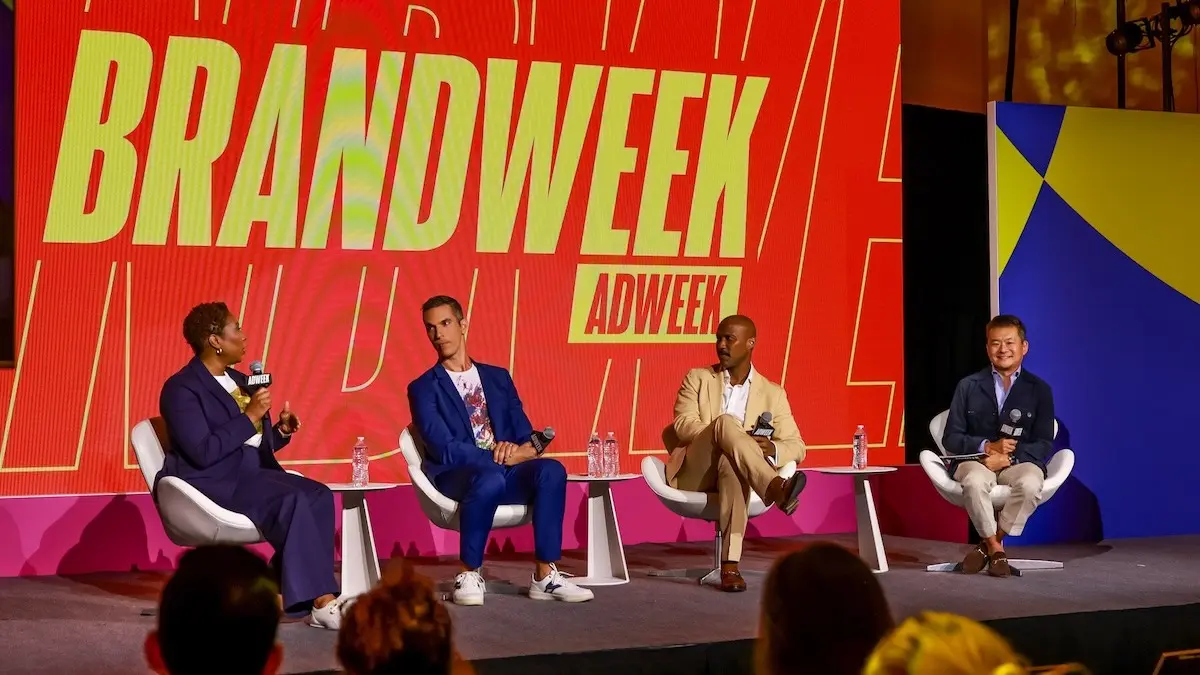
This pressing reality took center stage at Brandweek 2026, where ADWEEK CEO Will Lee partnered with CNN leadership and renowned journalists to dissect the mechanics of modern audience loyalty. The resulting panel discussion illuminated a paradigm shift in how legacy media organizations must operate. No longer can news outlets rely solely on the traditional "hard news" beat system to capture the modern consumer. Instead, they must meet audiences across highly customized, non-linear timelines, recognizing that contemporary culture, entertainment, politics, and daily life exist in a continuous, intertwined stream.
At the heart of this evolution is a fundamental reevaluation of the relationship between content creators and their consumers. Through innovative programming, genre-blending podcasts like CNN’s Engagement Party, and a strategic expansion into direct-to-consumer digital verticals, CNN is pioneering a blueprint for modern media monetization and trust-building. This report provides an in-depth examination of the insights shared at Brandweek 2026, exploring how media companies are converting fleeting digital impressions into lasting human connections, how recognizable personalities act as anchors in an algorithmic storm, and how brands can authentically participate in these conversations without compromising journalistic integrity.
Detailed Chronology: The Brandweek 2026 Dialogue
The discourse at Brandweek 2026 offered a rare, behind-the-scenes look at the strategic machinations driving one of the world’s most recognizable news institutions.
Setting the Stage: Will Lee and the Quest for Retention
The panel opened with ADWEEK CEO Will Lee posing a foundational question to the assembled media executives: What actually keeps modern audiences returning to a specific media brand day after day, scroll after scroll? Lee established that while breaking news draws initial eyeballs, long-term brand equity is forged through compelling storytelling, recognizable personalities, and active participation in the cultural conversations that matter most to consumers.
Expanding Beyond the Breaking News Cycle
Guy Griggs, Senior Vice President of Ad Sales and Client Partnerships at CNN, immediately addressed the operational challenges facing modern broadcasters. While hard news remains the unshakeable bedrock of CNN’s global identity, Griggs emphasized that the network is actively broadening its touchpoints to reach consumers in the quiet spaces between major breaking news events.
This expansion involves the rollout of targeted digital verticals, inventive content formats, and direct-to-consumer offerings designed to fit seamlessly into the digital lifestyles of modern consumers. Griggs confronted a harsh truth well-known to modern marketers: raw reach is a vanity metric if it lacks resonance. "You can buy an impression; you can’t buy people’s interest," Griggs told the Brandweek audience, encapsulating the core dilemma of digital advertising.
Navigating the Algorithmic "Multiverse"
The conversation then shifted to the chaotic nature of the modern digital diet, led by Audie Cornish and Ari Shapiro, co-hosts of CNN’s Engagement Party.
Cornish offered a sharp critique of legacy media’s historical isolationism. For decades, newsrooms operated on strict vertical silos—politics here, entertainment there, business over in the corner. However, the architecture of modern social media has obliterated those artificial boundaries. Today, a user’s social media scroll juxtaposes high-stakes geopolitical conflicts with viral pop culture moments, personal life updates, and memetic humor.
"I think we’ve all learned that pop culture is no longer something off to the side that’s a guilty pleasure somewhere else. It is the story," Cornish asserted.
Expanding on this concept, Cornish described the contemporary media consumer as navigating a "multiverse" of hyper-personalized algorithmic feeds. In this environment, no two people experience the exact same reality online. To combat this fragmentation, Cornish and Shapiro use Engagement Party to "reknit the timeline together." By comparing the disparate pieces of content populating their respective feeds, the co-hosts identify the underlying cultural threads that deserve deeper journalistic scrutiny, transforming isolated digital moments into cohesive, shared national conversations.
Supporting Context & Metrics: The Crisis of Attention and Trust
To fully grasp the significance of the CNN and ADWEEK dialogue, one must examine the broader macroeconomic and psychological trends reshaping the media and advertising industries.
The Attention Economy vs. The Impression Economy
For over a decade, digital advertising was dominated by the "impression economy"—a transactional model where brands paid primarily for viewability metrics. However, ad fatigue, ad-blocker adoption, and banner blindness have exposed the severe limitations of this approach. Consumers are exposed to thousands of commercial messages daily, resulting in cognitive overload.
In response, the industry has transitioned into the "attention economy," where time spent, active engagement, and emotional resonance dictate true marketing value. Media brands that possess high cultural authority—such as CNN—are uniquely positioned to bridge the gap between passive viewers and active participants. By cultivating formats that demand genuine focus, these networks offer marketers environments where their messages are not just seen, but felt and remembered.
The Evolution of the Podcast Medium
Audio and podcasting have emerged as critical battlegrounds for audience loyalty. Unlike traditional television broadcasts, which can sometimes feel distant or institutional, podcasts offer an intimate, direct-to-ear experience. Industry data consistently shows that podcast listeners exhibit some of the highest engagement rates in media.
Shows like Engagement Party leverage this medium to bypass the traditional top-down broadcasting model. By incorporating listener feedback segments like "Scroll and Tell," CNN transforms passive listeners into active co-creators of the show’s content. This participatory loop fosters a deep psychological bond between the audience and the brand, turning casual consumers into brand advocates.
Official Statements and Industry Insights
The dialogue at Brandweek 2026 yielded several critical axioms regarding the future of journalism, hosting, and commercial partnerships.
Anchors vs. Hosts: Redefining On-Air Persona
A particularly illuminating moment in the panel arrived when Audie Cornish articulated the distinct difference between a traditional news "anchor" and a modern media "host":
- The Traditional Anchor: Grounded primarily in the delivery of hard facts, objective reporting, and structural stability during unfolding crises.
- The Modern Host: Acts as a cultural facilitator—someone who welcomes audiences into an ongoing conversation, introduces them to diverse viewpoints, and guides them through complex emotional and intellectual terrain.
Ari Shapiro expanded on this philosophy, emphasizing the profound psychological intimacy that develops between podcast hosts and their listeners. Because listeners invite hosts directly into their private spaces—whether through headphones during a morning commute or while doing chores at home—a unique sense of parasocial intimacy is formed.
"They feel connected to the hosts. They feel like they’re friends, even if they’ve never met in real life," Shapiro noted. This relational equity is precisely what allows modern media brands to retain audiences even as algorithmic options multiply exponentially.
The Commercial Imperative: Walking the Line of Trust
As media companies experiment with new formats, the pressure to monetize these environments intensifies. However, for a news organization like CNN, commercial integration carries inherent risks. If advertising feels heavy-handed or misaligned, it can erode the foundational trust that underpins the entire enterprise.
Guy Griggs addressed this delicate balance directly, affirming that CNN approaches brand integrations with extreme editorial vigilance. The network’s strategy involves designing innovative partnership opportunities that allow brands to organically participate in cultural conversations without disrupting the user experience.
Summarizing CNN’s core commercial philosophy, Griggs stated:
"We’re going to go as far to the line as we possibly can without crossing that line, because trust is our product, and without that, we have absolutely nothing."
This declaration underscores a vital reality for the modern media ecosystem: in an era plagued by misinformation and audience skepticism, editorial integrity is not merely an ethical guideline—it is the ultimate commercial asset.
Future Outlook: Navigating the Next Era of Media
As we look toward the remainder of the decade and beyond, the insights shared by ADWEEK and CNN at Brandweek 2026 serve as a vital roadmap for the entire media and marketing ecosystem. Several key trajectories will define the industry’s evolution:
1. The Death of the Rigid Beat System
The traditional compartmentalization of news (politics, business, lifestyle, entertainment) is rapidly becoming obsolete. Future-proof media organizations will adopt fluid editorial strategies that reflect how humans actually experience life: as an interconnected web of cultural, political, and social phenomena. Shows that successfully blend hard news reporting with cultural critique—like Engagement Party—will serve as models for future programming.
2. Personality-Driven Ecosystems
As AI-generated content and commoditized information flood the internet, human-centric storytelling will become an increasingly scarce and valuable commodity. Media companies will increasingly invest in developing, supporting, and platforming distinct journalistic personalities who can build direct, authentic relationships with audiences across multiple channels, from streaming video to social audio.
3. Collaborative Storytelling and Audience Co-Creation
The boundary between "creator" and "consumer" will continue to dissolve. Media brands that thrive in the coming years will be those that build feedback loops into their core programming—turning audience comments, social media trends, and consumer perspectives into active components of the editorial product.
4. Precision Partnerships Built on Trust
For advertisers, the mandate is clear: intrusive, disruptive marketing is giving way to native, values-aligned participation. Brands that wish to succeed in premium media environments must align themselves with trusted publishers who possess high cultural authority. By respecting the editorial boundaries that protect audience trust, smart brands can achieve unprecedented resonance within high-engagement communities.
Conclusion
The collaboration between ADWEEK and CNN at Brandweek 2026 was more than just a panel discussion; it was a candid masterclass in modern media survival. By acknowledging the realities of the digital "multiverse," embracing the power of relatable personalities, and fiercely guarding the sanctity of editorial trust, CNN and its industry peers are proving that legacy media institutions can not only endure the digital revolution—they can lead it.