

By the Editorial Desk
Published: September 22, 2026
Executive Overview
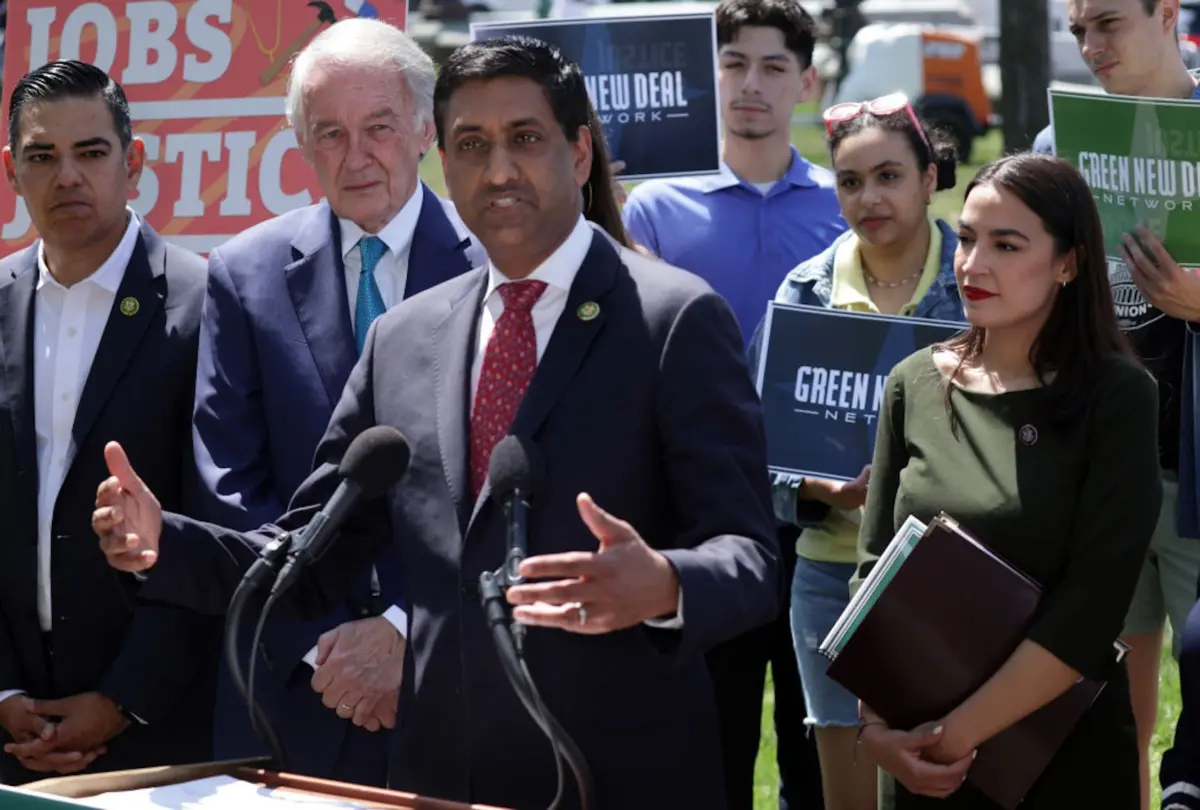
Fifteen years after its inception during the height of the Obama administration, the progressive activist group RootsAction—founded alongside media critics and organizers to challenge both Republican ideology and the corporate capture of the Democratic Party—is preparing its next major electoral intervention. Teaming up with Progressive Democrats of America (PDA), the organizations are launching a coordinated national campaign immediately following the November midterms. Their objective is ambitious yet clear: draft U.S. Representatives Ro Khanna (D-Calif.) and Alexandria Ocasio-Cortez (D-N.Y.) into the 2028 Democratic presidential primary.
The urgency driving this initiative stems from a profound disillusionment with the mainstream Democratic establishment, which organizers accuse of repeatedly fumbling winnable presidential elections through cautious, consultant-driven strategies. Pointing to the avoidable losses of 2000, 2004, 2016, and 2024, progressive leaders argue that the party can no longer afford to play it safe. By injecting the populist visions of Khanna—a self-described "progressive capitalist" representing Silicon Valley—and Ocasio-Cortez—a democratic socialist championing the working class—into the 2028 race, organizers hope to force a genuine national debate on economic inequality, climate action, militarism, and the governance of emerging technologies like artificial intelligence.
Detailed Chronology: Learning From History to Prevent Future Disasters
To understand the rationale behind the upcoming 2028 draft campaign, one must examine the trajectory of progressive organizing over the past decade and a half.
The Roots of Dissent (2010–2020)
In the wake of the 2010 midterm wave, RootsAction was established to push back against the corporatism and foreign policy militarism embedded within the modern Democratic Party. This ideological friction culminated in strong support for Senator Bernie Sanders’ insurgent presidential bids in 2016 and 2020. PDA played a parallel role in candidate recruitment, notably launching the "Run, Bernie, Run" movement in late 2013, which successfully drafted Sanders into the 2016 race and permanently shifted the national political discourse.
The "Don’t Run Joe" Warning (2022–2024)
As early as 2022, polling data revealed that a strong majority of Democratic voters desired a nominee other than Joe Biden for the 2024 cycle. Heeding these warnings, RootsAction launched the "Don’t Run Joe" campaign, explicitly arguing that renominating Biden would be a strategic error.
That warning went largely ignored by party elites until the June 2024 presidential debate laid bare the political vulnerabilities of the incumbent ticket. By the time Biden stepped aside, the window for an open, competitive primary process had slammed shut. The resulting compressed timeline hindered the party’s ability to cultivate an energetic, grassroots-backed alternative capable of defeating Donald Trump’s right-wing populism.
The Insurgent Wave of 2026
Despite heavy financial backing from special-interest donors—particularly within the tech, cryptocurrency, and defense sectors—the 2026 primary cycle witnessed an unprecedented wave of underfunded progressive victories across local and statewide races. Notable wins, such as Dr. Abdul El-Sayed securing the Democratic nomination for Senate in Michigan, demonstrated that the party’s electoral base is increasingly progressive, energized, and ready to break away from traditional establishment playbooks.
Supporting Context & Metrics: The Case for Khanna and Ocasio-Cortez
The coalition behind the RunRoRunAOC.org petition contends that a dynamic presidential contest featuring Khanna, Ocasio-Cortez, or both, is vital for the health of the party and the nation. Far from splitting the progressive vote, the dual-candidacy model has proven successful in recent municipal and regional contests.
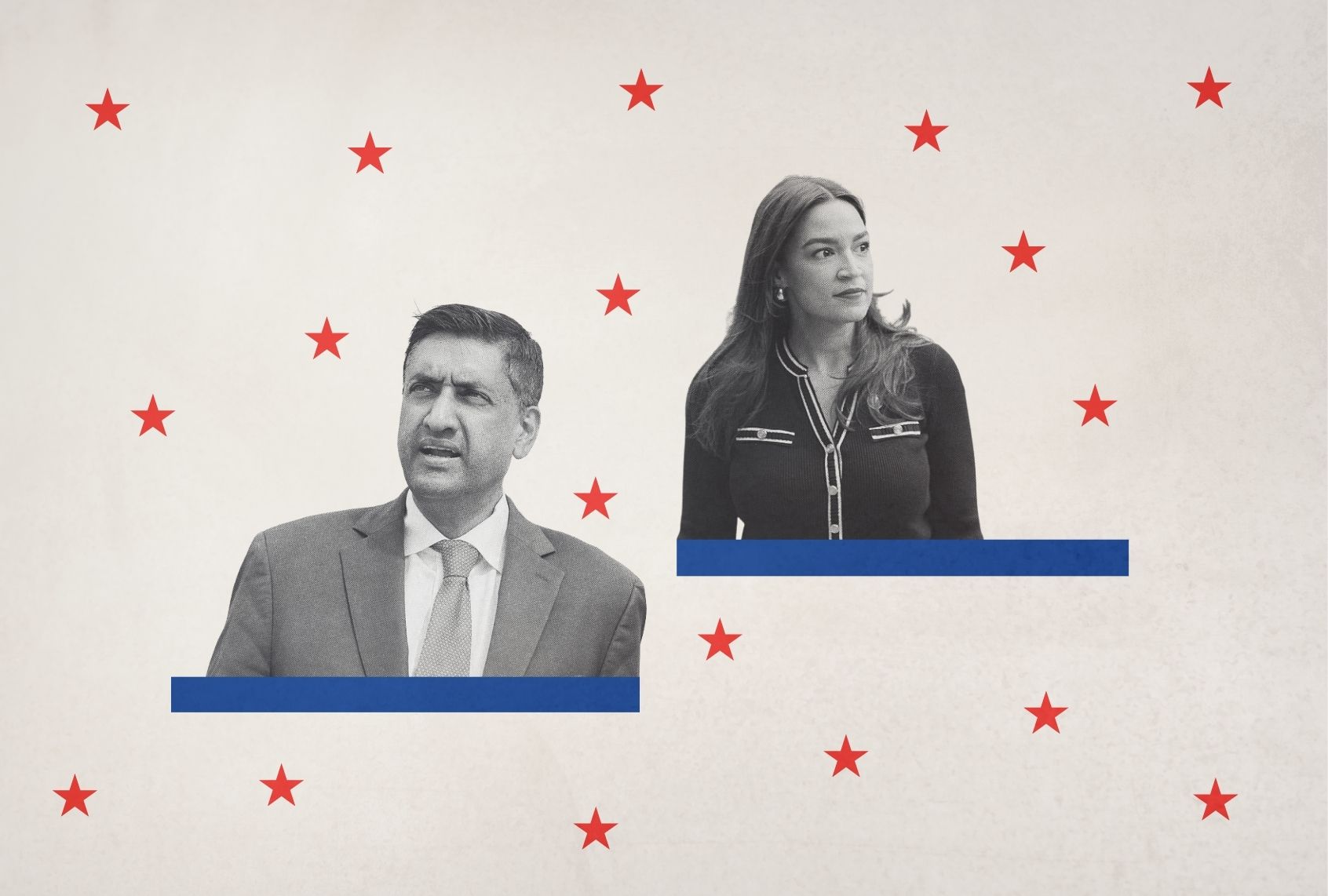
- The Tandem Strategy: Organizers point to recent electoral models, such as the New York City mayoral primary where ranked-choice voting and non-aggression pacts between progressive candidates (like Zohran Mamdani and Brad Lander) elevated both figures and solidified progressive power blocks. Similarly, the early months of the 2019–2020 Democratic primary—before personal friction arose between Bernie Sanders and Elizabeth Warren—demonstrated how two aligned progressive voices could successfully push the entire party debate toward systemic economic reform.
- Demographic Realities: Research from institutions like Tufts University’s Center for Information & Research on Civic Learning and Engagement (CIRCLE) indicates that younger generations are experiencing a pronounced shift toward progressive and left-leaning views. A progressive bloc of delegates at the August 2028 Democratic National Convention would ensure that critical policy planks—ranging from expanded healthcare access and green jobs to the regulation of AI data centers and foreign policy reform—remain central to the national platform.
Profile of the Contenders: Two Wings of the Progressive Movement
While Ro Khanna and Alexandria Ocasio-Cortez represent different ideological labels, their political lineage traces directly back to the populist movements galvanized by Bernie Sanders.
Representative Ro Khanna (D-Calif.)
Representing California’s 17th Congressional District—encompassing much of Silicon Valley and standing as one of the wealthiest districts in the nation—Khanna has carved out a unique lane as a "progressive capitalist." He has gained national prominence through legislative battles aimed at releasing government transparency files, ending protracted foreign wars (such as his work concerning Yemen and Iran), and challenging his own detention by Israeli settlers during a humanitarian trip to the occupied West Bank. Khanna advocates for aggressive taxation on the ultra-wealth, marrying high-tech fluency with economic populism.
Representative Alexandria Ocasio-Cortez (D-N.Y.)
Ocasio-Cortez burst onto the national political stage following her historic 2018 primary victory over veteran congressional leader Joe Crowley. Representing a working-class, Latino-majority district in New York City, she identifies as a democratic socialist. Over her tenure in the House, she has spearheaded legislative efforts for the Green New Deal, led congressional pushback against the unchecked expansion of energy-intensive AI data centers, and campaigned vigorously alongside Sanders at national "Fighting Oligarchy" rallies.
Official Statements and Strategic Vision
Prominent strategists and organizers have long pointed out the structural flaws in how presidential nominees are selected. In his book How the Democrats Screwed Bernie, veteran political strategist Tad Devine noted that dollar-dominated primary processes are frequently rigged against outsider candidates who genuinely connect with voter anxieties. Devine argues that these populist candidates are statistically more likely to succeed in general elections than candidates who rely primarily on institutional insider support.
The joint statement from RootsAction and Progressive Democrats of America echoes this sentiment, emphasizing that leaving the 2028 primary process entirely to party elites invites repeat failures:
"Without a progressive populist advocate atop the ticket, the Democratic response would be woefully underwhelming — enabling right-wing demagoguery to push voter unrest in dangerous and divisive directions. The voices of Khanna and/or AOC are needed in the presidential campaign to ensure that voters hear serious solutions to healthcare, jobs, AI, militarism, and foreign policy."
Future Outlook: The Road to 2028
As the nation approaches the conclusion of the 2026 midterms, progressive organizers are pivoting their focus toward national infrastructure. The launch of the RunRoRunAOC.org petition immediately following the November elections marks the formal starting gun for what organizers hope will be a transformative primary cycle.
The central question facing the Democratic Party is whether it will retreat to the safe, corporate-backed formulas that have repeatedly faltered against right-wing populism, or embrace a bold, insurgent vision capable of inspiring millions of disaffected voters. For a growing segment of the party’s base, the answer lies in drafting leaders who refuse to compromise with oligarchy. Whether Ro Khanna and Alexandria Ocasio-Cortez ultimately choose to answer the call will define the trajectory of American progressive politics for the next generation.