

Executive Overview
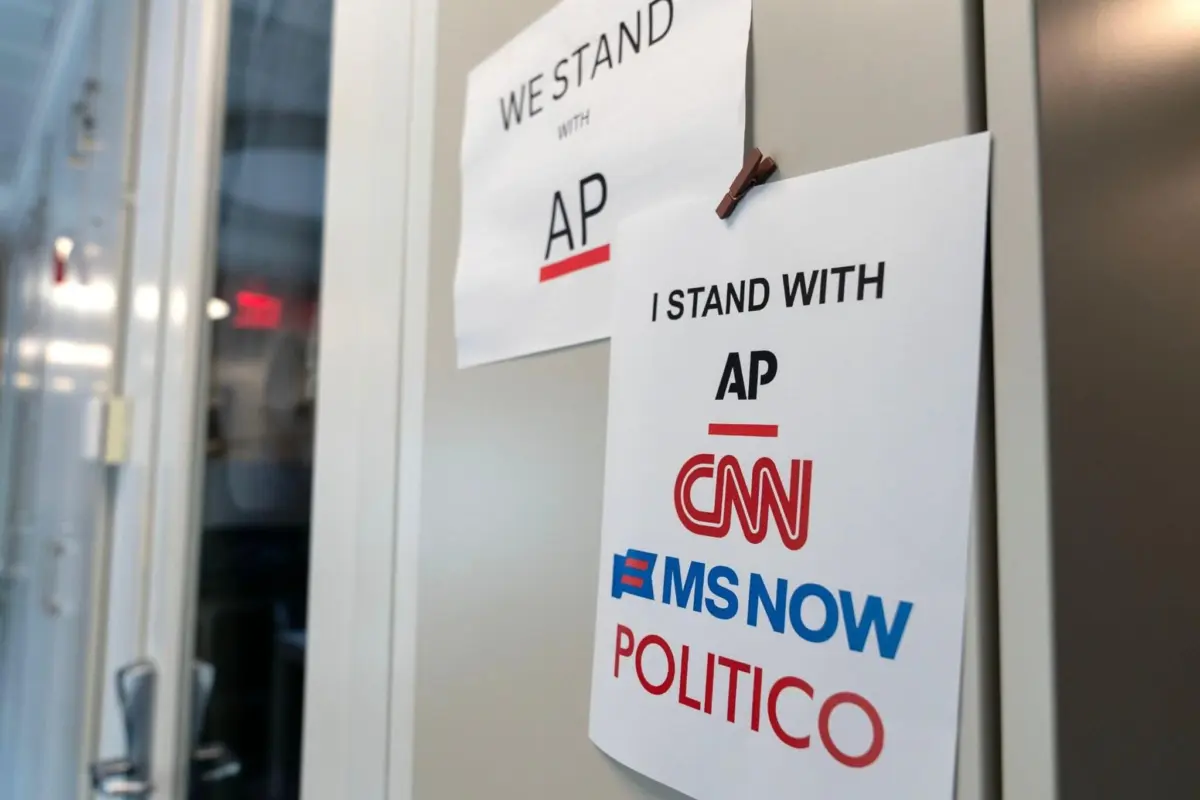
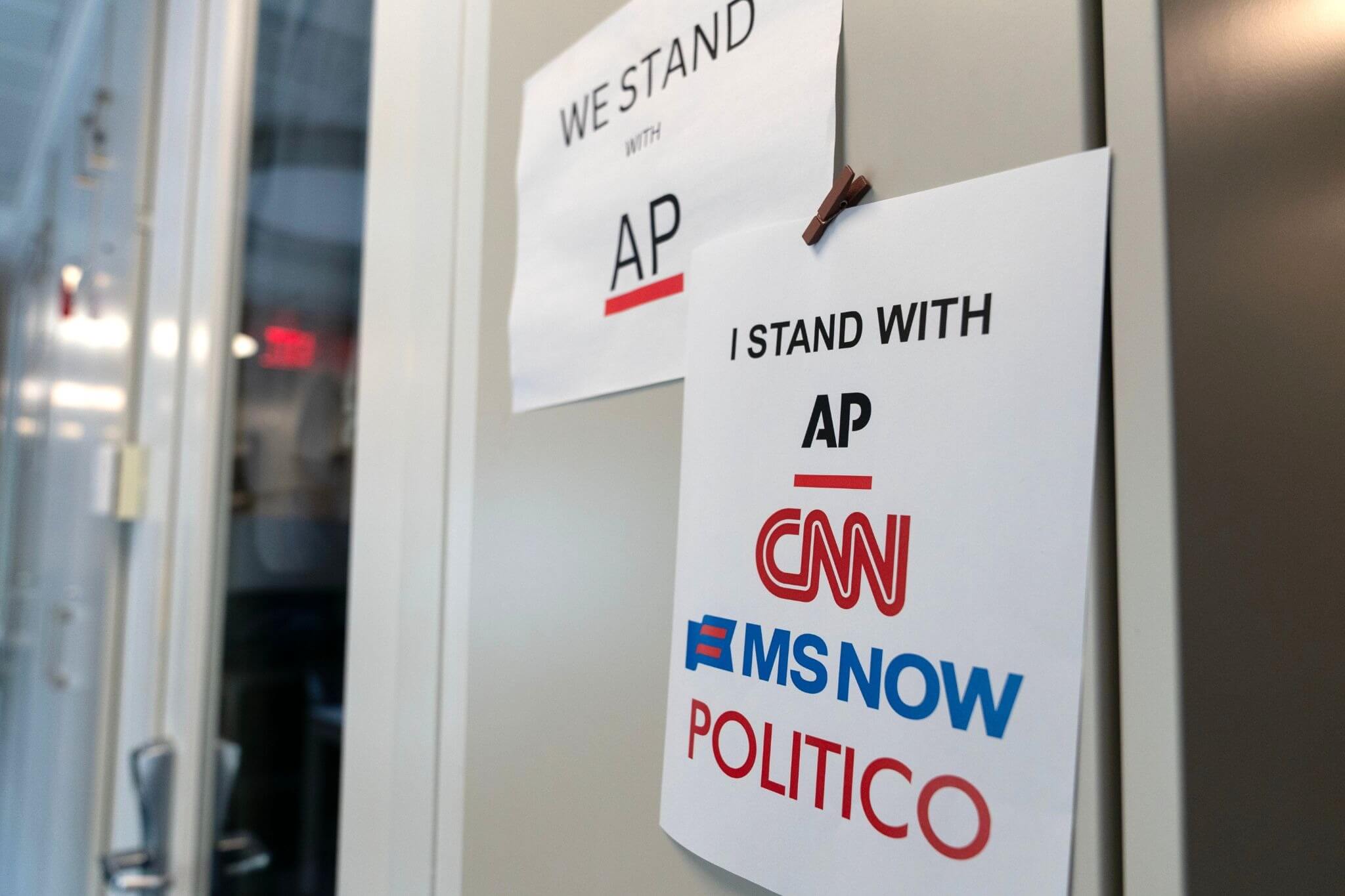
In a sweeping legal and political rebuke of executive overreach, a federal court has once again halted attempts by President Donald Trump to penalize independent journalism. U.S. District Judge Timothy Kelly handed down a 14-day temporary restraining order requiring the White House to immediately restore press credentials to CNN, MS NOW, and Politico. The outlets had been summarily banned from the White House complex following a series of contentious reports.
While the administration sought to justify the sweeping ban on nebulous grounds of national security and a defense against what it labeled "fake news," Judge Kelly’s ruling focused sharply on violations of constitutional due process under the Fifth Amendment, while touching on core First Amendment protections. The decision underscores a tense and escalating standoff between the executive branch and the American news media—a conflict characterized by retaliatory social media attacks, accusations of "treason," and widespread industry solidarity.
Simultaneously, the broader media and entertainment ecosystem is experiencing seismic shifts. From massive corporate mergers like Paramount’s pending acquisition of Warner Bros. Discovery to high-stakes legal battles involving election polling and architectural safety scandals at the White House, the intersection of politics, corporate power, and journalism remains as volatile as ever. This report provides an in-depth chronological breakdown, context, and forward-looking analysis of these interconnected developments.
Detailed Chronology: From Social Media Proclamation to Federal Courthouse
The Ban and the Initial Legal Challenge
The crisis erupted over a weekend when President Trump utilized his Truth Social platform to announce a blanket ban on CNN, MS NOW, and Politico, blocking their reporters from accessing the White House complex and revoking their hard passes. The administration’s sudden action caught newsrooms off guard, prompting the three targeted organizations to immediately file a joint lawsuit.
The matter was expedited to a 45-minute federal court hearing on Wednesday afternoon before U.S. District Judge Timothy Kelly—a Trump appointee who notably also ruled in favor of restoring the press credentials of former CNN reporter Jim Acosta back in 2018.
The Midnight Ruling
At approximately 1:30 a.m. Eastern time on Thursday, Judge Kelly issued his ruling. He determined that the administration’s ban was likely unconstitutional and granted the 14-day restraining order. The directive explicitly mandated that the White House "immediately return, reinstate, and restore" the organizations’ press credentials.
While the core of the media’s argument hinged on the First Amendment—asserting that the ban was unconstitutional retaliation for unfavorable coverage—Judge Kelly anchored his immediate ruling in the Fifth Amendment’s due process guarantees. During the hearing, Kelly noted:
"Before we get to any core First Amendment issues, there is a due process claim and a due process issue that seems to me the first stop in figuring out how to resolve the motion."
In his written opinion, Kelly emphasized that the administration had failed to afford the outlets basic procedural rights: "Defendants do not dispute that Plaintiffs did not receive notice and an opportunity to be heard before their hard passes were revoked."
The Arguments in Court
During oral arguments, Theodore J. Boutrous, counsel for the media outlets, pointed out the irony of the administration’s shifting justifications. Boutrous argued that Trump’s own public statements—admitting he took exception to their journalism—served as the plaintiff’s primary evidence of constitutional infringement. "He keeps proving our point," Boutrous remarked to the judge.
Conversely, Michael Velchik, representing the administration, argued that the media outlets were advancing an "absurd interpretation of the First Amendment" and asserted that their reporting posed tangible threats to national security.
Judge Kelly expressed deep skepticism regarding the national security rationale, noting that the administration’s justifications flatly contradicted the president’s original social media announcements. Kelly wrote that Trump’s initial declarations focused entirely on the "alleged lack of truthfulness and negativity of Plaintiffs’ reporting," rather than classified leaks or security risks.
Supporting Context & Metrics: The Anatomy of a Pretextual Ban
The "National Security" Defense vs. Anonymous White House Briefings
To substantiate its ban against Politico, the White House submitted a formal letter citing six specific stories it claimed threatened national security and spread falsehoods. Among them was a June report titled: “A deal with Iran is near but not final, senior US official says.”
However investigative reporting by outlets including Status, The Washington Post, and The Associated Press quickly unraveled the administration’s rationale. It was revealed that the anonymous "senior official" cited in Politico’s reporting was none of other than Vice President JD Vance, who had actively briefed a group of reporters during a background call organized and hosted by the White House itself.
Reporters on the call had been explicitly instructed under White House ground rules to cite an anonymous "senior administration official." By penalizing Politico for publishing information derived directly from an administration-sanctioned background briefing, the White House exposed the disciplinary action as pretextual—a reality that severely weakened its legal standing in court.
Escalating Rhetoric: Accusations of "Treason"
The legal battle occurs against a backdrop of increasingly hostile rhetoric from the executive branch. According to tracking by Media Matters analyst Matt Gertz, President Trump has casually accused news outlets of "treasonous" reporting at least nine times since March, including a Truth Social post explicitly targeting CNN and reporter Kaitlan Collins, calling them "all sick, treasonous, and demented!"
Media analysts and legal scholars have repeatedly warned that branding routine, critical journalism as "treason" lowers the threshold for state-sponsored retaliation, creating a dangerous precedent for press freedom in the United States.
Official Statements and Industry Reaction
The legal defeat elicited sharp responses from both the legal teams representing the press and from media executives navigating the ongoing political crossfire.
- Theodore J. Boutrous (Plaintiffs’ Attorney): Following the ruling, Boutrous told CNN’s Brian Stelter: "This is a strong ruling vindicating freedom of the press, due process and rule of law. We appreciate the court’s swift action."
- Vice President JD Vance: Defending the administration’s policy earlier in the week prior to the ruling, Vance argued that the restrictions did not constitute a true ban: "They can still report on the Trump White House. They can still get the public reports. They can still, of course, talk to people in the administration and outside the administration." Vance also reiterated his assessment of media bias, claiming that Politico was "as anti-Trump as Breitbart was anti-Obama or anti-Biden."
- Industry Solidarity: The attempt to isolate CNN, MS NOW, and Politico ultimately backfired, fostering unprecedented industry-wide unity. Major broadcast networks participating in the White House TV pool—including ABC, CBS, NBC, Fox News, and CNN—unanimously agreed to stage a cooperative boycott of Trump administration coverage in solidarity with the ousted outlets.
Future Outlook: Legal Ramifications, Media Mergers, and Corporate Shifts
1. The White House Response
With the 14-day temporary restraining order now in effect, the ball is back in the executive branch’s court. While the administration could theoretically attempt to build a legally sound, due-process-compliant case to revoke credentials in the future, legal experts suggest that the overwhelming solidarity across the journalistic landscape—coupled with the humiliation of having their national security arguments dismantled by their own briefing transcripts—may lead the White House to let the matter drop.
2. Collateral Legal Victories for the Press
Adding to a difficult week for the administration’s legal strategy, an Iowa judge dismissed a separate lawsuit filed by Trump against pollster J. Ann Selzer, the Des Moines Register, and Gannett. Trump had sued for "election inference" following a late 2024 poll that accurately captured political momentum swings that he disputed. Iowa District Judge Scott J. Beattie dismissed the suit, writing that the petition attempted to "turn speech that enjoys the highest category of First Amendment protection into a liability." FIRE Chief Counsel Bob Corn-Revere lauded the decision, emphasizing that the First Amendment does not permit public officials to weaponize the label "fake news" to punish independent analysts and statisticians.
3. Corporate Upheaval: The Paramount-WBD Merger and Elon Musk
Beyond the courtroom, the media landscape faces sweeping transformation. A federal court hearing was scheduled for U.S. District Judge Araceli Martínez-Olguín to address outstanding questions regarding the proposed $111 billion acquisition of Warner Bros. Discovery (WBD) by Paramount.
While the transaction inches closer to completion—contingent on consent decrees ensuring commitments like releasing at least 30 movies per year and establishing an independent oversight board for CNN and CBS News—financial maneuvers have sparked fresh controversy. Reports indicate that Paramount CEO David Ellison has weighed tapping billionaire Elon Musk to join a syndicate of equity investors.
While financially pragmatic, the inclusion of Musk—whose control over X and influential political footprint already concern lawmakers—would introduce intense political volatility. Analysts note that any formal or perceived ownership stake by Musk in legacy news institutions like CNN and CBS News would likely trigger immediate antitrust and regulatory alarms in Washington, even if operational oversight remained cordoned off.
4. Leadership Transitions at CNN
Amid the corporate restructuring, CNN CEO Mark Thompson addressed staff during a town hall, expressing enthusiasm about staying with the network while acknowledging uncertainty regarding how Paramount intends to manage its newly expanded news division. Thompson cautioned employees not to "jump to conclusions that we become one with CBS News," though observers remain watchful as corporate integration timelines unfold.
Conclusion
The federal court’s swift intervention to restore White House press credentials represents a critical victory for the rule of law and constitutional due process. However, the underlying hostilities between the executive branch and the press corps show no signs of abating. As media conglomerates consolidate under unprecedented financial and political pressures, and as the administration continues to challenge the boundaries of protected speech, the institutional resilience of the American press will remain under severe test in the months to come.