In the high-stakes arena of Search Engine Optimization (SEO), one question continues to baffle both veteran marketers and digital novices: How many backlinks do I actually need to rank on page one?
For years, the conventional wisdom dictated a brute-force approach—accumulate as many links as possible, leverage massive guest-posting campaigns, and hope that domain authority metrics would naturally pull your content to the top. However, modern SEO data reveals a more nuanced, precision-driven reality. Most website owners radically overestimate the sheer volume of links required to break into the top three to five positions on Google’s Search Engine Results Pages (SERPs).
By conducting a rigorous upfront analysis rather than relying on guesswork, digital strategists can optimize their resource allocation, target high-converting assets, and focus exclusively on the specific quantity and quality of backlinks needed to move the needle. This investigative guide breaks down a proven, 5-step blueprint to accurately calculate backlink quotas, analyze competitor profiles, and establish sustainable link velocity targets for long-term SERP dominance.
Detailed Chronology: The 5-Step Blueprint to Backlink Calculation
To eliminate the guesswork from link building, top-tier SEO practitioners follow a systematic, repeatable methodology. Here is the chronological framework used to audit, evaluate, and target the precise backlinks required to conquer competitive keyword landscapes.
Step 1: Identify Your Highest Priority Backlink Targets
Before calculating link requirements, you must isolate the pages on your website that actually drive revenue, leads, and conversions. Rather than building links to low-impact blog posts, focus your resources on high-converting assets currently languishing in positions 4 through 10—the bottom half of page one.
There are two primary methods for extracting these high-priority targets:
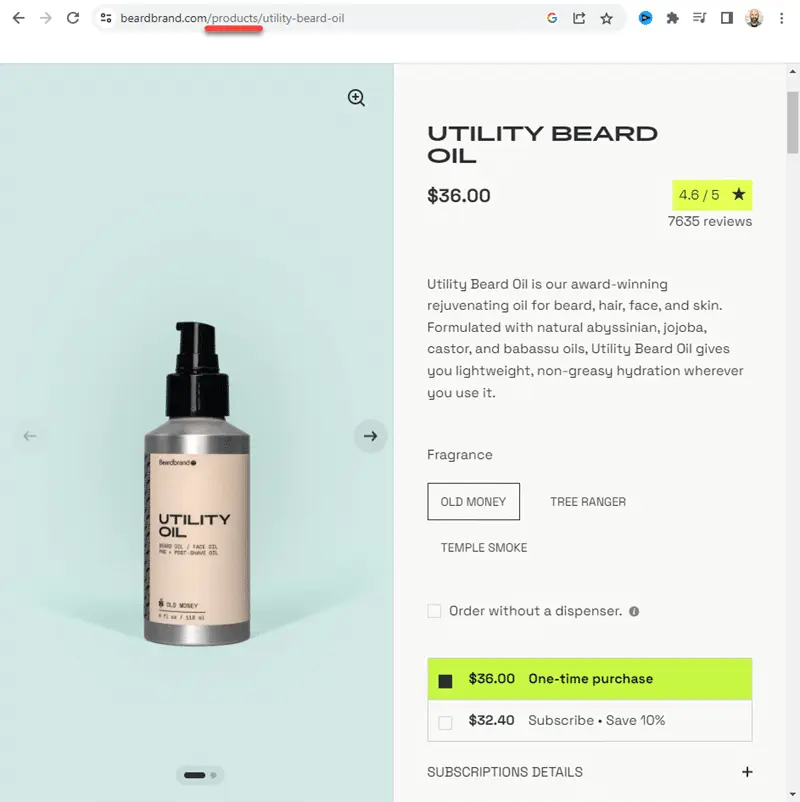
Subfolder Analysis: Many commercial websites house their core revenue-generating assets within distinct subfolders, such as /products/, /features/, /industries/, or /services/. By using tools like Ahrefs Site Explorer to audit your subfolders and applying a position filter for ranks 4–10, you instantly generate a shortlist of commercial pages ripe for a rankings boost.
Keyword Modifiers: For sites not organized by rigid subfolder structures, you can navigate to the "Top Pages" report in Ahrefs and deploy a "Keyword Contains" filter. Input high-intent modifier strings such as best, software, tools, platform, alternatives, or vs. This surfaces commercial comparison and review pages that serve as prime candidates for targeted link acquisition.
Step 2: Review SERP Data and Competitor Baselines
Once your target asset is selected, the next phase involves examining the live search landscape. By isolating your primary keyword and pulling the SERP overview report, you can visualize the top ten ranking competitors and project the traffic potential of moving into the top three positions.
Crucially, SEOs must look past raw "Referring Domains" (RD) counts. Raw totals can be profoundly misleading because they often include low-quality, spammy, or irrelevant links that your competitors accumulated organically over years. To establish a realistic benchmark:
Identify a competitor with a Domain Rating (DR) comparable to or lower than your own.
Ensure they are ranking with a matching content type and format (e.g., comparing a listicle blog post to a listicle blog post).
Select the competitor with the lowest referring domain count to establish your "apples-to-apples" baseline.
Step 3: Review Competitor Backlink Profiles (The Filtering Phase)
A competitor might boast 85 referring domains, but that does not mean you need 85 links to surpass them. Step three requires opening the competitor’s Referring Domains report and applying stringent filters to strip away noise.
By filtering out low-quality metrics, redirect chains, or non-editorial link types, you will often watch that initial number shrink dramatically—frequently dropping from nearly a hundred domains down to a lean core of 20 to 25 relevant sites. Next, manually skim the remaining list to eliminate topically irrelevant domains. Subtracting these leaves you with a surgically precise, highly achievable link target.
Step 4: Assess Domain Rating Distributions
Quantity tells only half the story; link quality dictates whether those links will actually move your rankings. Step four requires an audit of the competitor’s domain rating distributions.
If a competitor’s backlink profile is heavily weighted with ultra-authoritative links (such as multiple DR80+ placements secured through targeted guest posting and industry collaborations), closing that gap will take a deliberate, sustained outreach campaign. Conversely, if the top-ranking page relies on mid-tier authority sites, your link acquisition strategy can be tailored to match that exact quality threshold without over-engineering your outreach.
Step 5: Determine Link Velocity Targets
Ranking on page one is rarely a one-time event; it is an ongoing battle for digital real estate. Competitors actively defend their positions by building new links month after month. Therefore, your final analytical step is calculating link velocity.
By toggling your competitor analysis reports to display "New Backlinks" over 30-day, 90-day, and 180-day intervals, you can gauge their ongoing link acquisition pace. If a competitor has generated zero new qualifying referring domains in the past month, you know you will not need an aggressive, high-velocity campaign to remain competitive. Instead, you can close your initial deficit and maintain your position with a modest trickle of one or two quarterly links.
Supporting Context & Metrics: Case Studies in Strategic Link Allocation
To understand how this framework functions in the wild, consider two distinct content assets managed under real-world SEO audits:
Case Study A (The Listicle Format): A comprehensive guide targeting the primary keyword "serp tracking tools" sat stagnant on page one. The top-ranking competitor (Marketing Arsenal, DR 56) displayed a raw count of 85 referring domains. However, after applying strict backlink filters and auditing topical relevance, the true competitive gap narrowed to just 22 clean, relevant referring domains. Furthermore, historical velocity reports indicated zero new links acquired by the competitor in the previous 30 days. The actionable strategy: close the 22-link gap via targeted guest blogging and industry collaborations, then maintain momentum with minimal quarterly maintenance.
Case Study B (The Enterprise SaaS Landscape): An "enterprise seo tools" post languishing in position nine faced competition from a rival page (Plerty, DR 71) ranking in position five with a mere three referring domains. Because the site owner had performed zero proactive link building for this specific URL, its existing links were largely organic anomalies. Armed with this insight, the strategist confirmed that a comprehensive content refresh paired with just a couple of strategic DR70+ placements would be sufficient to recapture top-five visibility and potentially triple organic traffic.
Official Statements and Industry Consensus
Leading voices in the search marketing community have long advocated for efficiency over volume when it comes to off-page optimization. Industry analysts consistently emphasize that modern search algorithms prioritize contextual relevance, user intent alignment, and authority over brute-force link accumulation.
"The biggest mistake marketers make is treating link building as a numbers game," notes veteran SEO strategist Robbie Richards. "When you dissect top-ranking competitor profiles with the right filters, you almost always find that you need far fewer links than you initially thought. Upfront analysis protects your budget and maximizes your return on investment."
Search engine algorithms have evolved to discount manipulative, high-volume link schemes, rewarding instead the targeted acquisition of topically contextual, high-authority editorial mentions. Aligning your link-building efforts with actual SERP requirements ensures that every outreach email sent and every dollar spent contributes directly to measurable organic growth.
Future Outlook: The Evolution of Backlink Intelligence
As search engine algorithms continue to integrate sophisticated artificial intelligence and natural language processing capabilities, the raw quantity of backlinks will matter even less than it does today. Google’s ability to evaluate the semantic context, user engagement metrics, and actual utility of a piece of content means that links will increasingly serve as endorsements of trust rather than mechanical ranking levers.
For digital marketers and enterprise SEO teams, the future belongs to data-driven precision. By adopting the 5-step auditing framework outlined above, organizations can move away from wasteful, spray-and-pray link building tactics. Instead, they can embrace a surgical approach—auditing subfolders, analyzing competitor backlink profiles, mapping domain rating distributions, and calculating exact link velocity targets.
Ultimately, mastering backlink calculation ensures that your SEO resources are deployed with maximum efficiency, securing sustainable first-page rankings and driving long-term, high-converting organic revenue.


![How Many Backlinks Do I Need To Rank? [Answered]](https://www.robbierichards.com/wp-content/uploads/2023/07/How-many-backlinks-are-needed-to-rank.jpg)
![How Many Backlinks Do I Need To Rank? [Answered]](https://www.robbierichards.com/wp-content/uploads/2023/07/image19.png)
![How Many Backlinks Do I Need To Rank? [Answered]](https://www.robbierichards.com/wp-content/uploads/2023/07/image6.png)
![How Many Backlinks Do I Need To Rank? [Answered]](https://www.robbierichards.com/wp-content/uploads/2023/07/image24.png)
![How Many Backlinks Do I Need To Rank? [Answered]](https://www.robbierichards.com/wp-content/uploads/2023/07/image10.png)
![How Many Backlinks Do I Need To Rank? [Answered]](https://www.robbierichards.com/wp-content/uploads/2023/07/image5.png)
![How Many Backlinks Do I Need To Rank? [Answered]](https://www.robbierichards.com/wp-content/uploads/2023/07/image16.png)
![How Many Backlinks Do I Need To Rank? [Answered]](https://www.robbierichards.com/wp-content/uploads/2023/07/TSP-Banner.jpg)
![How Many Backlinks Do I Need To Rank? [Answered]](https://www.robbierichards.com/wp-content/uploads/2023/07/image2.png)
![How Many Backlinks Do I Need To Rank? [Answered]](https://www.robbierichards.com/wp-content/uploads/2023/07/image8.png)
![How Many Backlinks Do I Need To Rank? [Answered]](https://www.robbierichards.com/wp-content/uploads/2023/07/image9.png)
![How Many Backlinks Do I Need To Rank? [Answered]](https://www.robbierichards.com/wp-content/uploads/2023/07/image3.png)
![How Many Backlinks Do I Need To Rank? [Answered]](https://www.robbierichards.com/wp-content/uploads/2023/07/image4.png)
![How Many Backlinks Do I Need To Rank? [Answered]](https://www.robbierichards.com/wp-content/uploads/2023/07/image20.png)
![How Many Backlinks Do I Need To Rank? [Answered]](https://www.robbierichards.com/wp-content/uploads/2023/07/image13.png)
![How Many Backlinks Do I Need To Rank? [Answered]](https://www.robbierichards.com/wp-content/uploads/2023/07/image11.png)
![How Many Backlinks Do I Need To Rank? [Answered]](https://www.robbierichards.com/wp-content/uploads/2023/07/image18.png)
![How Many Backlinks Do I Need To Rank? [Answered]](https://www.robbierichards.com/wp-content/uploads/2023/07/image23.png)
![How Many Backlinks Do I Need To Rank? [Answered]](https://www.robbierichards.com/wp-content/uploads/2023/07/image14.png)
![How Many Backlinks Do I Need To Rank? [Answered]](https://www.robbierichards.com/wp-content/uploads/2023/07/image15.png)