

Executive Overview
The 81st United Nations General Assembly in New York City will likely be remembered as a historic turning point in modern geopolitics—the moment the Unitedospheric anchor of the post-World War II international order was formally abandoned and a new, decentralized pole of global leadership stepped into the vacuum.
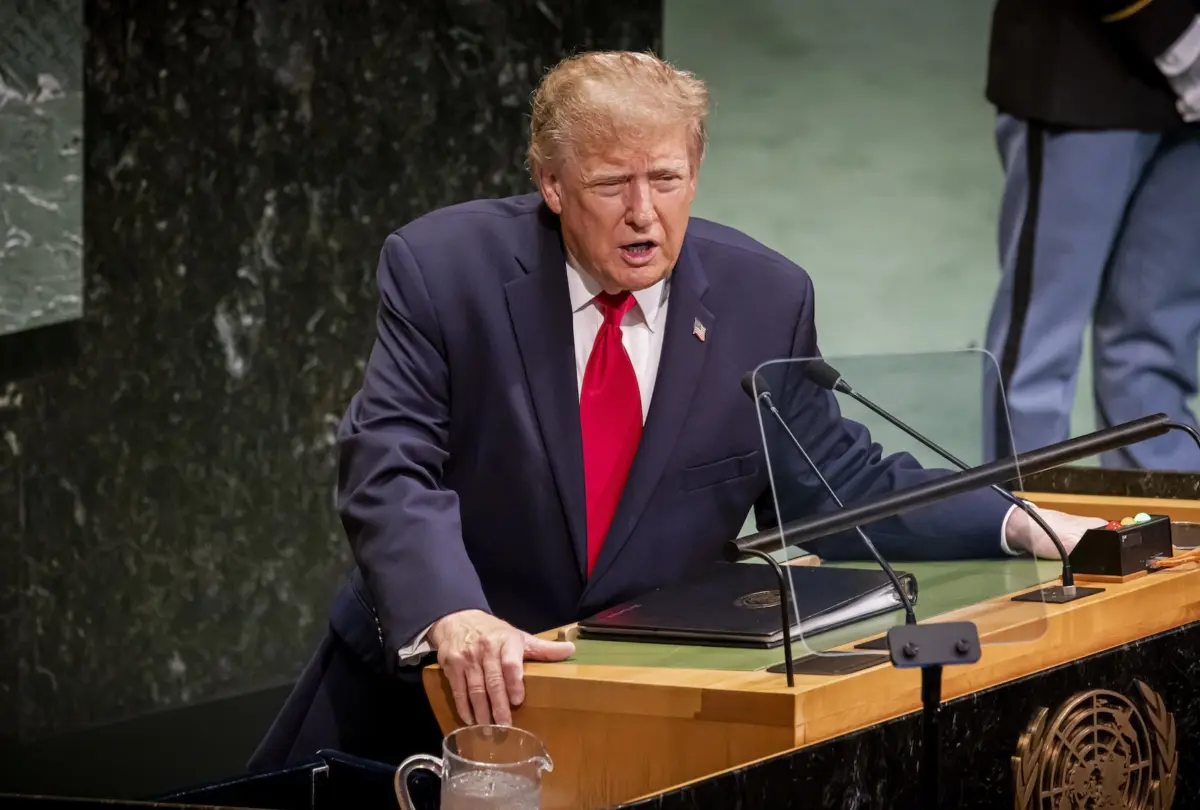
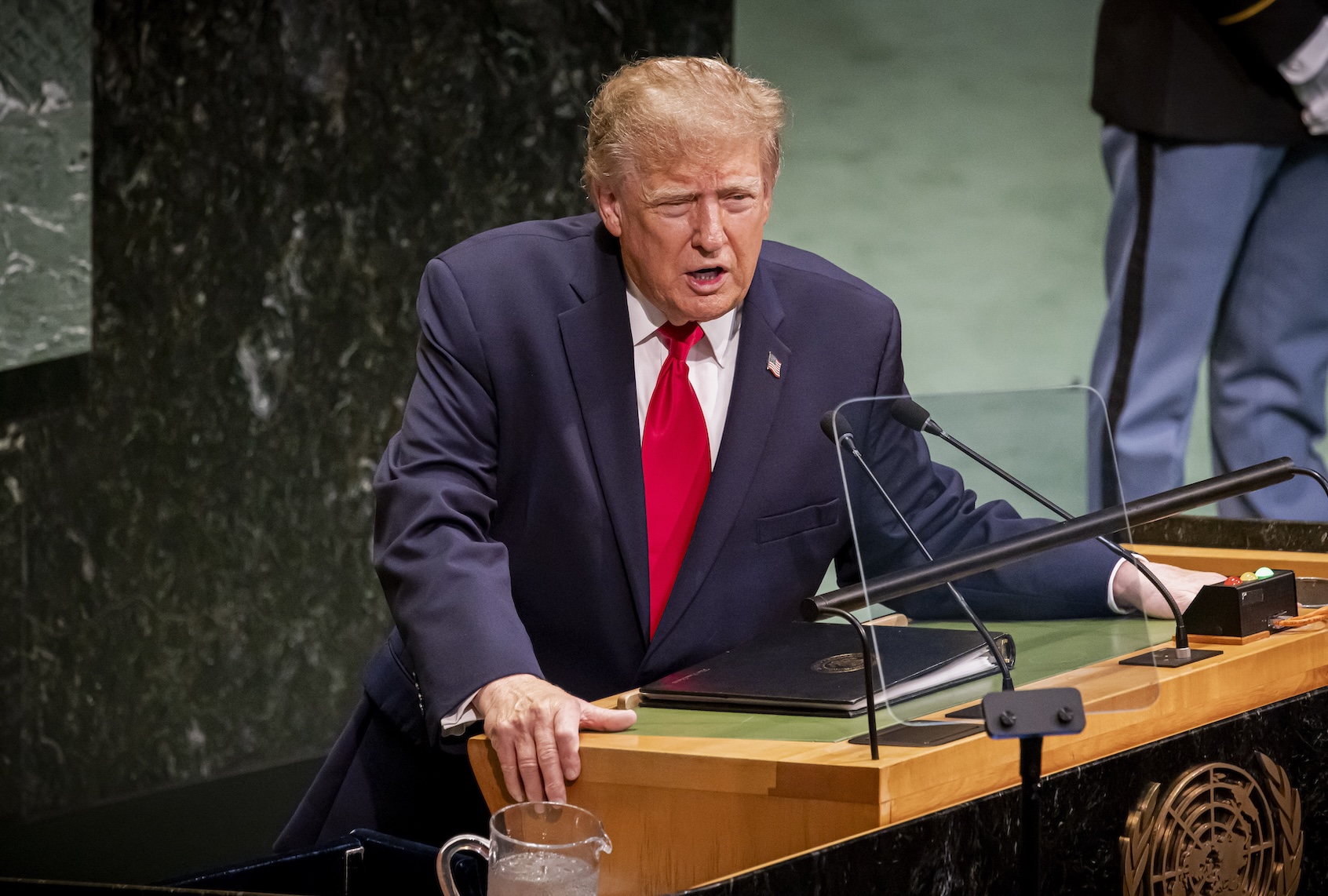
During a rambling, deeply combative, and grievance-laden address on September 22, 2026, U.S. President Donald Trump laid bare an unapologetic, 19th-century imperialist foreign policy. Eschewing the norms of multilateral diplomacy, Trump openly boasted of territorial resource seizures, threatened total annihilation against sovereign states, and defended extrajudicial military actions on the high seas. The speech horrified traditional allies, provoked walkouts by targeted delegations, and visually alienated even the United Nations leadership.
Yet, the true historical significance of the summit lay not merely in Washington’s further descent into rogue-state status, but in the definitive ascension of a new democratic standard-bearer. While the American president projected instability, aggression, and transactional corruption, Canadian Prime Minister Mark Carney seized the moment. Through a series of brilliant bilateral engagements, a major policy address on "values-based realism," and an evolving blueprint for transnational coalition-building—highlighted by a groundbreaking proposal from the European Union to make Canada its first "associate member"—Carney effectively stepped into the mantle of the leader of the free world.
Detailed Chronology: A Week of Diverging Destinies in New York
Sunday, September 20 – Monday, September 21: The Pavements of New York and the Economic Pitch
In the days leading up to the formal opening of the General Assembly, the contrast between American isolationism and Canadian outreach was immediately apparent. While Washington’s diplomatic machinery focused on defensive posturing and transactional threats, Prime Minister Mark Carney engaged in an aggressive schedule of economic and diplomatic diplomacy.
Teaming up with former Canadian Prime Minister Stephen Harper in an extraordinary display of bipartisan economic pragmatism, Carney hosted a high-stakes summit of international financiers, institutional investors, and global CEOs. The pitch was simple yet potent: Canada—possessing an educated workforce, abundant critical minerals, expansive natural gas reserves, and strategic ports spanning two oceans—offered a secure, stable, and rule-bound harbor for global capital at a time when the United States was turning inward and volatile.
Tuesday, September 22: The General Assembly Showdown
The ideological fault lines of the 21st-century world order cracked open inside the UN General Assembly hall on Tuesday morning.
President Trump took the podium for a 40-minute address marked by a desultory tone and a staggering rejection of international law. In front of a visibly tense and appalled assembly—with UN Secretary-General António Guterres famously captured covering his face in dismay—Trump outlined an aggressive doctrine of resource extraction and pre-emptive violence.
- The Iranian Provocation: Looking directly at the delegation of the Islamic Republic, Trump mused aloud about his "big decision," openly threatening total annihilation. "Will a deal be made with Iran that lets them rebuild? Or do I annihilate the Islamic Republic? Do I drive them into hell with no chance of survival, and no hope of future greatness for generations?"
- Maritime Extrajudicial Killings: Defending his Caribbean naval operations, Trump asserted that drug traffickers—whom he categorized wholesale as enemy combatants—must be "killed, exiled, or detained without the possibility of release."
- The Spoils of Venezuela: Bragging about the military incursion earlier in the year that deposed Venezuelan President Nicolás Maduro, Trump declared that the United States had secured "more than 60% of the oil in the world… It was a war, but it’s perhaps the biggest deal ever made. To the victor belong the spoils."
As Trump concluded his remarks, the traditional diplomatic applause was conspicuously absent. Instead, the hall sat in stunned silence, punctuated only by the deliberate walkout of Iranian and Cuban delegates.
Tuesday Afternoon, September 22: Carney’s Counter-Vision
Hours after Trump’s address, Canadian Prime Minister Mark Carney held a press conference that immediately reframed the global conversation. Eschewing wishful multilateralism and cold realpolitik alike, Carney introduced the concept of "values-based realism."
"This is, in many respects, a time that comes once or twice every century," Carney told the international press corps in New York. "What comes ahead, it’s not wishful multilateralism, which defends only the status quo, nor a cold realpolitik that dismantles the status quo altogether. The alternative that Canada and many others are pursuing is values-based realism, an approach that’s both principled and pragmatic."
Wednesday, September 23 – Thursday, September 24: The European Embrace and "Partners for Multilateralism"
The momentum generated in New York rapidly translated into concrete geopolitical architecture. Following his UN appearances, Carney embarked on a triumphant trip to Europe, where he was received by European leaders not merely as a neighboring head of government, but as a vital strategic savior.
On September 16, European Commission President Ursula von der Leyen formally invited Canada to become the European Union’s first-ever "associate member." Urging a systemic reimagining of Western alliances, von der Leyen stated, "We must urgently reimagine our partnerships. And build global coalitions for our resilience and democracies."
By the conclusion of the week, Carney, alongside leaders from the EU and six other allied nations, officially launched "Partners for Multilateralism." This new paradigm bypasses cumbersome, gridlocked global consensus models, focusing instead on flexible, problem-oriented coalitions built on shared values rather than geography or raw size.
Supporting Context & Metrics: Fact-Checking the Rhetoric
To fully grasp the magnitude of the 2026 UN General Assembly, one must examine the widening gap between Donald Trump’s grand rhetorical claims and empirical reality—a gap that further solidifies America’s status as a rogue actor in the eyes of traditional allies.
1. The Venezuelan Oil Claim
- Trump’s Claim: The U.S. controls "more than 60% of the oil in the world" following the January intervention in Venezuela.
- The Reality: According to data from the New York Times and global energy analysts, Venezuela’s proven oil reserves account for approximately 23% of the world’s total, not 60%. Furthermore, the assertion that a foreign military intervention grants legal or operational title to a sovereign nation’s natural resources represents a complete regression to mercantilist imperialism.
2. The Caribbean Drug Interdiction Reality
- Trump’s Claim: U.S. naval operations targeting Caribbean trafficking have reduced the flow of drugs by 90%.
- The Reality: Independent fact-checkers and intelligence assessments confirm this assertion is entirely fabricated. The ongoing campaign—in which the U.S. Navy routinely targets small vessels with lethal force under the designation of "enemy combatants"—has registered zero statistically significant impact on overall drug supply flows, functioning instead as an unconstitutional domestic political display executed through lethal kinetic force.
3. Economic Divergence: The Rise of Canada as a Safe Harbor
While the American economy under Trump remains weighed down by erratic tariff wars, severe institutional erosion, and global alienation, Canada has deliberately positioned itself as the premier destination for international investment. By leveraging its vast natural gas reserves, critical mineral deposits, and highly skilled labor force through bipartisan domestic alignment, Canada has successfully decoupled its long-term economic stability from the erratic whims of Washington’s trade policies.
Official Statements
On U.S. Foreign Policy and Iran:
"I have a big decision to make. Will a deal be made with Iran that lets them rebuild? Or do I annihilate the Islamic Republic? Do I drive them into hell with no chance of survival, and no hope of future greatness for generations?"
— Donald Trump, President of the United States, addressing the 81st UN General Assembly.On the Iranian Response to U.S. Aggression:
"We are victims of terrorism at the hands of the U.S… but we are ready for dialogue and diplomacy and negotiations without accepting the language of force."
— Masoud Pezeshkian, President of Iran, responding on September 23, 2026.On Canada’s New Geopolitical Doctrine:
"This is, in many respects, a time that comes once or twice every century. What comes ahead, it’s not wishful multilateralism… nor a cold realpolitik. The alternative that Canada and many others are pursuing is values-based realism, an approach that’s both principled and pragmatic."
— Mark Carney, Prime Minister of Canada.On the Proposal for European Integration:
"We must urgently reimagine our partnerships. And build global coalitions for our resilience and democracies."
— Ursula von der Leyen, President of the European Commission, floating the plan for Canada as the EU’s first associate member.
Future Outlook: Navigating a Multi-Polar World Without American Leadership
The post-World War II international order, constructed to maintain global stability through collective security, international law, and institutional diplomacy, has officially run its course. For decades, the structural burden of acting as the world’s primary security guarantor gradually warped American foreign policy, transforming a democratic republic into an overextended global empire. Under Donald Trump, that trajectory has metastasized into outright bellicosity, transactional corruption, and open contempt for international norms.
As the world faces compounding crises—ranging from accelerating climate change and nuclear proliferation to the ethical and existential challenges of artificial intelligence—cooperation is more vital than ever. Yet, the current American administration actively chooses disruption and profiteering over partnership.
In this vacuum, the emergence of Mark Carney’s "values-based realism" offers a profound glimmer of hope. While still in its nascent stages, the alignment between Canada and the European Union—exemplified by the newly minted "Partners for Multilateralism"—establishes a viable, stable blueprint for the 21st century. It proves that nations committed to democracy, the rule of law, and human rights can organize around practical problem-solving rather than geographic boundaries or hegemonic coercion.
The United States under Trump may have abdicated its moral authority, choosing the dark path of 19th-century imperialism. But history moves forward, and as traditional allies look toward Ottawa rather than Washington for steadfast, principled leadership, a new democratic axis is quietly and firmly taking shape.