

Executive Overview
As the media and commerce industries pivot toward the high-stakes fourth-quarter shopping season, the global advertising ecosystem has unveiled an extraordinary slate of high-production campaigns. Marked by a rare convergence of Hollywood heavyweights, pop icons, and self-aware pop-culture nostalgia, this season’s creative output represents a decisive shift in how brands capture consumer attention.
In an era defined by media fragmentation, ad-skipping technologies, and declining attention spans, top-tier brands are deploying cinematic storytelling, multi-hyphenate celebrity partnerships, and meta-humor. This approach treats commercials not merely as interruptions, but as cultural events.
From Ben Stiller donning a feline costume to promote his proprietary beverage line to Drew Barrymore stepping back into the slasher-comedy tropes that defined a generation for Chase Freedom, this quarter’s campaigns demonstrate an acute understanding of modern consumer psychology. Advertisers are leveraging emotional resonance, humor, and high-gloss aesthetics to cut through the noise.
Concurrently, industry heavyweights are preparing for major offline convergences, such as the upcoming ADWEEK House: Advertising HQ in Midtown Manhattan. This four-day summit brings together the architects shaping modern commerce and media for unscripted dialogues on the very trends defining this season’s creative renaissance.
This report provides an exhaustive, multi-faceted investigation into the week’s most dominant advertising campaigns, analyzing the creative mechanics, strategic imperatives, and measurable consumer impacts driving the industry forward.
Detailed Chronology: The Week’s Defining Campaigns and Creative Mechanics
The current advertising landscape is characterized by a rapid-fire rollout of high-concept spots. Brands are breaking conventional mold boundaries by blending surrealism, self-parody, and star-powered validation. Below is a detailed breakdown of the week’s most notable campaigns, tracking their creative trajectories and strategic executions.
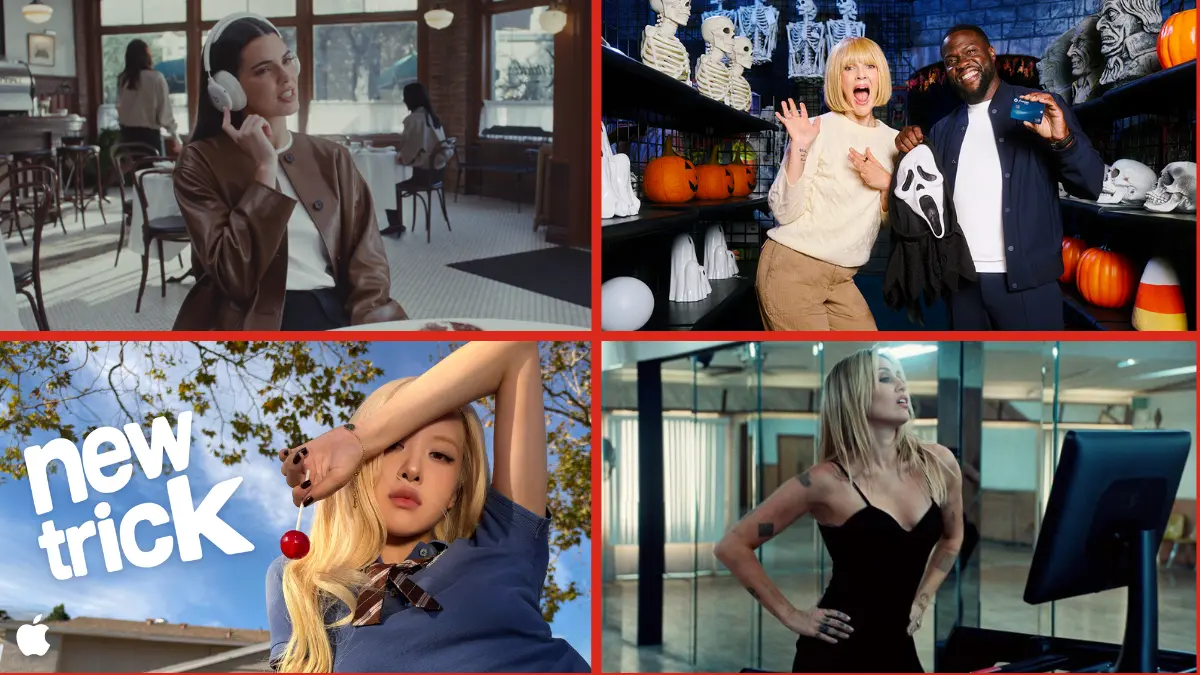
1. Chase | "Scream Halloween"
- The Talent: Drew Barrymore and Kevin Hart.
- The Premise: A comedic, self-aware parody celebrating the approaching 30th anniversary of the iconic horror film Scream.
- Strategic Objective: To promote Chase Freedom’s lucrative cash-back rewards structure ahead of the peak holiday shopping season.
Capitalizing on the lucrative intersection of nostalgia and seasonal marketing, Chase has reunited with original Scream star Drew Barrymore alongside comedian Kevin Hart. The spot leans heavily into the meta-horror tropes that made the original 1996 film a cultural touchstone, all while seamlessly weaving in the practical financial benefits of the Chase Freedom card. By timing the release ahead of the 30th anniversary of the cinematic franchise and aligning it with the commencement of Q4 holiday shopping, Chase has engineered a masterclass in behavioral targeting. The campaign uses humor to disarm viewers, ensuring that the core value proposition—cash-back rewards during a high-spend period—resonates without feeling didactic.
2. Stiller’s Soda | The Feline Transformation
- The Talent: Ben Stiller.
- The Premise: The acclaimed actor and director appears in a full-body cat costume.
- Strategic Objective: Brand introduction and category disruption for Stiller’s Soda.
In one of the most surreal and talked-about creative swings of the quarter, Ben Stiller fully committed to the absurd by donning a cat costume for Stiller’s Soda. Eschewing traditional celebrity endorsement tropes—where talent merely holds a product and recites a script—Stiller leans into total transformation. The campaign relies on scroll-stopping visual dissonance. By associating the beverage with an eccentric, high-production visual gag, the brand successfully carved out immediate space in a hyper-saturated beverage market, proving that genuine weirdness, when backed by A-star talent, remains an effective tool for disruption.
3. Beats by Dre | The Infinite Kendall Jenner
- The Talent: Kendall Jenner (multiplied).
- The Premise: A kaleidoscopic visual feast featuring Kendall Jenner surrounded by an army of Kendall Jenners.
- Strategic Objective: Product positioning for Beats headphones as the ultimate accessory for individualistic self-expression.
Beats has long mastered the art of lifestyle-driven hardware marketing, and its latest campaign featuring Kendall Jenner pushes visual multiplication to its aesthetic limits. By surrounding the supermodel and media mogul with clones of herself, the spot visually articulates the brand’s core ethos: standing out while fitting in, or finding one’s unique frequency in a crowded world. The immaculate art direction, combined with rhythmic editing and high-fashion styling, elevates the product from a consumer electronics device to an indispensable cultural artifact.
4. Campari | The Perfect Pour with Alan Cumming
- The Talent: Alan Cumming.
- The Premise: The charismatic Scottish-American actor assumes the role of the ultimate urbane bartender, meticulously crafting the quintessential Negroni.
- Strategic Objective: Premium positioning and cocktail-culture education for Campari.
Campari opted for sophisticated elegance, enlisting the theatricality and charm of Alan Cumming. Eschewing fast cuts and chaotic pacing, this spot moves at a deliberate, luxurious tempo. Cumming guides the viewer through the rituals of mixology with theatrical precision, positioning the bitter aperitif not merely as an ingredient, but as an experience. The campaign targets discerning consumers who view beverage consumption as an extension of lifestyle and culinary appreciation.
5. Apple | Rosé’s Cinematic Interlude
- The Talent: Rosé (BLACKPINK).
- The Premise: The global K-pop sensation strikes striking, cinematic poses that highlight the advanced camera and design capabilities of Apple’s latest hardware.
- Strategic Objective: Deepening brand resonance within Gen Z and millennial consumer segments through high-end aesthetic alignment.
Apple’s collaboration with BLACKPINK star Rosé is a masterclass in minimalist global marketing. Rather than relying on heavy exposition, the campaign lets framing, lighting, and Rosé’s magnetic screen presence do the heavy lifting. By fusing K-pop cultural capital with Apple’s sleek hardware design, the tech giant reinforces its status at the intersection of consumer technology and high art.
6. Peloton | Miley Cyrus in Motion
- The Talent: Miley Cyrus.
- The Premise: The pop icon delivers an energetic, sweat-inducing workout session tied to Peloton’s dynamic fitness ecosystem.
- Strategic Objective: Re-energizing brand engagement and reinforcing the community-driven, music-first ethos of Peloton workouts.
Peloton continues to leverage top-tier musical talent to drive its connected-fitness narrative. Miley Cyrus brings her signature raw energy and vocal powerhouse status to the platform, transforming a standard digital workout spot into an immersive music experience. The campaign underscores Peloton’s strategic pivot toward holistic lifestyle integration, positioning the hardware not as exercise equipment, but as a portal to cultural immersion and personal transformation.
7. M&M’s | The Spokescandies’ Dramatic Turn
- The Talent: The iconic M&M’s Spokescandies.
- The Premise: Animated characters engage in high-drama theatrical performances.
- Strategic Objective: Character-driven brand continuity and humorous engagement.
Mars continues to find fresh life in its legendary anthropomorphic confectionery. Eschewing human celebrity entirely, the latest M&M’s campaign turns the Spokescandies loose in melodramatic scenarios that parody prestige television and cinematic tropes. This self-referential humor keeps the century-old candy brand relevant and culturally agile across generations.
8. Target | In the Bag
- The Premise: A sleek, design-forward retail campaign celebrating the ubiquitous Target shopping bag as a symbol of everyday discovery.
- Strategic Objective: Reinforcing brand affinity and affordable joy during the fall retail ramp-up.
Target’s latest creative offering focuses on visual poetry, elevating the simple act of retail shopping into a vibrant lifestyle choice. By centering the campaign around the iconic red-and-white visual identity, Target reminds consumers of the emotional comfort and excitement associated with browsing its aisles.
Supporting Context & Metrics: The Science of Effective Advertising
While creative brilliance captures consumer imagination, modern media execution relies heavily on quantitative validation. In partnership with EDO—a TV measurement and data company that tracks consumer engagement behaviors in real-time—this week’s data reveals clear winners in terms of immediate viewer action and purchase intent.
Most Effective Ad of the Week: McDonald’s Brings the Heat
Securing the crown for the Most Effective Ad of the Week in partnership with EDO is a spicy, sensory-driven offering from McDonald’s.
The Data Behind the Heat
EDO’s analytical framework measures the immediate behavioral response of viewers—specifically tracking whether audiences search for, engage with, or purchase a product within minutes of an ad airing on television. The McDonald’s spot outperformed competitors by leveraging several key empirical drivers:
- Sensory Activation: Visual and auditory cues depicting spice and warmth triggered immediate visceral responses, directly correlating with subsequent search volume for limited-time menu items.
- Daypart Optimization: Strategic placement during high-viewership evening and weekend programming maximized reach among key demographic segments seeking convenient, comforting meal solutions.
- Clear Call-to-Action: By integrating frictionless digital ordering prompts with irresistible imagery, the fast-food giant minimized the friction between inspiration and transaction.
Official Statements and Industry Insights
As the advertising community prepares for upcoming industry convergences, thought leaders and creative directors have weighed in on the shifting paradigms of modern media consumption.
-
On the Rise of Meta-Humor and Nostalgia:
Industry analysts note that macroeconomic uncertainties and digital fatigue have driven a massive surge in comforting, nostalgic storytelling. Campaigns like Chase’s Scream parody demonstrate that consumers respond positively when brands acknowledge shared cultural memories. "When you combine 30 years of cinematic equity with immediate financial utility, you remove the cynicism traditionally associated with bank advertising," notes a senior creative strategist familiar with the campaign. -
On Celebrity Integration:
The days of passive celebrity endorsements are officially over. Modern campaigns demand active, often self-deprecating participation. Whether it is Ben Stiller inside a cat suit or Kevin Hart fleeing a cinematic killer, talent is increasingly expected to serve as co-creators of the brand’s narrative voice rather than mere mouthpieces. -
Looking Ahead to ADWEEK House: Advertising HQ:
Scheduled for October 5–8 in Midtown Manhattan, this year’s Advertising HQ summit aims to dissect these very phenomena. Bringing together the minds shaping advertising, commerce, and media for unscripted conversations, the event will serve as a crucible for debating how artificial intelligence, shifting privacy regulations, and changing consumer habits will dictate creative output through 2026 and beyond.
Future Outlook: What Q4 and Beyond Hold for the Industry
As we look toward the remainder of the fourth quarter and into the new fiscal year, several macro trends are poised to redefine the advertising landscape:
- The Fusion of Commerce and Content:
Shoppable television and instant-purchase integrations are no longer experimental; they are baseline expectations. Campaigns from brands like Target and Chase prove that inspiration must be immediately actionable, collapsing the funnel from minutes to milliseconds. - The Premiumization of Streaming and Linear Video:
With audiences split across ad-supported streaming tiers and traditional networks, advertisers are investing heavily in cinematic production values. If an ad looks indistinguishable from a Hollywood blockbuster or a prestige streaming series, viewers are significantly less likely to skip it. - The Imperative of Authenticity and Self-Awareness:
Consumers, particularly Gen Z and Millennials, possess a finely tuned radar for corporate insincerity. Campaigns that lean into humor, absurdity, and self-awareness—such as Stiller’s Soda or the M&M’s dramatic spots—succeed because they do not take themselves too seriously while remaining relentlessly committed to craft.
Ultimately, the current advertising climate proves that when bold creative vision aligns with rigorous data science and strategic timing, the commercial break transforms from an interruption into the most engaging part of the cultural conversation.