

Executive Overview
The intersection of artificial intelligence and commercial creativity has officially moved past the theoretical phase of industry debates and entered an era of rapid, practical execution. For years, advertising executives, agency leads, and brand custodians have wrestled with a polarized narrative regarding generative AI: would it democratize creative output, or would it commodify storytelling into a homogenized stream of algorithmic output?
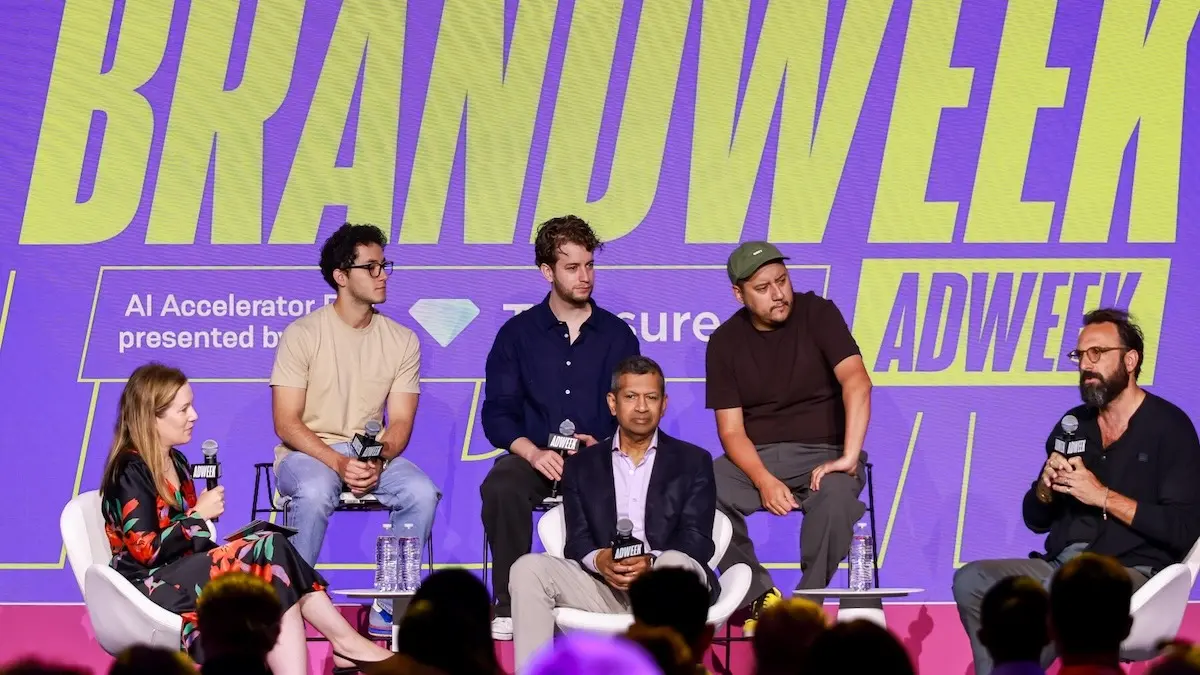
At Brandweek, this ongoing industry discourse took a tangible, real-world turn. During a high-profile fireside chat co-hosted by Higgsfield AI and ADWEEK, industry leaders gathered to unpack the current state of AI storytelling tools and announce the winners of the high-stakes Adathon competition. Featuring insights from Zoë Ruderman, Chief Content Officer of ADWEEK; Mahi de Silva, Co-founder and Chief Strategy Officer of Higgsfield AI; and Michael Ventura, author of Applied Empathy and Constellation Thinking, the session offered a definitive look at how creative workflows are being fundamentally restructured.
The consensus from the stage was clear: generative AI is no longer viewed as a novelty or a passing technological gimmick. Instead, it is maturing into a foundational infrastructure layer for modern content creation. By stripping away traditional physical constraints—such as astronomical production budgets, complex camera rigs, lighting setups, and location scouting—platforms like Higgsfield are giving creators a new linguistic medium. Yet, as demonstrated by the winning entry from Mexico City-based AI-R Studio, the true differentiator in the age of AI is not raw technological capability, but human discernment, meta-narrative, and the timeless art of storytelling.
Detailed Chronology: From Skepticism to Practical Integration
To understand where the creative industry stands today, one must examine the rapid trajectory of AI-native creative suites over the last two years. When Higgsfield launched approximately 17 months prior to the Brandweek showcase, the reception from the broader creative community was defined by skepticism. Many agency veterans initially categorized generative video and image tools as mere toys—novelties capable of generating surreal imagery or amusing loops, but fundamentally unsuited for high-end commercial production workflows.
However, as accessibility improved and foundational models matured, that perception underwent a seismic shift. Creators who spent months experimenting with these platforms began to realize their practical utility. Rather than serving as autonomous engines designed to replace human imagination, AI platforms emerged as force multipliers.
During the Brandweek conversation, Mahi de Silva contextualized this evolution by drawing a direct historical parallel. Thirty years ago, the advent of Adobe Photoshop sparked fierce industry debates. Traditionalists worried that digital manipulation would erode the authenticity of graphic arts, photography, and design. Today, digital editing tools are so deeply embedded in the creative process that nobody thinks twice about using them. AI, de Silva argued, is following that exact historical blueprint: it is simply the next evolutionary tool in the artist’s toolkit.
This operational shift was put to the ultimate test through the Adathon, a rigorous four-week competition hosted by Higgsfield in partnership with ADWEEK. The challenge was straightforward yet demanding: task agency and brand creatives with conceptualizing, producing, and finalizing a commercial entirely leveraging AI tools.
The submission window forced participants to grapple with the realities of AI production—moving past the initial honeymoon phase of prompt engineering into the disciplined realms of narrative pacing, visual continuity, and brand resonance. When the dust settled, the panel of judges—including Michael Ventura—awarded the top prize to AI-R Studio, the specialized AI production arm of Mexico City-based creative tech agency PicoLove.
The winning spot masterfully leaned into the anxieties of the industry itself. The commercial followed a frustrated traditional commercial director being instructed by an unseen voice to replace his AI-generated cast with "something more human." The spot brilliantly subverted expectations before closing with a sharp, self-aware tagline: "Don’t kill the AI stars. They’re just trying to improve your video."
Supporting Context & Metrics: The Mechanics of Modern AI Workflows
The rapid adoption of AI-native creative suites is driven by profound shifts in production economics, time-to-market pressures, and the democratization of technical skills. Traditional commercial production is notoriously resource-intensive. A standard 30-second spot often requires months of pre-production, international travel permits, expensive equipment rentals, multi-day shoots, and extensive post-production cycles involving rotoscoping, color grading, and visual effects compositing.
Platforms like Higgsfield are radically compressing these pipelines. By integrating ideation, spatial control, and video generation into cohesive workflows, these suites allow creators to iterate through dozens of visual concepts in a matter of hours rather than weeks.
The Productivity Multiplier
According to industry insights shared during the Brandweek panel, AI tools are fundamentally altering the cost-to-output ratio for agencies. Creatives are leveraging these platforms to produce high-fidelity storyboards, pitch decks, and mock commercials at a fraction of the traditional budget.
- Democratization of Technical Barriers: Historically, achieving hyper-specific visual styles required deep technical proficiency in specialized software (e.g., Blender, After Effects, Cinema 4D) or mastery over complex prompt engineering syntax. Modern AI-native platforms act as "booster seats," lowering the barrier to entry so that directors and copywriters can focus on conceptual execution rather than technical troubleshooting.
- Speed-to-Insight: In fast-moving consumer goods and digital-first marketing, agility is paramount. Brands can now test hyper-localized or culturally nuanced video concepts in real-time, adapting their messaging based on early audience engagement metrics before committing to major media buys.
Despite these efficiency gains, the economic shift introduces complex questions regarding agency billing models, labor dynamics, and intellectual property rights. As production timelines shrink from months to days, agencies are being forced to reevaluate how they price their services—transitioning away from billable hours toward value-based pricing models that prioritize strategic insight and creative direction over manual execution.
Official Statements & Expert Perspectives
The dialogue at the Brandweek fireside chat underscored a vital nuance: while the tools are evolving exponentially, the core philosophy guiding their use must remain anchored in human intent.
Mahi de Silva emphasized that the primary objective of Higgsfield is not to disintermediate human creators, but to expand their cognitive and expressive bandwidth.
"It’s not here to replace you," de Silva stated plainly during the session. "It is a new language for creators, and it’s a new form of expression—the ability for them to fully realize what’s in their brain without the physical limits of cameras, lighting, location, and budget."
De Silva further dismantled the myth of the professional "prompt engineer," arguing that the future belongs not to those who memorize arcane text commands, but to those who possess clear creative visions.
"It’s really like a booster seat for you—it helps you get in the game of AI without becoming a prompt engineer. It’s a tool for expression, right? It’s a platform that helps creators become more productive."
Michael Ventura, whose work in empathy and constellation thinking focuses heavily on human connection, offered a rigorous framework for evaluating AI-generated creative work. When reviewing the Adathon submissions, Ventura looked past the superficial polish of the rendering engines to evaluate the deeper editorial choices made by the creators.
"I think you’ve got to look at it first from how they’re using the tool," Ventura explained. "Once you get past that, what I’m interested in is: What’s the creative idea? Where’s the discernment? Can you see that someone made a good choice going this direction vs. that direction? And is there a story here?"
Ventura stressed that the submissions that rose to the top of the competition were not those that merely flexed technological muscle by generating hyper-realistic, physics-defying visuals. Instead, the winning entries succeeded because they harnessed the medium to tell coherent, emotionally resonant stories. Commenting on AI-R Studio’s winning submission, Ventura highlighted the brilliance of its meta-narrative:
"The thing I loved about their submission was that we were in on the joke. There was a meta-narrative at play."
Yet, even as AI platforms demonstrate unprecedented capabilities in rendering, interpolation, and style transfer, both leaders drew a hard line at the boundaries of what technology can achieve. De Silva offered a definitive conclusion regarding the limits of artificial intelligence:
"There is no replacement for the human art of storytelling. How you tell that story, the imagery of it, the voice behind the story—AI is never going to get there."
Future Outlook: The Next Frontier of AI in Advertising
As the advertising industry looks toward the remainder of the decade, the implications of the Brandweek showcase and the Higgsfield Adathon point toward a transformed creative landscape. The integration of generative AI into mainstream agency workflows is no longer a speculative horizon; it is an active operational reality.
1. The Rise of the Meta-Creative
As AI tools become ubiquitous, technical proficiency will become commoditized. When every agency has access to hyper-realistic video generation suites, technical execution will cease to be a competitive advantage. Instead, the industry will experience a hyper-inflation of visual noise. In this environment, the ultimate differentiator will be discernment—the human ability to curate, edit, imbue cultural nuance, and construct compelling meta-narratives, much like AI-R Studio did in their winning Adathon spot.
2. Redefining Agency-Client Partnerships
Clients are increasingly demanding faster iteration cycles, personalized video variations at scale, and localized content that speaks directly to micro-segments of their audience. AI-native creative suites will enable agencies to meet these demands without inflating headcount or production budgets. However, this will also require agencies to restructure their internal teams, fostering hybrid talent pools where traditional art directors, copywriters, and data scientists collaborate seamlessly alongside AI specialists.
3. Ethical Governance and the Preservation of Human Voice
As synthetic media becomes indistinguishable from live-action footage, the industry will face mounting pressure regarding transparency, copyright provenance, and brand safety. Maintaining authenticity will become a primary brand asset. As de Silva noted, while AI can synthesize pixels, lighting, and motion, the foundational empathy, lived experience, and idiosyncratic voice of human storytelling remain entirely unreplicable.
Ultimately, the takeaway from the Brandweek showcase is one of cautious optimism and creative empowerment. Artificial intelligence is not here to usurp the creator; it is here to remove the friction between imagination and realization. For the advertising industry, the challenge ahead lies not in fearing the machine, but in mastering the new language it offers—ensuring that human ingenuity remains firmly in the director’s chair.