

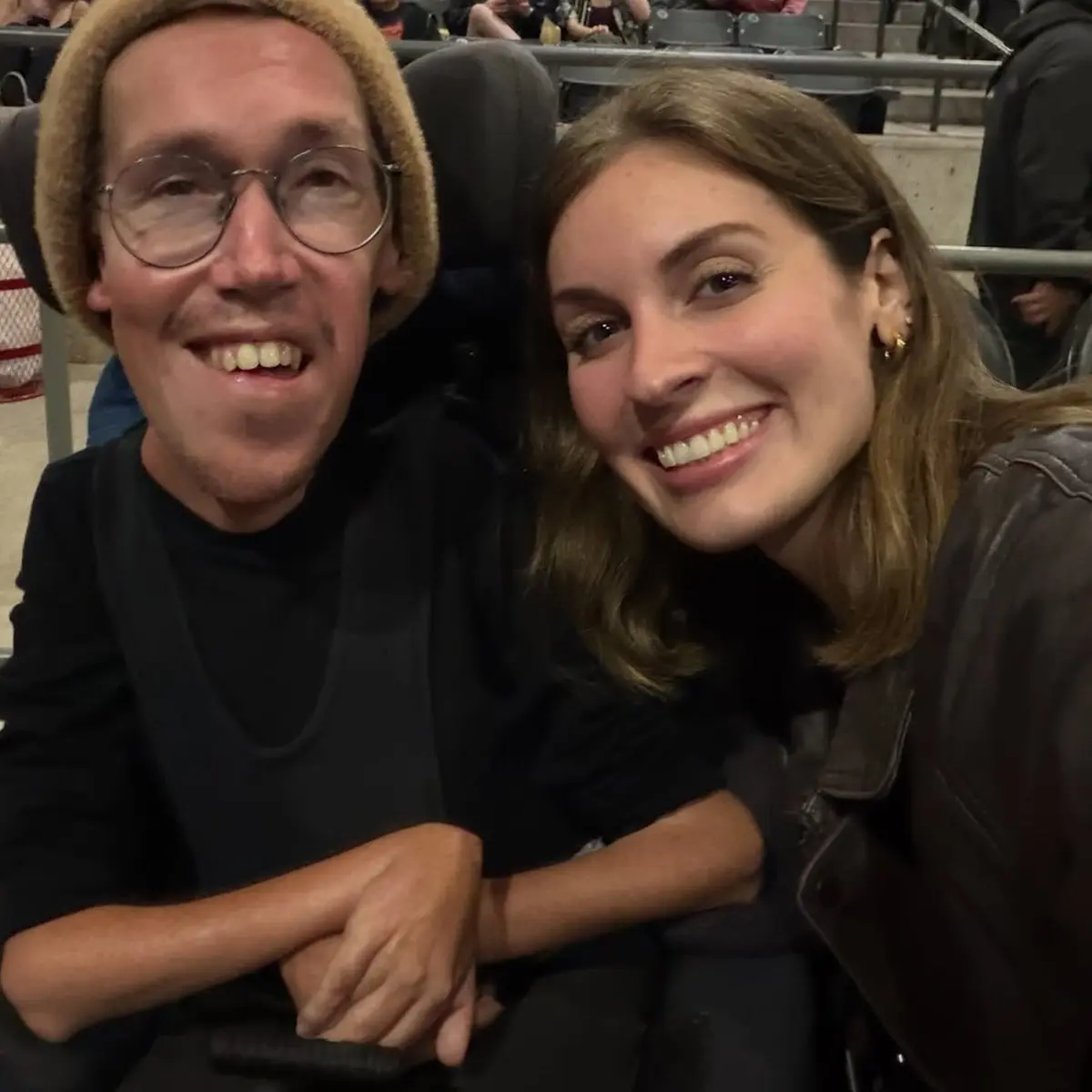
The intersection of digital content creation, personal vulnerability, and public scrutiny has reached a critical juncture with the recent announcement by popular social media influencers Shane and Hannah Burcaw. Widely recognized by their moniker “Squirmy and Grubs,” the couple—who have spent years cultivating a transparent digital footprint regarding Shane’s life with spinal muscular atrophy (SMA)—recently revealed that they are expecting their first child.
While the pregnancy announcement represents a joyous milestone following a protracted fertility journey, it has simultaneously ignited a fierce dialogue concerning child privacy, the ethics of family vlogging, and the dark underbelly of internet culture. In an era where digital creators routinely monetize their domestic lives, the Burcaws have chosen a path of deliberate restraint. Confronting anticipated ableist backlash and cyberharassment head-on, the couple has established strict boundaries designed to shield their unborn child from public exposure. This case study explores the broader cultural implications of influencer parenthood, the legal and ethical responsibilities of digital guardians, and the persistent societal prejudices faced by parents with physical disabilities.
Detailed Chronology of Events
The narrative arc leading up to the Burcaws’ pregnancy announcement and subsequent privacy framework is defined by calculated patience, resilience in the face of hostility, and a steadfast commitment to ethical digital stewardship.
The Fertility Journey and the Five-Month Reveal
For years, Shane and Hannah Burcaw—who married in 2020 after dating since 2016—documented the intimate realities of their relationship, addressing public curiosity with humor, candor, and advocacy. Behind the scenes, however, the couple navigated a complex and emotionally taxing fertility journey. Recognizing the intense public interest that would inevitably follow any news of a pregnancy, the couple opted for radical discretion.
Hannah, 30, reached her fifth month of pregnancy before the couple formally broke the news to their audience on September 8. This deliberate delay served a dual purpose: it ensured medical stability during the critical early stages of gestation and allowed the couple to formulate a comprehensive strategy for managing public engagement.
Anticipated Backlash and the Reality of Cyberharassment
The decision to withhold the news was also heavily influenced by the grim reality of digital bigotry. Shane, 34, lives with spinal muscular atrophy, a genetic disease that progressively destroys motor neurons. Throughout their tenure as public figures, the couple has routinely encountered ableist commentary questioning the validity, morality, and logistics of their relationship.
Anticipating that these prejudices would intensify exponentially upon announcing a pregnancy, Shane and Hannah prepared themselves for a wave of toxic discourse. Their predictions were confirmed almost immediately. Just one day after the September 8 announcement, Shane was forced to confront a particularly vitriolic direct message from an internet troll who wrote, "Hope you die soon." Demonstrating his characteristic resilience, Shane posted a screenshot of the message to his Instagram Stories on September 9, appending a heart-eyes emoji and wryly noting, "Glad to see our content reach new fans."
Formulating the Privacy Paradigm
Following the onslaught of hostile messages, the couple articulated their foundational parenting philosophy in a joint interview published on September 25. Rather than retreating entirely from the platforms that built their brand, the Burcaws established a clear boundary: while they intend to share their personal experiences as parents adapting to unique logistical challenges, their child will remain strictly off-limits. This approach places the child’s right to autonomy and privacy above the monetization metrics that typically govern influencer culture.
Supporting Context & Metrics: The Shifting Landscape of Influencer Parenthood
The Burcaws’ deliberate choice to protect their child’s privacy stands in stark contrast to the booming "family vlogging" economy, where children are often integrated into content creation from infancy. To understand the gravity of Shane and Hannah’s decision, one must examine the broader cultural, psychological, and statistical frameworks governing children on social media.
The Rise of "Sharenting" and Its Pitfalls
"Sharenting"—the habitual use of social media by parents to share copious details about their children’s lives—has become a defining characteristic of contemporary digital culture. According to digital privacy watchdogs, the average child has a substantial digital footprint compiled by their parents before they even reach toddlerhood.
While family channels frequently boast millions of subscribers and lucrative brand partnerships, legal and psychological experts are increasingly raising alarms regarding the long-term consequences:
- Informed Consent: Minors featured prominently in digital media cannot legally or cognitively consent to having their daily lives, developmental milestones, or private moments broadcast to millions of strangers.
- Security Risks: Publicly accessible geographic markers, school uniforms, routines, and identifying details expose children to targeted surveillance, identity theft, and stalking.
- Psychological Toll: Growing up under the constant gaze of a digital audience can distort a child’s sense of self, leading to anxiety, boundary issues, and a pervasive sense of performative existence.
The Ableist Stigma in Modern Parenting
Beyond general privacy concerns, the Burcaws navigate a specific matrix of societal bias directed at parents with disabilities. Historically, individuals with physical impairments have faced systemic ableism that erroneously equates physical disability with an inability to nurture, protect, or effectively parent a child.
Sociological research indicates that disabled parents are subjected to disproportionate scrutiny by both institutional bodies and the general public, often having to prove their competence in ways that able-bodied parents do not. Shane Burcaw’s candid discussions regarding the hostility he faces underscore how deeply entrenched these antiquated prejudices remain. By choosing to step into fatherhood openly while firmly guarding their child’s identity, the Burcaws are actively dismantling these harmful stereotypes through lived example.
Official Statements and Personal Perspectives
The philosophical framework guiding the Burcaws’ approach to parenthood is rooted in parental responsibility and ethical digital consumption. Below are key excerpts from their public disclosures detailing their rationale:
Shane Burcaw on Parental Responsibility:
"We felt like, we are bringing another human into the world; they can’t speak for their privacy right now, and so that as parents is our responsibility. So, we wanted to take sharing of all this with the world really carefully so that we’re being deliberate and intentional and make sure that what we are sharing aligns with our values."Shane Burcaw on Anticipated Hostility:
"There are going to be a number of people, a big number of people, who are not happy about this pregnancy announcement, and that’s another reason we haven’t wanted to share with the world. There are going to be horrible, horrible people in the comments and in the message boards and in our emails telling us that we are making the worst mistakes of our lives, [and] that I cannot and should not be a father because of my disability."Hannah Burcaw on the Reality of Social Media:
"Social media is not always great. We definitely don’t want to subject a child to the kinds of comments that we get. We know what we’ve signed up for, and we’re excited to share our parenting journey, and how we make it work and all of that. But at the same time, our main goal is just privacy for the baby."
Future Outlook: Setting a New Standard for Digital Families
As Shane and Hannah Burcaw prepare to welcome their child, their trajectory signals a potential paradigm shift within the influencer ecosystem. For over a decade, the prevailing commercial incentive dictated that personal milestones—weddings, pregnancies, and child-rearing—must be fully monetized and laid bare for public consumption.
However, a growing counter-movement among millennial and Gen Z creators emphasizes digital boundaries. By refusing to leverage their child as a content asset, the Burcaws are demonstrating that substantial audience engagement can coexist with rigorous privacy protections. Their journey challenges both cyberbullies and industry norms, proving that authentic advocacy and personal protection can go hand in hand.
In the years to come, the success of the Burcaws’ boundary-setting may serve as a blueprint for other public figures navigating the treacherous waters of digital parenting. As conversations surrounding child data privacy, legislative protections for minor influencers, and the destigmatization of disabled parenthood continue to evolve, Shane and Hannah stand at the vanguard—redefining what it means to be public advocates while fiercely guarding their most sacred, private role: parents.