

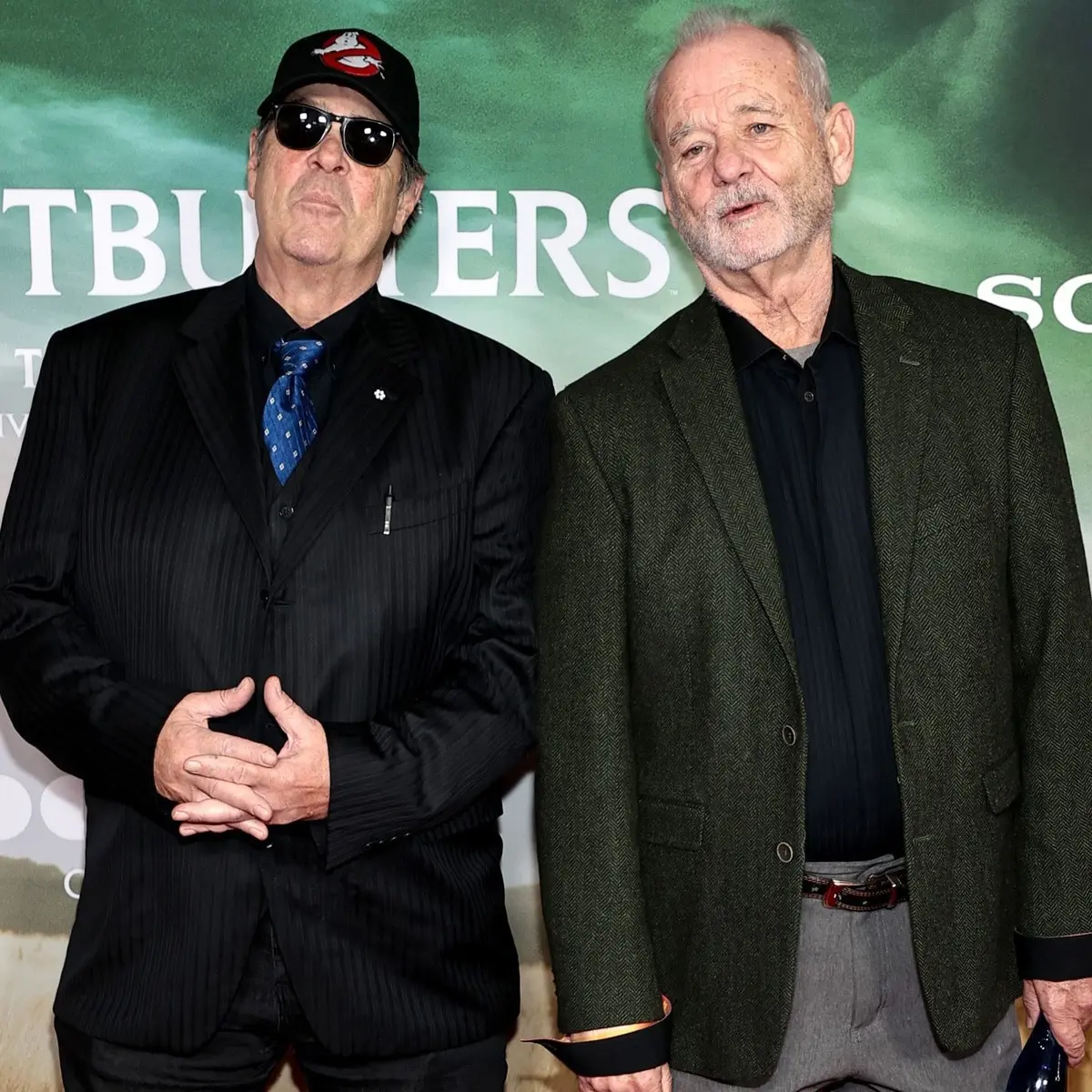
Decades after capturing the public imagination with proton packs, unlicensed nuclear accelerators, and a towering, sailor-suited confectionary nightmare, the cultural footprint of Ghostbusters remains remarkably indelible. Recent disclosures from franchise co-creator Dan Aykroyd, alongside a comprehensive look back at the chaotic, high-stakes production of the 1984 original film, offer a vivid window into the lightning-in-a-bottle phenomenon that birthed a multi-generational sci-fi comedy empire.
From late-night police motorcycle joyrides through a closed Central Park to impromptu script rewrites by Bill Murray and the near-casting of legendary alternative leads, the genesis of Ghostbusters is a masterclass in cinematic improvisation and high-stakes gamble. As recent franchise entries—including Ghostbusters: Afterlife (2021) and Ghostbusters: Frozen Empire (2024)—continue to expand the paranormal universe initiated by Ivan Reitman, examining the foundational roots of the property reveals how a deeply unorthodox supernatural premise evolved into a cornerstone of American pop culture. This retrospective synthesizes Aykroyd’s recent reflections on his decades-long creative partnership with Bill Murray, contextualized against the exhaustive behind-the-scenes chronology of the original cinematic milestone.
Detailed Chronology: From Spiritualist Roots to the Big Screen
The journey of Ghostbusters spans generations of family history, sudden tragedy, fierce studio negotiations, and a grueling 13-month production schedule that tested the limits of 1980s special effects technology.
Family Lore and the Genesis of the Concept
Dan Aykroyd’s affinity for the paranormal was not merely a comedic whim; it was a birthright. As the great-grandson of dentist and spiritualist Dr. Sam Aykroyd and the son of Peter H. Aykroyd—author of A History of Ghosts—Dan grew up immersed in literature concerning mediumship, transmediumship, and the survival of human consciousness after death.
In the late 1970s and early ’80s, Aykroyd married his deep-seated family fascination with the real-world parapsychological investigations of J.B. Rhine, William G. Roll, and the Maimonides Dream Lab, blending them with the snappy ghost comedies of the 1930s. He originally conceived the script as a vehicle for himself and his Saturday Night Live castmate and close friend, John Belushi.
The Shadow of Tragedy and the Shift in Personnel
The production’s early trajectory suffered a devastating blow on March 5, 1982, when John Belushi died of a drug overdose at the Chateau Marmont in Los Angeles. Aykroyd was actively typing a line for Belushi when the office teleprinter alerted him to the tragedy. Demonstrating profound composure under heartbreaking circumstances, Aykroyd rushed to inform Belushi’s wife, Judy Jacklin, beating the breaking news cycle just as newspaper delivery trucks hit the streets.
With the original vision shattered, the script lay dormant until Aykroyd pivoted, envisioning Bill Murray—who had joined Saturday Night Live in its second season—taking over the role originally earmarked for Belushi. Aykroyd brought the project to director Ivan Reitman, who initially encountered a much grander, nearly unfilmable treatment involving competing groups of Ghostbusters operating across multiple dimensions and outer space. Reitman and associate producer Joe Medjuck insisted the concept be scaled back to "inner space," setting the action squarely within the urban grit of Manhattan.
Securing the Greenlight and Assembling the Dream Team
With Harold Ramis—who had collaborated with Murray and Reitman on Stripes (1981)—signed on to co-write and star, the creative trio pitched the project to Columbia Pictures President Frank Price in May 1983. Estimating a $30 million budget, Price greenlit the picture with a strict mandate: a theatrical release in June 1984. This left the team a compressed 13-month window to conceptualize, film, animate, and score a movie that relied heavily on untested special effects.
Casting shifts continued to shape the film’s identity. Aykroyd initially wanted his Trading Places co-star Eddie Murphy to round out the core team as Winston Zeddemore. However, Murphy was unavailable, choosing instead to star as Axel Foley in Beverly Hills Cop (1984)—a decision that led to Murphy’s film narrowly outpacing Ghostbusters at the box office. Ernie Hudson ultimately stepped into the role of Zeddemore, though a late script revision drastically reduced the character’s early screen time, a creative choice that director Ivan Reitman defended by framing the character as the audience’s grounded, relatable surrogate.
Meanwhile, Sigourney Weaver successfully campaigned for the role of cellist Dana Barrett, pitching the memorable transformation in which her character is possessed and morphs into a demonic terror dog. Rick Moranis stepped in to play the hapless accountant Louis Tully after John Candy passed on the role.
Supporting Context & Metrics
The financial and operational metrics of the original Ghostbusters production underscore its status as an unprecedented high-risk, high-reward enterprise.
- Production Timeline: Exactly 13 months from greenlight (May 1983) to theatrical release (June 1984).
- Initial Box Office Gross: Grossed approximately $229 million during its initial 1984 run, making it one of the highest-grossing comedies of all time. Subsequent re-releases pushed its lifetime global gross higher.
- Special Effects Constraints: Richard Edlund’s Boss Film Corporation handled visual effects because George Lucas’s Industrial Light & Magic was fully committed to Indiana Jones and the Temple of Doom. Roughly 80 percent of the visual effects shots were completed on the first take due to time constraints.
- The "Ghostbusters" Trademark: Columbia Pictures temporarily faced legal hurdles because Taft Broadcasting owned the rights to the name via a 1970s CBS live-action children’s show titled The Ghost Busters, though studio legal teams successfully secured the title.
- Iconic Locations: The exterior of the Ghostbusters headquarters was filmed at Firehouse, Hook & Ladder Company 8, located at 14 North Moore Street in Tribeca, New York City—a site that remains a global destination for fans. Dana Barrett’s Art Deco apartment building was shot at 55 Central Park West.
Official Statements and Behind-the-Scenes Revelations
The enduring bond between the film’s primary architects was highlighted anew when Dan Aykroyd took to Instagram to celebrate Bill Murray’s 76th birthday. Reflecting on their decades of collaboration, Aykroyd shared a daring anecdote from the production of Ghostbusters II (1989):
"So many adventures over the years," Aykroyd wrote. "One night shooting GB2, we appropriated two fully equipped police motorcycles from the movie’s motor pool and spent an hour chasing each other around a closed Central Park with full lights and sirens."
When asked if they faced disciplinary consequences for the unauthorized late-night pursuit, Aykroyd quipped: "No consequences. After all, we were Ghostbusters."
Aykroyd also praised Murray’s extraordinary instincts during the production of the 1984 original. Recalling a quiet moment at Aykroyd’s home in Woodrow Wilson Drive above Los Angeles midway through filming, Aykroyd noted:
"Bill Murray and I went up to my house… He said, ‘You have written, and we are in probably, what’s going to be one of the biggest comedies of all time.’ I said, ‘Well, Bill, we’re only halfway through. How do you know?’ As for Murray’s response? ‘I know.’ And he knew. His instincts are amazing."
Murray’s improvisational brilliance defined his character, Dr. Peter Venkman. According to Aykroyd, Murray’s lines were largely born on the spot during principal photography. Despite studio handlers attempting to keep the charismatic actors on a tight leash while roaming the streets of Manhattan, Murray viewed his freedom as essential to the film’s anarchic charm:
"I didn’t get into this position by being like a stiff sitting on the set in a folding chair," Murray reflected in a 1988 interview. "I did it by walking around on the streets and stirring things up."
Future Outlook
As the Ghostbusters intellectual property continues to thrive under the stewardship of Sony Pictures and legacy filmmakers like Jason Reitman, the franchise has successfully transitioned from a standalone 1980s comedy experiment into a durable cinematic universe.
The successful box-office performances of Ghostbusters: Afterlife and Ghostbusters: Frozen Empire demonstrate that audiences retain an insatiable appetite for the nostalgic blend of supernatural thrills, blue-collar camaraderie, and dry comedic delivery established by Aykroyd, Murray, Ramis, and Reitman. While the physical landscape of New York City has evolved significantly since 1984—and vintage production methods have given way to advanced digital workflows—the cultural blueprint laid down by the original cast remains unmatched.
As long as fans continue to make pilgrimages to the Tribeca firehouse and quote Venkman’s deadpan quips, the enduring legacy of cinema’s premier paranormal exterminators will continue to resonate across generations.