In an increasingly fragmented digital economy, the ability to capture, hold, and monetize human attention has emerged as the definitive competitive advantage for online enterprises. While venture capital and complex software suites often dominate discussions of corporate scaling, historical and contemporary business metrics reveal a more fundamental driver of enterprise value: high-performance copywriting.
Recent case studies from elite digital marketing agencies and media conglomerates—including the operational blueprints utilized by Copyblogger, a multi-million-dollar digital training and community platform—demonstrate that written marketing channels remain the primary engine for sustainable customer acquisition. Unlike high-cost paid media campaigns that suffer from ad fatigue and escalating Customer Acquisition Costs (CAC), strategic copywriting across blog posts, social media channels, and email newsletters generates compounding organic traffic and high-lifetime-value (LTV) customer conversions.
This investigative report analyzes the operational frameworks, algorithmic optimizations, and psychological principles that elevate copywriting from a creative writing exercise into a predictable, revenue-generating engine. By shifting focus from literary eloquence to quantitative return on investment (ROI), modern copywriters and enterprise marketing leaders are restructuring how digital products are built, marketed, and sold.
Detailed Chronology: The Blueprint for Modern Copywriting Mastery
The evolution of a performance copywriter from a novice content creator to a high-earning strategic asset follows a structured, multi-phase methodology. This chronological pipeline bypasses traditional academic writing models in favor of market-tested feedback loops.
+--------------------------------------------------------+
| Phase 1: Customer Alignment & Qualitative Research     |
| - Identify core anxieties, aspirations, and objections |
+--------------------------------------------------------+
                           |
                           v
+--------------------------------------------------------+
| Phase 2: Competitive Intelligence & Creative Archiving |
| - Analyze historical competitor ads and build swipe files|
+--------------------------------------------------------+
                           |
                           v
+--------------------------------------------------------+
| Phase 3: Operational Pipeline Systematization          |
| - Implement keyword mapping and search intent checks  |
+--------------------------------------------------------+
                           |
                           v
+--------------------------------------------------------+
| Phase 4: Sandboxed Execution & Product Testing        |
| - Launch niche micro-projects to test purchase intent  |
+--------------------------------------------------------+
Phase 1: Customer Alignment and Qualitative Research
The foundational phase of high-performance copywriting does not involve writing. Instead, it requires extensive qualitative research designed to map the psychological landscape of the target demographic. Before a single sentence is drafted, the copywriter must isolate:
The acute, immediate pain points keeping the customer awake at night.
The unspoken internal desires and ultimate goals of the buyer.
The specific, logical, and emotional objections preventing a purchase.
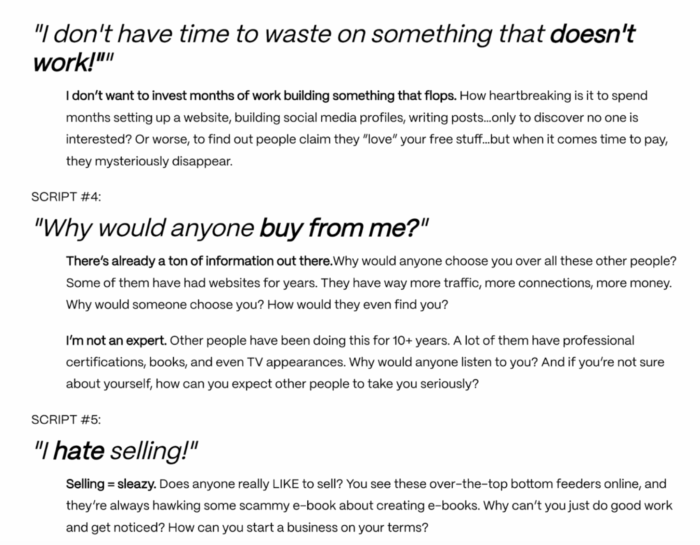
To execute this, successful copywriters utilize direct sales feedback loops. In established organizations, this involves interviewing front-line sales representatives to catalog recurring objections. In early-stage or client-facing environments, writers deploy data-scraping protocols on digital town squares—specifically Reddit and niche Facebook groups—to extract raw, unfiltered consumer sentiment.
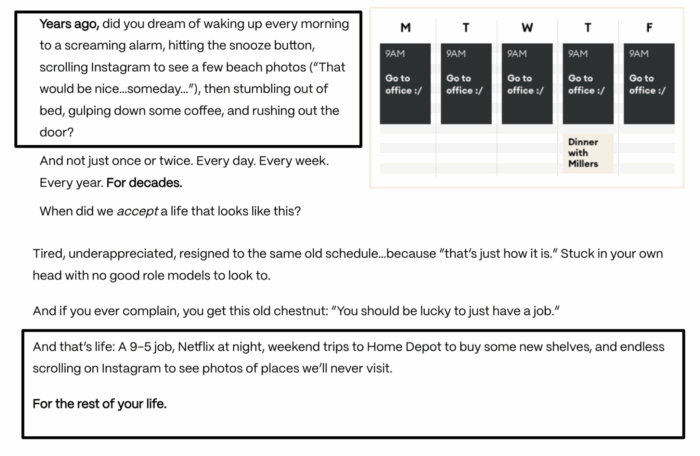
By feeding transcripts of sales calls and community discussions into advanced large language models (LLMs), copywriters can categorize pain points and generate highly specific messaging matrices. For example, in the personal finance space, marketing campaigns such as Ramit Sethi’s Earnable course succeed not by promising generic wealth, but by mirroring the exact daily realities of their audience: the monotony of a 9-to-5 job, routine weekend trips to hardware stores, and the passive consumption of streaming media.
Phase 2: Competitive Intelligence and Creative Archiving
Once the target audience’s psychological profile is mapped, copywriters pivot to historical market analysis. Industry leaders rarely construct campaigns in a vacuum; instead, they analyze the long-running, validated campaigns of direct and indirect competitors.
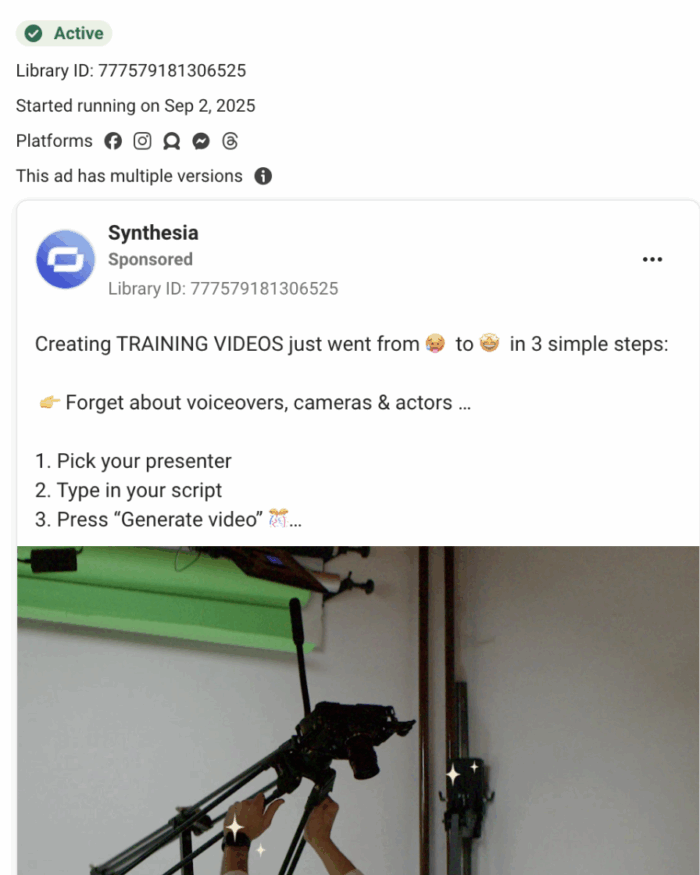
Using transparency tools like the Meta Ad Library and LinkedIn Ads Directory, writers identify active promotional creatives. The core operational thesis is simple: ads that have run continuously for months or years are inherently profitable.
For instance, video creation platforms like Synthesia consistently run ad variations highlighting the logistical friction and high costs of traditional video production. Similarly, customer relationship management (CRM) systems like HubSpot and Close run ad creatives addressing the risk of lost deals due to disorganized databases. By archiving these validated hooks, copywriters compile "swipe files"—curated digital databases of successful marketing structures—to guide their own creative work.
Phase 3: Systematizing the Creative Pipeline
To eliminate the unpredictability of "writer’s block" and ensure consistent production quality, elite copywriters establish rigid, step-by-step writing processes. A standard three-step workflow for digital publication includes:
Keyword and Intent Mapping: Identifying high-value search terms and aligning the content directly with the searcher’s specific goal (e.g., informational, investigational, or transactional).
Structural Outlining: Constructing a hierarchical skeleton of headings and subheadings designed to maintain high readability and logical flow.
Conversion and Pain Point Optimization: Writing the draft and auditing it against a strict checklist: Does it directly address the primary customer pain point? Are all potential objections systematically dismantled? Is there a clear, low-friction Call to Action (CTA)?
Phase 4: Sandboxed Execution and Product Testing
The final phase of mastery involves practical execution in real-world market sandboxes. High-performing copywriters often incubate their skills by launching independent digital properties, such as niche affiliate websites, dropshipping storefronts, or micro-SaaS tools built via low-code platforms.
This sandboxed execution teaches a critical business lesson: the difference between writing for traffic and writing for purchase intent. A classic industry case study involves a copywriter launching a drop-shipping business for high-end clocks. Content targeted at "how to repair" clocks generated high traffic but zero sales, whereas copy targeted at "buying guides" yielded immediate revenue. This distinction is vital for maximizing client ROI.
Supporting Context & Metrics: Measuring the Hard ROI of Written Media
The primary differentiator between amateur content creation and elite copywriting is the integration of quantitative performance metrics. Historically, creative copy was treated as a subjective expense. In the modern digital landscape, it is an auditable revenue driver.
+---------------------------------------------------------------------------------+
|                              COPYWRITING ROI METRICS                            |
+-------------------------+-------------------------------------------------------+
| Metric Category         | Measurement Methodology                               |
+-------------------------+-------------------------------------------------------+
| Social/Ghostwriting     | Lead-quality audits, "How did you hear about us?"     |
|                         | attribution, executive-level comment tracking.        |
+-------------------------+-------------------------------------------------------+
| Organic Blog Content    | GA4 conversion pipelines, click-through rates (CTR)   |
|                         | on CTAs, assisted conversion values.                  |
+-------------------------+-------------------------------------------------------+
| Sales Funnels & Email   | A/B testing open rates, direct attribution links,     |
|                         | churn reduction, and revenue-per-subscriber.          |
+-------------------------+-------------------------------------------------------+
Deconstructing Vanity Metrics vs. Commercial Conversion
In social media channels, such as LinkedIn or X (formerly Twitter), copywriters frequently optimize for raw engagement—likes, reposts, and impressions. However, financial audits reveal that high engagement does not automatically translate to commercial health.
To drive true ROI, copywriting must attract qualified decision-makers. For instance, a B2B SaaS company selling enterprise software benefits far more from five comments left by corporate Vice Presidents than from 500 likes from entry-level professionals.
To track this accurately, modern organizations implement qualitative attribution forms on product demo sign-ups, asking buyers directly: "How did you hear about us?" This qualitative data often reveals that low-reach, highly targeted thought-leadership posts are the primary drivers of high-value pipeline opportunities.
Technical Implementation of Conversion Analytics
For organic blog channels, sophisticated marketing operations utilize conversion tracking in platforms like Google Analytics 4 (GA4). Rather than evaluating a writer’s performance solely on page views or keyword rankings, companies track specific conversion actions:
Newsletter sign-ups.
Lead magnet downloads.
Product demo registrations.
Direct e-commerce purchases.
By applying attribution models to these actions, marketing teams can assign direct dollar values to individual written assets, justifying higher retainer fees for skilled copywriters who can write copy that ranks well and converts searchers into buyers.
Official Statements and Strategic Insights
Industry leaders emphasize that the future of digital customer acquisition relies on a balanced integration of human intuition, strategic positioning, and analytical tools.
In a strategic brief regarding the evolution of educational communities, the leadership team at Copyblogger Academy—headed by digital growth experts and personal branding specialists like Charles Miller—noted:
"The challenge for modern entrepreneurs is not access to information; it is the isolation of building in a vacuum. The copywriters who command six- and seven-figure incomes are those who subject their work to continuous peer review and expert critique before deploying it to live markets."
Furthermore, as artificial intelligence tools like ChatGPT and Claude become ubiquitous, leading marketers emphasize that generative AI should be used for research and refinement, rather than complete content generation. Experienced copywriters use AI to:
Accelerate Pain Point Research: Asking models to synthesize long threads of customer feedback into organized lists of concerns.
Refine Sentence Phrasing: Testing multiple structural variations of a headline to maximize clarity and punch.
Uncover Expert Context: Prompting AI to locate verified quotes and real-world examples from industry experts on platforms like LinkedIn to back up claims.
This strategic positioning is supported by investment philosophies from thought leaders like Naval Ravikant, who famously advised professionals to "be impatient with action, but patient with results." Applied to copywriting, this principle highlights that while daily output must be aggressive and consistent, the compounding return on written digital assets often takes months of market testing to fully realize.
Future Outlook: The Intersection of AI, Niche Communities, and the Creator Economy
As generative AI commoditizes generic, low-tier writing, the copywriting industry is undergoing a major structural shift. The future belongs to writers who can combine technical execution with deep psychological insight and strategic distribution.
                 TRADITIONAL VS. EMERGENZ FUTURE COPYWRITING

   [Traditional Model]                      [Future Paradigm]
   - Focus: Eloquence & Word Count          - Focus: Conversion & Revenue (ROI)
   - Method: Staring at blank page          - Method: AI-assisted research & outline
   - Distribution: Single channel           - Distribution: Multi-platform adaptation
   - Feedback: Subjective opinions          - Feedback: Hard data & peer masterminds
The Commoditization of Average Content
The rapid development of LLMs means that search engines and social platforms are being flooded with automated, generic text. Consequently, consumers are developing a strong resistance to superficial content.
This trend is driving up the value of high-context, personality-driven, and data-supported copywriting. Writers who rely on personal stories, primary research, and verified case studies will see their distribution and conversion rates increase, while those producing generic SEO filler will lose visibility.
The Rise of Specialized Micro-Communities
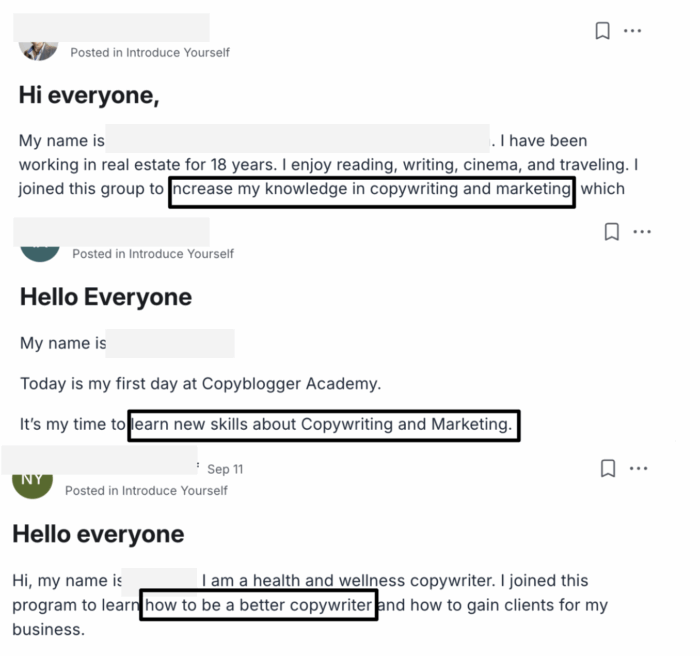
To navigate this shifting landscape, aspiring and established copywriters are moving away from isolated freelancing and joining high-leverage professional networks. Shared educational platforms and collaborative feedback loops—such as those found in specialized academies—are becoming essential hubs for career advancement. These environments allow writers to:
Exchange warm client referrals and job opportunities.
Conduct live A/B testing of headlines and sales pages within a supportive peer group.
Receive direct coaching from senior copywriters with proven track records.
Ultimately, the democratization of low-code development tools, advanced AI assistants, and digital distribution networks has made copywriting the most leverageable skill set for modern digital builders. Whether launching an independent software product, growing an agency, or building an educational platform, the entrepreneurs who master the art of turning written words into cash will continue to lead the digital economy.