In the digital economy, the line between eloquent prose and commercial performance has never been more distinct. Historically, copywriting was categorized alongside creative writing—evaluated on style, syntax, and narrative elegance. Today, a paradigm shift has occurred: the most successful copywriters are not measured by the beauty of their prose, but by the measurable revenue generated by their words.
This investigative analysis explores the operational framework that transforms written communication into a high-yield growth asset. Drawing on the strategies of industry veterans—including the leadership behind the seven-figure educational platform Copyblogger—this report deconstructs the mechanics of customer acquisition through written channels.
The findings indicate that sustainable growth is not driven by viral vanity metrics, but by a structured system of customer research, competitor intelligence, algorithmic optimization, and rigorous return on investment (ROI) tracking. For businesses and individual practitioners alike, mastering this system is no longer optional; it is the primary driver of digital customer acquisition.
Detailed Chronology: The Lifecycle of a High-Conversion Campaign
To understand how high-performing copy is created, we must look at the step-by-step workflow of elite practitioners. Rather than treating writing as an act of sudden inspiration, industry leaders use a chronological, data-driven process that minimizes risk and maximizes conversion rates.
Phase 1: Deep-Dive Discovery and Customer Synthesis
The lifecycle of any successful marketing campaign begins long before a single word is drafted. The foundational step is customer synthesis, which involves extracting the exact psychographic profile of the target audience.
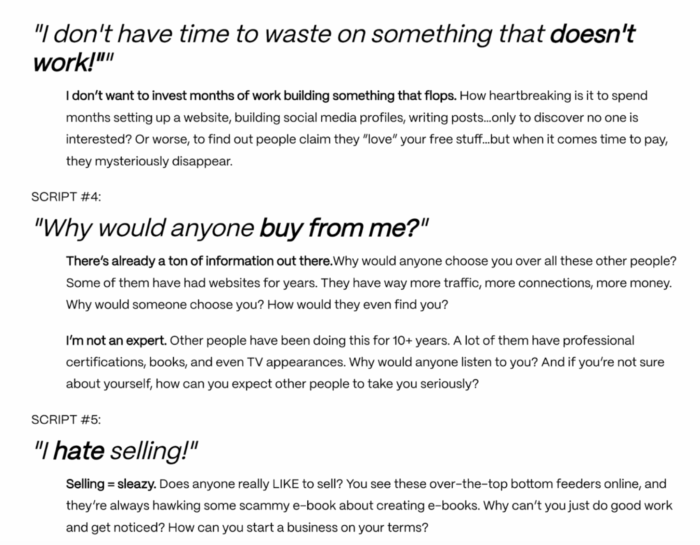
Transcription Analysis: Modern copywriters bypass traditional surveys. Instead, they analyze recorded sales calls. By processing transcripts through large language models (LLMs), writers can identify recurring objections, exact phrasing, and emotional friction points.
Digital Ethnography: Writers immerse themselves in organic communities on platforms like Reddit and Facebook. By observing unmoderated discussions, copywriters learn how prospects talk about their struggles without marketing bias.
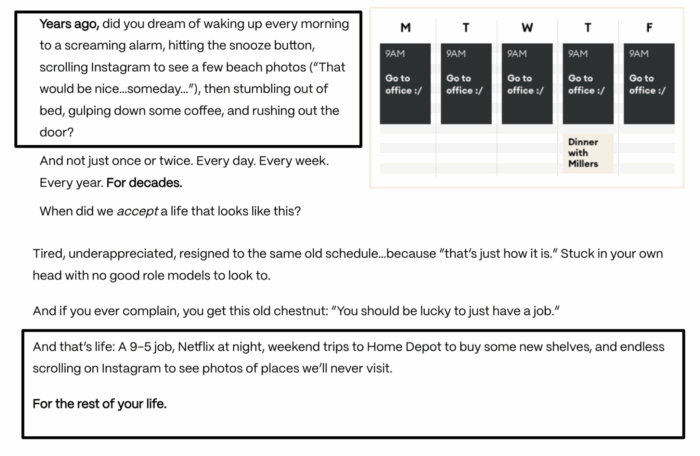
Synthesizing the "Reality Gap": The goal is to document the prospect’s current reality (e.g., working a tedious 9-to-5 job, spending weekends on routine chores, or doomscrolling on social media) and contrast it with their desired future state.
Phase 2: Competitor Intelligence and Ad-Library Audits
Once the customer profile is established, copywriters conduct a competitor intelligence audit to understand the current market landscape.
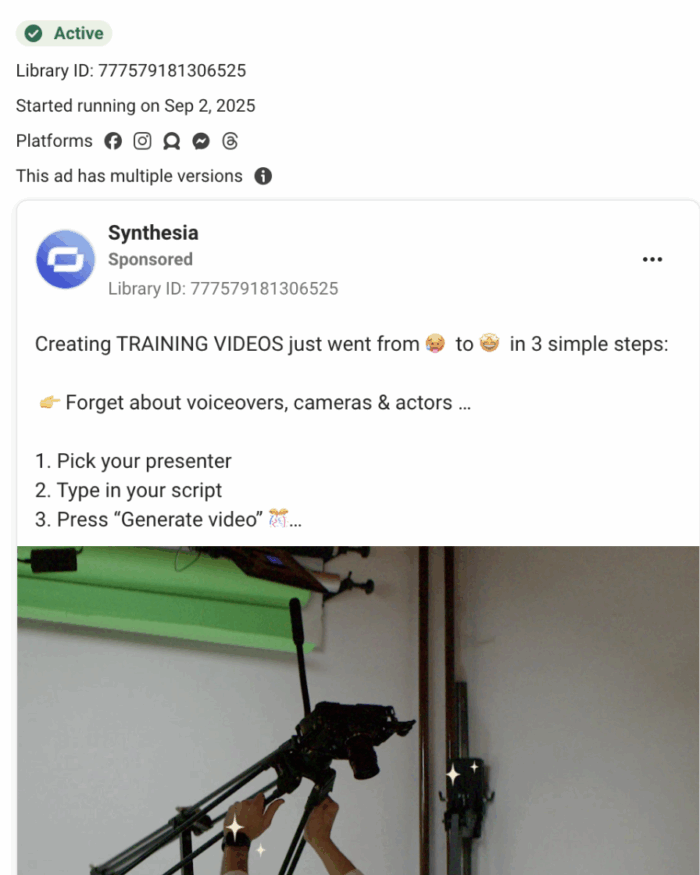
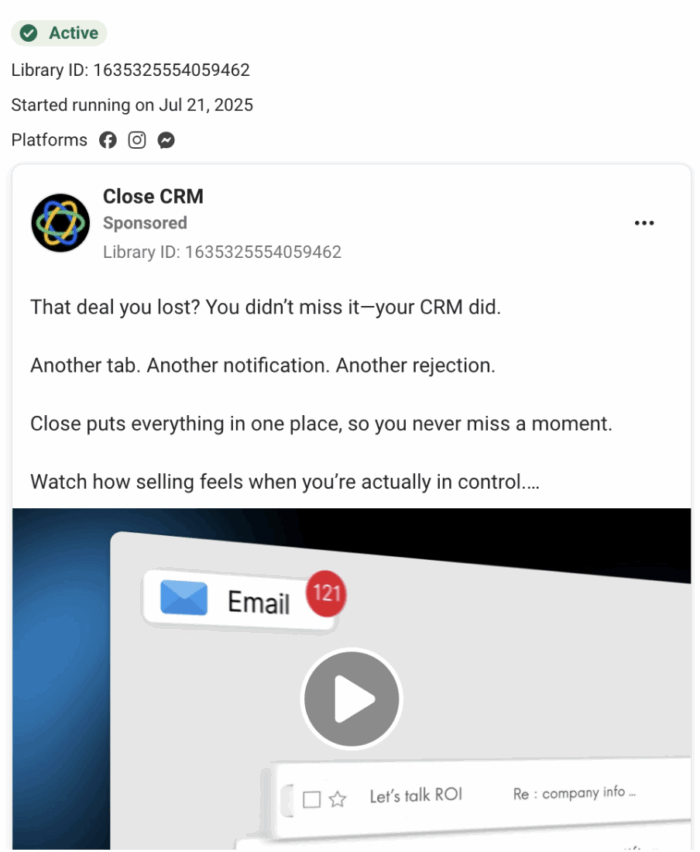
The Duration Heuristic: Using the Meta (Facebook) and LinkedIn Ad Libraries, copywriters identify active campaigns within their niche. The key metric here is duration. An advertisement that has run continuously for months is highly likely to be profitable.
Angle Extraction: Rather than copying the text directly, writers analyze the underlying psychological angles of these long-running ads. For example, a software-as-a-service (SaaS) competitor might focus on "the anxiety of messy, lost data" rather than "efficient database management."
Phase 3: Structural Outlining and Draft Iteration
With research and competitor data in hand, the copywriter moves to structural outline creation. This phase is designed to eliminate writer’s block by using a strict assembly process.
The Skeleton Draft: The writer maps out the logical flow of the piece—whether it is a blog post, an email sequence, or a landing page. This skeleton explicitly highlights where key pain points, objections, and calls to action (CTAs) will live.
The Rough Build: The writer fills in the structure without self-editing. The focus is entirely on flow, argument strength, and clarity.
The Conversion Polish: The final pass focuses on cutting unnecessary words, improving readability, and making sure the call to action is clear and compelling.
Phase 4: Algorithmic Tailoring and Distribution
High-conversion copy must be tailored to the specific platform where it will live. Different channels require distinct structural frameworks.
Search Engine Optimization (SEO): For search-driven copy, writers focus on search intent. The copy must directly answer the user’s search query while naturally incorporating secondary keywords to satisfy search engine crawlers.
Social Platforms (e.g., LinkedIn, X): On social feeds, the focus shifts to the "hook"—the first 1-2 lines designed to stop the user from scrolling. The style is conversational, highly structured for mobile screens, and focused on thought leadership.
Phase 5: Post-Launch Performance Optimization
The process does not end when the content goes live. Continuous testing and optimization are required to keep conversions high.
A/B Testing: Writers test headlines, email subject lines, and CTA buttons to see which versions perform best.
Funnel Analysis: Marketers track the customer journey from the initial click to the final sale, identifying and fixing drop-off points in the copy.
Supporting Context & Metrics: Measuring the Economics of Copy
To justify premium pricing, copywriters must connect their work directly to business revenue. The transition from a cost-center writer to a revenue-generating partner requires a deep understanding of conversion tracking and attribution metrics.
Copywriting Channel
Key Performance Indicator (KPI)
Primary Metric
Secondary Metric
SEO / Editorial Blog
Conversion Rate to Lead/Customer
Attributed Revenue (GA4)
Organic Search Traffic
Social Ghostwriting
Target Audience Engagement
Comments from Ideal Customers
Impressions / Shares
Direct-Response Landing Page
Sales Conversion Rate
Average Order Value (AOV)
Bounce Rate / Time on Page
Email Marketing Funnel
Revenue per Subscriber
Click-Through Rate (CTR)
Open Rate
The Vanity Metric Trap vs. Attributed Revenue
A common mistake in digital marketing is treating raw traffic or social media engagement as a direct measure of success. In business-to-business (B2B) enterprise security, for example, a blog post that attracts thousands of views from university students researching basic terms generates zero pipeline value.
Conversely, a highly targeted post that attracts only 50 visits—but from Chief Information Security Officers (CISOs)—can generate millions in contract value.
To track this accurately, modern organizations use advanced analytics frameworks:
First-Touch and Last-Touch Attribution: Using Google Analytics (GA4) to see which blog posts or landing pages first introduced a customer to the brand, and which ones finally convinced them to buy.
Qualitative Conversion Tracking: Adding a mandatory field to contact and demo forms: "How did you hear about us?" This simple question often reveals that a high-value client decided to reach out after reading a specific, well-written post on LinkedIn or a newsletter, even if automated tracking missed the connection.
User reads LinkedIn Post ──> Visits site via direct search ──> Fills out form: "How did you hear about us? -> LinkedIn"
Official Statements & Expert Insights
Industry leaders emphasize that successful copywriting relies on deep customer research and continuous practice, rather than raw writing talent.
Neville Medhora, creator of SwipeFile.com, highlights the value of studying proven, historical advertising campaigns:
"The best copywriters don’t reinvent the wheel. They build a deep, personal library of winning frameworks. By analyzing why classic ads worked, you develop an eye for human psychology that transcends modern platform changes."
Gaetano Nino DiNardi, a prominent B2B growth advisor, notes that targeted engagement is far more valuable than broad social media reach:
"If you are writing for executives, stop chasing viral likes. Look at who is actually commenting on your posts. If your comments section is filled with directors, VPs, and decision-makers, your copy is doing its job. If it is filled with bots and peers just looking for mutual engagement, you need to change your angle."
Naval Ravikant, investor and philosopher, offers a foundational rule for building a career in any competitive field:
"Be impatient with action, patient with results."
This philosophy is highly relevant to copywriting. While a writer should produce, test, and refine copy daily, building a profitable personal brand or search-engine footprint takes months of consistent effort before showing major financial returns.
Future Outlook: Copywriting in the Age of Generative AI
The rise of generative artificial intelligence has fundamentally changed the copywriting landscape. Basic, generic writing has been commoditized. However, rather than replacing skilled copywriters, AI has raised the value of strategic, research-driven practitioners who know how to use these new tools effectively.
[Traditional Copywriter] ──> Replaced by basic AI tools
[Strategic "Hybrid" Copywriter] ──> Uses AI for research/phrasing ──> Produces 10x high-value output
The "Hybrid Writer" Model
The most successful modern copywriters use AI to handle repetitive tasks, allowing them to focus on high-level strategy and research.
Accelerated Pain-Point Synthesis: Instead of spending days reading forum posts, writers can feed thousands of customer reviews or Reddit threads into an LLM. The AI can quickly group these into key themes, helping the writer identify the target audience’s top frustrations and objections in minutes.
Sentence Refinement and Clarity: When a writer is struggling to phrase a complex idea, they can use AI to quickly generate multiple alternative drafts, choosing the clearest and most compelling option.
Expert Sourcing: Writers can use AI to search the web for specific, real-world examples, case studies, and quotes from industry experts. This adds depth and authority to their copy, making it much more convincing.
The Rise of "Vibe Coding" and Micro-SaaS Marketing
As low-code and no-code platforms make it easier for anyone to build software, the primary bottleneck for new products is no longer development—it is distribution.
Copywriters who understand how to market and sell these tools are increasingly launching their own micro-SaaS businesses or dropshipping brands. By applying their skills to their own products, writers can build independent, highly profitable revenue streams.
The Irreplaceable Value of Community Feedback
As automated content floods the internet, authentic human connection and real-world feedback have become more important than ever. Educational communities like the Copyblogger Academy provide a crucial space for writers to share their work, get feedback from experienced seven-figure marketers, and build valuable professional networks.
Ultimately, the future of copywriting belongs to those who view the craft not as a creative exercise, but as a business system. By combining deep customer empathy with data-driven testing and modern AI tools, strategic copywriters will continue to drive customer acquisition and business growth for years to come.