The global digital marketing landscape has undergone a profound structural shift over the past decade. Where brand communications were once dominated by verbose, aesthetically driven agency prose, modern digital channels now demand high-precision, revenue-focused messaging. In an online economy saturated with content, the primary metric of copywriting success is no longer stylistic eloquence, but validated financial conversion and audience acquisition.
This comprehensive operational report analyzes the methodology behind multi-million-dollar digital marketing frameworks, drawing upon key insights from industry veterans, agency founders, and digital publishing platform leaders. By deconstructing the operational mechanics of top-tier copywriters—ranging from direct-response agency models to media properties like Copyblogger—this analysis outlines the critical protocols required to turn written content into a predictably scalable growth engine.
Central to this performance-driven philosophy is a foundational truth: exceptional copywriters operate less like literary artisans and more like behavioral researchers and conversion engineers. To consistently generate superior returns on investment (ROI), modern copywriters must master advanced customer psychology, competitive intelligence gathering, targeted platform mechanics, data attribution, and hybrid workflows utilizing artificial intelligence.
Detailed Chronology: The Evolution of a Seven-Figure Copywriting Architecture
The journey from novice content generation to scalable revenue engine relies on a structured, iterative progression. Through systematic execution, top-tier practitioners advance through distinct operational phases to establish high-converting copy strategies.
Phase 1: The Strategic Shift from Eloquence to ROI-Driven Conversion
Traditional creative writing prioritizes narrative elegance and vocabulary. Direct-response copywriting, conversely, evaluates success strictly through customer action: sign-ups, demo bookings, and transactions.
Leading market strategists emphasize that copy designed for high ROI frequently sacrifices artistic complexity in favor of extreme clarity and direct emotional alignment.
Case Study Analysis: Intent Framing in High-Converting Offer Pages
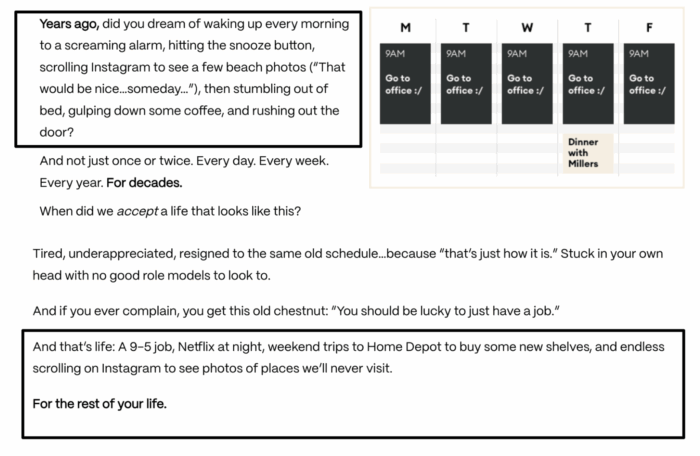
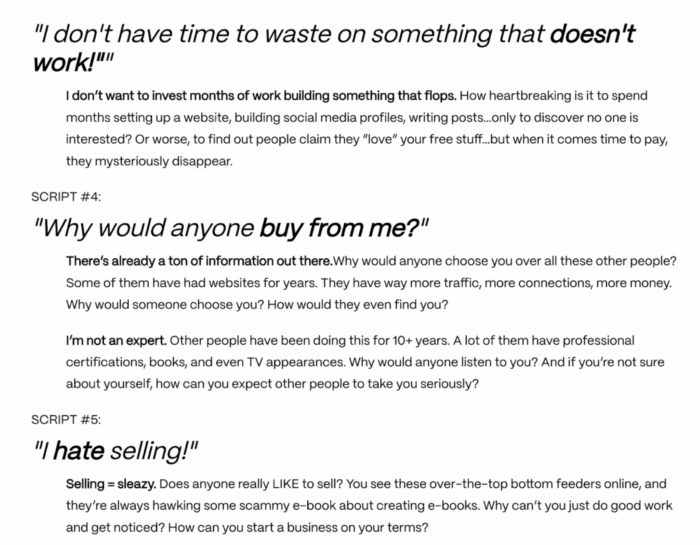
When evaluating high-converting landing pages—such as those deployed by digital educator Ramit Sethi for his flagship programs—the messaging deliberate avoids abstract value propositions like "Learn how to maximize your financial potential."
Instead, the copy mirrors the exact daily routines, friction points, and silent frustrations of the prospective buyer:
Working rigid 9-to-5 schedules
Spending evenings passively consuming media
Conducting repetitive weekend chores
Mindlessly scrolling social feeds under career anxiety
By presenting an hyper-accurate mirror of the target customer’s current reality, the copy establishes immediate authority. The underlying psychological mechanism relies on a simple premise: if a writer can describe a prospect’s problem more accurately than the prospect can, the reader instinctively assumes the writer holds the optimal solution.
+-----------------------------------------------------------------------+
|                 TRADITIONAL VS. CONVERSION COPYWRITING                 |
+------------------------------------+----------------------------------+
| Traditional / Brand Copywriting    | Conversion-Focused Copywriting   |
+------------------------------------+----------------------------------+
| • Focuses on eloquent prose        | • Focuses on clarity and action  |
| • Evaluated by aesthetic appeal    | • Evaluated by ROI and revenue   |
| • Uses broad value statements      | • Mirrors acute customer pain    |
| • Seeks wide vanity metrics        | • Targets high-intent buyers     |
+------------------------------------+----------------------------------+
Phase 2: Systematic Customer Empathy and Conversational Intelligence
High-converting copy is rarely invented from scratch; it is extracted directly from the voice of the market. To build deep buyer profiles, copywriters deploy robust quantitative and qualitative discovery protocols:
1. Direct Sales & Service Call Mining
When working with established corporate clients, primary data collection begins with internal sales and support personnel. Sales representatives interact daily with front-line objections, hesitation patterns, and value triggers.
By analyzing sales call recordings or processing raw call transcripts through Large Language Models (LLMs), strategists extract exact customer phrasing regarding primary paint points.
2. Community Intent Extraction
For nascent products or emerging niches lacking internal sales data, copywriters analyze organic discussion hubs such as Reddit threads, specialized Facebook groups, and industry forums.
Observing how users articulate their struggles reveals key psychological drivers, including:
Primary emotional triggers and operational bottlenecks
Prevailing market skepticism and prior solution failures
Specific vernacular, jargon, and phrasing native to the target demographic
Phase 3: Competitive Intelligence and Swipe File Architecture
Top-performing copywriters leverage competitive validation to mitigate market testing risks. Established industry competitors spend millions annually testing ad angles, messaging hooks, and offer positioning. Analyzing this landscape provides a blueprint of market-tested strategies.
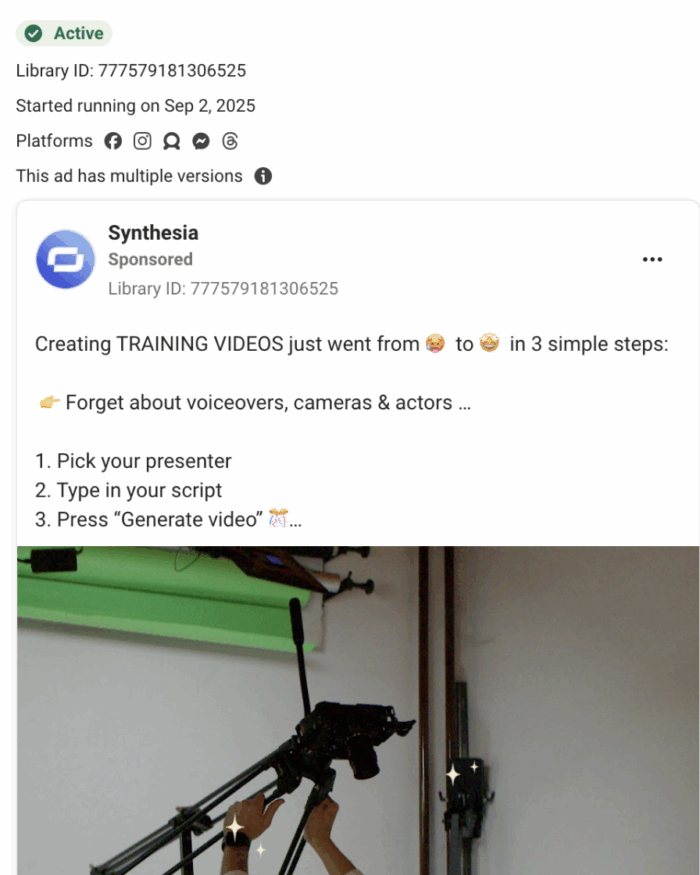
Platforms such as the Meta Ad Library and LinkedIn Ad Library serve as public archives for commercial messaging. Within paid acquisition channels, ad deployment duration directly correlates with campaign profitability.
When an ad runs continuously for extended periods—such as enterprise video creation platforms like Synthesia highlighting the pain of coordinating physical video shoots, or CRM providers like Close focusing on revenue lost due to noisy data—the messaging strategy has verified commercial traction.
Swipe File Engineering
Disciplined copywriters maintain curated archives (swipe files) containing proven headlines, lead paragraphs, email sequences, and direct-response formats.
Referencing established public repositories—such as Neville Medhora’s SwipeFile.com—allows writers to evaluate historical winning campaigns, analyze underlying structural frameworks, and adapt proven concepts to new sectors.
Phase 4: Operationalizing the Writing Process and Platform Specialization
To eliminate creative friction and prevent writer’s block, successful agencies institute rigid operational workflows tailored to specific content mediums.
Professional Social Platforms (e.g., LinkedIn): Requires concise narrative hooks, executive thought-leadership framing, mobile-optimized line spacing, and dialogue-provoking conclusions.
Direct Sales Pages & Email Funnels: Demands explicit urgency building, risk-reversal guarantees, social proof integration, systematic objection handling, and singular call-to-action (CTA) focuses.
Supporting Context & Metrics: Measuring Attribution and ROI
A core vulnerability in modern content operations is the misinterpretation of performance metrics. Novice writers frequently conflate top-of-funnel engagement—such as views, likes, and shares—with genuine business growth. High-earning practitioners evaluate content against concrete financial attribution models.
Social engagement metrics can be deceptive. A broad, generalized viral post may generate thousands of impressions from un-targeted accounts while yielding zero sales leads. Conversely, a focused post receiving low public engagement may generate high-value inbound inquiries if read by targeted decision-makers.
Qualitative Lead Profile Auditing: Evaluating the job titles, executive seniority, and industry alignment of accounts interacting with the copy.
Self-Reported Attribution (SRA): Implementing mandatory or optional open-text fields within enterprise checkout/demo forms asking: "How did you first learn about us?" High-converting campaigns routinely surface direct references to specific social channels or executive posts.
2. SEO & Editorial Content Tracking
In organic search strategies, total site traffic is secondary to commercial intent.
Case Example: The Intent Alignment Principle
Consider an e-commerce platform specializing in antique timepiece restoration. An article detailing "How to Repair a Cuckoo Clock at Home" may attract high traffic volumes, but primary visitor intent centers on DIY troubleshooting rather than purchasing services.
Conversely, content optimized for commercial query strings—such as "Best Professional Cuckoo Clock Repair Services"—yields lower total search volume but significantly higher conversion rates.
Advanced content operations configure precise event-conversion tracking within analytics tools like Google Analytics 4 (GA4). By tagging specific micro-conversions—such as newsletter signups, lead magnet downloads, and direct software trial creations—publishers directly attribute revenue generated by specific editorial assets.
The modern copywriter’s toolkit relies on battle-tested frameworks from leading industry practitioners. Integrating targeted technology, disciplined execution models, and expert feedback loops enables sustainable agency growth.
 🤖 AI Analytical Augment            🧠 Operational Discipline           💬 Expert Review Ecosystem
 • Deep Pain Point Discovery         • Micro Action / Macro Patience     • Community Feedback Loops
 • Phrasing & Clarity Optimization   • Daily Output Commitments          • Experienced Peer Audits
 • Expert Sourcing & Proof Points    • Long-Term Value Compounding       • Quality Control Metrics
Strategic Integration of Artificial Intelligence
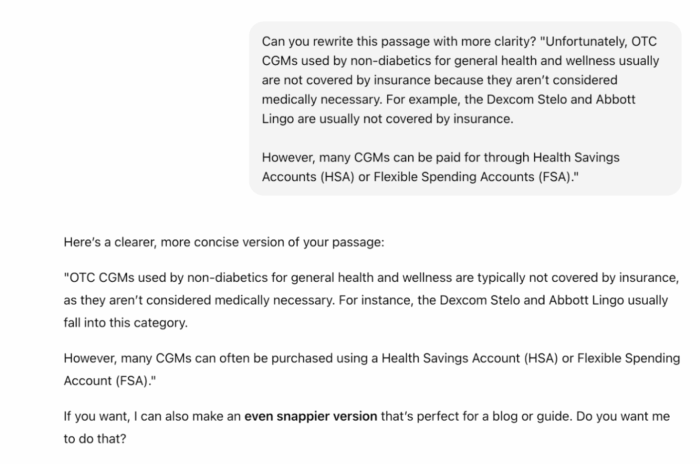
Rather than relying on automated platforms to generate uninspired content, elite copywriters use Large Language Models as analytical partners to refine research and execution.
"Act as a senior conversion copywriter. Analyze the following target audience:
[INSERT DEMOGRAPHIC/PROFILE]. Identify the top 5 emotional friction points,
internal anxieties, and operational bottlenecks preventing them from
purchasing a solution for [INSERT PRODUCT CATEGORY]. Format output as specific,
first-person quotes mirroring authentic speech patterns."
Protocol B: Clarity Refinement
"Analyze the following paragraph for reader comprehension and momentum:
[INSERT DRAFT COPY]. Rewrite this passage to increase structural clarity,
remove passive phrasing, and sharpen the value proposition while preserving
a tone of authoritative simplicity."
Protocol C: Real-World Proof Point Sourcing
"I am drafting an authoritative guide on [INSERT SUBJECT MATTER]. Locate real-world
case studies, expert quotes, or industry insights discussed by validated
practitioners on LinkedIn, professional forums, or whitepapers regarding
[SPECIFIC SUB-TOPIC]. Provide contextual attribution."
The Operational Paradox: Micro Action and Macro Patience
Navigating a successful marketing career requires balancing immediate execution with long-term perspective. As noted by investor Naval Ravikant, high performers adopt a dual mindset:
"Be impatient with action, and patient with results."
Applying this rule to copywriting requires maintaining aggressive daily output standards while allowing market authority, organic rank, and audience trust time to compound. High-converting brand assets rarely achieve peak traction overnight; they build value through sustained iteration, split testing, and content publishing over months and years.
The Role of Peer Review and Mastermind Environments
Isolated content creation often leads to blind spots in messaging. To maintain high output standards, top agency owners and copywriters leverage structured feedback loops.
Educational platforms and professional incubators—such as the Copyblogger Academy, co-led by digital entrepreneurs Tim Stoddart and Charles Miller—fill a critical gap in professional development. By submitting draft collateral to seasoned seven-figure marketers for direct review, copywriters can audit their work against real-world conversion standards before launching live campaigns.
Future Outlook: Navigating the Next Era of Performance Copywriting
As generative AI tools lower the barrier to baseline content creation, digital channels face an unprecedented volume of automated, generic copy. This saturation changes the economic landscape for copywriters, agencies, and enterprise brands.
The Premium on Authentic Market Empathy: Generic product descriptions will continue to lose effectiveness. Commercial success will belong to writers who conduct deep primary research, talk directly to customers, and capture authentic human experiences.
Algorithmic Mechanics & Platform Precision: Copywriters must evolve into holistic distribution strategists. Understanding search intent evolution, social platform distribution nuances, and buyer-journey mechanics will separate low-cost writers from high-value growth partners.
Rigorous Focus on Revenue Attribution: As enterprise marketing budgets face increased scrutiny, copywriters must directly link their output to bottom-line financial metrics. Mastering conversion tracking, intent alignment, and funnel optimization will remain the primary benchmark for top-tier direct response writing.
By replacing subjective artistic style with analytical rigor, structured market research, and verified conversion metrics, modern copywriters can elevate writing from a simple operational expense into a predictable, high-return growth asset.