

Published: November 3, 2026
Author: Troy Farah | Investigative Political Desk
Executive Overview
In what political scientists are already calling the most consequential electoral shockwave of the 21st century, the political landscape of Texas was fundamentally rewritten on Tuesday, November 3, 2026. In a stunning reversal of decades-long conservative dominance, Texas Democrats captured both a high-stakes U.S. Senate seat and the governorship, shattering a statewide losing streak that had persisted since 1994.
Charismatic Texas State Representative James Talarico decisively defeated state Attorney General Ken Paxton—Donald Trump’s hand-picked conservative champion—in the country’s most fiercely contested and exorbitantly expensive Senate race. Trailing by more than a million votes late into election night, the Associated Press officially called the race for Talarico just before 11:00 p.m. Eastern Time.
In a parallel earthquake that caught national pundits and pollsters entirely off guard, State Representative Gina Hinojosa ousted incumbent Republican Governor Greg Abbott by a margin exceeding 700,000 votes. These historic triumphs served as the crown jewels of a broader national "blue wave" in the 2026 midterms, fueled by voter fatigue with the second administration of Donald Trump, historic grassroots mobilization, and an unprecedented expenditure of capital that forever transforms the math of American political campaigns.
Detailed Chronology: Election Night and the Path to Victory
The unfolding drama on Tuesday evening marked the culmination of a grueling, multi-billion-dollar electoral war of attrition that gripped the American consciousness for nearly two years.
The Senate Showdown
As the sun set over Austin on November 3, early voting totals indicated an extraordinarily high turnout across Texas’s major metropolitan hubs, including Harris, Dallas, Travis, and Bexar counties. By 9:00 p.m. EST, returns from suburban battlegrounds—traditionally the bedrock of modern Texas Republican power—showed a massive erosion of conservative margins.
By 10:30 p.m., internal campaign data and early precinct reporting from election supervisors signaled an insurmountable lead for James Talarico. Bolstered by a message centered on economic populism, affordable living, and an authentic appeal to Christian faith that directly challenged conservative moral monopoly, Talarico surged ahead. When the Associated Press formally projected his victory shortly before 11:00 p.m., Talarico held an insurmountable lead of over one million votes against Ken Paxton.
The Gubernatorial Shock
Almost before the dust had settled on the Senate race, a second, even more improbable domino fell. State Representative Gina Hinojosa, running an aggressively grassroots campaign focused on public education funding, healthcare access, and infrastructure resilience, was projected by the AP to defeat three-term incumbent Governor Greg Abbott.
While public polls in the final weeks of October showed a tightening race, few analysts predicted that Hinojosa would cross the finish line with a margin of over 700,000 votes. Observers noted that the defeat of Abbott—a titan of the Texas GOP who had presided over the state for more than a decade—signals an unmistakable cultural and demographic realignment within the Lone Star State.
Supporting Context & Metrics: A Financial and Cultural Watershed
The 2026 Texas midterms will be studied by historians for generations, not merely for their outcomes, but for the unprecedented mobilization of financial and media resources that defined the cycle.
The Billion-Dollar Battleground
The Senate contest between James Talarico and Ken Paxton shattered all historical spending records for a state-level race in American history. A combined total of $573 million was funneled into the primary and general election campaigns by the candidates, their allies, and external political action committees.
The primary driver of this financial arms race was tech billionaire Elon Musk. The CEO of SpaceX and Tesla deployed an estimated $474 million into the election cycle—virtually all of it dedicated to bolstering Ken Paxton and defeating Talarico. This expenditure sets a modern record for political spending by a single individual in a U.S. election.
Musk’s capital was strategically deployed across multiple vehicles:
- $168 million channeled directly into the Senate Leadership Fund.
- The remainder funneled through his personal super PACs.
- $10 million allocated to the pro-Paxton Lone Star Liberty PAC, which saturation-bombed Texas media markets with advanced artificial intelligence-generated robocalls and hyper-targeted digital ads attacking Talarico’s record.
By contrast, the Talarico campaign and allied Democratic PACs operated at a severe financial disadvantage, raising approximately $133 million. Governor Greg Abbott likewise held a massive financial advantage over Gina Hinojosa, with CNN political analyst David Axelrod noting that Hinojosa was outspent roughly 10-to-1.
Misinformation and the Battle for the Narrative
The campaign was equally notable for its descent into hyper-partisan vitriol and viral disinformation. Because Talarico anchored much of his appeal in his identity as a practicing Christian and former seminary student, he became an existential threat to the religious right’s lock on faith-based politics.
In response, right-wing media ecosystems and pro-Paxton operatives launched a barrage of bizarre conspiracy theories. Talarico was forced to publicly counter viral hoaxes painting him as a "secret vegan" attempting to undermine Texas agriculture, alongside unfounded rumors regarding his mental health.
Democratic strategists initially feared that this deluge of digital misinformation would successfully overshadow severe, documented vulnerabilities within the Paxton camp. Weeks before the election, a blockbuster Wall Street Journal investigative report revealed that Paxton had taken a lavish trip to Dubai in the company of international fugitives from U.S. justice and a woman other than his wife. Despite these damaging corruption allegations, Talarico’s disciplined focus on local affordability and personal integrity cut through the noise, driving voters to the polls in historic numbers.
Official Statements and National Implications
The reverberations of Tuesday night’s results extended far beyond the borders of Texas, signaling a transformative shift in the national balance of power.
With victories in Texas, alongside high-profile flips in South Carolina—where Democrat Annie Andrews upset incumbent Republican Senator Darline Graham—and North Carolina (where former Governor Roy Cooper easily secured the seat vacated by retiring GOP Senator Thom Tillis), the Democratic Party appeared all but certain to capture control of the United States Senate. Undecided or closely contested races in Iowa, Maine, and Ohio further pointed to a decisive blue wave across the American legislative map.
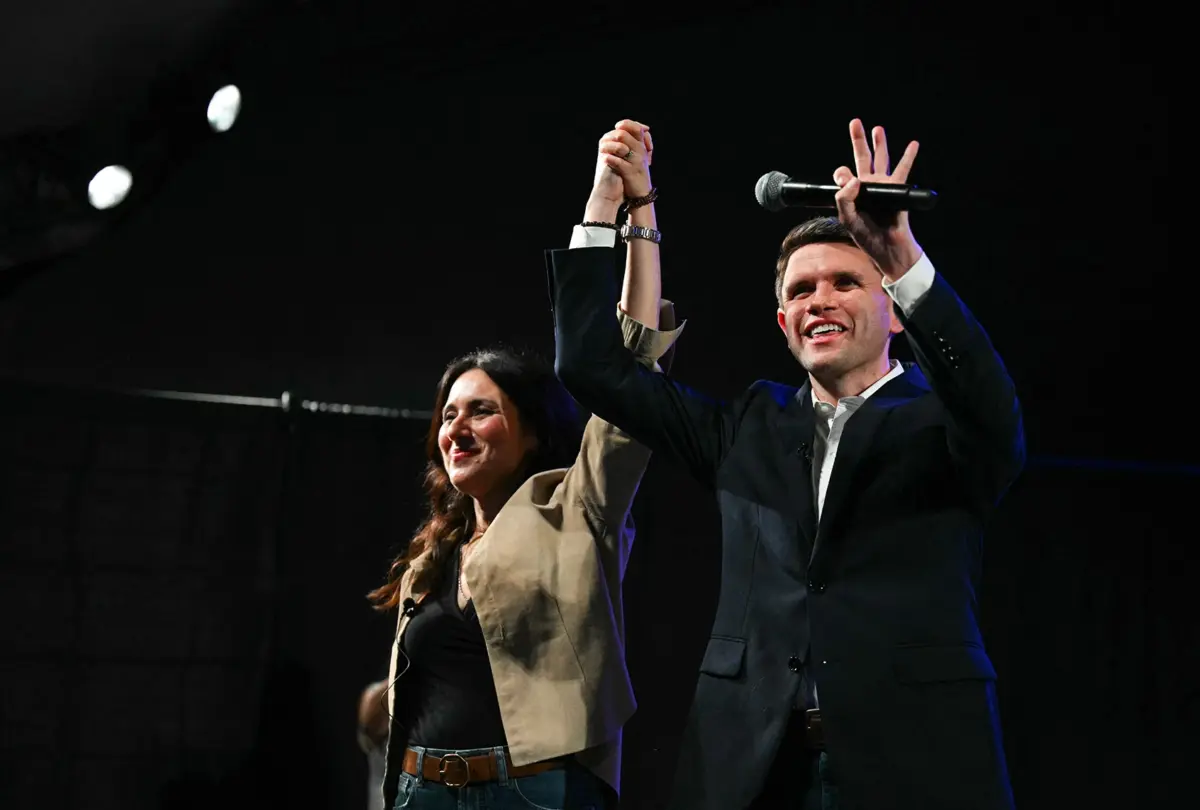
Speaking to an ecstatic crowd of supporters in Austin late Tuesday night, a visibly emotional James Talarico framed his victory as a rejection of division and a return to foundational values:
"Tonight, the people of Texas proved that our state cannot be bought by billionaires, nor can our faith be co-opted by corruption. We have shown that hope is stronger than fear, and that grace is more powerful than grievance. This is a new dawn for the Lone Star State—one where we govern for all Texans, not just the privileged few."
Governor-elect Gina Hinojosa similarly emphasized the unifying themes of her unexpected landslide:
"For years, we were told that Texas was a red state, unmovable and unreachable. Today, the working families of Texas spoke with one clear, undeniable voice. We are going to fully fund our public schools, protect our healthcare, and build an economy that works for every kitchen table in this state."
National Republican strategists, meanwhile, pointed to the unprecedented financial spending and the shifting demographics of Texas suburbs as wake-up calls. Privately, leadership acknowledged that the party’s reliance on polarizing national cultural messaging failed to resonate against disciplined, localized campaigns focused on economic dignity and institutional accountability.
Future Outlook
As the dust settles on the 2026 midterms, the political reality for Texas—and the nation—has fundamentally shifted.
For the newly elected officials, the immediate future will demand a delicate balancing act. Governor-elect Hinojosa and Senator-elect Talarico will step into institutional frameworks historically dominated by conservative infrastructure, requiring bipartisan cooperation to enact their ambitious agendas on education reform, infrastructure modernization, and criminal justice overhaul.
Nationally, the fallout from Musk’s half-billion-dollar expenditure will undoubtedly accelerate congressional debates over campaign finance reform, the regulation of artificial intelligence in political advertising, and the unchecked influence of super-wealthy donors in American democracy.
Above all, the events of November 3, 2026, have permanently retired the political axiom that Texas is an immovable fortress. The Lone Star State is officially a hyper-competitive battleground, and the seismic shifts witnessed this week will reverberate loudly through the presidential primaries of 2028 and beyond.
