

In the annals of American political history, midterm elections rarely arrive without a loud and unmistakable referendum on the sitting administration. Yet, the seismic shifts of November 3, 2026, exceeded even the most aggressive prognostications of a Democratic resurgence. Billed by Donald Trump and his inner circle as a surrogate referendum in which the electorate was urged to "vote like he was on the ballot," the midterms transformed precisely into that—with devastating consequences for the Republican Party.
What began as a tremor in the rural counties of Kentucky’s 6th Congressional District quickly metastasized into a national political avalanche. For nearly a decade, political scientists and pundits debated when, or even if, a definitive reckoning would arrive for the populist nationalist movement spearheaded by Donald Trump. That reckoning materialized with brutal efficiency on Tuesday night.
Across the country, historic strongholds flipped, long-standing dynastic seats crumbled, and an energetic Democratic coalition capitalized on a fractured Republican base. From the heart of the South to the sprawling battlegrounds of Texas, voters delivered a resounding message: the era of unchecked MAGA dominance had run aground on the shoals of economic anxiety, overreach, and a severe alienation of the very demographics that had once propelled Trump back to the White House.
Detailed Chronology: How the Night Unfolded
The writing was on the wall early in the evening, offering an immediate prelude to the historic night that lay ahead.
The Early Warnings in Kentucky
At 6:00 p.m. EST, as the first polls closed in Kentucky’s 6th Congressional District, numbers trickled in from rural precincts. Historically a competitive battleground before being carefully gerrymandered by the GOP to favor Republicans following a 2012 breakthrough by Andy Barr, the district was expected to remain safely in the red column for candidate Ralph Alvarado against Democrat Zach Dembo.
Yet, the margins told a radically different story. Alvarado underperformed Barr’s 2024 benchmarks by a staggering 20 percentage points. Thousands of traditional Republican voters either stayed home or crossed party lines. By 9:15 p.m., Alvarado conceded. A seat written off by Democrats for over a decade had just provided the first major indicator of a national wave.
Southern Shifts and Midwestern Routing
As the evening progressed, the momentum rapidly accelerated southward. In Georgia, Sen. Jon Ossoff secured an early and decisive victory, crushing Republican challenges and validating his strategy of anchoring his campaign to aggressive healthcare affordability protections. North Carolina followed suit, with former Governor Roy Cooper projected to defeat former Republican National Committee Chairman Michael Whatley in a vital Senate pickup. Even ruby-red Florida saw competitive statewide performances, with gubernatorial nominee David Jolly and democratic socialist Senate candidate Angie Nixon running neck-and-neck with their opponents before Panhandle returns shifted the scales.
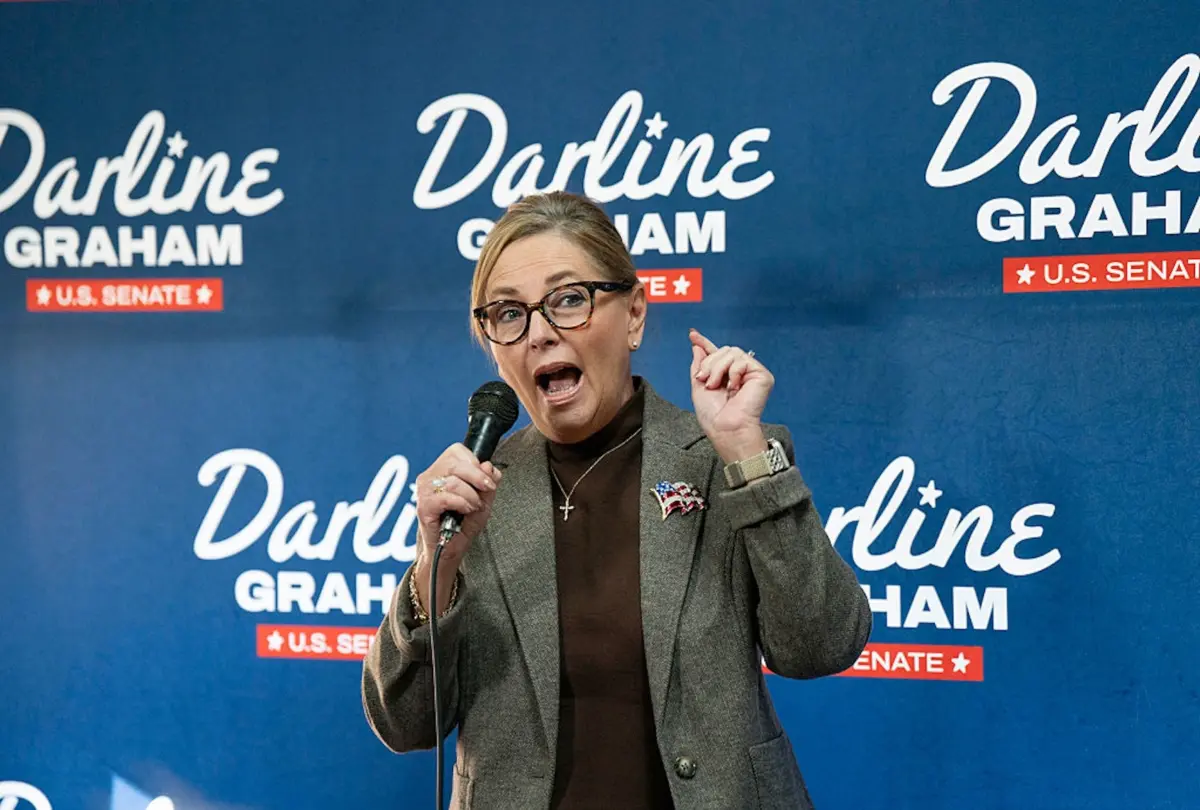
Then came the crown jewel of the night’s historic upsets: South Carolina. Following the death of long-serving Senator Lindsey Graham, Donald Trump had essentially installed Graham’s sister, Darline Graham, as the party’s anointed successor. Palmetto State voters rejected the dynastic maneuver outright. Dr. Annie Andrews swept to a historic victory, marking the first time a Democrat had claimed a Senate seat in South Carolina since 1998.
The Midwest and the Lone Star State
In the Midwest, Ohio’s Democratic gubernatorial nominee, Dr. Amy Acton, routed Vivek Ramaswamy. Ramaswamy’s campaign had imploded weeks prior following a widely condemned advertisement that weaponized a tragic chapter of Acton’s childhood.
Meanwhile, the eyes of the nation turned toward Texas, where high drama unfolded. Despite a massive influx of capital and direct messaging from billionaire tech magnate Elon Musk, Texas Democrats achieved the unthinkable. James Talarico was projected to win a resounding victory over scandal-plagued Ken Paxton—who had infamously warned, "If we lose Texas, we lose America"—while Gina Hinojosa ousted incumbent Governor Greg Abbott from the governor’s mansion.
Supporting Context & Metrics: The Anatomy of a Collapse
To understand how the Republican firewall collapsed so completely, one must examine the twenty-two months leading up to November 2026.
Following his 2024 victory, Donald Trump had successfully expanded his electoral coalition, making historic inroads among Black men, Latinos, and young voters. Emboldened by this expansion, the Republican apparatus pursued an aggressive national gerrymandering strategy while simultaneously attempting to govern through an increasingly precarious and unfavorable economic climate.
However, the administration’s overreach proved fatal to its coalition. Drunk on political power, Trump and his congressional allies alienated the very groups that had fueled his resurgence:
- Attacks on Voting Rights and Civil Rights: The administration’s aggressive campaigns against voting rights, combined with the Supreme Court’s controversial gutting of the Voting Rights Act earlier in the spring, galvanized Black voters. Turnout in urban and suburban precincts reached record highs for a midterm cycle.
- Immigration Enforcement Overreach: Over a year of aggressive ICE raids, mass deportations, and hostile rhetoric directed toward naturalized citizens triggered a profound backlash among Latino voters. This demographic played a pivotal role in powering down-ballot upsets, most notably in Texas.
- Alienation of Young Voters: Assaults on the social safety net, civil liberties, and educational autonomy alienated Gen Z and millennial voters across demographic divides, driving them toward the opposition in unprecedented numbers.
The numbers reflect this systemic erosion. In district after district, suburban voters—once trending competitive or leaning Republican—broke decisively for Democrats. The GOP’s reliance on culture-war distractions failed to mask the grinding realities of inflation, prolonged legislative gridlock, and the longest federal government shutdown in modern history.
Official Statements and Political Reactions
The shockwaves through party headquarters on both sides of the aisle highlighted a night of profound transformation.
In Washington, Democratic leadership pointed to the night’s results not merely as an anti-Trump backlash, but as a mandate for aggressive, working-class populism. Strategists emphasized that candidates who played it safe or relied on conventional moderation routinely underperformed compared to those who embraced bold, populist economic platforms.
Jon Ossoff, whose early stubbornness during the historic government shutdown forced the restoration of Affordable Care Act subsidies, issued a statement framing the night as a victory for everyday families:
"Voters did not ask us to tinker at the margins. They demanded that we lower costs, protect their healthcare, and stand uncompromisingly against corporate and political corruption. Tonight proves that when you fight for the working class, the working class fights for you."
Conversely, Republican leadership struggled to formulate a unified response as the scale of the defeat became apparent. Privately, moderate Republicans expressed fury over the party’s absolute alignment with executive overreach and the imposition of uncompromising loyalists in historic seats like South Carolina. Publicly, surviving members of the congressional caucus attempted to downplay the results as a routine midterm correction, though few could obscure the panic caused by the losses in Texas, Ohio, and the industrial Midwest.
Future Outlook: The Mandate and the Danger Ahead
As the sun rises on a radically altered political landscape, Democrats find themselves confronting an unfamiliar and intoxicating reality: they hold the wind firmly at their backs. Yet, party veterans and progressive organizers alike recognize that the euphoria of victory carries a dangerous subtext.
The primary danger for the Democratic Party lies in its historical propensity to misread electoral mandates. The 2026 midterms were not handed to the Democrats because of an inherent affection for institutional centrism; they were won because voters demanded uncompromising fighters who addressed the material realities of their daily lives—affordability, healthcare access, civil liberties, and economic security.
If Democratic leadership attempts to interpret these results as an invitation to return to corporate-friendly incrementalism, they risk stepping directly onto the proverbial banana peel that has historically tripped up progressive movements.
Furthermore, the Republican Party faces an existential reckoning. The myth of an unbreakable, perpetually expanding MAGA coalition has been thoroughly tested and found wanting when detached from the immediate presence of Donald Trump on the ballot. As the GOP picks through the wreckage of Senate losses in North Carolina and South Carolina, gubernatorial defeats in Texas and Ohio, and the collapse of margins in rural strongholds, the party’s architects must decide whether to double down on the populist strategies that alienated suburban and minority voters or forge a painful path toward internal reform.
For now, America stands remarkably intact. Paxton’s warning that losing Texas meant losing the nation proved to be hyperbole; Texas turned blue, and the republic endures. But the rules of engagement in American politics have been irrevocably rewritten. The voters have spoken, the fragile coalitions of the 2020s have fractured, and the path forward will demand accountability from leaders on both sides of the aisle.
