

Executive Overview
The landscape of American cable news has spent the past decade weathering an era of profound institutional crisis, political intimidation, and corporate restructuring. On the night of November 3, 2026, however, the atmosphere inside the control rooms and anchor desks of CNN and MS NOW (the network formerly known as MSNBC) underwent a tectonic shift. As early exit polls solidified into a sweeping nationwide referendum—dubbed a "blue-nami" by CNN anchor Jake Tapper—two networks long accustomed to broadcasting under a cloud of existential dread suddenly found themselves navigating an unaccustomed emotion: unbridled optimism.
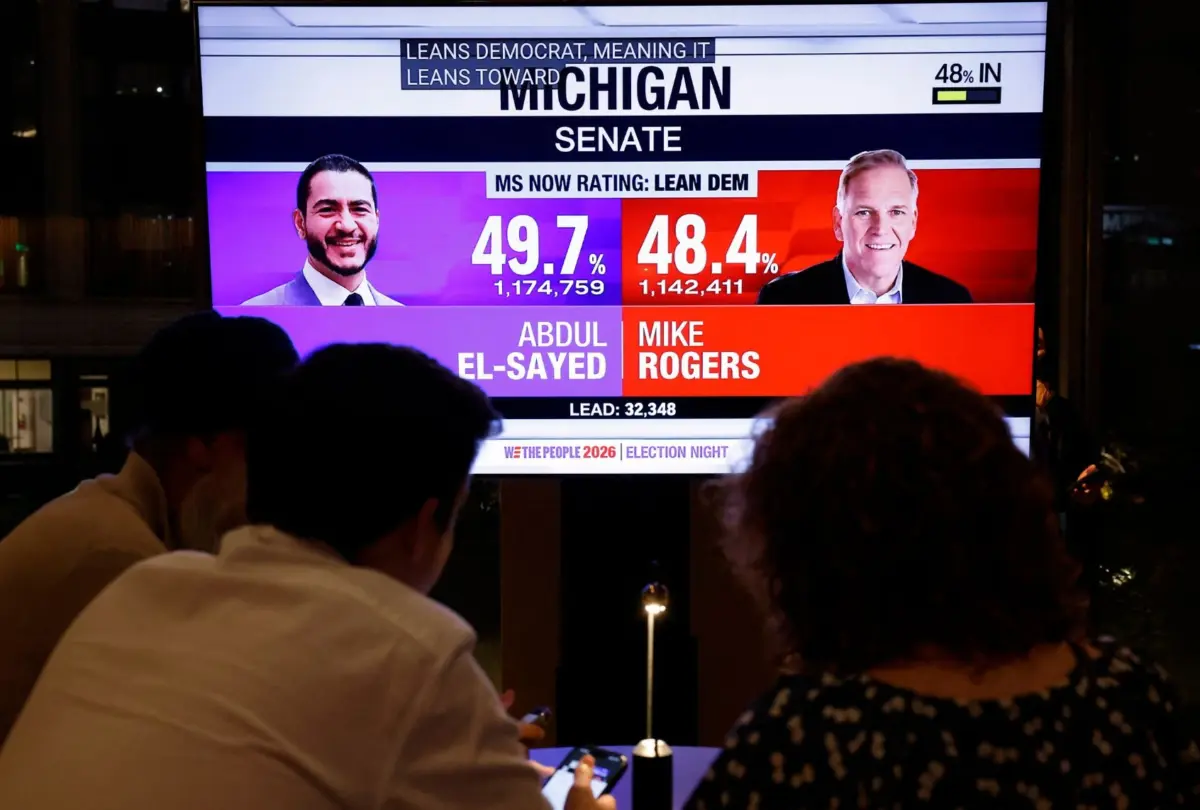
The midterm elections of 2026 delivered a stinging rebuke to the incumbent administration, flipping control of both the House of Representatives and the Senate, fracturing the cohesion of the ruling party, and shattering historic glass ceilings across the American map. For anchors, data wranglers, and commentators who had spent the better part of a decade reporting on the steady erosion of democratic norms, the evening was more than a statistical victory; it was a psychological release valve.
Yet, this jubilation occurred against a backdrop of acute corporate uncertainty. While MS NOW operates with a scrappy independence following its spin-off under Versant, CNN faces an impending ownership transition involving Skydance and media figures tied to the political establishment. Despite these corporate shadows, the on-air talent managed to deliver a masterclass in emotional journalism—balancing biting political post-mortems, data-driven awe, and raw, tearful catharsis.
Detailed Chronology: Anatomy of a "Blue-Nami"
The contours of election night 2026 became apparent early in the evening, defying conventional polling models that had repeatedly underestimated Democratic momentum throughout the cycle. By prime time, the narrative shifted from cautious speculation to an outright political earthquake.
The Early Hours: Breaking the Data Wall
As the map began to flash blue in districts long considered safe for the right, veteran data analysts were forced to throw out their standard playbooks. Over at MS NOW, Ali Velshi took charge of the Big Board, buzzing with a kinetic energy reminiscent of his predecessor, Steve Kornacki (who had recently transitioned to NBC). Velshi’s breakdown of unexpected victories—such as a shocking Democratic breakthrough in South Carolina—highlighted a pervasive undercurrent of voter realignment.
"This is a totally weird conversation that we are having. Right?" Velshi remarked to the camera, capturing the collective disbelief of a press corps conditioned by years of polling anxieties.
Concurrently, CNN’s John King stood before his famed Magic Wall, methodically contrasting the scarlet-dominated map of 2024 with the surging azure of 2026. King’s running internal monologue—wrestling with whether to label the unfolding event a "rebuke," a "repudiation," a "shellacking," or a "spanking"—framed what was visibly unfolding: the live-television collapse of the president’s party.
Prime-Time Triumphs and Historic Milestones
As the evening progressed, the focus shifted from sheer mathematical shifts to the historic human element of the midterms. Voters across the nation made deep structural statements:
- New Hampshire: Elected Democrat Chris Pappas to the U.S. Senate, making him the first openly gay man to achieve the office.
- Texas and the South: Witnessed astonishing regional shifts, culminating in a series of gubernatorial victories for Black candidates.
- Georgia: Keisha Lance Bottoms, the former mayor of Atlanta, secured a historic victory to become the state’s first female and first Black governor, marking a monumental milestone in American political history.
When the race was officially called for Bottoms, MS NOW’s Symone Sanders-Townsend was brought on air to contextualize the moment. Visibly holding back tears, Sanders-Townsend reflected on the psychic toll of the preceding years. "After the 2024 presidential election, for myself and Black women all over this country, it felt like a repudiation of us," she shared, her voice cracking with emotion. "There were Black women, myself included, that felt like, ‘Well, maybe America just does not want us.’"
The election results, she noted, provided an emphatic corrective: "Georgia wanted Keisha."
Supporting Context & Metrics: The Weight of the Press Room
To fully appreciate the tenor of the 2026 midterms coverage, one must examine the hostile environment in which these news organizations have operated. Ever since Donald Trump’s emergence on the political stage in 2016—an era famously characterized by commentator Van Jones as a "whitelash against a changing country"—mainstream media outlets have found themselves targeted as adversaries of the state.
The years following 2024 brought renewed threats to independent journalism, with newsrooms facing aggressive legal maneuvers designed to force editorial compliance. CNN and MS NOW entered November 2026 carrying the institutional scars of these battles. Anderson Cooper, whose career includes deep-seated investigative work on 60 Minutes, led CNN’s coverage with a solemnity that reflected the precarious state of modern journalism.
Corporate Vulnerabilities
The economic and corporate foundations of cable news remain volatile:
- CNN: Part of Warner Bros. Discovery, bracing for an acquisition by Skydance under David Ellison.
- MS NOW: Operating as an independent entity under Versant, following its structural separation from NBCUniversal.
These looming transitions underscore why moments of journalistic exuberance on election night were so striking. Peddling optimism is rarely the mandate of an investigative newsroom, yet the sheer weight of the political reversal allowed anchors and analysts to momentarily drop their defensive armor and mirror the public’s palpable sense of relief.
Official Statements and On-Air Commentary
The most indelible moments of the evening arrived via unscripted, highly charged commentary from anchors and pundits who used the platform to deliver sweeping historical judgments.
Rachel Maddow of MS NOW framed the overarching sentiment before the first returns had even cleared: "So far, the one thing we can definitively say is that Americans like our democracy, and they are enjoying using it in record numbers in this cycle." As results confirmed Democratic majorities in both the House and Senate, Maddow’s analysis grew sharper, punctuated by playful jabs at defeated opponents—such as labeling a Republican congressional candidate a "sometime ghost hunter."
Meanwhile, CNN’s Van Jones delivered what many deemed the monologue of the evening, directly addressing the assembled conservative pundits, including Scott Jennings:
"If you join a cult, at some point the cult leader takes you to Jonestown and tries to get you to drink the Kool-Aid. This is Jonestown for the Republican Party. They drank the Kool-Aid, and they have candidates that are dropping like flies across the country because they did not stand up to this guy when he was doing things that were wrong… That’s where you are tonight, Republicans."
Jones later encapsulated the night’s historic magnitude with characteristic flair: "This is like Christmas and a birthday and an Easter bunny and Halloween! This is the repudiation of Trumpism that people have been hoping for, seeing American democracy stand up."
Chris Hayes added analytical depth to the celebration, noting that while economic anxieties and high consumer prices drove significant voter anger, the broader rejection was ideological. "The rot that is coming from the top of the country is very, very, very clearly on voters’ minds," Hayes observed.
Future Outlook: Navigating the Post-2026 Reality
The 2026 midterm results have fundamentally altered the balance of power in Washington, bringing an abrupt halt to the legislative agenda of the executive branch and empowering a newly minted congressional majority. For the administration, the path forward will require navigating intense internal party fractures and an energized opposition eager to exercise its newly acquired oversight powers.
For the media industry, however, the questions are equally consequential. The return of political optimism on networks like CNN and MS NOW offers a temporary morale boost, but it does not erase the systemic challenges confronting broadcast journalism. As ownership structures continue to shift toward corporate entities with complex political alignments, the editorial independence of these networks will face ongoing tests.
Furthermore, the integration of historic figures like Governor-elect Keisha Lance Bottoms into executive power introduces a new dynamic to federal-state relations. As Sanders-Townsend pointedly observed, when future federal inquiries or political grievances are directed toward Georgia, it will be Bottoms answering the phone—and standing sentinel over the administration of future national elections.
Ultimately, election night 2026 demonstrated that despite years of institutional battering, polarization, and democratic stress-testing, the American electorate retained its capacity for sudden, decisive course-correction. For the journalists who chronicled the transformation, it was a rare and welcome reminder of what it feels like to witness history bend back toward hope.
