

Executive Overview
The 2026 midterm election cycle laid bare a profound transformation in American political journalism. Across the United States, the most consequential investigative reporting—the bombshell revelations that dismantled candidacies, exposed systemic corruption, and directly influenced the balance of power in Washington—did not originate from the newsrooms of local newspapers or regional television broadcasts. Instead, these seismic stories were unearthed by national media giants parachuting into communities to scoop the locals in their own backyards.
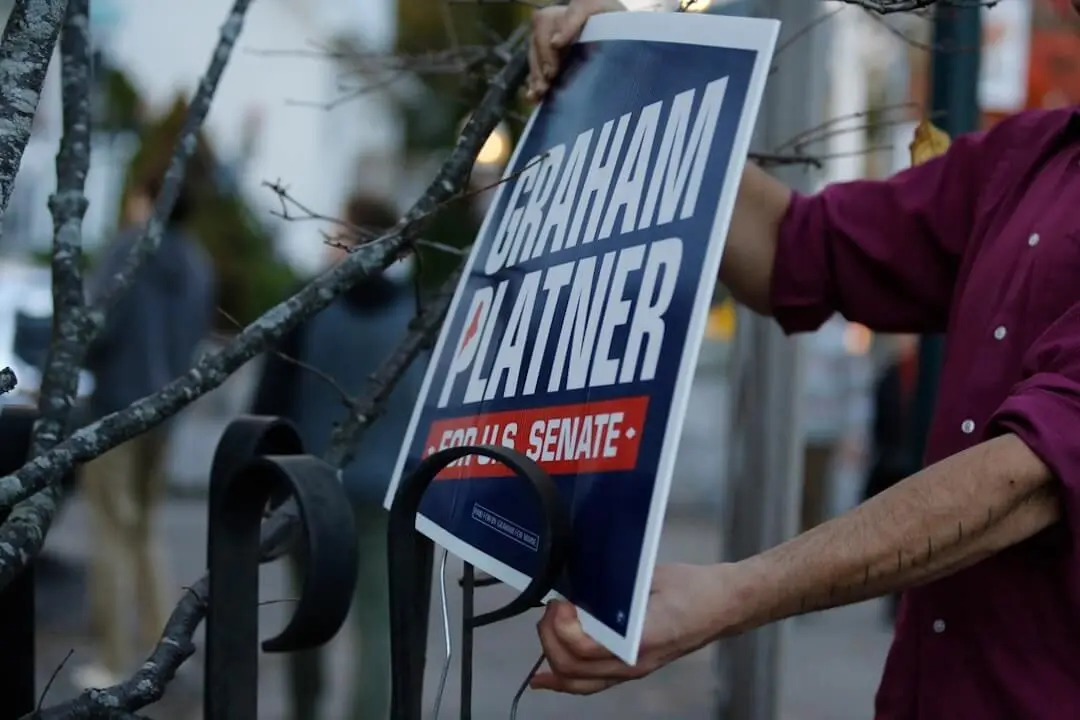
From Maine to Alaska, and from Florida to California, out-of-town reporters routinely outperformed local press corps. The phenomenon was perhaps most vividly illustrated in the Maine Senate race, where allegations of sexual misconduct felled Democratic candidate Graham Platner, and allegations of public corruption contributed to the electoral defeat of Republican incumbent Susan Collins. Neither of these explosive stories was broken by a Maine-based publication. The New York Times, Politico, ProPublica, and The Intercept did the heavy lifting, exposing deep-seated institutional and personal failures that local outlets either could not or would not investigate.
This trend is not a mere fluke of a single election cycle. It is the visible symptom of a slow-moving structural crisis: the systematic hollowing out of local newsrooms. Decimated by decades of declining advertising revenue, collapsing subscriptions, and the expansion of digital "news deserts," community journalism has lost the financial muscle and institutional protection necessary to sustain rigorous investigative reporting.
While national outlets possess the vast resources, legal defenses, and prestige required to dig deeply into regional political machines, their dominance represents a precarious safety net. Out-of-town journalism is no substitute for a permanent local press corps. Scandals do not only occur during major election cycles, and corruption does not exclusively inhabit the halls of Washington; it thrives down the street and across town. When national reporters become the primary watchdogs of local governance, it signals a media ecosystem where the peak is thriving, but the foundation is crumbling.
Detailed Chronology: Case Studies from the 2026 Election Cycle
To understand the scope of this journalistic shift, one must examine the specific investigations that defined the 2026 cycle. In nearly every major electoral upset, national outlets led the charge, often building upon faint smoke signals initially detected by local or alternative publications.
The Maine Senate Race: Platner and Collins
The dual battles for Maine’s Senate seat demonstrated the limits of the local press and the potency of national investigative muscle. In May 2026, the conservative regional outlet The Maine Wire published early inklings regarding Graham Platner, including screenshots from dating apps that pointed toward problematic personal behavior. Around the same time, The Bangor Daily News maintained threads concerning Susan Collins’s questionable financial relationships with defense contractors, a trail they had first sniffed out as early as February 2022.
However, the definitive narratives remained obscured until national reporters stepped in. In late May 2026, The New York Times reporters Katie Glueck and Lisa Lerer broke the story that Platner’s wife had warned campaign officials about a pattern of unsolicited sexual messaging directed at over a dozen women. Days later, Glueck and Lerer detailed a former girlfriend’s accounts of physical altercations. The final blow was struck by Politico’s Jessica Piper and Adam Wren—though Piper, notably, is an alumna of The Bangor Daily News—who published the most serious sexual assault allegations, prompting Platner to withdraw from the race within 48 hours.
Concurrently, allegations of corruption involving Senator Susan Collins were brought to light not by Portland dailies, but through deep investigative dives by ProPublica and The Intercept, ultimately contributing to Collins’s defeat at the ballot box.
National Scoops Across the Map
The Maine races were part of a broader pattern of national outlets driving local accountability:
- Alaska (October 2026): Just six days before Election Day, The New York Times reporter Kellen Browning broke the explosive story that Alaska Democrats had surreptitiously recruited a Senate candidate named Dan J. Sullivan specifically to stack the ballot and siphon votes from the incumbent, Dan S. Sullivan.
- Kansas (September 2026): The New York Times journalist Sarah Kliff exposed Kansas Senator Roger Marshall’s aggressive legal and financial pursuit of hundreds of former low-income patients who owed him money for medical services.
- Ohio (July 2026): Detailed allegations of spousal and child abuse involving Representative Max Miller of Ohio were brought to light not by his hometown paper, but through meticulous investigations by Abby Vesoulis at Mother Jones.
- Florida (February 2026): Mother Jones reporter Noah Lanard published a profile detailing Florida Representative Cory Mills’s history of restraining orders, disputed business ventures, and contested claims regarding his military record.
Exceptions to the Rule: When Regional Outlets Stood Tall
Despite the overarching narrative of local retreat, a few well-staffed regional newsrooms managed to land historic, career-ending investigations during the cycle:
- California: The San Francisco Chronicle journalists Alexei Koseff and Sophia Bollag effectively ended the political career of California Representative Eric Swalwell—then the leading candidate for governor—by publishing corroborated allegations of sexual assault made by a former Swalwell staffer.
- Texas: In a coordinated shockwave in February 2026, the San Antonio Express-News and The Texas Tribune simultaneously disclosed Representative Tony Gonzales’s intimate relationship with a staffer who tragically died by suicide shortly thereafter. Both Swalwell and Gonzales subsequently resigned from Congress.
Supporting Context & Metrics: The Anatomy of Local News Collapse
The growing reliance on national outlets to police local politics is the direct byproduct of an economic collapse within the regional news industry. For generations, metropolitan and regional newspapers—such as The Miami Herald, The Chicago Tribune, The Boston Globe, and The Baltimore Sun—served as the primary incubators of American investigative journalism.
The Globe’s legendary Spotlight team famously exposed the Catholic clergy abuse scandal in 2002; The Miami Herald’s Julie K. Brown single-handedly revived the dormant federal case against Jeffrey Epstein in 2018 through her groundbreaking series, “Perversion of Justice.”
Today, those traditional powerhouses have been severely weakened. According to data from Northwestern University’s Local News Initiative, hundreds of American counties have transformed into "news deserts," completely devoid of professional, paid journalism.
Why Local Outlets Fall Silent
The economic hurdles facing local publications are multifaceted:
- Advertising and Subscription Flight: Decades of digital migration have gutted classified and display advertising revenue, while paywalls have met resistance from readers accustomed to free content.
- The Fear of Retraction and Boycotts: Unlike national publications with diversified subscriber bases, local papers operate within tight-knit geographic boundaries where aggressive reporting carries immediate commercial risks.
- Political Polarization: Investigative reporting frequently triggers accusations of partisan bias. Steve Greenlee, the former editor of the Portland Press Herald, noted in an interview with the Columbia Journalism Review that he regularly fielded furious calls from readers angry that the paper’s reporting did not mirror the populist narratives promoted by talk radio or cable news. The constant threat is a retaliatory subscription boycott so severe "that you won’t have a newspaper anymore."
Official Statements and Academic Insights
Industry analysts and journalism educators warn that while national interventions are currently filling a dangerous void, they cannot permanently replace the localized roots necessary for a healthy democracy.
Michael Socolow, a professor of journalism at the University of Maine who closely observed the Platner and Collins media storms in his home state, emphasized the structural imbalance:
"The big players in D.C. and New York City are taking on an oversized role in investigative journalism with local ramifications. National news organizations are stepping in where diminished newspapers and local TV stations don’t have the investment or protection anymore."
Socolow noted that while local outlets like The Bangor Daily News and The Maine Wire occasionally capture the initial smoke of a developing scandal, they lack the staying power to map the entire fire.
The advantages held by national organizations are structural rather than purely ethical. Beyond larger newsrooms and deeper capital reserves, national reporters operate with a layer of insulation. Because they do not live in the communities they investigate, they are largely shielded from the localized social ostracization, direct political retaliation, and advertiser boycotts that routinely paralyze community editors. Furthermore, legacy national outlets maintain dedicated Washington, D.C., bureaus—infrastructure that regional papers dismantled decades ago to cut costs.
Despite these hurdles, Socolow remains cautiously optimistic about the craft itself, asserting that "investigative journalism still matters in 2026." However, he cautions that out-of-town rescue missions are a symptom of a systemic pathology:
"Rigorous and probing news reporting takes money, time, credibility, relationships, and independence. Unfortunately, those are much more difficult to secure in local newsrooms today."
Future Outlook: Parachutes vs. Foundations
The reliance on national media to uncover regional corruption evokes uncomfortable parallels to past electoral cycles. During the 2022 midterms, a small local paper on Long Island—The North Shore Leader—published early warnings about anomalies in the biography of then-candidate George Santos, describing him as "sketchy." Yet, the true breadth of Santos’s elaborate fabrications remained obscure until The New York Times reporters Grace Ashford and Michael Gold dedicated weeks to unraveling his background. By the time the full picture emerged, Santos had already been elected and sworn into office.
This dynamic creates a dangerous precedent for American civic life. When accountability is outsourced to national newsrooms, oversight becomes selective, prioritizing high-stakes congressional races and statewide power struggles while leaving municipal corruption, school board malfeasance, and county-level graft entirely unexamined.
Reversing this trend will require more than temporary philanthropic bailouts or digital subscription models. It demands a reimagining of local media financing, potentially through public-interest tax credits, non-profit community trusts, and a renewed commitment from local readers to support adversarial journalism even when it challenges their political beliefs.
Until local newsrooms regain their financial independence and institutional armor, national journalists will continue to serve as the country’s primary firefighters—arriving just in time to write the autopsy, but leaving communities vulnerable to the next quiet blaze down the street.
