

Executive Overview
In the fast-evolving landscape of artificial intelligence regulation, headlines warning of “drastic measures,” “astronomical fines,” and “sweeping new AI rules” have understandably sparked panic across tech boardrooms and product design studios. However, a deeper examination reveals a regulatory framework that is far more narrow, deliberate, and practical than the initial media storm suggests. At its core, the European Union’s latest directive is not about stymieing technological innovation; rather, it is about establishing baseline trust, clarity, and unambiguous accountability where artificial intelligence intersects with public consumption.
Effective August 2, 2026, stringent AI labeling laws officially take effect across the European Union. Much like the European Accessibility Act (EAA) and the General Data Protection Regulation (GDPR) before it, this mandate carries extraterritorial reach. It is not limited to companies headquartered within the EU; rather, it applies to any global enterprise whose AI-generated or AI-manipulated outputs are deployed, marketed, or consumed by EU citizens.
This article cuts through the regulatory noise to examine what the mandate actually requires, where the fuzzy lines between human editing and machine generation lie, why the ubiquitous "AI sparkle" icon is no longer legally sufficient, and how product teams can design compliant, user-centric interfaces.
Detailed Chronology and Regulatory Milestones
Understanding how we arrived at the August 2, 2026 enforcement date requires looking back at the deliberate, multi-year rollout of the overarching European Union Artificial Intelligence Act.
- The Blueprint Phase: The ideological groundwork for the AI Act was laid years prior, as policymakers recognized that synthetic media, deepfakes, and automated decision-making systems possessed the potential to distort public discourse, manipulate financial markets, and compromise personal safety.
- Legislative Consensus: Following intense negotiations among EU member states, industry stakeholders, and civil rights organizations, the overarching AI Act achieved formal legislative milestones, setting strict timelines for high-risk AI categories, general-purpose models, and transparency obligations.
- Article 50 Codification: Article 50 of the AI Act emerged as the primary vehicle governing transparency. It formally established that individuals interacting with synthetic text, audio, image, or video content must be explicitly informed of its artificial origin.
- The Code of Practice & Iconography (Mid-2026): In the months leading up to the August 2 deadline, the European Commission released its final guidance on transparency obligations alongside a standardized Code of Practice. This included the official EU AI icon set—providing distinct visual markers for basic AI, fully generated content, and partially modified media.
- Enforcement Day (August 2, 2026): Transparency and labeling obligations officially become legally enforceable. From this date forward, providers and deployers operating within the EU market must ensure their systems comply with explicit disclosure mandates or face regulatory scrutiny and potential financial penalties.
What Actually Needs Labeling? (And What Doesn’t)
The overarching philosophy of the EU’s transparency mandate is simple: help users immediately recognize, in a clear and distinguishable way, when content has been artificially generated or manipulated.
According to Article 50(4) of the AI Act, these disclosure obligations apply broadly across both providers (the entities that build or supply the underlying AI systems) and deployers (the companies, marketers, or organizations integrating those systems into consumer-facing products). Much like GDPR, a company cannot circumvent its legal responsibilities simply by licensing a third-party AI tool from an external vendor.

The Scope of Disclosure
Crucially, however, the mandate does not imply that every single instance of AI assistance must bear an explicit label. The vast majority of everyday, behind-the-scenes AI-assisted productivity work remains unencumbered by the new rules.
Specifically, disclosure obligations do not apply when:
- Human Editorial Oversight is Present: AI-generated text has been genuinely reviewed, edited, and shaped by a human, with a named individual or legal entity taking explicit editorial responsibility for the final publication.
- Closed B2B Environments: The AI content is utilized within strictly internal, closed business-to-business workflows where all participating parties are fully aware of the technology’s involvement.
- Purely Assistive Micro-Edits: Minor, functional enhancements—such as automated spellchecking, grammar correction, basic code syntax suggestions, image cropping, color balancing, or automated machine translation—do not cross the threshold into "AI generation."
Where the Mandate Strictly Applies
Conversely, automated workflows that produce substantive, original, or deceptive output require immediate, transparent labeling. This includes:

- Public Interest Content: AI-generated or manipulated claims touching upon health, safety, the environment, the economy, finances, politics, science, or culture.
- Realistic Synthetic Media: Advertising, marketing materials, and commercial content featuring realistic AI-generated illustrations, photos, or posters that closely resemble real people, places, objects, or events. Legal experts across major advisory firms strongly urge commercial teams to label all hyper-realistic marketing imagery as a mandatory precaution.
The Fine Line Between "Edited" and "AI-Generated"
One of the most pressing questions facing product designers and content creators is the grey area surrounding human-in-the-loop workflows. Where exactly does edited AI content cease to be "AI content"?
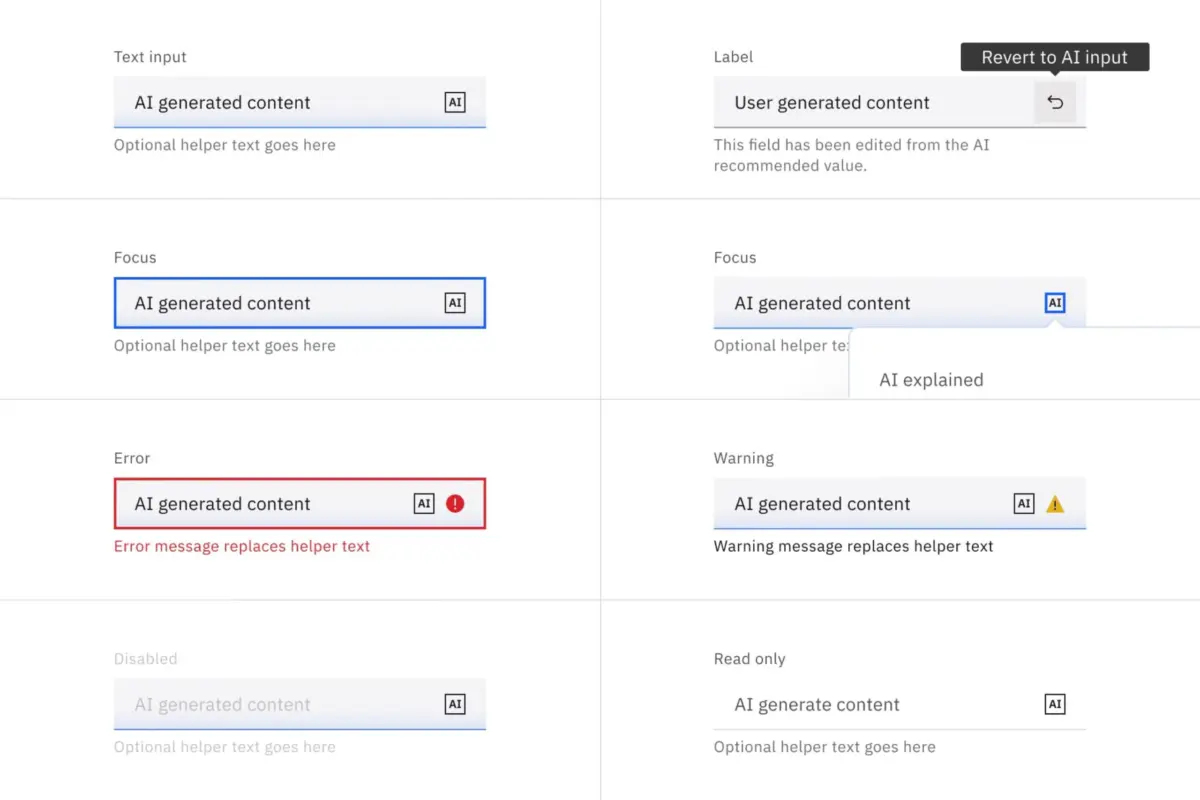
For instance, if a digital form is auto-filled by an AI model, and a user subsequently modifies a few fields, is the resulting data still considered artificial? The European Commission’s guidance on this matter is nuanced.
The Boundary of Automation
- Exempted Utilities: As noted, mechanical enhancements like formatting adjustments, spelling checks, and color correction are viewed as functional tools rather than generative acts. A human polishing a sentence they initially drafted does not trigger a disclosure requirement.
- Mandatory Disclosures: In contrast, AI-generated summaries, composite image generation, substantive structural rewrites, or the algorithmic addition and removal of elements within a photograph are firmly classified as AI generation.
- The Myth of the "Skimmed" Review: The European Commission has explicitly clarified that a human merely "skimming" an AI-generated article or report before publication does not constitute valid editorial review. For an exemption to apply, the human review must be substantive, shifting editorial accountability to a named person who takes responsibility for the material.
Why AI Sparkles Are Likely Not Enough
For years, the technology industry has relied on a shorthand visual language to denote artificial intelligence: the humble sparkle icon ($text✨$). From mobile app interfaces to productivity suite buttons, sparkles have signaled the presence of an AI-powered feature.

Under the EU’s new guidelines, however, sparkles are no longer sufficient.
The Ambiguity of the Sparkle
Research from organizations like the Nielsen Norman Group highlights a fundamental UX problem: the sparkle icon is inherently ambiguous. Users frequently interpret sparkles to mean "this interface element contains an AI feature," rather than "this specific piece of content was generated by an artificial intelligence."
Because the EU mandate requires disclosures that are unmistakable and directly tied to the synthetic output itself, relying on an ambiguous sparkle buried in a corner fails the legal test of being "clear and distinguishable."

The Official EU AI Icon Set
To bridge this gap, the European Commission has published an official set of EU AI transparency icons. These marks provide standardized visual identifiers distinguishing between:
- Basic AI system interactions.
- Fully AI-generated content.
- Partially AI-modified content.
Crucially, the Commission has stressed that simply slapping an icon onto a page does not automatically establish legal compliance. A micro-icon rendered in low-contrast gray, a fleeting label that flashes for a split second, or a notice buried deep within a website’s footer are all explicitly non-compliant.
Best Practices for Compliant Design
To achieve genuine compliance and robust user trust, product teams should adhere to the following design patterns:

- Pair Icons with Plain Text: Always accompany any visual icon with explicit, plain-language text (e.g., "AI-generated" or "Synthetically modified").
- Ensure Accessibility: Labels must be fully readable by screen readers and accessible to users with visual impairments.
- Persistent Metadata: Disclosure metadata must travel with the asset. If an AI-generated image or document is downloaded or reshared externally, the labeling mechanism must persist.
Global Context: It Isn’t Just the EU
While European regulations often capture the loudest headlines, the push toward mandatory AI transparency is a global phenomenon. Product creators operating internationally face a converging pattern of regulatory expectations:
- United States: While lacking a single comprehensive federal privacy and AI law equivalent to the EU AI Act, the U.S. has seen a surge in state-level legislation. Various jurisdictions have enacted strict rules governing synthetic human performers in entertainment, AI disclosures in political advertising, and deepfake prevention in commercial campaigns.
- Asia-Pacific Markets: Regulatory bodies in countries like China and South Korea have aggressively rolled out mandatory labeling and watermarking requirements for generative AI services, deepfakes, and algorithmic recommendations.
This synchronized global shift indicates that AI transparency is not a fleeting regulatory hurdle, but a permanent structural evolution in digital product design. Companies shipping AI-driven products in 2026 and beyond must proactively audit their interfaces to determine precisely what requires labeling and what remains exempt.
Future Outlook
The introduction of the EU’s AI transparency rules marks a maturation point for the tech industry. By shifting away from unchecked technological obscurity and toward proactive clarity, regulators are empowering consumers to easily distinguish between authentic human creativity and automated output.

Ultimately, this transition benefits everyone. Far from stifling progress, transparent design patterns clear away the ambiguity of "AI slop," fostering an ecosystem where genuine human endeavor and responsible artificial intelligence can coexist clearly and transparently.
Recommended Resources
For product designers, UX engineers, and digital architects looking to dive deeper into practical interface solutions, explore the following expert resources:
- Video Course & UX Training: Design Patterns For AI Interfaces — Practical video courses and real-world interface patterns by Vitaly Friedman.
- Official Documentation: European Commission AI Act Guidance & Transparency Code of Practice.
- Design Systems: Carbon Design System AI Guidelines.
