

Executive Overview
The 2026 midterm elections delivered a seismic political shift across the United States, characterized by a sweeping wave of anti-Trump sentiment that rippled far beyond traditional stronghold regions. From the heartland of Kansas to the politically contested terrain of the Carolinas and Texas, the Republican Party faced unexpected vulnerabilities. Yet, as the dust settled on election night, a glaring paradox emerged: while national Democrats celebrated a "blue avalanche" in northern and midwestern battlegrounds, they largely bypassed the very Southern battlefields where grassroots enthusiasm was palpably rewriting political maps.
Nowhere was this phenomenon more pronounced than in Florida, Mississippi, Louisiana, and Texas. Despite high-energy campaigns and surprisingly narrow margins in states long written off as Republican redoubts, national party committees—specifically the Democratic Senatorial Campaign Committee (DSCC)—faced scathing post-election criticism for pre-emptively conceding these races.
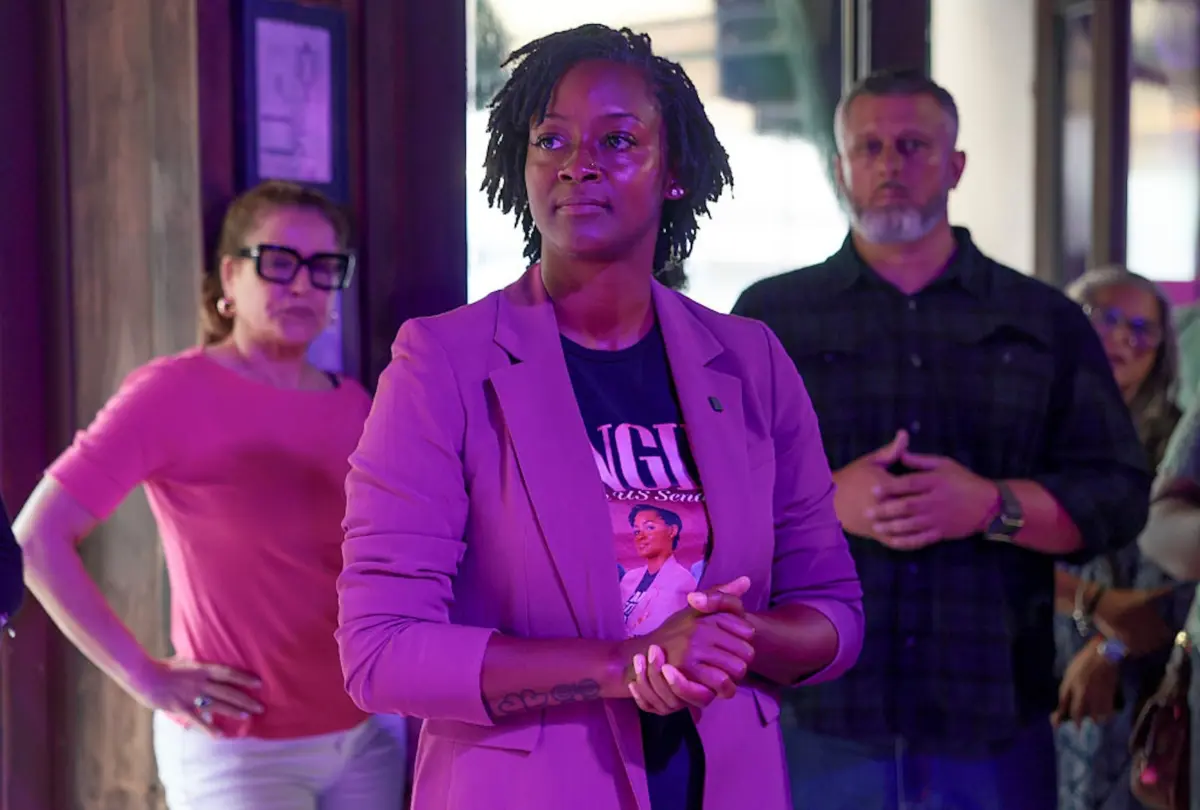
In Florida, progressive firebrand and state Representative Angie Nixon fell just short of pulling off one of the greatest upsets of the cycle, losing by less than two percentage points to Republican incumbent Ashley Moody despite being heavily outspent. Similar dynamics played out in Louisiana and Mississippi, where underfunded Democratic challengers came within a hair’s breadth of unseating entrenched conservatives. Political analysts and regional party leaders argue that these close contests were not isolated anomalies, but rather missed opportunities born of institutional defeatism. By refusing to fund and back viable candidates in the South, national leadership arguably left critical Senate seats on the table, hobbling their own legislative leverage for the legislative battles ahead.
Detailed Chronology: The Anatomy of a Squeaker in the Sunshine State
The trajectory of Florida’s 2026 Senate race began long before Election Day, tracing its roots through a decade of shifting demographics and institutional entrenchment. Once the quintessential American bellwether, the state swung decisively rightward in the wake of the 2008 and 2012 Obama victories. Aggressive Republican redistricting established an unyielding legislative supermajority, while a post-COVID influx of conservative transplants seeking lower taxes and relaxed regulations cemented the state’s conservative tilt. By 2026, the Florida Democratic Party was widely viewed as moribund, having alienated its progressive base for years by running conservative-leaning moderates who failed to inspire turnout.
Enter Angie Nixon. A Jacksonville-based organizer, bookstore owner, and state representative, Nixon injected a new dynamic into the political landscape by running a proudly democratic socialist campaign. Focused heavily on universal healthcare—a resonant message in a state grappling with compounding property insurance and affordability crises—Nixon defied conventional wisdom. Following a surprise primary victory in August 2026, her campaign gained genuine momentum. Polls tightened steadily through the autumn, and by the final weeks of the race, ground-level enthusiasm suggested she had a viable path to victory.
On election night, however, structural headwinds and institutional abandonment proved decisive. Moody, appointed to the seat by Governor Ron DeSantis following Marco Rubio’s confirmation as Secretary of State, outspent Nixon by more than two to one. Nixon ultimately fell short by less than two percentage points, mirroring the fate of other under-supported Southern candidates while starkly illustrating the cost of national neglect.
[August 2026] ──> Nixon secures shock primary win; faces immediate DSCC skepticism.
      │
[Sept 2026]  ──> Schumer tells Nixon he will "look into it"; national funding withheld.
      │
[Late Oct]   ──> Wesleyan Media Project notes 10:1 ad spending disparity (Iowa vs. Florida).
      │
[Nov 5, 2026] ──> Moody edges out Nixon by <2%; Southern progressives decry abandonment.
Supporting Context & Metrics: The Cost of Institutional Defeatism
The narrative that the South is an impenetrable monolith for Democrats was comprehensively challenged by the raw data of the 2026 midsets. Across the region, candidates who managed to build grassroots infrastructure consistently outperformed expectations, even when starved of national resources.
According to data compiled by the Wesleyan Media Project, the strategic allocation of campaign resources revealed a stark disparity in national Democratic investment. In the final weeks of the cycle, national party committees and aligned political action committees spent roughly ten advertising dollars in Iowa for every one dollar spent in Florida. While this targeted investment in the Midwest paid dividends—culminating in newly elected Democratic senators and governors in unexpected places—it highlighted a systemic blind spot regarding Sunbelt demographics.
Furthermore, the geographical distribution of votes within Florida told a story of untapped potential. Despite a Cuban-American electorate historically hostile to left-leaning rhetoric, Nixon carried Miami-Dade County. Simultaneously, traditionally conservative Jacksonville swung markedly to the left. Political scientists noted that a fraction of the capital funneled into safer or alternative battlegrounds could have catalyzed urban turnout in Florida, easily bridging the two-point deficit.
The pattern repeated across the Gulf Coast:
- Louisiana: Democratic challenger Jamie Davis lost to Republican Julia Letlow by a mere two percentage points, running an intensely competitive race despite receiving zero advertising dollars from the national party throughout October.
- Mississippi: District Attorney Scott Colom ran neck-and-neck with incumbent Senator Cindy Hyde-Smith. With 96% of precincts reporting, Colom trailed by a razor-thin margin of just 138 votes, with roughly 15,000 provisional ballots remaining uncounted.
Official Statements and Insider Perspectives
The friction between national party apparatuses and regional candidates burst into public view as early as late summer, as candidates realized they were operating without institutional backing. Speaking on video podcasts and national news broadcasts, Nixon and other Southern leaders voiced profound frustration with Senate Minority Leader Chuck Schumer and the DSCC leadership.
Reflecting on her direct communications with party leadership, Nixon recounted a chillingly non-committal response to her historic bid:
"When I did speak with Sen. Schumer on the phone, it was basically a ‘we will see,’" Nixon remarked during an appearance on MS NOW. "He’s going to look into it. That’s what was said, that he’s going to look into it."
Nixon went further in subsequent interviews, suggesting that institutional trauma from the 2024 presidential cycle played an outsized role in the party’s risk aversion. She asserted that national strategists were "gun-shy" following Vice President Kamala Harris’s loss, leading to systemic hesitancy in funding Black women candidates, particularly within the geographic constraints of the Deep South.
This sentiment was echoed in Mississippi, where state Representative Cheikh Taylor castigated the Democratic National Committee (DNC) for locking local campaigns out of major financial streams. Appearing on television analysis programs, Taylor emphasized the tenacity of local organizing in the face of institutional abandonment:
"Early money always helps. Monies have come to the state of Mississippi, just not through the traditional means, though the DNC," Taylor stated. "We all know that the Colom campaign was locked out of that $30 million contribution to U.S. Senate races… Even though the money didn’t come, in Mississippi, we figure it out."
Future Outlook: Lessons from the 2026 Map
The 2026 midterm results will likely serve as a foundational case study for Democratic strategy for years to come. On one hand, the cycle proved that the anti-MAGA coalition is broad, resilient, and capable of generating unexpected momentum well outside traditional blue strongholds. On the other hand, it underscored the self-fulfilling nature of pre-emptive electoral write-offs.
By conceding races in Florida, Mississippi, and Louisiana before the ballots were even printed, the DSCC and allied committees forfeited a rare opportunity to structurally alter the balance of power in Washington. Securing even one or two of these razor-thin Southern contests would have provided incoming congressional majorities with vastly superior leverage to contest executive appointments and legislative agendas over the subsequent two years.
As the party looks toward future election cycles, the performance of insurgent candidates like Angie Nixon and Scott Colom serves as both a rebuke of risk-averse national strategies and a roadmap for the future. The data demonstrates clearly that voters in the South are willing to engage when given a compelling, populist alternative. Whether national leadership absorbs this lesson—and chooses to invest where the fight is hardest rather than where it is easiest—remains the defining question for the party’s national expansion strategy.
