

Executive Overview
In the rapidly evolving landscape of modern retail, a silent revolution is underway. The traditional customer journey—where shoppers navigate directly to a brand’s website or walk into a brick-and-mortar storefront to begin their product discovery—is being fundamentally re-engineered. Today, a new retail battleground is emerging: the AI assistant. These intelligent algorithms increasingly act as gatekeepers, deciding what products to recommend to consumers long before they ever interact with a brand’s proprietary digital or physical properties.
In this decentralized, AI-driven environment, traditional consumer loyalty is more valuable than ever. But maintaining that loyalty requires a radical reimagining of how brands connect with their audiences.
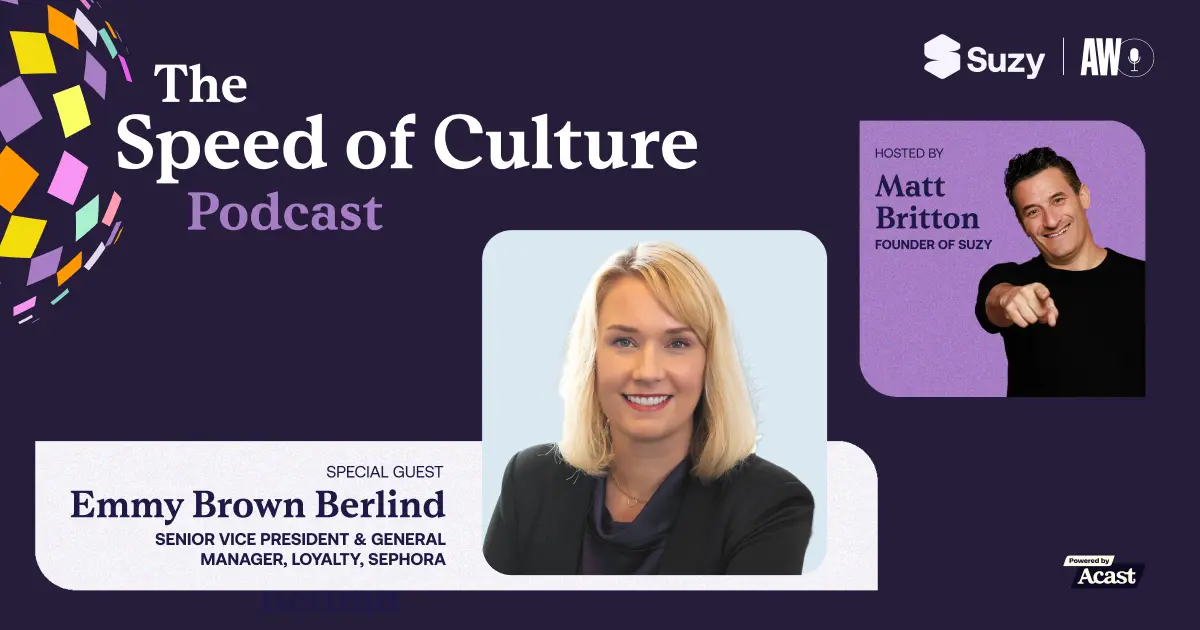
To explore how legacy programs are adapting to this seismic shift, Emmy Brown Berlind, Senior Vice President and General Manager of Loyalty at Sephora, recently sat down with host Matt Britton. Their discussion offers a masterclass in modern retail strategy, shedding light on how Sephora’s nearly 20-year-old loyalty ecosystem—the Beauty Insider program—is navigating the intersection of physical retail, human expertise, first-party data, and cutting-edge artificial intelligence.
Far from retreating into digital walled gardens, Sephora is doubling down on a holistic approach. By combining the irreplaceable tactile magic of physical stores with sophisticated first-party data, human beauty advisors, and emerging "agentic" shopping partnerships with platforms like OpenAI’s ChatGPT and Google, Sephora is proving that brand relevance in the future depends on meeting the consumer wherever their beauty journey begins.
Detailed Chronology & Strategic Evolution
The Unwavering Power of Physical Retail in an Experience Economy
As commerce has digitalized over the past two decades, many analysts predicted the eventual death of the physical storefront. Yet, Sephora’s leadership remains steadfast in its belief that brick-and-mortar locations are not merely points of sale, but critical anchors of the brand experience.
When physical retail is weighed against digital convenience, Sephora’s physical footprint continues to win because it offers something algorithms cannot replicate: sensory exploration and human expertise. Emmy Brown Berlind highlights that Sephora’s physical stores remain central to its ecosystem because the experience extends far beyond simple product access.
Key elements driving foot traffic include:
- Highly Trained Beauty Advisors: Human experts who offer customized, empathetic guidance tailored to individual skin tones, types, and personal preferences.
- Discovery-Oriented Layouts: Merchandising strategies designed to encourage physical browsing, testing, and tactile interaction.
- Tangible Rewards: Sample rewards and hands-on testing stations that allow loyalty members to try something new before committing financially.
The broader lesson for retailers and marketers is clear: digital convenience does not automatically replace physical retail when the physical store creates expertise, exploration, and sensory value that online channels struggle to reproduce.
Shifting from Transactional Rewards to Personal Recognition
As the Beauty Insider program approaches its momentous 20th anniversary, its longevity is rooted in continuous evolution. A loyalty program launched in the mid-2000s cannot survive on point-accrual mechanics alone in a market saturated with consumer choices.
Berlind explains that Sephora has systematically evolved the program around the core concept of consumer choice. A prime example of this philosophy in action is the evolution of the iconic Beauty Insider birthday gift. What was once a static, one-size-fits-all reward has been expanded into a multi-option menu—including the flexibility to choose points instead of a physical item—because clients deeply value having a voice in their rewards.
This operational philosophy reflects a broader strategic goal: loyalty should make customers feel genuinely recognized rather than simply rewarded for spending money. When a consumer feels seen and valued as an individual, the relationship transcends a basic transactional exchange and evolves into brand advocacy.
Turning Personalization into Discovery: Beauty Insider Challenges
Personalization in retail often suffers from a lack of imagination, frequently resulting in repetitive product recommendations based strictly on past purchases. Sephora has flipped this dynamic on its head by using personalization as a vehicle for discovery rather than repetition.
Launched in 2023, Beauty Insider Challenges use limited-time tasks and point-based rewards to encourage members to venture outside their comfort zones. Crucially, these tasks are dynamically personalized based on purchase history. For instance, if data indicates that a member has never purchased a hair care product at Sephora, the system may prompt them to explore that specific
category by offering targeted incentives.
The strategy has resonated profoundly with consumers. Since its launch, more than 30% of Sephora’s active clients have participated in a challenge. By guiding shoppers toward new categories in a gamified, rewarding manner, Sephora expands its share of wallet while simultaneously delivering fresh value to the consumer.
Supporting Context & Metrics: Data, AI, and the Boundaries of Trust
Leveraging First-Party Data Without Crossing the "Creepy" Line
In the digital marketing ecosystem, data is the ultimate currency. Sephora sits on an enviable goldmine: more than 90% of the brand’s sales come from Beauty Insider members. This rich, proprietary first-party data set gives the company deep insights into consumer behavior, preferences, and purchasing habits.
However, possessing vast amounts of consumer data comes with a profound responsibility regarding privacy and trust. Berlind outlines a straightforward, ethical standard for how Sephora deploys artificial intelligence: apply AI exclusively where it creates practical, tangible value for the client.
Rather than implementing flashy technology for its own sake, Sephora utilizes AI to solve real consumer pain points:
- Beauty Skin Scan: An advanced digital tool that improves shade matching and skincare recommendations by accurately analyzing individual skin tones and conditions.
- Optional AI Beauty Chat: Conversational AI assistants that remain strictly optional for the user, stepping in to assist only when requested.
By anchoring its technology stack in utility and user consent, Sephora ensures that AI earns its place in the customer journey by making the experience easier and more precise, rather than aggressively demonstrating what it knows about the shopper.
Official Statements & Leadership Philosophy
Navigating the Agentic Era of Commerce
Perhaps the most significant strategic pivot discussed by Berlind is Sephora’s positioning within the emerging "agentic" era of shopping. For decades, retail strategy has focused on driving traffic to proprietary destinations—getting the consumer to type "Sephora.com" into a browser or open the brand’s native mobile application.
Today, that paradigm is fracturing. Consumers are increasingly turning to third-party AI assistants and conversational interfaces to conduct product research, compare options, and make purchasing decisions. Sephora’s leadership recognizes that they cannot—and should not—expect every beauty journey to begin on their own website.
"We want to be wherever people are shopping for beauty," Berlind emphasizes.
This philosophy has driven Sephora to meet consumers directly within AI-powered environments. The brand has launched an application natively integrated inside ChatGPT and established a strategic partnership with Google for Agentic Checkout. These integrations allow consumers to discover, evaluate, and purchase Sephora products seamlessly without ever leaving those third-party platforms.
Ultimately, this forward-thinking strategy redefines success: it is less about aggressively protecting a proprietary destination and more about fiercely protecting brand relevance across an increasingly fragmented digital ecosystem.
The Internal Compass: Client-Friendly Decision Making
Behind every successful consumer-facing initiative lies a rigorous internal culture. Berlind traces her core leadership philosophy back to a guiding question she encountered early in her tenure at Sephora: "Is this client-friendly?"
While simple in its phrasing, answering that question affirmatively often requires navigating immense operational complexity. Designing flexible birthday gifts, structuring cross-departmental rewards programs, and engineering seamless omnichannel experiences require deep coordination across marketing, supply chain, digital, and in-store operations.
Berlind argues passionately that advocating for what clients genuinely want is an indispensable part of the job description—even when executing the simpler, internally convenient option would be far easier from an administrative standpoint. It is this unwavering commitment to the end consumer that has allowed Sephora to maintain its market leadership for two decades.
Future Outlook: The Next Frontier of Retail Loyalty
As we look toward the horizon, the intersection of loyalty, artificial intelligence, and physical retail will continue to define the winners and losers in the global retail sector.
Several critical trends will shape the future of this landscape:
- The Rise of Contextual Agents: As generative AI agents evolve from simple chat interfaces into autonomous transactional agents, brand discovery will become increasingly automated. Retailers that lack flexible API infrastructures and partnerships with major AI ecosystems risk becoming invisible to consumers who delegate their shopping decisions to algorithms.
- The Hyper-Integration of Human and Machine: The future is not purely digital, nor is it exclusively physical. The most successful brands will successfully fuse the empathy, expertise, and sensory engagement of human advisors with the predictive power and personalization capabilities of first-party AI models.
- Redefining Loyalty as a Service: Transactional point-accumulation programs will continue to lose efficacy among younger, digitally native consumers. Loyalty must transform into a holistic value-add service—offering exclusive discovery opportunities, tailored education, and frictionless cross-platform access.
Sephora’s trajectory under leaders like Emmy Brown Berlind provides a compelling blueprint for legacy brands attempting to navigate rapid technological disruption. By respecting consumer boundaries, embracing the realities of agentic commerce, and never losing sight of the tactile magic of the physical store, Sephora is ensuring that its loyalty program remains a gold standard for the next twenty years and beyond.
