

Executive Overview
The contemporary broadcasting and digital media landscape is undergoing a profound, high-stakes structural evolution. As traditional television networks navigate the treacherous waters of shifting consumer habits, declining linear viewership, and the expensive pivot to streaming economics, newsrooms are forced to make aggressive adaptations.
At the center of this dynamic period are high-profile contract renewals, sudden programming terminations, leadership retirements, and strategic digital expansions that signal where the industry is heading.
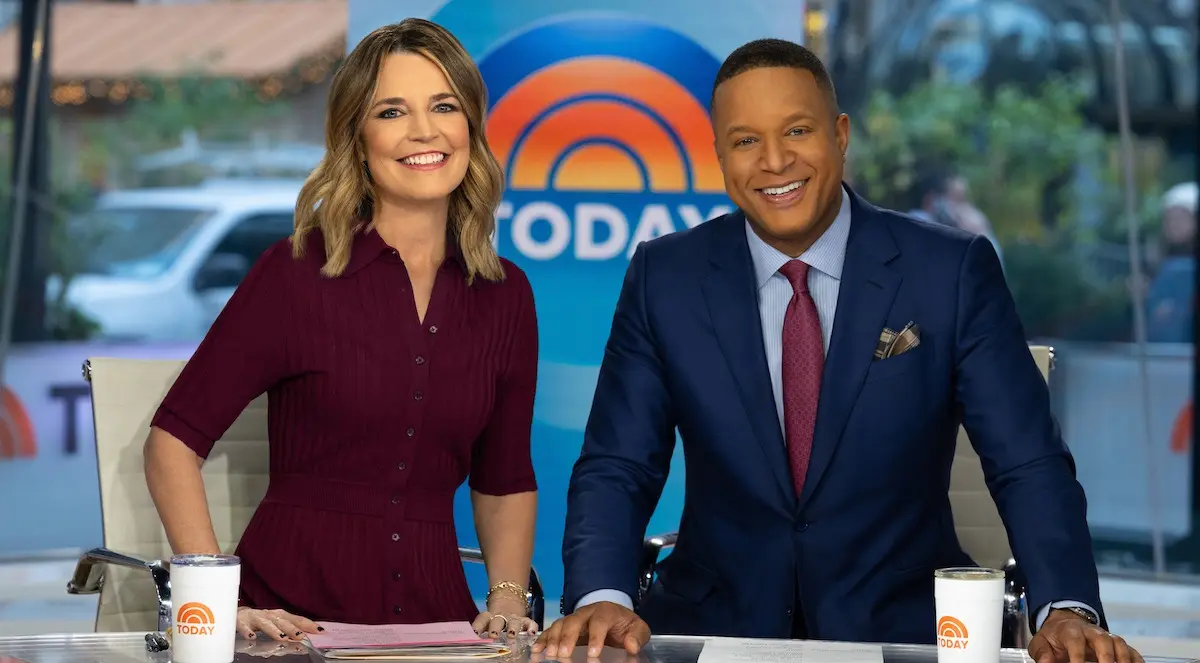
In a defining moment for morning television, marquee Today co-host Savannah Guthrie has officially committed her long-term future to NBC News, signing a major contract extension. This renewal anchors the morning franchise at a time of immense personal adversity for Guthrie, whose resilience in the face of family tragedy has profoundly resonated with viewers and stabilized the network’s ratings dominance.
Simultaneously, however, NBC News is executing hard-nosed operational cutbacks. The network has confirmed the cancellation of its prime-time streaming news venture, Stay Tuned, on NBC News Now—a move resulting in structural layoffs and a retreat to lower-cost rerun programming in the 8 p.m. ET block.
Elsewhere across the broadcast and cable ecosystem, executive suites and anchor desks are seeing seismic shifts. At CNN, chief domestic correspondent and anchor Phil Mattingly is doubling down on the digital-first model, expanding his streaming franchise CNN Breaks It Down into a twice-weekly live broadcast and video podcast.
Simultaneously, a leadership transition is sweeping through the upper echelons of Sunday morning political broadcasting. Mary Hager, the legendary senior executive producer of CBS News’ Face the Nation and the network’s executive editor of politics, has announced her retirement after a transformative 15-year tenure. This departure is compounded by the relocation of executive producer Anne Hsu to the network’s Hong Kong bureau, leaving CBS to restructure one of the most prestigious public affairs broadcasts in American journalism.
Finally, political reporting talent continues to shuffle between digital outlets and cable news, highlighted by Abby Livingston’s high-profile jump from Puck to MS NOW as a political reporter.
This comprehensive report examines the multifaceted forces reshaping the American media industry, analyzing the financial metrics, executive decisions, and human stories driving the news cycle.
Detailed Chronology of Industry Developments
1. The Savannah Guthrie Contract Extension and Today’s Resilience
For Savannah Guthrie, the past year has been an agonizing crucible. While coping with the unimaginable trauma of her mother’s sudden abduction from an Arizona residence—an ongoing ordeal that has captured national headlines—Guthrie has maintained a steady, consummate professionalism on America’s airwaves. Refusing to let personal tragedy compromise her professional obligations, she has continued to lead Today alongside co-anchor Craig Melvin with trademark grace and journalistic rigor.
NBC News leadership, acutely aware of Guthrie’s irreplaceable value to the franchise and her deep connection with the morning viewing audience, acted swiftly to secure her services long-term. Industry reports indicate that Guthrie has officially signed a lucrative contract extension, ensuring that her stabilizing presence will remain a cornerstone of NBC’s morning schedule for years to come.
This renewal comes on the heels of sustained ratings success for the Today franchise. Despite fierce, round-the-clock competition from ABC’s Good Morning America and CBS’s CBS Mornings, Today has consistently demonstrated robust audience engagement. This durability directly translates to commercial supremacy, keeping advertisers heavily invested in the franchise.
2. NBC News Downscales Streaming: The Canceled Stay Tuned Era
While the linear morning cash cow remains fortified, NBC News is aggressively trimming fat in its digital streaming division. In a strategic pivot away from expensive original streaming productions, NBC News announced the cancellation of Stay Tuned, its prime-time news show airing on the digital platform NBC News Now.
The program, which carved out a niche by delivering news tailored to digital-first audiences at 8 p.m. ET, aired its final episode on a Wednesday. In an internal communication addressing the changes, network executives confirmed that host Gadi Schwartz will remain with the broader NBC News family, retaining a prominent role within the organization. However, the cancellation has inevitably resulted in a handful of job eliminations. Impacted staffers have been encouraged to apply for alternative openings across the company’s corporate career portal.
To fill the now-vacant 8 p.m. ET hour on NBC News Now, the network is pivoting to a lower-overhead programming strategy: utilizing reruns of established linear news programming. This move underscores a broader industry-wide realization that producing costly, original daily news programming exclusively for free or ad-supported streaming platforms often fails to yield the margins required to justify the overhead in an austere economic climate.
3. CNN Doubles Down on Digital: CNN Breaks It Down Expansion
While NBC scales back its streaming footprint, CNN is doubling down on targeted, personality-driven digital programming designed to meet audiences where they consume media. On Tuesday, CNN officially relaunched and expanded CNN Breaks It Down, hosted by prominent chief domestic correspondent and anchor Phil Mattingly.
Under the new format, the streaming series has shifted to a robust twice-weekly production schedule, airing live on Tuesdays and Thursdays at 10 a.m. ET. Recognizing the shifting consumption habits of modern news consumers, CNN has structured the project as both a live broadcast—available on CNN All Access—and an on-demand video podcast accessible across all major podcast platforms.
The strategic focus of the expanded show centers on translating complex macroeconomic, political, and business issues into accessible insights that directly impact everyday citizens. By leveraging Mattingly’s analytical prowess and reputation for breaking down convoluted policy debates, CNN is seeking to capture younger, digitally native demographics who have largely abandoned traditional cable bundles.
4. Leadership Upheaval at CBS News: Face the Nation Loses Its Vanguard
In the realm of Sunday morning public affairs, an era is coming to a close. Mary Hager, the formidable senior executive producer of CBS News’ legendary Face the Nation and the network’s executive editor of politics, has announced her retirement. Hager’s departure in January marks the end of a remarkable 15-year run at the helm of the program, during which she cemented the broadcast’s reputation as an indispensable Sunday destination for political heavyweights, lawmakers, and presidential contenders.
Hager’s leadership has been defined by sharp editorial vision, rigorous journalistic standards, and an innate ability to shape the national political conversation. Her retirement leaves monumental shoes to fill.
Compounding the transition, Face the Nation is also losing executive producer Anne Hsu. Rather than departing the network entirely, Hsu is embarking on a major international relocation, heading overseas to take on a new leadership role within CBS News’ vital Hong Kong bureau. These concurrent departures present incoming CBS News leadership with the urgent task of completely restructuring the creative and operational spine of one of American television’s most storied historical franchises.
5. Cable and Digital Talent Movements: Abby Livingston Joins MS NOW
Rounding out the recent wave of industry personnel shifts, MS NOW has announced the strategic hire of political reporter Abby Livingston. Livingston joins the network after building a stellar reputation in elite political journalism, most recently serving at the digital media outlet Puck.
Prior to her tenure at Puck, Livingston established herself as an authoritative voice on Capitol Hill, covering the granular mechanics of federal legislation and congressional power dynamics for esteemed publications including The Texas Tribune and Roll Call. Her addition to the MS NOW team signals the network’s ongoing commitment to deepening its enterprise political reporting capabilities as the nation careens toward future electoral cycles.
Supporting Context & Financial Metrics
To fully appreciate these personnel and programming shifts, one must examine the hard financial realities driving the contemporary television and streaming market.
The Undeniable Power of Linear Morning Television
While Wall Street and media analysts obsess over cord-cutting and subscriber churn in the streaming sector, traditional linear morning television remains an astonishingly lucrative profit engine. According to comprehensive industry data compiled by Guideline, the 7 a.m. to 9 a.m. ET morning news block remains an advertiser’s paradise.
In 2025 alone, the Today show window generated a staggering $203.5 million in advertising revenue. This immense financial performance explains why NBC News is willing to invest heavily to keep anchors like Savannah Guthrie locked into long-term contracts. Morning news is not merely a journalistic exercise; it is a vital commercial pillar that subsidizes broader newsgathering operations across the entire network.
The Streaming Reality Check
Conversely, the economic architecture of ad-supported and subscription-based streaming news services has proven far more volatile. Initial excitement over cord-cutting led legacy networks to launch dedicated streaming channels—such as NBC News Now—populated with original programming like Stay Tuned.
However, monetization models for streaming news have struggled to match the high cost of original daily production. Unlike prime-time broadcast hits or lucrative morning shows, streaming news viewers often exhibit lower brand loyalty and fragmented consumption habits, making it difficult to command top-tier advertising rates.
NBC’s decision to cancel Stay Tuned and replace its 8 p.m. slot with recycled linear footage is a bellwether for the industry. Networks are entering a phase of fiscal consolidation, pruning unprofitable digital experiments to protect their core profit margins.
Official Statements and Industry Reactions
The cascade of announcements has generated significant reaction from network executives, media analysts, and the journalists themselves.
Regarding the strategic evolution of CNN Breaks It Down, CNN Communications emphasized the mandate to connect macro-level economic realities with the everyday concerns of viewers. In an official statement released via social media, the network highlighted the show’s core mission:
"CNN announced today that CNN Breaks It Down with Phil Mattingly is expanding to a twice-weekly live show and video podcast, breaking down what the biggest questions in business, economics and politics mean for your life and wallet."
While CNN leans into digital expansion, the mood at NBC News remains more subdued following the restructuring of NBC News Now. Internal memorandums leaked to media reporters indicate that management is expressing gratitude to Gadi Schwartz and the Stay Tuned production team for their innovative work in building a youth-oriented digital news brand. At the same time, leadership is actively working to redeploy displaced personnel, emphasizing that the company’s career portal remains open to internal applicants seeking new roles within the broader NBCUniversal ecosystem.
At CBS News, tributes have begun pouring in for Mary Hager as she prepares for her January retirement. Colleagues across the network have praised her steadfast dedication to journalistic integrity, noting that Face the Nation maintained its competitive edge and elite status under her 15-year guidance precisely because she refused to sacrifice depth for superficial sensationalism.
Future Outlook: What Lies Ahead for Broadcast and Digital Media
As the media industry looks toward the horizon, several dominant trends are crystallizing from this recent flurry of developments.
1. The Consolidation of Linear Assets
As demonstrated by NBC’s protection of Savannah Guthrie and Today, networks will continue to aggressively shield their core, cash-generating linear franchises. In an era of economic uncertainty, leadership teams are risk-averse. They are leaning into proven star power and trusted formats that guarantee advertiser revenue, rather than gambling on speculative concepts.
2. The Rationalization of Streaming
The era of "streaming at all costs" is officially over. The cancellation of Stay Tuned serves as a cautionary tale for digital news divisions. Moving forward, streaming news operations will likely focus on low-overhead, high-efficiency models—such as repurposed linear content, live-event coverage, and versatile video podcasts (exemplified by CNN’s strategy with Phil Mattingly)—rather than expensive, dedicated daily studio productions.
3. Executive Turnover and the Next Generation of Leadership
The departure of titans like Mary Hager at CBS News marks a generational turnover in television news production. As veteran producers and executives retire, a new wave of leadership must step up to navigate an increasingly complex media ecosystem where linear ratings are declining, digital platforms are changing by the month, and audience trust in institutional media is under constant scrutiny.
Ultimately, the events of this week illustrate an industry caught in a permanent state of reinvention. Whether through securing marquee talent to weather personal and professional storms, trimming unprofitable digital fat, or reshaping Sunday morning institutions, media companies are making ruthless, calculated bets on how information will be produced, distributed, and monetized in the years to come.
