

Executive Overview
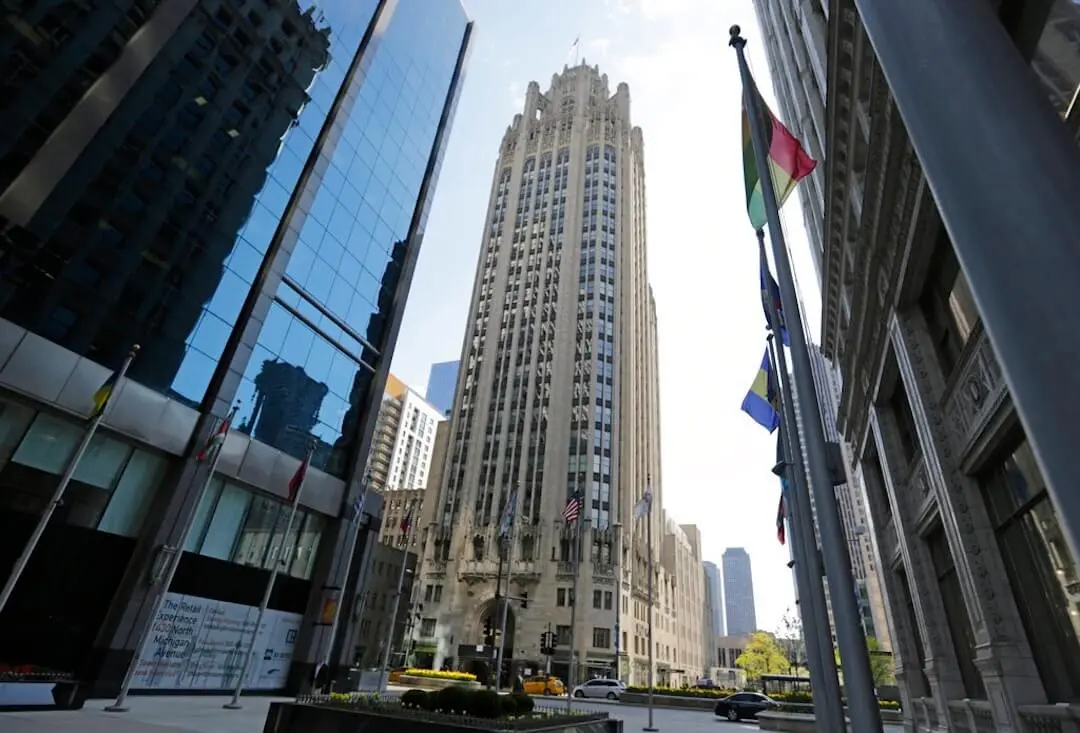
For well over a century, the physical newsroom served as the beating heart of civic life in towns and cities across the globe. Towering stone headquarters, such as Chicago’s Tribune Tower or the former Philadelphia Inquirer building, stood as monumental symbols of local accountability, a tangible manifestation of the free press embedded directly within the urban landscape.
Today, that landscape is undergoing a profound and rapid transformation. Driven by severe economic pressures, the acceleration of remote work models, and an industry-wide contraction, traditional newsrooms are vanishing at an unprecedented rate. Outlets are trading sprawling urban footprints for remote operations, shared co
-working spaces, or modest suburban strip malls—and in many cases, disappearing entirely.
While digital-first outlets like the award-winning Colorado Sun have proven that high-caliber, investigative journalism can thrive without a permanent brick-and-mortar office, the physical dismantling of the newsroom carries hidden costs. Scholars, editors, and urban planners warn that the loss of these spaces threatens more than just operational convenience; it erodes the informal mentorship, cultural continuity, and community visibility that have historically sustained the journalism profession. As news organizations adapt to a decentralized world, the industry faces an urgent question: how to preserve the institutional soul of journalism when the room where it happens no longer exists.
Detailed Chronology: The Shrinking Footprint of American Media
The retreat from the physical newsroom is not a sudden phenomenon, but a decades-long evolution accelerated by economic decline, changing corporate structures, and, most recently, the disruptions of the COVID-19 pandemic.
- 2004: A major physical anchor of American journalism vanishes as the historic Chicago Sun-Times headquarters along the Chicago River is demolished to make way for commercial luxury development, setting an early precedent for the monetization of prime media real estate.
- 2015: Demolition concludes on the former Miami Herald headquarters at One Herald Plaza. The 15.5-acre waterfront site remains largely idle for years, signaling the departure of legacy media from downtown urban cores.
- 2018: The Chicago Tribune famously exits the iconic Tribune Tower, relocating to a series of temporary spaces before consolidating operations entirely at a printing facility—symbolizing a broader industry shift away from cathedral-like civic headquarters toward utilitarian production centers. Concurrently, the Colorado Sun is founded in Denver as a digital-first, reporter-owned publication, successfully proving that award-winning journalism can launch without a physical newsroom.
- 2020–2021: The COVID-19 pandemic forces widespread, emergency remote-work protocols. As pandemic-era safeguards wane, many outlets choose not to renew their commercial leases, accelerating the permanent adoption of distributed newsrooms. In Milwaukee, the former Journal Sentinel building is successfully converted into student housing and apartments.
- 2022: The historic home of The Philadelphia Inquirer and the Daily News officially transitions into the new headquarters of the Philadelphia Police Department, completing a symbolic role reversal in civic architecture.
- 2023: The Southern Illinoisan is sold to Paxton Media Group, which subsequently eliminates its entire local news staff and relocates operations 17 miles away from Carbondale to Marion, leaving residents questioning whether the paper even exists.
- 2025: Prominent regional legacy papers continue dramatic downsizing. The Richmond Times-Dispatch completely abandons its longtime headquarters after having already slashed its operational footprint from 160,000 square feet down to 10,000. Meanwhile, the Colorado Sun dominates regional competitions, winning the prestigious Public Service award for the second consecutive year despite maintaining its completely decentralized structure.
- 2026: In Ohio, Toledo’s The Blade vacates its century-old downtown headquarters and transitions staff to remote work, while its parent company explores emergency asset sales. Concurrently, academic institutions like Northwestern University’s Medill School of Journalism document climbing rates of newsroom closures, highlighting an unfolding crisis in community connection.
Supporting Context & Metrics: The Tangible and Intangible Losses
The physical decline of local journalism encompasses two parallel trends: the macroscopic loss of newspaper buildings that anchored civic identity, and the microscopic loss of daily, in-person professional interaction.
The Architectural and Community Impact
For generations, newspaper offices acted as familiar beacons in their cities. Subscribers walked through their doors to place advertisements, report local tips, or purchase physical copies. Reporters could step out onto the street and instantly immerse themselves in the municipal rhythms of City Hall, local courts, and neighborhood businesses.
When these buildings are sold, demolished, or repurposed—such as the transformation of The Southern Illinoisan’s former Carbondale home into a U-Haul rental office—the psychological connection between a community and its news source frays. As academic researchers have noted, citizens frequently mistake a newsroom’s relocation or digitization for its outright death. When an outlet moves miles away to a suburban strip mall, the public visibility of the press drops precipitously.
The Hidden Costs of Decentralization
While digital tools like Slack, Zoom, and shared cloud drives allow modern journalists to write, edit, and publish from virtually anywhere with an internet connection, they fail to capture the informal learning environment of a traditional newsroom.
Social science research consistently underscores the value of proximity in professional development. Foundational studies on newsroom culture—dating back to Warren Breed’s landmark 1955 research and reinforced by contemporary scholars like University of Colorado assistant professor Patrick Ferrucci—demonstrate that younger journalists absorb ethical standards, institutional norms, and reporting techniques organically. Listening to a senior editor handle a difficult source, or leaning over a colleague’s shoulder to workshop a headline, provides a masterclass in the craft that cannot be easily replicated through a video conference window.
Furthermore, physical newsrooms historically housed invaluable institutional assets: comprehensive historical archives, dedicated photo studios, and localized reference libraries. Their disappearance risks generating a transient culture of journalism where institutional memory is easily lost.
Official Statements & Industry Perspectives
Industry leaders, urban designers, and veteran journalists offer diverse perspectives on the shift away from physical offices, balancing economic necessity against cultural preservation.
“We miss the social values of the physical newsroom, where you were in community with the people who worked next to you. This environment helped encourage team feelings and promoted an understanding that none of us were on an island. We do not have the luxury, now, of inviting someone to roll up a chair while their story is edited.”
— Dana Coffield, Editor and Co-Founder, The Colorado Sun
The tension between practical financial savings and organizational health is felt far beyond the media sector. Jim Prendergast, a Chicago-based design director and principal at Gensler, notes that while the financial metrics of office space are easily calculated, the intangible "alchemy of knowing and being with one another" carries profound organizational weight.
“The counterpoint to people saying that we don’t need a newsroom is you’re cutting at the fabric of the organization. You do that at your own peril.”
— Jim Prendergast, Principal, Gensler
For veterans of legacy print media, the physical separation from the communities they cover remains a profound loss. Randall Beach, who spent much of his career at the New Haven Register when its downtown office sat squarely within walking distance of City Hall and Yale University, reflects on the fading intimacy between reporters and their readership.
“What’s been lost is the connection to the community. The ability to connect with New Haveners, city officials downtown, the street people… Reporters could come into the newsroom, read the paper and talk about each other’s stories. They could bounce story ideas and leads off one another.”
— Randall Beach, Veteran Journalist
Meanwhile, academic researchers like Dr. Nik Usher of the University of San Diego emphasize the branding and visibility losses associated with vanishing media architecture.
“These are diminished physical reminders, from no longer getting print to not seeing news buildings in the sky of their city. There are these branding things that happen without people noticing.”
— Nik Usher, Associate Professor, University of San Diego
Future Outlook: Rebuilding the Newsroom Culture in a Digital Age
As the dust settles on the physical contraction of the news industry, pioneering digital operations are actively experimenting with ways to artificially cultivate the collaboration and mentorship once generated by shared office space.
The Colorado Sun, despite operating entirely remotely, has instituted structured, staff-directed monthly training sessions designed to bridge the generational and skill gaps left by the absence of traditional newsrooms. These sessions range from workshops on vertical video production—funded by grants from organizations like the Pulitzer Center—to strategic seminars on concise digital writing and investigative techniques. By treating professional development as an explicit institutional duty rather than a passive byproduct of proximity, the Sun aims to nurture the next generation of editors and reporters.
Nevertheless, significant challenges remain. Marilyn Halstead, editor at The Southern Illinoisan, continues her daily efforts simply to remind the regional public that her decimated news staff remains operational. Freelance journalists like Randall Beach continue to hit the pavement independently, recognizing that local reporting ultimately demands a physical presence in the streets, even if the newsroom itself has been downsized into oblivion.
Ultimately, the consensus among media analysts is clear: while journalism can survive, and even win top awards, without a physical building, it cannot survive without intentional human connection. Whether maintained through rented co-working spaces, deliberate virtual mentorship programs, or boots on the ground in the community, the future of the press depends entirely on whether media leaders actively choose to invest in its cultural fabric.
