

Executive Overview
The 2026 midterm elections delivered a historic, dual-layered verdict on American political culture, exposing a stark partisan paradox regarding LGBTQ+ rights and representation. On one side of the ledger, the results showcased a profound expansion of queer political power. From New England to the heart of Texas, openly LGBTQ+ candidates and their allies shattered historical glass ceilings, while traditional anti-gay political strategies failed to yield their historical efficacy. Voters increasingly rejected the weaponization of sexual orientation, signaling a cultural maturation in several key battleground races.
However, this progressive leap forward coexisted with a sobering counter-narrative. On the very same ballots where voters demonstrated acceptance—or outright indifference—toward gay candidates, electorates in multiple states advanced restrictive measures targeting transgender youth. Measures restricting athletic participation and gender-affirming care passed or held strong leads in states like Arizona, Nebraska, Colorado, and Washington.
This analysis explores the complex dynamics of the 2026 midterms. It evaluates the historic breakthroughs of figures like U.S. Senator-elect Chris Pappas and state-level victors, examines the diminishing returns of anti-gay political rhetoric, and confronts the strategic relocation of conservative animus toward the transgender community. Ultimately, the midterms presented a profound challenge to the broader LGBTQ+ coalition: how to reconcile hard-fought political inclusion with a persistent, shifting wave of legislative hostility directed at its most vulnerable members.
Detailed Chronology of Key Electoral Outcomes
The landscape of the 2026 midterms was shaped by a series of localized battles that collectively redrew the map of representation and prejudice.
The New Hampshire Senate Breakthrough
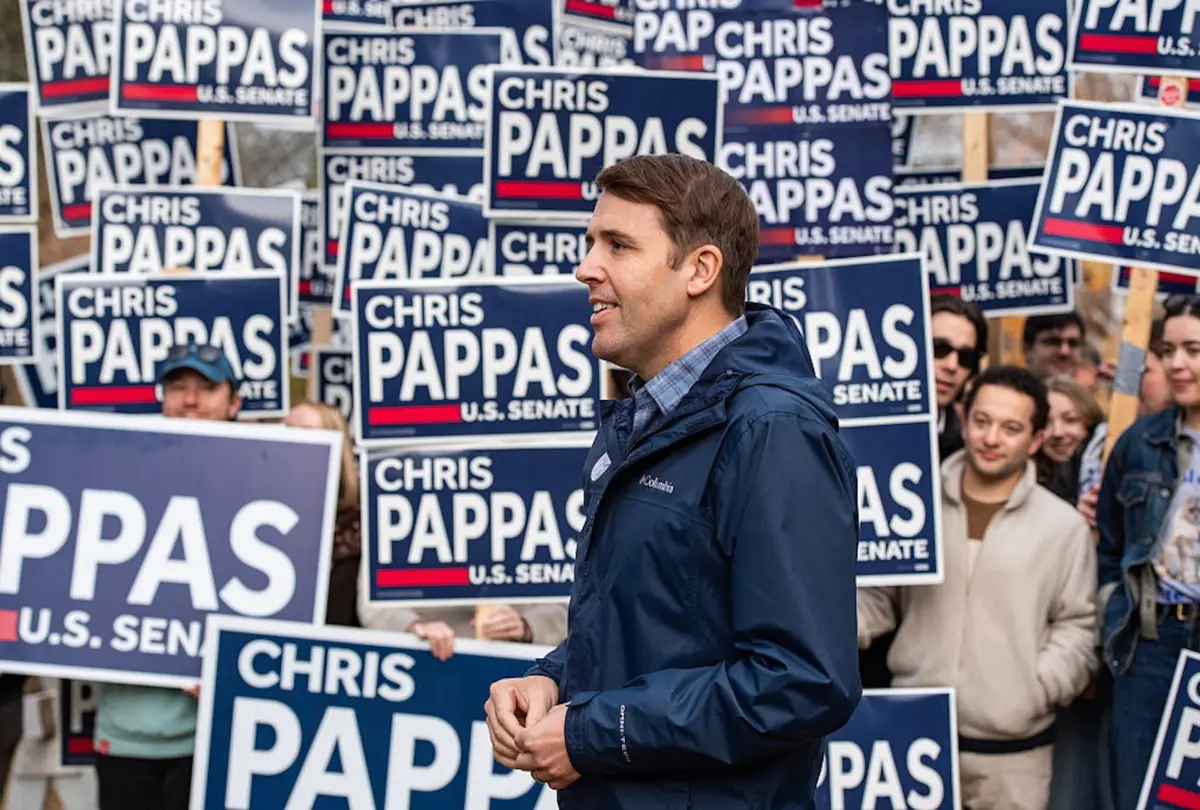
On Tuesday night, November 3, 2026, New Hampshire U.S. Representative Chris Pappas secured a historic victory in his bid for the United States Senate. Defeating a competitive field in a closely watched New England contest, Pappas became the first openly gay man ever elected to the upper chamber of the United States Congress. His victory contributed significantly to the Democratic Party’s margin, helping secure control of the Senate. For political observers, Pappas’s ascension marked a milestone for a state traditionally viewed as a pragmatic swing territory, proving that institutional barriers to high-level federal office have fallen for gay men.
Mid-America and Southern Shifts
The momentum extended far beyond the Northeast. In Indiana, J.D. Ford achieved a milestone by unseating a Republican incumbent to secure a seat in the state’s legislative House, building upon his prior historic footprint as the state’s first openly gay legislator.
Perhaps the most startling regional disruption occurred in Texas. James Talarico, a Democratic candidate running in a historically conservative statewide landscape, defeated high-profile opponent Ken Paxton to secure a major statewide office—marking the first time a Democrat won statewide in Texas in over thirty years. This victory carried unique symbolic weight: reports indicated that anti-LGBTQ+ messaging constituted Paxton’s single largest category of campaign advertising. Furthermore, the national campaign trail featured prominent figures, including the vice president of the United States, utilizing Talarico’s identity as a comedic wedge. Talarico’s victory, achieved as a straight candidate weathering targeted homophobic dog-whistling, underscored the declining utility of identity-based attacks in diversifying Southern electorates.
The Long Island Test Case
On Long Island, New York, a compelling test of resilience played out in a congressional district previously carried by Donald Trump. Democratic candidate Chris Gallant faced an aggressive smear campaign when his private photographs were leaked online in an explicit attempt to sink his political viability. Rather than retreating, Gallant leaned into his identity and community ties, running a defiant race against entrenched incumbent Republican Nick LaLota.
While Gallant ultimately conceded on Wednesday, trailing by a narrow margin of approximately 6,700 votes (roughly two percentage points), his performance stunned political forecasters. By coming within striking distance of flipping a safely rated Republican seat while carrying the full weight of a targeted outing scandal, Gallant demonstrated that the politics of sexual shame no longer guarantee an automatic political execution.
The Down-Ballot Transgender Backlash
Simultaneously, the electoral map revealed a darker trend regarding transgender rights. In Arizona and Nebraska, voters approved ballot measures explicitly barring transgender girls from participating in female scholastic sports categories. In Colorado, two parallel initiatives—one addressing sports participation and another restricting specific surgical care pathways for minors—advanced with narrow leads. Meanwhile, in Washington State, a ballot initiative designed to exclude transgender youth from female sports teams passed comfortably.
Supporting Context & Metrics: The Dulling of an Old Weapon
For decades, the political playbook of American conservatism relied heavily on moral panic surrounding sexual minorities. From the 1990s battles over military service and marriage equality to localized school board fights, the invocation of deviance or threat was a reliable tool for mobilizing base voters and driving turnout.
The 2026 midterms, however, revealed structural fractures in this strategy. Quantitatively, the data indicates that running explicitly anti-gay campaigns failed to anchor conservative victories in high-stakes environments:
- The Texas Statewide Shift: Despite millions of dollars and heavy airtime dedicated to anti-LGBTQ+ and culturally regressive messaging against Talarico and his ticket-mates, the conservative strategy failed to insulate the incumbent from defeat.
- The Suburban Resilience: On Long Island and in competitive districts across New Hampshire and the Midwest, voters systematically separated personal identity from legislative competence. The attempted weaponization of Chris Gallant’s personal life resulted in a near-miss upset rather than a blowout defeat, proving that suburban swing voters are increasingly fatigued by personal smear tactics.
Sociologically, this suggests that gay men and lesbians have crossed a threshold of cultural integration. Having achieved a baseline level of social normalization, institutional representation, and visibility, gay candidates are frequently evaluated by constituents on standard metrics of governance—inflation, healthcare, and infrastructure—rather than culture-war caricatures. Gays, in essence, have become powerful enough, visible enough, and integrated enough to be largely left alone by the median voter.
Yet, this dynamic exposes a grim corollary. Political machines that rely on out-group hostility require an active target to sustain voter mobilization. When one demographic achieves sufficient social protection, the apparatus of cultural grievance simply redirects its focus toward a more vulnerable population: transgender individuals, particularly youth.
Official Statements and Campaign Reactions
The duality of the election results prompted complex, introspective responses from political figures, civil rights organizations, and commentators navigating the new landscape.
In his concession speech on Long Island, Chris Gallant refused to adopt the posture of personal humiliation intended by those who leaked his private images. Addressing his constituents, Gallant framed his candidacy not around scandal, but around service, maintaining his identity as a neighbor and a community member to the very end. His refusal to apologize for his private life set a new benchmark for how candidates can respond to bad-faith opposition research in the digital age.
Conversely, advocates for transgender rights expressed profound alarm at the coordinated wave of state-level ballot measures. Civil rights organizations issued statements condemning the legislative targeting of minors, noting that while adult gay candidates celebrate hard-won electoral milestones, transgender children are being systematically turned into legislative scapegoats.
Political analysts noted a palpable tension within progressive and liberal political circles. The temptation to celebrate a "rainbow wave" of historic firsts—such as Pappas’s Senate seat and Ford’s legislative win—clashed immediately with the sobering reality of the anti-trans measures passing in Western and Midwestern states. Leaders within the broader coalition warned against the dangers of selective amnesia, emphasizing that a civil rights movement cannot afford to accept institutional protection for its most visible members while abandoning its most exposed youth.
Future Outlook: The Imperative of Solidarity
The 2026 midterm elections will be remembered as a watershed moment for queer political representation, but they also serve as an urgent warning about the mechanics of political backlash.
As the dust settles on the legislative chambers of Washington, Concord, Indianapolis, and Austin, the immediate future of American politics will likely see an intensification of battles over transgender rights. The playbook utilized against gay men in previous decades has been systematically updated, digitized, and deployed against trans children and their families. School boards, athletic associations, and state legislatures will remain primary battlegrounds for these cultural frictions.
For the broader LGBTQ+ community and its political allies, the path forward requires confronting this split screen with clear eyes. The victories of Chris Pappas, J.D. Ford, and James Talarico demonstrate that bigoted wedge issues can be defeated when met with institutional competence, economic populism, and an absolute refusal to submit to shame.
The strategic imperative now is to extend that same refusal to the current targets of the political machine. The historical lesson learned by the gay community—that enduring safety cannot be achieved while leaving marginalized segments behind—must be applied outward. Until the legislative targeting of transgender youth ceases to be a viable political strategy, the celebration of queer political power will remain incomplete, shadowed by the cost paid by the most defenseless members of the broader community.
