

Published: November 4, 2026
Dateline: DETROIT, Michigan
Executive Overview
In what has crystallized as one of the most dramatic and closely watched electoral showdowns of the 2026 midterm cycle, Democrat Dr. Abdul El-Sayed has triumphed over Republican Mike Rogers to capture Michigan’s open U.S. Senate seat. The Associated Press called the race shortly after 2:00 a.m. on Wednesday, projecting El-Sayed to a decisive victory with a roughly seven-point lead over his GOP rival.
The high-stakes contest, triggered by the retirement of veteran Democratic Senator Gary Peters, became a national bellwether. It tested the ideological boundaries of the Democratic Party, the durability of Donald Trump’s influence in the industrial Midwest, and the escalating political weight of the progressive wing. For El-Sayed—a physician, former Detroit health director, and prominent progressive standard-bearer—the victory caps off a massive night for left-leaning movements nationwide. Yet, this milestone was achieved only after surviving a turbulent closing weekend defined by intraparty mutiny, a high-profile defection, and a last-minute scramble that galvanized the state’s progressive base.
Detailed Chronology: From Primary Battles to Late-Stage Drama
The August Primary and the Path to the General Election
The foundations of this pivotal race were laid during a bruising August Democratic primary. El-Sayed competed against a crowded field of seasoned politicians, most notably U.S. Representative Haley Stevens. Running on an unapologetically progressive platform focused on universal healthcare, economic equity, and environmental justice, El-Sayed mobilized a vast network of grassroots volunteers, young voters, and working-class urban coalitions to secure the nomination.
However, the primary left raw nerves within the party apparatus. While El-Sayed represented the energetic progressive wing, moderate establishment Democrats harbored deep reservations about his platform and foreign policy stances. Despite these internal frictions, the general election quickly shaped up to be a classic ideological clash between two distinct visions for Michigan’s future.
On one side stood El-Sayed, championing expanded healthcare access, systemic cost-of-living reductions, and investments in green energy. On the other stood Republican Mike Rogers, a former U.S. representative and House Intelligence Committee chairman. Rogers anchored his campaign firmly in traditional conservative orthodoxy: bolstering domestic manufacturing, enacting sweeping tax cuts, and leveraging his close alignment with Donald Trump to court working-class voters in Michigan’s suburban and rural enclaves.
The 48-Hour Political Earthquake
With pre-election polls showing a tightening race and more than 2.3 million Michigan voters having already cast their ballots by Monday via early voting and mail-in infrastructure, the contest was primed for a photo finish. Then, an unexpected political earthquake struck just 48 hours before the opening of precinct doors on Tuesday.
In a move that stunned political observers nationwide, Representative Haley Stevens—El-Sayed’s primary rival—publicly endorsed Republican Mike Rogers during a dramatic appearance at a Detroit church. The public defection of a sitting Democratic congresswoman to her party’s general election opponent sent immediate shockwaves through the Michigan political landscape.
Stevens cited sharp disagreements with El-Sayed over foreign policy, specifically regarding Israel, as well as broader concerns about the ideological direction of his campaign. The endorsement was immediately weaponized by the Rogers campaign, which rushed to amplify Stevens’s statements in television spots, digital ads, and final rally speeches across the state.
The Backlash and Mobilization
The fallout within the Democratic Party was instantaneous and fierce. State and national party leaders condemned Stevens’s maneuver, labeling it an egregious betrayal designed to sabotage the party’s chance of holding a critical Senate majority. The internal fracture extended directly into Stevens’s own congressional office, prompting a wave of high-profile staff resignations in protest of her endorsement.
Rather than collapsing under the weight of the late-breaking controversy, the El-Sayed campaign engineered an immediate counter-offensive. Campaign operations pivoted swiftly from damage control to mobilization, framing the betrayal as an attempt by the political establishment to thwart the will of primary voters.
The strategy yielded staggering results. On Sunday alone, the El-Sayed campaign reported a massive fundraising haul of $2.4 million, fueled by small-dollar donations from across the country. Simultaneously, Michigan Democratic party officials reported an unprecedented surge in volunteer sign-ups, with grassroots organizers flooding phone banks and staging aggressive door-to-door get-out-the-vote operations to neutralize the impact of the Stevens controversy.
Supporting Context & Metrics
The 2026 Michigan Senate race stands out not only for its drama but for the structural dynamics that shaped its outcome.
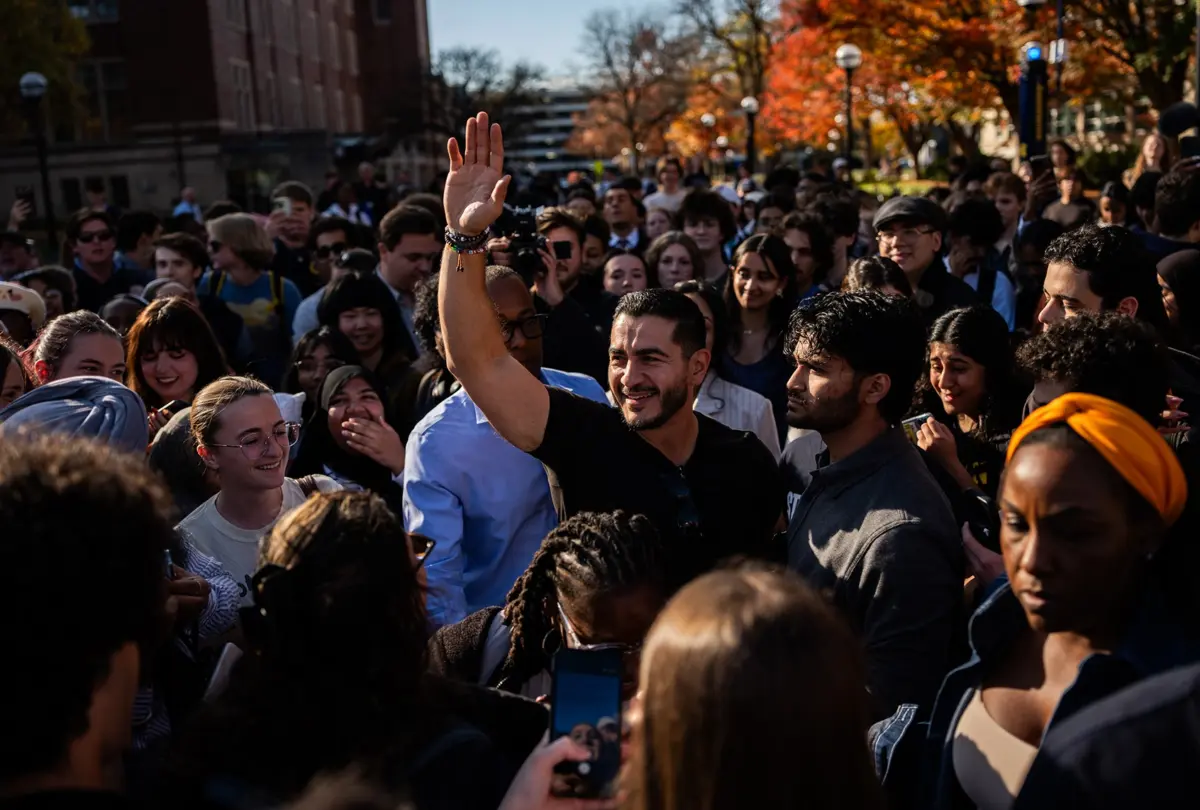
- The Electoral Map and Turnout: Michigan remains a quintessential purple battleground state, yet progressive mobilization in urban centers like Detroit, Grand Rapids, and Ann Arbor—anchored by strong student turnout at institutions such as the University of Michigan—proved resilient. Early voting metrics released by the Associated Press showed that over 2.3 million citizens had voted prior to Election Day, establishing a high-turnout baseline that historically favors broad-coalition candidates.
- Financial and Organizational Footprint: While Rogers leveraged traditional corporate and conservative PAC funding alongside high-profile endorsements, El-Sayed’s campaign demonstrated the formidable power of a decentralized, grassroots donor network. The late-weekend surge of $2.4 million in 48 hours underscored a nationalized progressive donor base eager to secure a Senate seat in the Rust Belt.
- Shifting Demographics: El-Sayed’s victory highlights a shifting demographic reality in Michigan, where urban progressivism and multi-ethnic coalitions are increasingly capable of overcoming traditional rural-suburban conservative margins when paired with high turnout.
Official Statements
Reactions to the race’s culmination poured in as the Associated Press projected El-Sayed’s victory in the early hours of Wednesday morning.
Addressing a jubilant crowd of supporters in Detroit after the race was called, Dr. Abdul El-Sayed emphasized unity and the core tenets of his campaign:
"Tonight proves that when we refuse to compromise on the dignity of working people, when we fight for healthcare as a human right, and when we build a movement from the ground up, we can win. To every Michigander who knocked on a door, made a phone call, or cast a ballot over these past grueling months: this victory belongs to you. We are going to Washington to ensure that our government works for the working class, not the privileged few."
Conversely, Mike Rogers addressed his supporters in a concession statement, reflecting on a hard-fought battle and acknowledging the unique headwinds of the final weekend:
"While this is not the outcome we hoped for, I am immensely proud of the campaign we ran, the issues we raised, and the relentless focus we maintained on bringing good-paying manufacturing jobs back to Michigan. We fought for an economy that puts Michigan families first, and I wish Dr. El-Sayed success as he steps forward to represent our state in the United States Senate."
National Democratic leadership also weighed in on the significance of the win. While party officials privately breathed a sigh of relief that the late-stage defection engineered by Representative Haley Stevens ultimately failed to sink the ticket, public statements focused squarely on the broader implications of holding the seat.
Future Outlook
Dr. El-Sayed’s victory marks a watershed moment for the progressive movement, signaling that populist left-wing platforms can successfully capture competitive statewide offices in critical industrial battleground states. As he prepares to transition from the campaign trail to the halls of Capitol Hill, several key questions lie ahead:
- Legislative Priorities: El-Sayed enters the U.S. Senate with a mandate centered on healthcare reform, economic equity, and climate investments. Observers will closely watch how he navigates a legislative body known for institutional inertia, particularly regarding whether he chooses to act as an insurgent progressive voice or a pragmatic coalition-builder.
- Intraparty Reconciliation: The deep wounds opened by the primary fight and Haley Stevens’s eleventh-hour endorsement of Mike Rogers will require careful political management. Healing the rift between Michigan’s moderate establishment and its energized progressive wing will be vital for Democratic cohesion in future cycles.
- The Post-Trump Midwest: By defeating a high-profile Republican backed heavily by Donald Trump’s political apparatus, El-Sayed has provided a blueprint for how Democrats can counter MAGA-aligned populism in the Rust Belt: through aggressive economic populism, energetic grassroots organizing, and an uncompromising focus on working-class material needs.
As the smoke clears over Michigan’s political landscape, Dr. El-Sayed’s historic win ensures that the progressive movement will have a bold, unyielding advocate in the United States Senate for years to come.
