

Executive Overview
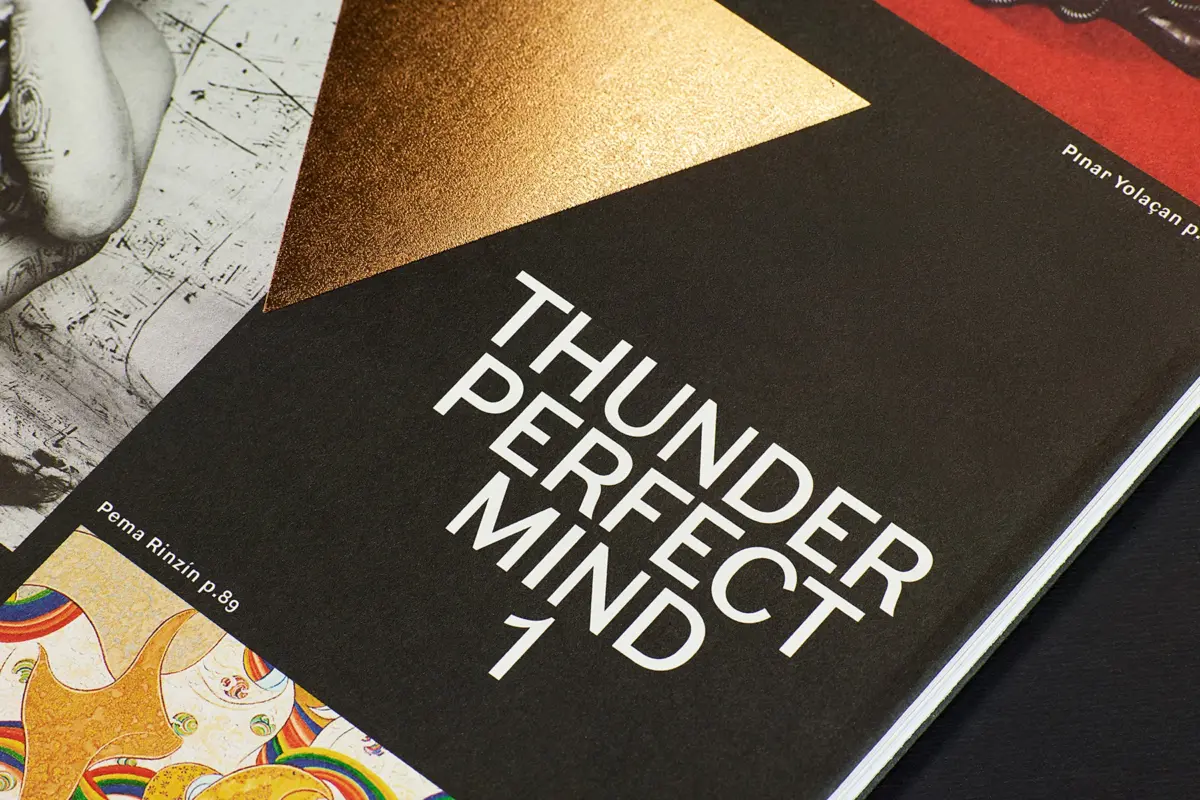
In an era defined by hyper-digitization, artificial intelligence dominance, and ecological degradation, a profound cultural and spiritual counter-current is quietly swelling. At the vanguard of this movement is Thunder Perfect Mind, a bold new print publication founded by veteran Rolling Stone contributor Cassady Rosenblum. Dedicated to exploring the concept of the Goddess not merely as a mythological relic, but as the living, intelligent pulse of the universe, the magazine bridges ancient animistic traditions with contemporary psychedelic and ecological discourse.
What began as a personal epiphany during a 2022 assignment in the Utah desert has blossomed into a multi-faceted cultural manifesto. Rosenblum, a self-described former atheist who once viewed spirituality as little more than a comforting bedtime story, underwent a radical worldview transformation during a ceremonial psilocybin experience with former members of the Church of Jesus Christ of Latter-day Saints. Encountering what she describes as the "Mother of All Creation"—a multi-headed, ferocious, and deeply benevolent cosmic force—pelted her down a rabbit hole of historical research, cross-cultural interviews, and philosophical inquiry.
This long-form piece examines the genesis of Thunder Perfect Mind, tracing its roots from the psychedelic Renaissance laboratories of Johns Hopkins to ancient Gnostic texts. It explores the intersections of modern plant medicine, environmental stewardship, the revival of animism, and a collective psychological reckoning with the sacred feminine. Far from a niche academic exercise, the publication captures a growing sentiment across society: that humanity’s separation from the natural world and the divine feminine is the root cause of our most pressing modern crises—and that reclaiming this ancient paradigm may be our only path forward.
Detailed Chronology: From Atheism to the Altar
The Utah Epiphany (2022)
The catalyst for Thunder Perfect Mind occurred in the sprawling, cinematic landscapes of Utah. Rosenblum, then working as an embedded journalist for Rolling Stone, was reporting on a community of individuals who had left the mainstream LDS Church and integrated psilocybin mushrooms into their spiritual practices. Invited to participate in an all-women’s mushroom ceremony, Rosenblum approached the ritual with the analytical distance typical of a modern secular journalist.
Instead of a chemical alteration, she experienced a radical ontological shock. The entity that revealed itself to her was neither abstract nor comforting in a traditional sense. "The Goddess came to Cassady Rosenblum ‘gorgeous, and terrifying, like a multiheaded dragon who could birth a planet or destroy a galaxy, simply by licking her numerous lips,’" she recalls.
In visions that cascaded through her consciousness, the Mother of All Creation unveiled three fundamental streams of existence: the endless chain of human birth, the unspooling growth of seeds and flora, and the surging dynamics of rivers and waterfalls. Rosenblum understood this entity to be the kinetic, animating energy of the universe itself.
Two immediate realizations crystallised in her mind. First, she understood the existential dread patriarchal institutions had harbored toward the feminine divine for millennia. Second, she felt an empowering sense of cosmic solidarity: "I felt for the first time that I, as a woman, was batting on the stronger team."
The Doctrinal Crackdown
The synchronicity of the spiritual awakening was underscored just one week after the ceremony. Rosenblum learned that the leadership of the LDS Church had abruptly issued a formal administrative proclamation banning prayers addressed to the Heavenly Mother. Furthermore, they quietly redacted a specific line from the Book of Mormon that generations of female church members had clung to as a vital spiritual anchor.
To Rosenblum, the timing was an undeniable demonstration of metaphysical overlap. The concurrent emergence of women reclaiming divine feminine spaces and the institutional clamping down on those very concepts felt like a manifestation of unseen realms bleeding into physical reality.
Archival Immersion and the Birth of a Movement
Following her return from Utah, Rosenblum’s life "swerved." Abandoning her skeptical materialism, she embarked on an intensive archival binge. She ordered every historical, anthropological, and theological text she could locate regarding the Goddess movement of the 1960s and 1970s, second-wave feminist theology, and Paleolithic mother religions.
Her research revealed an unbroken, subterranean lineage of human veneration of a supreme female creator—a tradition systematically suppressed by centuries of patriarchal monotheism. As she traversed the country reporting and attending conferences, she began casually surveying other individuals who had transitioned from staunch atheism to spiritual believers following unexpected psychedelic breakthroughs. Across dozens of narratives, a common denominator emerged: subjects across diverse backgrounds were consistently experiencing the divine as a feminine, maternal, and fiercely protective presence.
Supporting Context & Metrics: The Psychedelic Renaissance Meets Ancient Animism
The Mainstreaming of Animism and Plant Medicine
Thunder Perfect Mind arrives at a unique historical juncture where long-marginalized worldviews are rapidly bleeding into mainstream cultural discourse. Animism—the philosophical and spiritual framework asserting that non-human organisms, landscapes, weather systems, and inanimate objects possess consciousness or spiritual essence—is experiencing a academic and cultural revival in the 21st century.
Simultaneously, the cultural stigma surrounding psychedelics has dissolved. Millions of Americans now utilize plant medicines and synthetics for therapeutic, exploratory, and spiritual ends. However, Rosenblum and other cultural critics argue that the medical establishment’s attempts to sanitize psychedelics—stripping them of their numinous, sacred dimensions and treating them merely as novel pharmaceuticals—has robbed users of vital psychological scaffolding.
"The God part makes a lot of people squeamish," Rosenblum observes. "I think it’s actually been a disservice to mute that aspect, which I think is fundamental. People try plant medicine for depression expecting it to be like the newest, latest SSRI, and instead, they’re having totally unexpected encounters of the divine. And there’s really nothing to hold them on the other side of that."

Institutional Data and Research
Scientific validation for these mystical encounters continues to mount. A landmark study conducted by researchers at Johns Hopkins University administered psychedelic compounds to religious leaders spanning diverse global faiths. Strikingly, many of the participants—male and female clergy alike—reported encountering the divine specifically as a feminine presence, prompting profound shifts in their personal worldviews, pastoral approaches, and, in some cases, career trajectories.
Similarly, anecdotal evidence from figures like Massachusetts police lieutenant Sarko Gergerian highlights how psychedelic therapy can recalibrate human ethical duties. After utilizing psilocybin to treat service-related PTSD, Gergerian reported visions of Gaia bound in chains, radically reframing his professional oath to "protect and serve" as a sacred ecological mandate to defend the Earth and all its biological systems.
Official Statements and Editorial Vision
The Manifesto of Thunder Perfect Mind
Named after "The Thunder, Perfect Mind"—a striking, paradoxical Gnostic poem discovered among the Nag Hammadi library in Egypt in 1945, where a feminine divine voice proclaims her status as both honored and scorned, virgin and whore, first and last—the magazine operates as a physical altar for the sacred feminine.
The publication’s inaugural print run of 3,000 copies, produced at a cost of approximately $80,000 via Kickstarter crowdfunding and private patronage, represents an intentionally tactile antidote to digital saturation. Designed by creative director Ekin Balcıoğlu and designer Cem Eskinazi, the magazine’s aesthetics mirror the gravity of its contents.
"In the simplest terms, this is why the Goddess is important," Rosenblum states, reflecting on an interview within the first issue featuring Muslim chaplain Sughra Ahmed—whose psychedelic journey revealed the womb as the ultimate manifestation of God. "To recognize ourselves in the divine is critical for our own sense of power and preciousness, probably even beyond having a female president."
Navigating Critiques of Gender Essentialism
The modern Goddess movement frequently confronts academic critiques regarding gender essentialism—the assumption that men and women possess fixed, immutable traits tied strictly to biological sex. Rosenblum pushes back against this criticism by clarifying the metaphysical framework of her work:
"The divine is beyond all gender," she explains. "We choose to focus on the Mother because it’s the feminine that is being excluded and brutalized."
This inclusive ethos expands far beyond human identity, linking the defense of women’s bodily autonomy and historical dignity to broader ecological campaigns. For instance, the premiere issue features an interview with Rosa Vásquez Espinoza, a Peruvian Indigenous scientist whose groundbreaking research successfully secured legal rights for stingless bees—crucial Amazonian pollinators whose survival is intertwined with planetary health.
Furthermore, the publication leans fearlessly into challenging historical artifacts. In an essay by science writer C.A. Blackledge, readers are introduced to anasyrma—an ancient Greek term and historical practice wherein women repelled invading armies and would-be assailants through strategic vulvar displays. Far from being viewed through a modern lens of obscenity, Blackledge frames the act as a golden umbilical cord connecting modern women to a historical epoch where female anatomy was treated as a repository of ultimate power, terror, and communal respect.
Future Outlook: Zigging Where the Culture Zags
Launching an independent print magazine in an era dominated by algorithmic feeds and generative artificial intelligence may appear counterintuitive—or, as critics have politely suggested to Rosenblum, downright delusional. Yet, the publication’s distribution model via independent publisher Ayin Press reveals a surprisingly balanced demographic appetite: while its core readership skews heavily toward women, subscription and retail purchases sit at roughly a 60/40 split, and some of its most substantial financial backers are men seeking a conceptual framework to navigate contemporary cultural shifts.
As Silicon Valley pours billions of dollars into resource-intensive artificial intelligence infrastructure, data centers, and technological expansion in the face of fierce public blowback, Thunder Perfect Mind stakes out an opposing philosophical claim. It demands an immediate pivot back toward animistic reverence, ecological accountability, and a reintegration of the ferocious, untamed aspects of the feminine psyche that Western culture has spent centuries trying to domesticate or erase.
Cassady Rosenblum does not present her publication as a dogmatic scripture or a rigid political platform. Rather, she sees herself as a temporary torchbearer in a multi-millennia baton pass—planting a flag of significance for those standing on the precipice of secular disillusionment, searching for a language to describe the numinous world pulsing just beneath the surface of modern reality.
"Everywhere I’ve gotten in life is zigging to the zag," Rosenblum laughs. In a world hurtling blindly toward technological acceleration, Thunder Perfect Mind offers a radical invitation to pause, look downward into the soil, and listen to the voice of the ancient Mother echoing through time.
