

Executive Overview
The American political and media landscape is experiencing a period of intense volatility, marked by high-stakes confrontations at the Pentagon, ongoing internal realignments within the executive branch, and profound legal and institutional battles. At the center of this storm is Defense Secretary Pete Hegseth, who faces an unprecedented impeachment push spearheaded by congressional critics while locking horns with the national press corps.
Simultaneously, the administration is navigating a persistent search for a stable White House press secretary, grappling with declining digital engagement on alternative platforms like Truth Social, and digesting explosive disclosures from former President Joe Biden’s forthcoming memoir. Furthermore, federal judiciary rulings continue to challenge executive overreach, underscoring the deep structural friction defining contemporary American governance.
Detailed Chronology: Hegseth’s Pentagon Press Conference and Impeachment Battle
The Pentagon Press Briefing: A Clash of Access and Intimidation
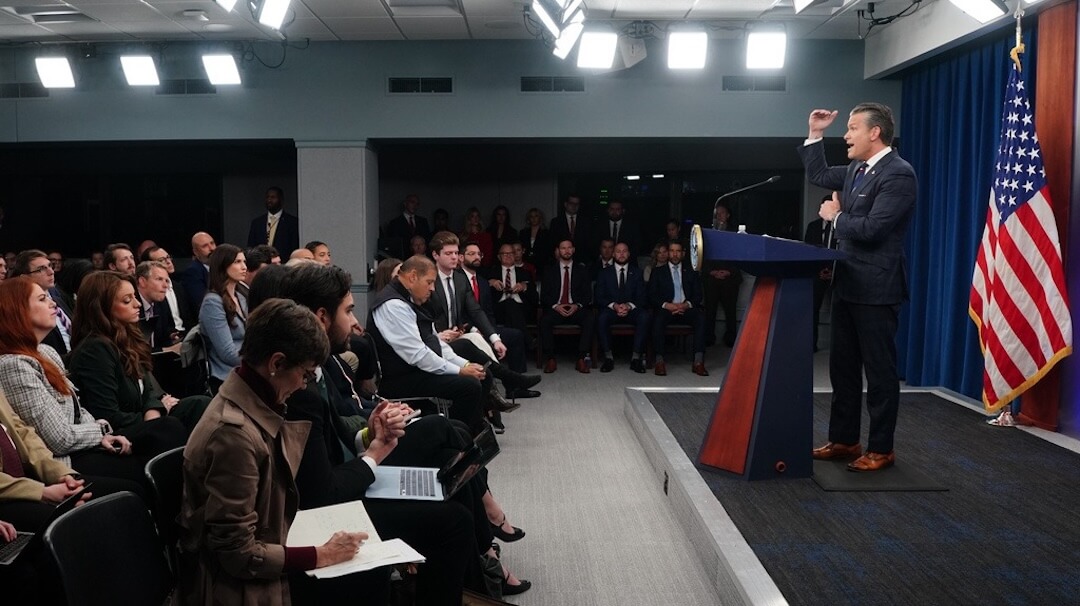
The tensions between the Department of Defense and the mainstream media reached a boiling point on Tuesday during Secretary of Defense Pete Hegseth’s first Pentagon press conference in six months. The event was preceded by an extraordinary and chilling warning: a security agent for the Secretary informed assembled reporters that they would be physically removed from the premises if they failed to "act professionally."
Members of the Pentagon press corps noted that such an explicit threat of physical force is virtually unprecedented in recent memory. When journalists—including Tara Copp of The Washington Post—pressed for clarification regarding whether standard journalistic practices, such as shouting questions, would trigger this punitive action, the security agent offered no response. A Defense Department civilian staffer likewise refused to elaborate. Joel Valdez, one of Hegseth’s political staffers, subsequently offered to explain the rules on an "off-the-record" basis. When multiple reporters objected to these opaque terms, Valdez walked away.
The Question-and-Answer Dynamic
Lasting approximately 30 minutes, the press conference concluded without any physical ejections. However, the structure of the Q&A session highlighted a stark bifurcation in media access. Hegseth systematically bypassed the institutional Pentagon press corps, calling exclusively on conservative media outlets and alternative digital platforms that had been brought in following last year’s exclusion of traditional reporters.
Copp documented her experience on the social media platform X, stating:
"I shouted at least 4 questions that Hegseth did not answer, on whether he takes responsibility for the war; on war crimes; others shouted if he’d become a distraction for Trump. Hegseth only took Qs from Conservative media or new media outlets they brought in after kicking out the Pentagon press corps last year."
Aside from The Wall Street Journal’s Mike Glenn, nearly every journalist granted a question had agreed to the strict, controversial ground rules that the broader Pentagon Press Corps had refused to sign the previous year.
The Impeachment Threat and Hegseth’s Defense
The hostile press conference occurred directly in the shadow of a major legislative challenge: Republican Representative Thomas Massie recently introduced eight articles of impeachment against Hegseth.
Hegseth did not mince words when addressing the legislative maneuver, dismissing it during the press conference as "a farce and it’s a stunt and everybody knows it." He argued that Massie’s actions placed an unconscionable "target on the backs of American warriors by signaling that Congress will undermine their missions in real time." He characterized the impeachment push not as an exercise in constitutional oversight, but as "sabotage," declaring: "Put the secretary on trial today, and the men and women who carried out those orders tomorrow."
Drawing a direct parallel to the political survival of President Donald Trump—who survived two impeachment efforts—Hegseth asserted with absolute confidence:
"They will fail again, and if standing with President Trump puts me in that company, I’ll take that company every day of the week."
Defending his execution of military strategy, particularly regarding operations in Iran, Hegseth maintained that every action he authorized was "a lawful operation ordered by the commander in chief, then ordered by myself, notified to Congress and executed by American warriors who did their jobs." He concluded flatly: "These are not high crimes. This is the job."
Supporting Context & Metrics
Truth Social’s Audience Decline
While the administration projects defiance on Capitol Hill and at the Pentagon, quantitative metrics indicate a measurable cooling in digital engagement for the President’s primary megaphone. According to recent data from The Righting, traffic to Truth Social plummeted to 11.8 million visits in October, a steep decline compared to the 19.5 million visits recorded in October 2025.
Howard Polskin, president of The Righting, contextualized these figures within a broader political timeline:
"The steep drop in visits to Trump’s Truth Social coincides with a shift in the American public’s perception on the effectiveness and consequences of Trump’s war with Iran. The traffic to Truth Social tells the story. In April 2026, when large swaths of the public were still behind Trump’s war, Truth Social attracted 48.8 million visits, the most in the past 15 months. But in May, year-over-year visits began sliding resulting in a six-month skid that continues to this day."
Polskin suggested that this six-month descent served as a digital precursor to the Republican Party’s subsequent struggles in the midterm elections. Interpreting the historically low traffic numbers as a referendum on presidential popularity, Polskin concluded that the public is increasingly "tuning out" the platform’s messaging.
The White House Press Secretary Search
In tandem with digital audience shifts, the West Wing continues to struggle with communications infrastructure. Following the tumultuous five-day tenure and subsequent departure of Katie Zacharia—who briefly replaced Karoline Leavitt—speculation has swirled regarding who will permanently fill the White House press secretary role. While initial rumors floated UFC CEO Dana White, that prospect has been definitively dismissed.
Reports from Fox News Digital indicate that President Trump is deliberating over several potential candidates. Sources suggest the administration is leaning toward appointing a male spokesperson. Conservative commentator and radio host Ben Ferguson has emerged as a leading contender, with sources noting that Ferguson is actively pursuing the role and that the president is aware of his candidacy. Meanwhile, CNN commentator Scott Jennings remains under consideration, though internal sources express skepticism about the viability of his appointment. Other figures mentioned in communications circles include White House Communications Director Steven Cheung, Breitbart chief Matthew Boyle, and former George W. Bush press secretary Ari Fleischer.
Official Statements & Institutional Repercussions
The Duality of Executive Power: Biden’s Memoir and Trump’s Private Letters
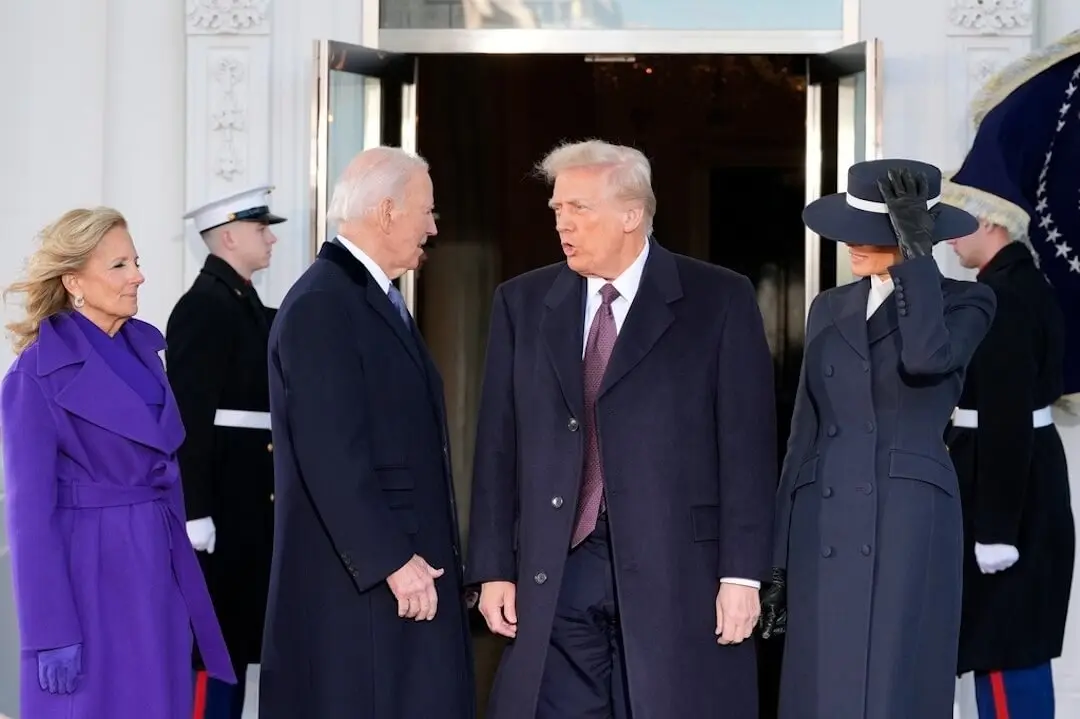
The release of excerpts from former President Joe Biden’s upcoming memoir, Promise Me, America, has injected a historical and psychological dimension into current political discourse. In The Atlantic, an excerpt highlighted Biden’s reflections on the events of January 6, 2021, and an encounter eight days after the 2024 election when Trump told him, "You know, Joe, if it weren’t for politics, I believe we’d be good friends."
Further compounding these complex interpersonal dynamics, reporting by The New York Times revealed the contents of a private letter Trump left for Biden on Inauguration Day, January 20, 2021. Written on White House stationery in Trump’s signature black Sharpie, the document struck a strikingly reflective and complimentary tone, avoiding any mention of election challenges and asserting that Biden would "be true to yourself and the American people."
Biden writes in his memoir that interacting with Trump often felt like dealing with "two Donald Trumps."
Current administration officials, however, reject any conciliatory framing. White House Communications Director Steven Cheung issued a scathing statement on Tuesday:
"Joe Biden should have heeded the president’s wise words, but instead he tried to destroy this country and weaponize the justice system against his political enemies. Biden is a disgrace, and America is better off with him no longer as president."
Judicial Intervention: The Voice of America Ruling
Beyond electoral and legislative arenas, the federal judiciary continues to check executive branch maneuvers. On Tuesday, a three-judge federal appeals court panel unanimously upheld a lower-court ruling declaring that Michael Abramowitz, the director of Voice of America (VOA), was illegally fired in 2025.
The termination had been executed by Kari Lake as part of an effort to dismantle VOA under administration directives. U.S. District Judge Royce Lamberth—a Ronald Reagan appointee—previously ruled that only the Senate-confirmed International Broadcasting Advisory Board held the statutory authority to fire the VOA director. Because the administration had dismantled that board upon taking office, the firing was deemed unlawful.
In a public statement following the appeals court victory, Abramowitz expressed deep gratification and a readiness to resume his duties:
"My lawyers and I are carefully studying the decision to determine next steps. But there is no longer any reason for the government to prevent me from doing the job for which I was legally installed on a bipartisan basis more than two years ago."
Future Outlook
As the political calendar moves forward, several critical trajectories will define the administration’s stability and operational efficacy:
- The Hegseth Impeachment and Congressional Scrutiny: The viability of Representative Thomas Massie’s impeachment articles remains uncertain in a polarized Congress. However, the mere existence of the proceedings has galvanized the administration’s base while hardening its resistance to institutional oversight, setting up a prolonged legislative showdown over military accountability and war powers.
- Media Access and Institutional Norms: The combative posture adopted by Secretary Hegseth’s security detail and press team signals an aggressive pivot away from traditional press interactions. The institutional press corps’ refusal to yield to restrictive ground rules ensures that battles over transparency and access will persist indefinitely at the Pentagon.
- Communications Realignment: The ongoing search for a permanent White House press secretary will test the administration’s ability to stabilize its public messaging apparatus, especially as digital engagement metrics on platforms like Truth Social display persistent downward trends.
- Legal and Judicial Resistance: Appellate rulings such as the VOA decision demonstrate that the federal judiciary remains an active constraint on executive restructuring, portending further legal battles over civil service protections and agency governance in the months ahead.
