

Executive Overview
The intersection of modern politics, media ethics, and sports journalism continues to produce high-stakes drama across the American cultural landscape. In the wake of the 2026 midterm elections—which saw a significant Democratic "blue wave" predicted accurately by mainstream pollsters—former President Donald Trump has retreated to familiar rhetorical territory, casting unfounded doubts on the integrity of the voting process despite lacking any empirical evidence of widespread irregularities.
Concurrently, the broader media ecosystem is digesting a wave of consequential developments. CBS’s "60 Minutes" has drawn widespread critical acclaim for Ross Douthat’s sharp, analytical interrogation of the president, while former President Joe Biden prepares to release a searing memoir detailing the enduring stain of the January 6 insurrection and his ongoing personal battles. In the realm of sports media, high-profile NFL reporter Dianna Russini has announced her official return to the industry seven months after a high-profile controversy and subsequent departure from The Athletic.
This report provides a comprehensive analysis of these intersecting media narratives, examining the systemic reverberations of election skepticism, the evolution of high-profile political broadcasting, and the structural standards governing modern sports journalism.
Detailed Chronology
The Post-Midterm Backlash and Trump’s Rhetorical Reversion
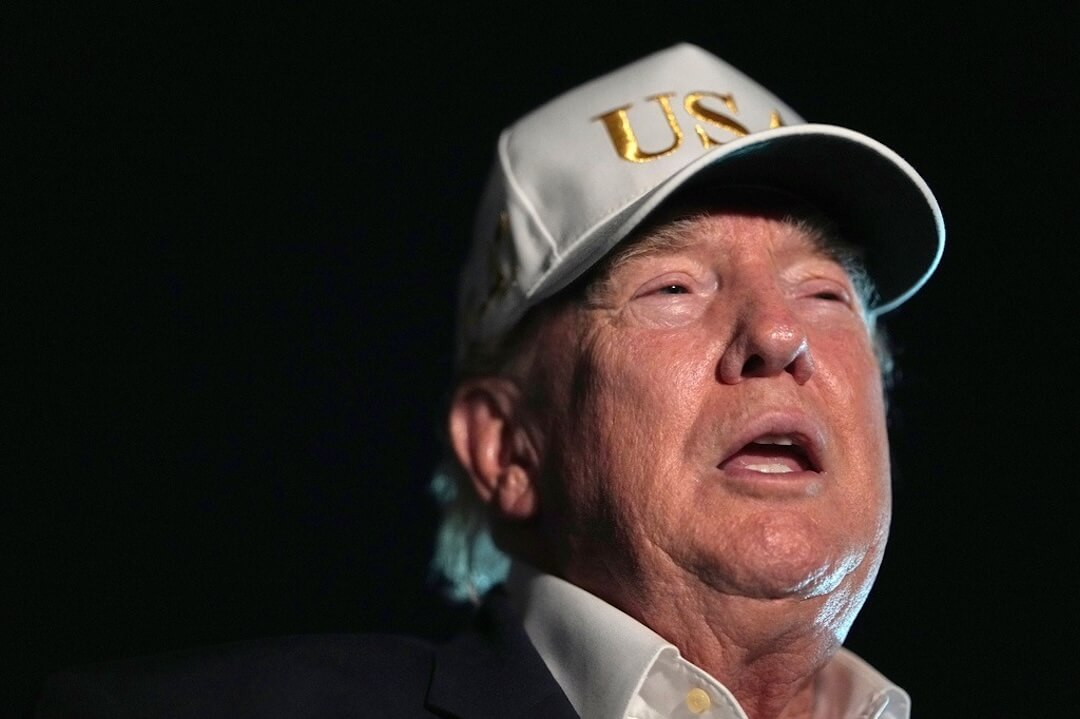
For two weeks following the conclusion of the 2026 midterm elections, political observers witnessed an uncharacteristic temporary calm from Donald Trump. After hinting in late October that he would accept the midterm outcomes even in the event of major Democratic gains, Trump engaged in several interviews—culminating in a Sunday night appearance on CBS’s 60 Minutes—wherein he openly discussed various strategic factors behind the Republican party’s losses. He cited external geopolitical challenges, such as the ongoing conflict in Iran, persistent high gas prices, and sub-optimal GOP candidate recruitment, without initially disputing the mechanics of the vote itself.
However, that rhetorical pivot proved short-lived. On Monday morning, Trump took to Truth Social to cast doubt on the legitimacy of the results, echoing the unsubstantiated claims that followed his 2020 presidential defeat:
"Does anybody really believe that this ‘Election’ was honest. How could the Polls be so wrong??? Some early voting ‘dumps’ were so large that it was impossible to win, no matter how many people went to vote. It’s all about the machines, which are far more important than the voter!"
The claim that polling was universally inaccurate was quickly dismantled by election analysts. Renowned pollster Nate Silver and other major forecasting models had projected a strong showing for Democrats well in advance, assigning high statistical probabilities to key victories, such as Democratic Senate candidate James Talarico unseating Republican Ken Paxton in Texas. Official election administrators nationwide confirmed that voting proceeded smoothly without significant operational anomalies or credible evidence of systemic fraud.
The reaction from media personalities, political strategists, and commentators was swift, reflecting deep fatigue with cyclical election denialism. Alyssa Farah Griffin, co-host of The View and a former Trump White House official, posted a succinct, weary assessment on social media: "Lather, rinse, repeat." Susan Glasser of The New Yorker echoed the sentiment, writing, "This was so inevitable." Even conservative commentator Megyn Kelly took to X to post a screengrab of the Truth Social statement alongside a blunt admonition: "Just stop."
Ross Douthat’s Masterclass on 60 Minutes
Trump’s reversion to election skepticism occurred just hours after his televised interview with 60 Minutes, which marked a major milestone for the program’s newest correspondent, Ross Douthat. Initially met with skepticism from traditional broadcasting circles regarding his transition from print journalism to television, Douthat earned widespread praise from across the political spectrum for his interviewing style.
Media critics and political commentators lauded the segment as a masterclass in modern presidential interrogation. Unlike traditional adversarial interviews that frequently devolve into cross-talk or passive deference, Douthat maintained a polite, persistent, and non-hostile posture. He intervened strategically to prevent the former president from rambling or shifting focus, eliciting candid concessions while holding him accountable to facts.
Fox News anchor Brit Hume praised the exchange, noting on social media that Douthat’s approach served as a model for interviewing high-ranking officials: "Non-hostile, respectful but penetrating. Good for him." Former CNN commentator Chris Cillizza similarly validated the network’s hiring decision, declaring the interview an essential case study in political journalism.
Supporting Context & Metrics
To fully understand the media’s reaction to the 2026 midterms and the persistent challenges surrounding institutional trust, it is necessary to examine the underlying polling data and structural realities of the recent election cycle:
- Polling Accuracy: Unlike the 2016 and 2020 cycles, where final outcomes diverged noticeably from national aggregates in specific swing counties, the 2026 midterms aligned closely with professional aggregators. Nate Silver’s modeling assigned Democrats a 96% probability of securing the House and an 80% likelihood of taking the Senate, statistics that materialized accurately on election night.
- The "Blue Wave" Drivers: Exit polling and structural economic indicators pointed to voter fatigue regarding inflation, foreign policy entanglements in the Middle East, and localized candidate quality issues as the primary catalysts for the Republican setback.
- Institutional Verification: Election boards across all contested states reported zero systemic failures in voting machines or tabulation systems, corroborating reports by The New York Times journalists Luke Broadwater and Zolan Kanno-Youngs, who confirmed that the vote went reasonably smoothly with negligible major issues.
Official Statements and Memoir Revelations: Joe Biden’s "Promise Me, America"
As political fallout from the midterms reverberates, the publishing world is bracing for the release of former President Joe Biden’s forthcoming memoir, Promise Me, America. The Atlantic published a high-impact excerpt detailing Biden’s unvarnished perspective on the events of January 6, 2021, and the subsequent normalization of political violence.
Writing about Trump’s pardons of individuals convicted for their participation in the Capitol riot, Biden did not mince words:
"And we know the truth. Donald Trump led an insurrection. His goal was to remain in power after the American people had voted him out of office. That’s the truth. It was a violent assault. The rioters weren’t ‘peaceful protesters.’ They came armed to stop the official certification of a legitimate election."
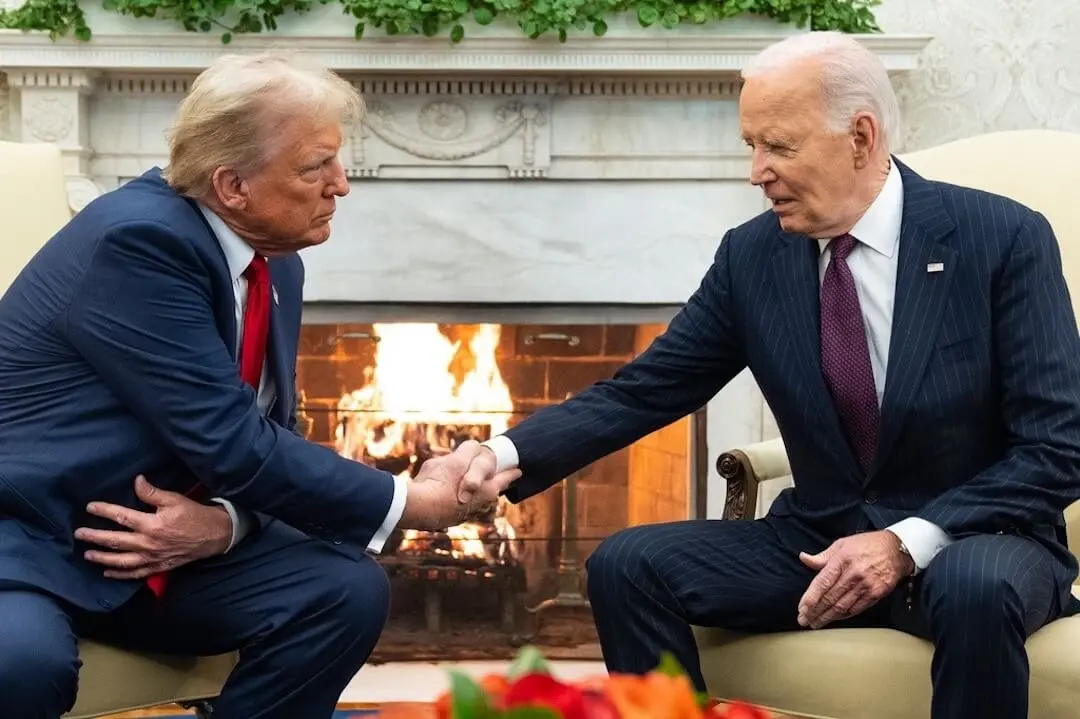
Biden further criticized the political posturing of those who claim to support law enforcement while defending individuals who assaulted Capitol Police officers. The excerpt also offers a personal anecdote regarding his post-election meeting with Trump at the White House eight days after the 2024 election, recounting a moment when Trump remarked, "You know, Joe, if it weren’t for politics, I believe we’d be good friends."
Regarding the promotional campaign for the book, Biden announced via social media that his ongoing battle with prostate cancer will restrict his media appearances. While noting that the illness occasionally slows him down, he expressed confidence that the text would stand on its own merits.
Future Outlook: Dianna Russini’s Industry Return and the Evolution of Sports Journalism
In sports media, veteran NFL writer Dianna Russini is staging a high-profile comeback. Seven months after parting ways with The Athletic amid a controversy involving published photographs of her alongside New England Patriots head coach Mike Vrabel at an Arizona resort, Russini has signed a multi-platform deal with BetUS.
Beginning this week, Russini will host a weekly one-hour NFL streaming program on BetUS TV’s website and X account, author a weekly column, and make regular appearances on the Nobody’s Safe podcast alongside radio host Jon "Stugotz" Weiner.
The return follows a turbulent period that sparked intense debate regarding newsroom ethics and personal boundaries. The Athletic launched an internal investigation after Page Six published images of Russini and Vrabel—both married to others—interacting by a pool and hot tub. While both parties denied romantic involvement, Russini resigned prior to the conclusion of the inquiry. The Athletic subsequently released a statement affirming that Russini’s conduct constituted a "clear violation" of newsroom standards, noting that regardless of whether the relationship was romantic, failing to disclose it represented a fundamental breach of journalistic transparency.
In an exclusive interview with People magazine, Russini reflected on the fallout:
"The best way to describe what the last six months were like for me is heartbreaking. At the beginning of this, it was a nightmare… The lies became so out of control. This was a runaway train, and there was nothing I could do to stop it."
Russini emphasized that the experience forced her to reevaluate her career priorities, placing family life and motherhood at the forefront. Supported by her husband and close family members, she expressed readiness to re-enter the sports media space, armed with a renewed perspective on personal resilience and professional boundaries.
Industry Implications
The parallel trajectories of political election reporting and sports journalism highlight an enduring truth about the contemporary media landscape: accountability, transparency, and institutional ethics remain under intense public scrutiny. Whether examining a former president’s recursive attempts to undermine democratic norms, a seasoned political analyst mastering the art of presidential interrogation, or a veteran sports reporter navigating a career rehabilitation, the media serves as both the mirror and the battleground for American public life. As these narratives unfold, the demand for rigorous, fact-based journalism has never been more critical to maintaining public trust.
