

Executive Overview
In an era defined by the hollowing out of local newsrooms and the meteoric rise of news deserts across rural America, independent digital publications are stepping up to fill the void. Yet, the transition from traditional, major-market newsrooms to hyper-local reporting brings a unique set of ethical, professional, and social challenges.
This tension was brought into sharp focus just weeks before the midterm elections in Tucker County, West Virginia, a picturesque mountain community of roughly 6,540 residents. Dan Parks, founder and editor of the Substack publication Country Roads, found himself at the epicenter of a high-stakes journalistic dilemma: whether to publish a bombshell public-records disclosure detailing a $275,000 sexual harassment settlement involving the sitting president of the county commission just three weeks before election day.
The situation exposed the friction points inherent in modern local journalism. Parks, an alumnus of elite national news outlets like Bloomberg and Congressional Quarterly, had to weigh the professional caution instilled by decades in national media against the fundamental democratic right of local taxpayers to know the character and legal liabilities of their elected officials.
Supported by reporter Mat Cloak, Parks ultimately chose transparency over caution. The subsequent publication of the settlement catalyzed a seismic shift in the local political landscape, contributing to the commissioner’s narrow defeat at the polls by a mere 61 votes.
Beyond a single election cycle, this case study illuminates the broader evolutionary path of community journalism. It highlights how digital-native platforms are reshaping accountability in regions where everyone knows their neighbors, where public officials are unaccustomed to aggressive journalistic scrutiny, and where the revival of the local press comes with deep social costs and profound civic rewards.
Detailed Chronology: The Road to the Tucker County Disclosure
The sequence of events that culminated in the explosive October 21 publication began months earlier, winding through bureaucratic delays, legal maneuvers, and ethical consultations before erupting into the public square at the most politically sensitive moment possible.
The Paper Trail and the Public Records Battle
For months, rumors and whispers had circulated throughout Tucker County regarding a legal dispute involving a former county employee and the local government. However, concrete details remained elusive until a public records request—submitted under state freedom of information laws—was finally fulfilled in mid-October, just weeks before the midterm elections.
The released documents revealed a sobering reality: the county had quietly finalized a $275,000 settlement in May with a former employee who had filed a lawsuit after her termination. The allegations within the suit were severe, painting a disturbing picture of a toxic work environment. According to the court filings, county employees had circulated a nude photograph of their coworker, an image originally made available by her ex-boyfriend. The lawsuit further claimed that the president of the county commission confronted the woman, explicitly telling her he had seen the photograph, and subsequently exhibited aggressive and intimidating behavior toward her.
The ‘October Surprise’ Dilemma
For Parks, the arrival of these documents presented a classic journalistic quandary. The timing was undeniable: the accused commissioner was actively running for re-election, and the election was precisely three weeks away.
Drawing on his extensive background in national journalism at Bloomberg and Congressional Quarterly, Parks was immediately wary. In national politics, late-breaking negative stories released on the eve of an election are frequently dismissed as "October surprises"—opportunistic, unverified smears planted by trailing political opponents as a desperate, last-ditch effort to alter electoral outcomes.
In mid-October, Parks placed a phone call to industry colleagues to discuss the ethical weight of publishing the documents so close to the election. He worried that printing the story might be viewed as an unfair, eleventh-hour intervention in a democratic race.
However, mentors and peers pushed back against that hesitation. They pointed out that an authentic public-records disclosure detailing a taxpayer-funded financial settlement involving sexual harassment allegations does not fit the definition of a questionable political rumor. Tucker County operates on an annual expense budget of roughly $8 million; a $275,000 payout to resolve a misconduct lawsuit represents a substantial financial and moral burden on the local tax base. The public had an undeniable, overriding right to know how municipal funds were being deployed and how elected leaders were behaving behind closed doors.
Publication and the Electoral Fallout
With the ethical path clarified, Parks and his team finalized the reporting. On October 21, Country Roads published the investigative piece detailing the $275,000 settlement.
The impact was immediate and profound. The story detonated across Tucker County, a community where political news is rarely scrutinized with such forensic intensity. Voters digested the revelations of workplace misconduct and financial fallout in the final stretch of the campaign.
Two weeks after the article went live, the incumbent commissioner lost his re-election bid by a razor-thin margin of 61 votes. While multiple factors influence any local election, community leaders and voters alike acknowledged that the exposure of the settlement played a decisive role in shifting public sentiment at the ballot box.
Supporting Context & Metrics: The Mechanics of Country Roads
To understand how a regional Substack publication wielded enough influence to swing a county election, one must examine the operational blueprint, economic model, and demographic tapestry of Country Roads.
The Demographics of Tucker County
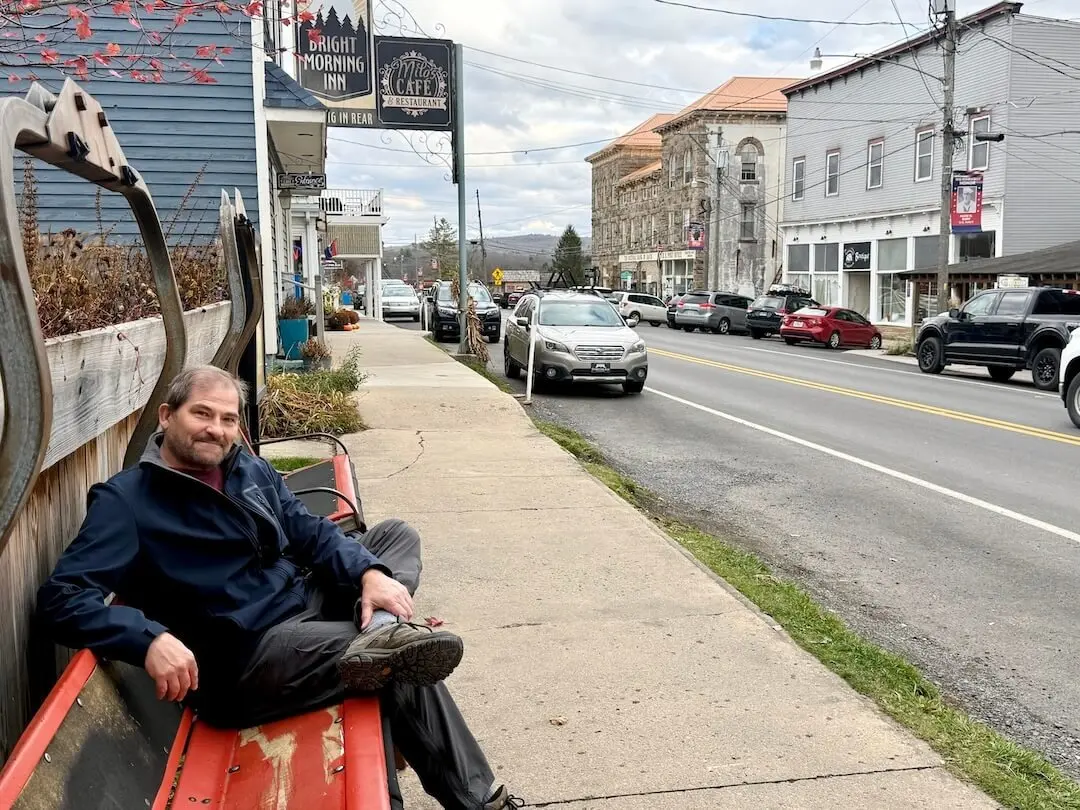
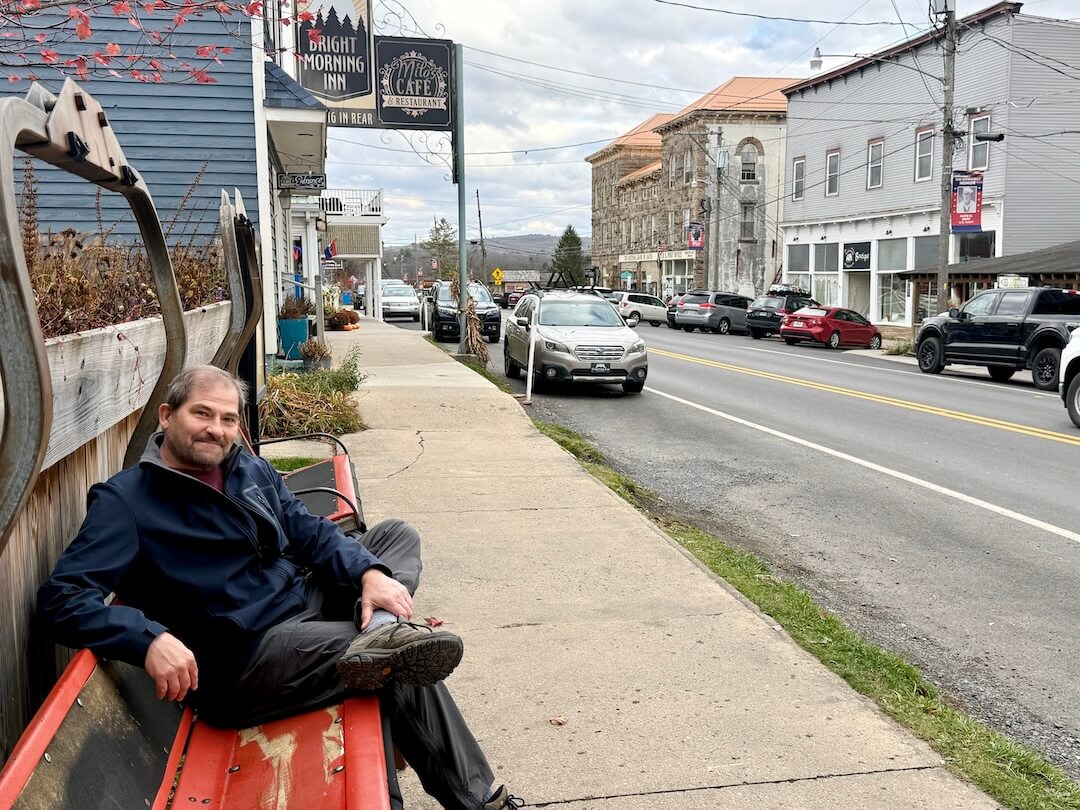
Tucker County is located roughly three hours from both Washington, D.C., and Pittsburgh. Famed for its rugged outdoor recreation—including skiing and mountain biking—the county features a landscape defined by natural beauty and intimate community structures, underscored by the fact that the entire county contains just a single stoplight.
Yet, this quiet mountain enclave has undergone significant cultural and demographic shifts, particularly accelerated by the COVID-19 pandemic. Parks, who has maintained a weekend connection to the area for over two decades and owned property there since 2014, describes a palpable cultural divide within the local population of 6,540:
- The "Old Guard": Generational residents whose grandfathers and fathers worked as coal miners or timbermen, anchored by traditional values and deep familial roots in the region.
- The Newcomers: An influx of urban transplants—accelerated during the pandemic—who skew more progressive and are frequently disparaged by legacy residents using labels like "tree-huggers."
Parks founded Country Roads with a singular, ambitious mandate: to bridge this cultural chasm and serve as a credible, trusted source of news for both factions. He wanted to uncover the unwritten stories of the community—large-scale real estate developments, municipal decisions, and local governance—that previously circulated only as gossip over breakfast tables or at local pubs.
Publication Metrics and Financial Sustainability
Operating as a lean, digitally native local news enterprise, Country Roads relies on a direct-to-consumer model that bypasses traditional advertising dependencies.
- Audience Reach: The publication boasts 2,400 newsletter subscribers, of which 500 are paid subscribers supporting the endeavor financially.
- Engagement Rates: Over a recent 30-day monitoring period, the newsletter maintained an exceptional average open rate of 59%. High-performing posts routinely attract upwards of 10,000 views.
- Revenue and Expenses: The operation brings in approximately $29,000 annually. Substack retains a 15% platform fee. The lion’s share of the revenue is reinvested directly into journalism, specifically funding their lone full-time reporter, Mat Cloak, a seasoned mid-career professional.
- Publishing Cadence: Parks and Cloak eschew rigid daily deadlines, opting instead to publish three to five deeply researched stories a week whenever their reporting meets their rigorous standards.
Official Statements & Community Perspectives
Covering news in a tight-knit rural environment requires a delicate balance of aggressive accountability and interpersonal diplomacy. In communities where sources and subjects cross paths daily at the grocery store, local diners, or youth sports events, the practice of journalism takes on a deeply personal dimension.
Navigating the Human Element of Local Reporting
Transitioning from the high-octane, detached environment of Washington, D.C., journalism to a small West Virginia county required Parks to adapt his methods.
"There’s a sensitivity to dealing with people who are not accustomed to fielding difficult questions from the media," Parks observed.
To mitigate reflexive defensiveness and build long-term trust, Parks instituted a collaborative reporting practice: he frequently emails sources ahead of publication—never sharing the entire story, but verifying specific facts and direct quotes. This transparency has yielded unexpected dividends. Rather than inviting waves of censorship requests, local sources have largely responded with reasonableness, occasionally saving the publication from factual errors and fostering a culture of mutual respect.
Reporter Mat Cloak noted the emotional friction that comes with holding powerful neighbors accountable:
"I think we’ve taken some heat for being what folks say would be divisive or trying to stir up drama. But really we’re just trying to do what we feel like is our due diligence in covering the important issues in the most factual and objective way we can."
Perspectives from Local Leadership
Elected officials within Tucker County have observed a dramatic transformation in municipal transparency since Country Roads entered the media ecosystem in November 2023.
Alan Tomson, the mayor of Davis, West Virginia—a municipality within Tucker County—testified to the immediate shift in administrative accountability:
"Without Dan’s reporting, you could do things under the radar. Not intentionally. But people just didn’t know what was going on. Now, I get so many more questions. It keeps everything out in the light of day."
Mayor Tomson also weighed in on the ethics of publishing the commissioner’s legal settlement on the eve of the election. Far from viewing the timing as an unfair ambush, Tomson argued that the timing was a civic necessity:
"It may or may not damage the candidate’s opportunity to get elected. But it’s better for a person to know that before they pull the lever in the booth on Election Day."
Tomson emphasized the inescapable intimacy of rural accountability, noting that in a place where everyone knows everyone—where voters went to high school with the candidates or live next door to them—news hits home harder than abstract political scandals reported from distant state capitals.
"It’s not just some political figure down at the Capitol. It’s personal for everyone."
Future Outlook: The Resurgence of Hyper-Local Digital Journalism
The success and impact of Country Roads in Tucker County offer a compelling blueprint for the future of regional journalism across the United States. As legacy newspapers continue to contract, shutter, or fall victim to private equity consolidation, communities risk sliding into information vacuums where corruption goes unchecked and civic engagement withers.
The Substack model, combined with entrepreneurial journalism, demonstrates that readers are willing to pay for rigorous, independent reporting that directly impacts their daily lives, property taxes, and local governance. However, the future of this model relies heavily on navigating several critical frontiers:
- Balancing Intimacy and Rigor: As Parks and Cloak have proven, rural journalists must master the art of being both aggressive watchdogs and compassionate community members. Maintaining credibility across polarized demographic divides—such as the "old guard" versus urban newcomers—requires an unwavering commitment to factual objectivity and transparent communication with sources.
- Economic Scalability: While generating $29,000 a year sustains a lean, two-person operation in a rural county, finding sustainable pathways for long-term health, healthcare coverage, and potential expansion remains an ongoing challenge for independent digital publishers.
- The Anti-Corruption Dividend: As Mayor Tomson noted, the mere presence of an active press alters the behavior of local government. When public officials know that public records requests are being filed and that local transactions are being monitored, the baseline of administrative integrity rises.
Ultimately, the Tucker County election serves as a powerful reminder that democracy does not merely function at the national level; it lives or dies in the municipal buildings, town council chambers, and local ballot boxes. Through meticulous reporting, unflinching ethical resolve, and a deep respect for the communities they cover, independent local journalists are proving that a single newsletter can restore light to the darkest corners of local governance.
