

EXECUTIVE SUMMARY
In an era dominated by synthetic media, AI-generated text, and legions of anonymous bot accounts polluting the digital commons, fitness tech pioneer Whoop is planting a flag for radical digital authenticity. The company, renowned for its screenless, biometric-tracking wristwear, has officially rolled out Whoop Humans—a proprietary, app-integrated social network designed around an unyielding premise: every single account is tethered to a real, living, breathing human being backed by continuous, real-time biometric data.
Billing the feature as "the most verifiably human social network" on the market, Whoop founder and CEO Will Ahmed is leaning heavily into a post-algorithmic, data-driven approach to community building. Rather than sharing filtered selfies or hot takes, Whoop users share physiological milestones—sleep scores, strain targets, and recovery metrics. This move marks a pivotal evolutionary leap for Whoop, transforming it from a solitary hardware-and-software health coach into an interactive, interconnected ecosystem.
As tech giants like Google and Apple crowd the screenless wearable space with competing hardware, Whoop’s aggressive pivot toward human-centric social connectivity signals a maturation of the wellness sector. This deep-dive report examines the mechanics of Whoop Humans, the meteoric growth trajectory of the company, the science of behavioral modification via wearable technology, and the broader competitive landscape facing the industry today.
Executive Overview: Reclaiming Digital Spaces Through Biometrics
The digital landscape of the mid-2020s is plagued by an identity crisis. Social media platforms originally designed to connect friends and families have transformed into algorithmic echo chambers overrun by automated bots, deepfakes, and disingenuous engagement farming. Trust in online profiles has plummeted to historic lows.
Enter Whoop with an unconventional solution: hardware-verified humanity.
By leveraging the continuous stream of data collected by its wrist-worn sensors—most notably, an active heartbeat—Whoop has engineered a closed-loop social environment where faking an identity is practically impossible. You cannot buy followers or spin up a bot farm on Whoop Humans unless you are willing to purchase thousands of $199-to-$359 annual memberships and strap the devices to actual living bodies.
[Whoop Wearable Hardware]
        │
        ▼ (Continuous Biometric Stream: Heart Rate, Sleep, Strain)
[Whoop Companion App]
        │
        ▼ (Opt-In Social Layer)
[Whoop Humans Network] ──► Real-Time Recovery & Sleep Milestones Shared Among Verified Peers
While participation in Whoop Humans is entirely optional, the launch addresses a fundamental consumer fatigue: the exhaustion of interacting with artificial profiles. By pivoting toward a network anchored in genuine vulnerability, shared physical exertion, and biological reality, Whoop is attempting to redefine what social media looks like when stripped of filters, vanity metrics, and AI interference.
Detailed Chronology: From Data Silos to Connected Ecosystems
To understand the weight of the Whoop Humans rollout, one must look at the company’s trajectory over the past decade and a half. Founded 14 years ago by Will Ahmed, Whoop spent its formative years carving out a niche among elite athletes, military operators, and hardcore data enthusiasts who wanted granular insights into their physical performance without the distraction of a glowing smartwatch screen.
The 14-Year Overnight Success
For over a decade, Whoop operated primarily as an individual optimization tool. Users wore the band day and night, opened the app to review their physiological recovery, and closed it. The community aspect was largely restricted to team leaderboards or corporate wellness challenges.
In a recent appearance on the All-In Podcast, Ahmed reflected on the arduous timeline required to achieve mainstream escape velocity:
"It took a very long time to be an overnight success. It took about 12 years for us to get to a million members, and then another 18 months or so to two million, about six months to three million. We expect to end the year around four million members."
This staggering acceleration in membership scaling—shrinking from a 12-year grind to reach the first million down to a matter of months for the latest milestone—provided Ahmed and his executive team with a critical mass of users. With more than three million active members globally (scaling rapidly toward four million), Whoop possessed the network density required to launch a viable social ecosystem.
The Rollout of Whoop Humans
The groundwork for Whoop Humans culminated this week with an update to the Whoop mobile application. The feature quietly and seamlessly integrated into the user experience, allowing members to opt in to a dedicated social feed.
Instead of traditional posts, the content generated within Whoop Humans is derived directly from user metrics. Members can:
- Follow friends, family members, and fellow athletes.
- Broadcast milestones related to daily strain, sleep optimization, and recovery scores.
- Leave textual comments and expressive reactions within the app’s interface.
The design philosophy behind the rollout is rooted in proactive accountability and mutual care rather than superficial validation. Early adopters and beta testers have noted that the interface shifts the focus away from how you look and entirely toward how you are holding up physically and mentally.
Supporting Context & Metrics: The Science of Wearable Behavior
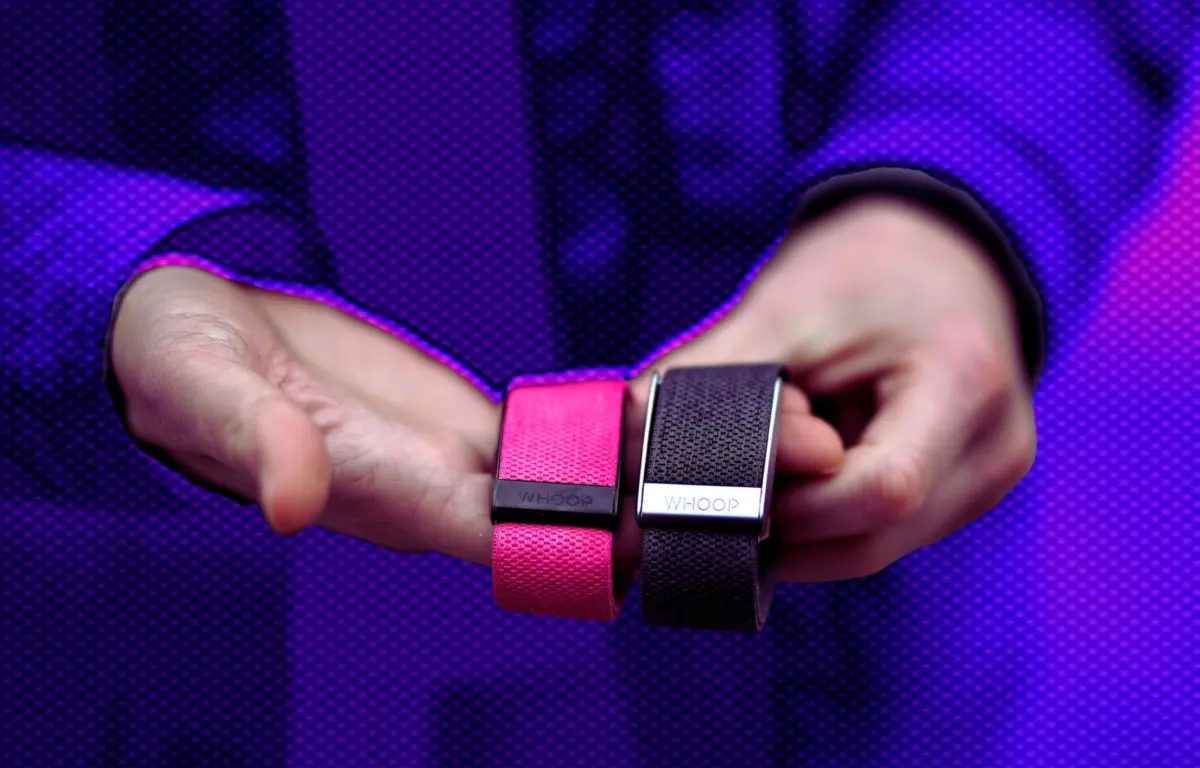
Whoop’s hardware strategy has always been anchored in subscription-based longevity. Ranging from $199 to $359 annually, the membership model bundles the hardware—a screenless wrist strap boasting a two-week battery life—with continuous physiological tracking of heart rate variability (HRV), resting heart rate, sleep stages, and dermal temperature.
Quantifying the Habit Loop
The success of Whoop as a platform is underscored by intense user engagement. According to internal company metrics, active members open the Whoop companion app more than eight times per day. This high-frequency interaction rate rivals traditional social media platforms, proving that users view their health data not as a periodic report card, but as a dynamic, unfolding narrative of their day.
This continuous engagement yields concrete health dividends. A landmark study published last year in the peer-reviewed journal Sensors analyzed 12 weeks of data from nearly 12,000 Whoop members. The findings demonstrated the profound behavioral modification power of passive, continuous tracking:
- Increased Physical Activity: Daily wearers clocked more than 90 additional minutes of exercise per week compared to baseline periods.
- Enhanced Sleep Hygiene: Daily wearers logged an average of 20 extra minutes of sleep per night, translating to over two hours of restorative sleep gained every week.
By introducing Whoop Humans, the company is attempting to leverage these behavioral modification loops socially. If seeing one’s own data drives better habits, the hypothesis is that seeing and supporting a trusted network’s physiological state will amplify those healthy outcomes exponentially.
Official Statements and Member Perspectives
The introduction of the platform has sparked industry-wide conversations about the intersection of wellness technology and social architecture. Company leadership has been aggressive in positioning the move as a moral and cultural imperative.
The Vision from the Top
In the official press release announcing the feature, CEO Will Ahmed drew a sharp contrast between traditional social platforms and the vision driving Whoop Humans:
"In a world that’s becoming increasingly artificial, we’re building something deeply human. Every account represents a real person with a verified heartbeat. They have real goals, challenges, and achievements. That’s what makes Whoop Humans different, and it’s a big area of investment for us."
Ahmed’s emphasis on investment underscores that this is not a minor app update, but a cornerstone of Whoop’s future strategic roadmap. The company is betting that users are fatigued by algorithmic manipulation and are craving spaces where interaction is tied to biological truth.
The User Lens: Micro-Interventions and Empathy
Early user feedback suggests that Whoop Humans is successfully fostering a culture of empathy rather than toxic comparison. Mika Bublitz, a prominent Whoop member, highlighted how the social network facilitates subtle, meaningful check-ins that traditional messaging apps often miss:
"Sometimes people don’t tell you when they’re not feeling their best. If I see a friend’s Recovery is low, I can check in and say, ‘Hey, it’s okay to take it easy today.’ That’s what I like about Whoop Humans. It gives us another way to look out for each other."
This capability transforms wearable data from a solitary optimization tool into a communal safety net. When a friend’s biometrics indicate severe fatigue, poor sleep debt, or a spiking resting heart rate (potentially signaling overtraining or illness), peers within the network have the contextual awareness to offer support, encouragement, or a gentle nudge to rest.
Future Outlook: The Battle for the Screenless Wearable Market
Whoop’s expansion into verified social networking arrives at a time of intense competitive pressure within the wearable technology sector. The market is rapidly polarizing between notification-heavy smartwatches (such as the traditional Apple Watch) and minimalist, biometric-first, screenless form factors.
Navigating Competitive Crosscurrents
Whoop is no longer operating uncontested in the screenless space. The competitive arena has heated up significantly:
- Google’s Fitbit Air: Earlier this year, tech monolith Google rolled out the Fitbit Air, a screenless wearable priced aggressively around $100, directly targeting the demographic that popularized Whoop’s minimalist aesthetic.
- Apple’s Evolving Hardware Roadmap: Industry reports indicate that Apple is actively developing its own screenless wellness tracker to challenge market leaders like Whoop and Oura, signaling that Silicon Valley views continuous, screen-free biometric monitoring as the next major frontier.
The Defensive Moat of Community
Faced with deep-pocketed hardware competitors boasting vast distribution channels, Whoop’s launch of Whoop Humans can be interpreted as a brilliant defensive and offensive maneuver.
Hardware can be replicated. Industrial design can be iterated upon. Price points can be undercut by tech giants operating at scale. However, network effects and community trust cannot be easily copied.
By building an ecosystem anchored in verified human connection and shared physiological journeys, Whoop is constructing a formidable data and community moat. If a user’s social circle—their running club, family members, or workout partners—is anchored within the Whoop Humans app, the friction of migrating to a competing hardware ecosystem increases exponentially.
Conclusion
Whoop Humans represents a fascinating evolution in the consumer technology landscape. By merging continuous biometric monitoring with a strictly
verified social layer, Whoop is attempting to solve two modern crises simultaneously: the epidemic of digital isolation filled by bots, and the solitary nature of fitness tracking. As the company marches toward its four million member milestone, the success of this initiative will test whether consumers are truly ready to trade curated digital facades for raw, unvarnished biological reality.
