

By Mitchell Parton
Senior Commerce Reporter
Executive Overview
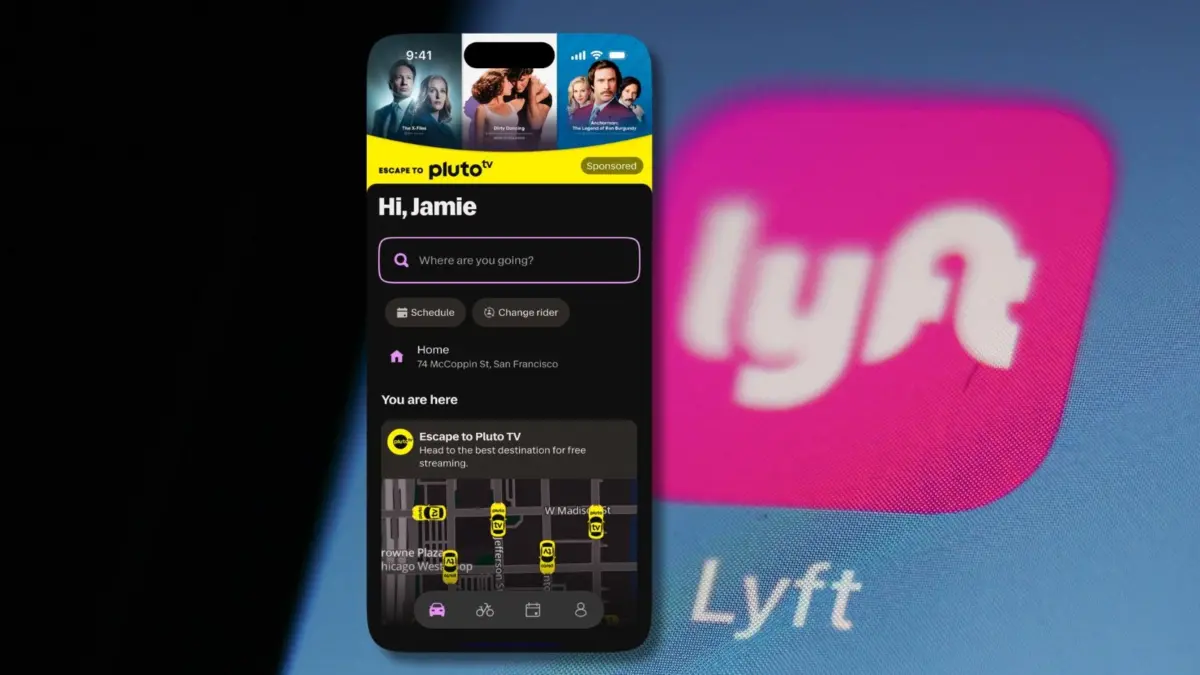
In an aggressive push to capture high-value consumer attention before a ride is even booked, ride-sharing giant Lyft has officially launched an alpha test for a brand-new, high-impact digital advertising unit: the “home masthead.” This innovative placement allows participating brands to achieve near-total visual ownership of the Lyft mobile application’s home screen—the primary interface riders interact with when opening the app.
As digital real estate becomes increasingly crowded and consumer attention spans fracture across social media, retail media networks, and streaming platforms, ride-share applications have emerged as the next major battleground for programmatic and experiential advertising. Lyft’s introduction of the home masthead positions the company not merely as a transportation network, but as a dynamic media platform capable of driving massive brand recall.
To kick off this alpha testing phase, Lyft has joined forces with streaming heavyweight Pluto TV. The ad-supported streaming service is leveraging the home masthead as a cornerstone of its sweeping “Escape to Pluto TV” brand campaign. This major marketing push coincides with Pluto TV’s largest product transformation to date, featuring an enhanced user experience and a vastly expanded on-demand content library.
By blending transactional utility with immersive digital storytelling, Lyft’s latest advertising experiment signals a paradigm shift in how brands can reach captive, mobile-first audiences during critical micro-moments of daily transit.
Detailed Chronology: The Evolution of Lyft Media
The rollout of the home masthead did not happen in a vacuum. It represents the logical next step in Lyft’s multi-year evolution from a pure-play transportation provider into a sophisticated retail and transit media network.
Phase 1: Foundational In-App Placements
Long before testing full-screen home takeovers, Lyft began experimenting with native advertising and sponsorships within its application ecosystem. Key milestones in this evolution include:
- Sponsored Vehicle Designs: Lyft introduced interactive map features allowing brands to customize the graphical representation of vehicles traversing the embedded user interface map. Rather than standard generic cars, users might see branded vehicles cruising toward their pickup location.
- Splash Screen Animations: The company rolled out dynamic splash screens—brief, full-screen interstitial animations that greet users upon opening the app before the mapping interface fully loads.
Phase 2: The Shift Toward Total Screen Ownership
While splash screens and sponsored map icons offered solid engagement metrics, brand partners increasingly demanded deeper visual real estate to cut through the digital noise. Recognizing the high-intent mindset of users actively preparing for a trip, Lyft’s product and engineering teams conceptualized the "home masthead."
Phase 3: The Pluto TV Alpha Partnership
In late 2026, Lyft officially initiated alpha testing for the home masthead feature, securing Pluto TV as its inaugural launch partner. Positioned strategically to support the streaming platform’s massive UX redesign, the partnership marries physical mobility with digital entertainment escape. Riders opening the Lyft app are immediately greeted by Pluto TV’s campaign messaging, seamlessly integrating the streaming brand into the user’s daily commute routine before a single keystroke is entered into the destination bar.
Supporting Context & Metrics: The Rise of Ride-Share Media Networks
To fully understand the strategic weight of Lyft’s home masthead, one must examine the broader macro trends shaping digital advertising and the explosive growth of "non-endemic" media networks.
The Captive Audience Phenomenon
Ride-sharing apps occupy a unique psychological and behavioral space in the modern consumer journey. When a user opens Lyft, they are usually in a state of transition: heading to work, arriving at an airport, returning home from an evening out, or navigating an unfamiliar city.
- High Intent & Focus: Unlike social media feeds where users passively scroll while half-distracted, ride-share apps require active engagement—checking ETA, monitoring driver location, reviewing fare estimates, and confirming safety details.
- Dwell Time: The average user spends significant time interacting with the home screen during peak booking decisions, creating a high-value window for brand impressions.
The Monetization of Mobile Real Estate
Retail media networks (RMNs) pioneered the concept of turning first-party customer data and digital shelf-space into highly profitable advertising revenue streams. Following the success of RMNs in grocery, e-commerce, and delivery apps, transit networks are capitalizing on similar principles.

By offering exclusive units like the home masthead, Lyft can diversify its revenue streams beyond ride commissions, boosting overall margin health through high-margin ad sales. For brand marketers, these environments offer cookieless, deterministic first-party targeting capabilities rooted in verified real-world behaviors and physical movement patterns.
Official Statements & Industry Reactions
While Lyft’s alpha test is currently unfolding behind closed doors with select partners, industry insiders and executives have begun weighing in on the strategic implications of full-screen transit advertising.
In communications shared with ADWEEK, Lyft representatives emphasized that the home masthead is designed to blend utility with compelling brand storytelling, ensuring that ads enhance rather than disrupt the user experience.
Pluto TV’s marketing team highlighted the synergy between their "Escape to Pluto TV" campaign and the ride-share environment:
"The modern consumer’s day is defined by transitions. By partnering with Lyft during this alpha phase, we are meeting viewers right at the threshold of their journeys, offering them an invitation to escape into endless entertainment before they even step foot in a vehicle."
Digital media analysts have broadly praised the move as a natural maturation of out-of-home (OOH) and digital-out-of-home (DOOH) advertising. Traditional OOH relies on static billboards along highways; Lyft’s home masthead essentially acts as a hyper-personalized, digital billboard inside the consumer’s palm precisely when they are planning transit.
Future Outlook: What’s Next for Transit Advertising?
As Lyft continues to evaluate the performance metrics, user feedback, and brand lift generated by the Pluto TV alpha test, the future of the home masthead points toward broader commercial availability and advanced personalization.
1. Programmatic Integration
While current tests are structured as direct partnerships, industry experts anticipate that successful ad units like the home masthead will eventually integrate into programmatic demand-side platforms (DSPs). This would allow media buyers to bid on Lyft home screen inventory dynamically, leveraging precise demographic, geographic, and contextual data filters.
2. Contextual and Environmental Triggering
Future iterations of ride-share home screen takeovers could incorporate real-time environmental data. Imagine a home masthead ad that shifts dynamically based on:
- Weather Conditions: A rideshare app promoting warm coffee brands on a rainy morning or streaming services on a stormy evening.
- Time of Day: Morning commuter messaging versus late-night weekend entertainment promotions.
- Destination Context: Co-branded experiences triggered when a user inputs a movie theater, shopping mall, or airport as their destination.
3. Balancing User Experience and Ad Load
The central challenge for Lyft moving forward will be maintaining user trust. If home screen takeovers become overly intrusive or slow down app load times, user churn could become a risk. Consequently, platforms must carefully regulate ad frequency caps, ensuring that masthead placements remain exclusive, premium events rather than ubiquitous interruptions.
Conclusion
Lyft’s introduction of the home masthead marks a watershed moment for mobile app monetization and experiential marketing. By giving major brands like Pluto TV total visual command of the pre-ride interface, Lyft has proven that the journey itself is just as valuable a marketing canvas as the destination. As the alpha test progresses, marketers will be watching closely to see how effectively ride-share mastheads convert captive transit moments into measurable brand loyalty and revenue.
