

Executive Overview
At a pivotal crossroads for the creative software industry, tech titan Adobe has launched its most ambitious marketing initiative in half a decade. Unveiled at the Adobe MAX annual creativity conference in Miami, the company’s new global campaign—appropriately titled “Made to Create”—serves as a high-stakes manifesto. In an era where generative artificial intelligence (AI) threatens to upend the traditional economics of software development, digital art, and commercial design, Adobe is aggressively positioning its suite of applications not as replacements for human thought, but as extensions of it.
For decades, Adobe has reigned as the undisputed architect of the digital canvas. From Photoshop and Illustrator to Premiere Pro and After Effects, the company’s software has formed the foundational toolkit of the global creative class. However, the meteoric rise of generative AI models has introduced an existential question to the industry: If a machine can synthesize breathtaking imagery, sophisticated layouts, and cinematic video from a simple text prompt in mere seconds, what is the value of human craftsmanship?
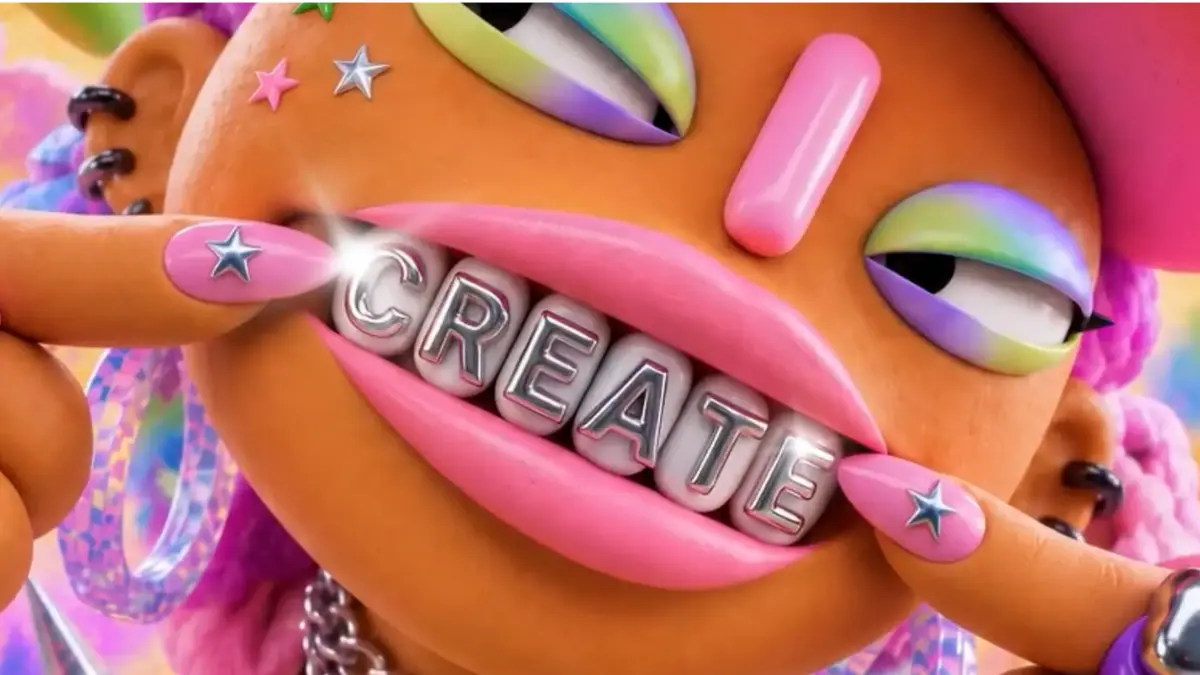
Adobe’s response, as articulated through "Made to Create," is a defiant doubling-down on the irreplaceable nature of human vision. By bringing together over 30 distinct artists hailing from 18 countries, the campaign showcases a mosaic of global talent whose work bridges the gap between traditional techniques and advanced digital workflows. More significantly, according to Adobe Chief Marketing Officer Lara Balazs, this initiative marks the first time in five years that the company has unified the vast breadth of its product ecosystem under a single, cohesive brand banner.
This deep-dive investigation explores the anatomy of Adobe’s latest strategic pivot, examining the pressures of the generative AI boom, the logistical and artistic scope of the Miami unveiling, the broader economic ramifications for creative professionals, and what this signals for the future of human-machine collaboration in the arts.
Detailed Chronology: From Miami’s Stage to Global Screens
The genesis of the "Made to Create" campaign did not happen in a vacuum; it was carefully choreographed to meet the shifting anxieties of the creative community head-on. To understand the weight of the campaign, one must trace the timeline of Adobe’s recent evolution—from the initial shockwaves of generative AI to the grand unveiling at Adobe MAX.
Phase 1: The Generative Disruption (2022–2023)
When powerful generative text-to-image and text-to-video models burst into the public consciousness, they sent immediate tremors through the creative sector. Freelancers, agency veterans, and enterprise designers alike expressed a mixture of awe and acute anxiety. Fears mounted that clients would bypass human creators altogether, opting for cheap, instantaneous algorithmic outputs.
Adobe recognized early on that it could not ignore this paradigm shift. Instead of treating AI as an enemy, the company integrated generative capabilities—branded as Adobe Firefly—directly into its flagship applications like Photoshop and Illustrator. While this move successfully equipped users with cutting-edge tools, it also inadvertently fueled a branding crisis among purists who worried Adobe was actively automating them out of a job.
Phase 2: Unifying the Ecosystem (Late 2023–Early 2024)
Recognizing the psychological and professional toll of this rapid technological transition, Adobe’s executive leadership began conceptualizing a counter-narrative. The goal was to pivot the conversation away from replacement and back toward empowerment.
For five years, Adobe’s marketing efforts had largely focused on fragmented product rollouts, targeting specific niches (such as video editors or web designers) with siloed campaigns. However, CMO Lara Balazs and her internal marketing teams realized that combating the existential dread of AI required a unified front. They needed a campaign grand enough to encompass the entire Creative Cloud ecosystem while anchoring the brand firmly to the human element. Thus, "Made to Create" was born.
Phase 3: The Global Collaboration (Mid 2024)
Months before its public debut, Adobe embarked on a massive global talent search. The criteria were rigorous: the company sought artists who not only pushed the boundaries of what is possible with Adobe software but who also maintained a deeply personal, distinctly human artistic signature.
The production brought together more than 30 multidisciplinary artists across 18 countries. Photographers, 3D animators, graphic illustrators, and filmmakers were given early access, collaborative spaces, and institutional backing to produce mixed-media pieces that would form the core visual assets of the campaign.
Phase 4: The Adobe MAX Unveiling (Miami, Late 2024)
The culmination of these efforts took center stage at Adobe MAX in Miami. As thousands of industry professionals packed the keynote arena, the "Made to Create" campaign was deployed as the defining theme of the conference.
The event featured immersive gallery installations, live-action case studies detailing the creation of the campaign’s visual assets, and high-profile panel discussions addressing the ethical boundaries of AI in art. By placing human creators front and center in Miami, Adobe sent an unambiguous message: the future of creation is human-led, and Adobe’s tools are the instruments through which that vision comes to life.
Supporting Context & Metrics: The Economics of Creativity in the Age of AI
To fully appreciate the strategic necessity of Adobe’s campaign, one must examine the macroeconomic environment in which it operates. The software giant is currently navigating a delicate balancing act: satisfying Wall Street’s insatiable demand for AI-driven growth while retaining the loyalty of the core creative professionals who built the company’s empire.
The Financial Landscape
Adobe’s financial health remains robust, yet the company faces intense competitive pressures. Traditional revenue models based on perpetual licenses gave way long ago to the Creative Cloud subscription model. However, the subscription economy is now being challenged by nimble, AI-native startups offering hyper-simplified tools at a fraction of the cost—or entirely for free.
To maintain its market dominance, Adobe has integrated Firefly across its ecosystem, charging for "generative credits" alongside traditional software subscriptions. While this has opened new monetization streams, it has also sparked heated debates within the design community regarding copyright, fair compensation for training data, and the devaluation of manual skill.
| Strategic Pillar | Pre-AI Era Focus | Current AI Era Focus (Post-"Made to Create") |
|---|---|---|
| Primary Value Prop | Precision, control, and professional standard tools. | Amplifying human imagination and accelerating complex workflows. |
| Campaign Strategy | Siloed product campaigns (Photoshop, Premiere, etc.). | Unified ecosystem narrative emphasizing the human creator. |
| Market Perception | The ultimate monopoly on digital artistic production. | A platform balancing automation efficiency with human artistry. |
| Target Audience | Professional graphic designers, photographers, and editors. | A broader coalition including enterprise teams, hybrid creators, and digital natives. |
The Psychological Shift in the Workforce
Surveys across the creative industries indicate a profound polarization. According to recent industry data, over 65% of professional designers utilize AI tools regularly to streamline tedious tasks (such as background removal, image upscaling, and basic asset generation). Yet, a nearly identical percentage expresses deep anxiety regarding career security, client budgets shrinking due to perceived "instant" work, and the erosion of artistic originality.
By launching "Made to Create," Adobe is attempting to stabilize this turbulent psychological landscape. The underlying thesis of the campaign is reassuring: while algorithms can synthesize pixels, they lack lived experience, emotional resonance, and intentionality—the very ingredients that make commercial art persuasive and fine art profound.
Official Statements and Industry Insights
The rollout of "Made to Create" has generated significant commentary from Adobe’s executive leadership and participating artists alike. The campaign represents a calculated pivot in how the tech giant communicates its values to the public.
Lara Balazs on Unifying the Ecosystem
In interviews surrounding the Miami conference, Adobe Chief Marketing Officer Lara Balazs emphasized the historic nature of the campaign:
"This is the first time in five years that we have brought the entire breadth of our products together in a single campaign execution. We wanted to remind the world—and ourselves—that the software is only as powerful as the imagination driving it. ‘Made to Create’ is our homage to the artists, designers, and dreamers who use our canvas to shape culture."
Balazs noted that the creative process has grown increasingly complex, caught between the demands of high-velocity digital marketing and the anxieties of technological disruption. By consolidating the brand narrative, Adobe aims to act as a stabilizing anchor for creative professionals navigating this uncertain terrain.
Perspectives from the Global Creator Collective
Artists involved in the production of the campaign have echoed these sentiments, highlighting the collaborative ethos behind their work.
“When you first see what AI can generate, it’s easy to feel dispensable,” shared a London-based digital illustrator who participated in the global showcase. “Working on this campaign reminded me that my value isn’t just in outputting a finished image; it’s in the messy, iterative journey of making choices, making mistakes, and injecting my personal perspective into the work. Adobe’s tools didn’t think for me—they helped me execute a vision that only I could have conceived.”
Industry analysts have largely praised the strategic pivot. Financial and tech analysts observe that while investors demand aggressive AI integration, brand longevity requires preserving the emotional equity of the user base. "Made to Create" serves as an ideological bridge, reassuring traditionalists that Adobe respects human craftsmanship even as it races ahead with machine learning innovations.
Future Outlook: Navigating the Horizon of Human-Machine Co-Creation
As the dust settles on the Adobe MAX conference in Miami and the "Made to Create" campaign rolls out across global digital billboards, social channels, and enterprise networks, the broader implications for the creative sector are beginning to take shape.
1. The Redefinition of "Skill" in the Digital Age
The definition of what constitutes a "skilled designer" is undergoing a rapid metamorphosis. As basic execution—such as masking, tracing, rendering, and basic layout generation—becomes automated via AI, the premium is shifting toward higher-order capabilities: conceptual direction, emotional intelligence, cross-medium storytelling, and ethical curation. Adobe’s ecosystem is evolving to support this shift, transitioning users from manual laborers of pixels to directors of algorithmic and digital processes.
2. Trust, Provenance, and Authenticity
One of the greatest challenges facing the creative industry is the erosion of trust in visual media. Deepfakes, synthetic misinformation, and unverified AI imagery have cluttered the digital sphere. Adobe has been a vocal champion of the Content Authenticity Initiative (CAI), embedding cryptographic "content credentials" into files generated or edited within its software. The "Made to Create" campaign subtly reinforces this commitment to provenance, reminding consumers that behind every piece of certified, high-impact media lies a verifiable human creator.
3. The Enterprise Imperative
For enterprise clients—advertising agencies, global brands, and media conglomerates—the pressures are dual-fold: they must scale content production to meet the demands of endless digital channels while protecting their brand reputation from copyright infringement and homogenized aesthetics. Adobe’s unified campaign signals to enterprise decision-makers that investing in Creative Cloud is an investment in professional-grade safety, creative control, and human originality.
Conclusion
Adobe’s "Made to Create" campaign is far more than a standard corporate marketing blitz. It is a calculated ideological stance in the defining technological battle of our time. By centering its multi-billion-dollar ecosystem around the heartbeat of the human artist, Adobe is attempting to chart a sustainable path forward—one where artificial intelligence acts as a tireless assistant, but human creativity remains firmly at the helm. As the industry looks toward the future, the success of this campaign will be measured not just in software subscriptions, but in its ability to preserve and champion the irreplaceable spark of human imagination.
