

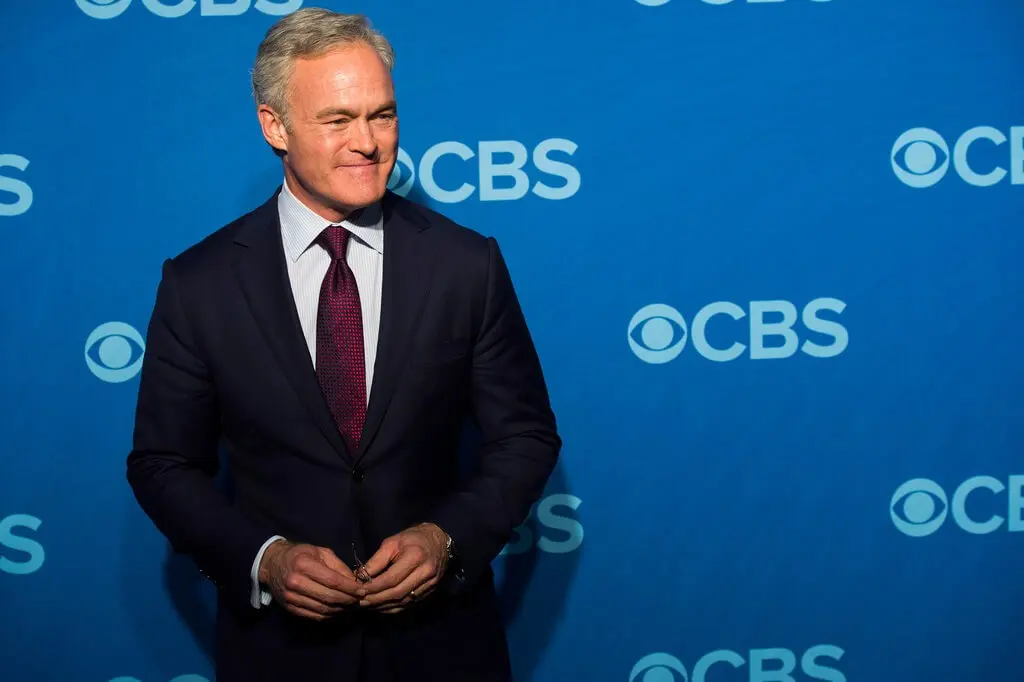
Executive Overview
In the wake of a seismic "blue tsunami" during the midterm elections—a wave of Democratic victories that fundamentally shifted the legislative power balance in Washington—political analysts and media critics alike began asking an inevitable question: Will mainstream media networks, which spent the past two years attempting to appease the second Trump administration, execute an about-face?
For institutions like CBS News, the question cuts to the core of institutional survival. Under the corporate stewardship of Paramount and its new parent company, Skydance, the network has faced heavy criticism for paying millions to settle legal disputes with President Donald Trump, implementing sweeping editorial changes, and bowing to perceived political pressure from the executive branch.
However, according to veteran broadcast journalist Scott Pelley, asking whether the bias will shift misses the entire point. Pelley, a legendary figure in American journalism whose career spans over five decades—including 37 years at CBS News as a war correspondent, CBS Evening News anchor, and 60 Minutes correspondent—argues that the foundational damage has already been done. CBS’s credibility, he maintains, is not merely compromised; it is gone.
Pelley’s critique comes at a defining juncture in his career. This Saturday, he is scheduled to receive the prestigious Poynter Medal for Lifetime Achievement in Journalism at Poynter’s Bowtie Ball, honoring a life spent holding power to account. Yet, this lifetime
achievement celebration follows a bitter, public, and historic exit from the network he once considered family.
In June, Pelley was fired from 60 Minutes after openly confronting network leadership over what he termed the systematic dismantling of journalistic integrity. His departure occurred in the shadow of Skydance’s acquisition of Paramount, the controversial installation of The Free Press founder Bari Weiss as editor-in-chief, and subsequent corporate mergers that have tied legacy American newsrooms to foreign sovereign wealth funds with troubling human rights records.
In an exclusive, wide-ranging interview ahead of the Bowtie Ball, Pelley reflects on the collapse of editorial independence at CBS, the grave ethical implications of foreign ownership in American media, his advice for journalists navigating similar takeovers at networks like CNN, and his surprising second act as an independent journalist.
Detailed Chronology: The Mutiny at 60 Minutes and the Purge of CBS News
To understand the current crisis at CBS News, one must examine the rapid and tumultuous restructuring of Paramount Global following its acquisition by Skydance Media. The corporate takeover fundamentally altered the power dynamics inside the country’s most storied newsrooms, replacing legacy broadcast executives with figures from the burgeoning digital and opinion-driven media landscape.
The most controversial appointment was that of Bari Weiss, founder of The Free Press, who was installed as editor-in-chief. Weiss’s arrival signaled a sharp departure from traditional network broadcasting standards, introducing an editorial philosophy that critics—and many veteran staffers—argued was designed to appease political actors and shift the network’s tone toward partisan compatibility.
Following Weiss’s arrival, 60 Minutes—long considered the gold standard of American investigative television journalism—became the epicenter of internal dissent. A string of high-profile firings and voluntary departures decimated the staff. Journalists openly alleged that Weiss and her newly appointed lieutenants were exercising direct interference in editorial independence, killing sensitive stories, and rewriting copy to satisfy outside ideological pressures. (Weiss has consistently denied these allegations of interference.)
The simmering tensions finally boiled over on June 1. During a tense staff meeting, Scott Pelley confronted Nick Bilton, the executive producer of 60 Minutes who had been handpicked by Weiss. Bilton, whose professional background lacked traditional television production experience, was challenged directly by Pelley in front of his peers.
According to accounts confirmed by staff, Pelley informed Bilton that he possessed "slender qualifications" to run the legendary broadcast. Turning his fire toward the top of the masthead, Pelley stated bluntly that Bari Weiss had "no qualifications" and was actively "murdering" 60 Minutes.
The retribution was swift. Just 24 days before his landmark career celebration at Poynter, and less than 24 hours after speaking truth to the new corporate power structure, Pelley was fired. The termination severed a 37-year institutional bond, signaling to the broader media landscape that dissent within the corporate-political alignment would not be tolerated.
Supporting Context & Metrics: Corporate Capture, Foreign Capital, and the Crisis of Credibility
The ouster of Scott Pelley is not an isolated personnel dispute; it is a clinical case study in the modern corporate capture of American journalism. As legacy media companies face declining linear television revenues, shrinking profit margins, and ferocious political headwinds, ownership models have shifted toward entities more vulnerable to government pressure and foreign financial entanglements.
The Financial and Legal Precedents
The erosion of CBS’s journalistic independence did not happen in a vacuum. Over the past two years, Paramount Global has paid millions of dollars in settlements to Donald Trump—most notably a $16 million settlement over a disputed 60 Minutes interview. Critics and insiders argue that these financial payouts established a dangerous precedent, signaling to the executive branch that legal threats and public attacks could successfully extract corporate capitulation.
When asked whether the recent midterm election losses for Republicans might prompt media leaders to reverse their appeasement strategies, Pelley rejected the premise entirely:
"To me, it’s not a question of which way the bias leans. The problem is that editorial control was taken from journalists trained in our principles and given to corporate executives and ideologues with an agenda. It doesn’t matter which agenda is imposed; independence and credibility are lost."
The Shadow of Foreign Sovereign Wealth
The systemic risks facing American newsrooms expanded exponentially following the closure of the merger between Paramount-Skydance and Warner Bros. Discovery. Through this transaction, legacy American media institutions—including CBS News and CNN—are now partially owned by the Saudi sovereign wealth fund.
The Public Investment Fund is chaired by Crown Prince Mohammed bin Salman, the de facto leader of Saudi Arabia. According to comprehensive U.S. intelligence assessments, Crown Prince Mohammed approved the 2018 military-intelligence operation that led to the murder and dismemberment of Washington Post contributing columnist Jamal Khashoggi at the Saudi consulate in Istanbul.
For Pelley, this financial entanglement represents an insurmountable moral and professional red line:
"If anything, the circumstances are more grave. With the closing of the Warner merger, Skydance is partly owned by the Saudi sovereign wealth fund. The fund is chaired by Crown Prince Mohammed bin Salman… who, according to U.S. intelligence, approved the operation that killed and dismembered Washington Post columnist Jamal Khashoggi. I cannot reconcile partial ownership of CBS News and CNN with the murder of a journalist. For this reason alone, I could not have remained at CBS News."
Official Statements and Perspectives
Ahead of receiving the Poynter Medal, Pelley sat down for an email interview to elaborate on his worldview, his defense of his colleagues, and the roadmap for journalists facing similar authoritarian pressures across the industry.
Defending Integrity and Standing with Colleagues
Asked whether he regrets his public confrontation with Nick Bilton, Pelley was unrepentant:
"No. I stood up for my colleagues. I stood up for integrity. I stand up for them today."
A Warning for CNN and the Broader Industry
With CNN now navigating the turbulent waters of the Skydance-Warner Bros. merger and its associated foreign capital structures, Pelley offered a stark, tactical warning to reporters inside the network:
"They should watch for ownership reneging on its promise of independence. They should watch for pressure to kill stories the ownership doesn’t like. They should watch for efforts to inject bias into their reporting. They should watch for the firing of colleagues who stand up for journalistic values. In our experience, the attack on 60 Minutes was not subtle."
The Evolution into Independent Journalism
Stripped of his corporate platform, Pelley has found unexpected liberation in the digital independent media space. Rather than fading into retirement, he has built a dynamic independent media company focused on documentary production, investigative writing, and podcast development.
"I’m surprised by how much I am enjoying the role of an independent journalist. In my media company, I am able to lead my team with integrity and return to the values I was taught in nearly 40 years at CBS News. I’m engaged in reporting, writing, documentary production and podcast development. I’m speaking all over the country on the indispensable role of press freedom in a democracy, and I’m lecturing at Columbia Journalism School. The opportunities are endless."
Pelley’s Current Media Diet
Despite his critique of modern media conglomerates, Pelley remains deeply engaged with traditional print journalism and high-minded public broadcasting:
"I am a little old-fashioned in this. Every morning I read The New York Times, The Washington Post and The Wall Street Journal. I’ve frequently admired the Journal’s editorial page for insight into Trump administration policy. I’m watching some truly great documentaries, and I’m fan of PBS’s NewsHour and Frontline."
Future Outlook: Blind Spots in Modern Coverage and the Road Ahead
As the American media landscape recalibrates following the midterms, Pelley offers a balanced evaluation of what the press is getting right—and where it is catastrophically failing the public.
On the positive side, Pelley heaps praise on the deeply reported investigative journalism tracking administrative corruption:
"The investigative reporting into corruption in the Trump administration has been excellent, and some of it may, in time, become legendary."
However, he warns that structural blind spots and institutional gatekeeping are actively failing to inform the citizenry on existential geopolitical and technological threats. First, he points to the ongoing, underreported conflict with Iran:
"I am not seeing nearly enough coverage of the war with Iran, but that is largely due to Pentagon leaders who are hostile to the public’s right to know."
Second, Pelley issues a clarion call for the press corps to elevate its intellectual ambition regarding artificial intelligence—a transformative force currently operating on largely unregulated frontiers:
"As a profession, we can never do too much explanatory reporting on the unregulated frontiers of AI. There is great public service to be done by illuminating a technology that will transform civilization."
Conclusion: The Indispensable Watchdog
The trajectory of Scott Pelley’s career—from the anchor desk of the CBS Evening News and the hallowed halls of 60 Minutes to an independent voice lecturing at Columbia—serves as both a warning and an inspiration.
As corporate consolidation, foreign petrodollars, and political appeasement continue to reshape the DNA of legacy media institutions, Pelley’s refusal to bend knee demonstrates that while corporate boards can buy networks, fire journalists, and alter editorial mandates, true journalistic integrity cannot be acquired at any price. For the journalists left behind in the corporate newsrooms, and for the public relying on them for the truth, Pelley’s legacy remains a stark reminder of what is at stake when the watchdog bows to the master.
