

Executive Overview
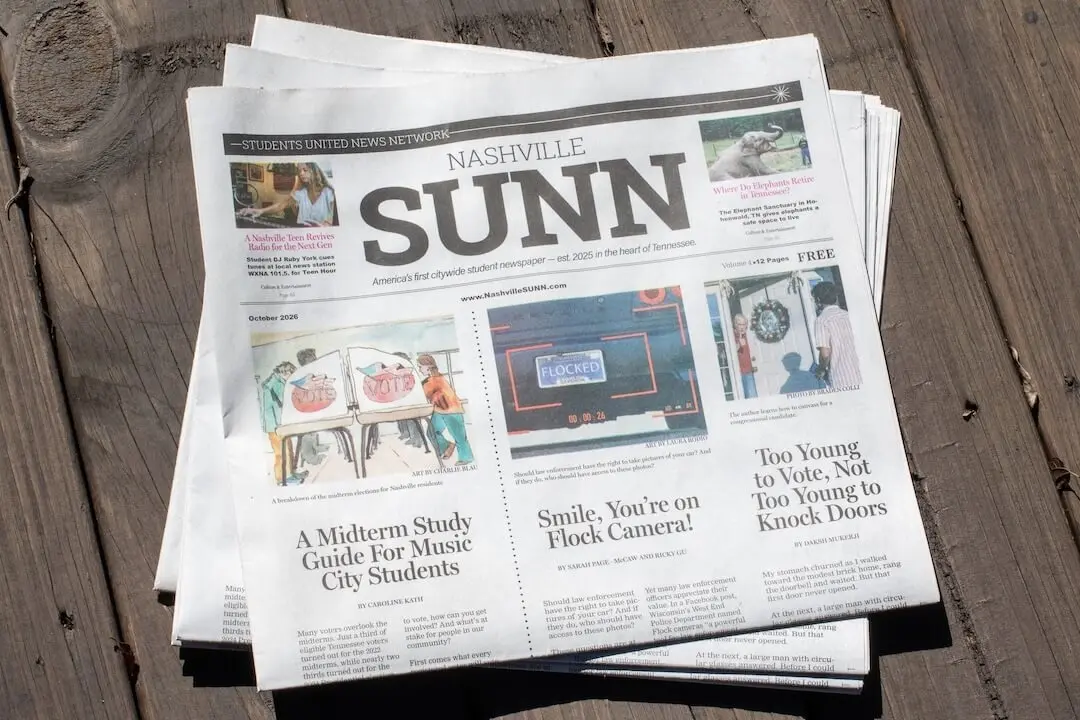
In an era defined by media fragmentation, institutional distrust, and the steady contraction of local newsrooms, a quiet revolution is taking root in Music City. The Nashville SUNN, celebrated as America’s first citywide, student-run newspaper, represents a bold countermeasure to the ongoing crisis in journalism. Operating as a hyper-local affiliate of the broader Students United News Network (SUNN)—which was established nationally in 2024 by writer-in-residence and former Bloomberg columnist Amanda Little—this pioneering publication bridges the generational and educational divide in modern media.
By pairing high school writers across 24 Nashville-area institutions with undergraduate editors from local powerhouses like Vanderbilt University and Belmont University, the initiative does more than merely produce content. It builds a vital mentorship pipeline, instills rigorous fact-checking standards, and restores a tangible sense of community through an innovative print and digital hybrid model.
As local newspapers continue to vanish from the American landscape, The Nashville SUNN offers a blueprint for cultivating civic engagement, fostering cross-generational dialogue, and proving that the future of journalism relies heavily on empowering tomorrow’s voices today.
Detailed Chronology: From Concept to Community Anchor
Laying the Groundwork: The National Vision
The genesis of The Nashville SUNN traces back to Amanda Little’s extensive work in youth civics programs. Recognizing a glaring void in how high school journalism was supported nationally—where well-funded suburban schools often dominated student press awards while under-resourced urban schools lacked even basic writing programs—Little conceptualized a unified network.
In March 2025, the national arm, The SUNN Post, launched to aggregate and showcase reporting from high school publications across the United States. However, Little realized that a purely national model would inevitably miss students trapped in news deserts—schools where student newspapers had long been defunded or never existed in the first place.
The Launch of The Nashville SUNN
To address this local disparity, The Nashville SUNN officially debuted in November 2025. Designed as the network’s inaugural local affiliate, the publication was engineered to cast a wide net across 24 Nashville-area high schools. Rather than relying on traditional faculty advisors, Little structured the operation to be managed day-to-day by undergraduate students.
Since May of that year, Vanderbilt University seniors Sarah Nipper and Manushree Navaneethakrishnan have steered the publication as editor-in-chief and managing editor, respectively. Supported by a dedicated roster of undergraduate copy editors, fact-checkers, and a recent Belmont University graduate serving as art director, the paper quickly established a rhythm of publishing bi-monthly print and digital editions.
The Editorial Cycle: Pitching, Mentoring, and Publishing
The journey from a raw concept to a polished, professional piece of journalism is deeply collaborative. Stories originate from three primary sources: existing high school newspapers, proactive pitches from the college editorial team, or direct submissions from teenage writers.
When a student pitches an idea, Nipper frequently initiates a phone consultation to workshop the concept. This human-centric approach demystifies the reporting process, giving the student roughly two weeks to produce a first draft.
Once submitted, the piece undergoes a rigorous multi-stage review process:
- Developmental Editing: Nipper or Navaneethakrishnan conducts structural edits over the phone rather than leaving isolated comments in a digital document, ensuring the young writer understands the architecture of an op-ed or news article.
- Fact-Checking & Copyediting: A team of undergraduate fact-checkers verifies sources, confirms data points, and ensures hyperlinks meet professional journalistic standards.
- Visual Direction: Laura Rodio, the art director, commissions or pairs student artists and photographers with the articles to create bespoke visual accompaniment.
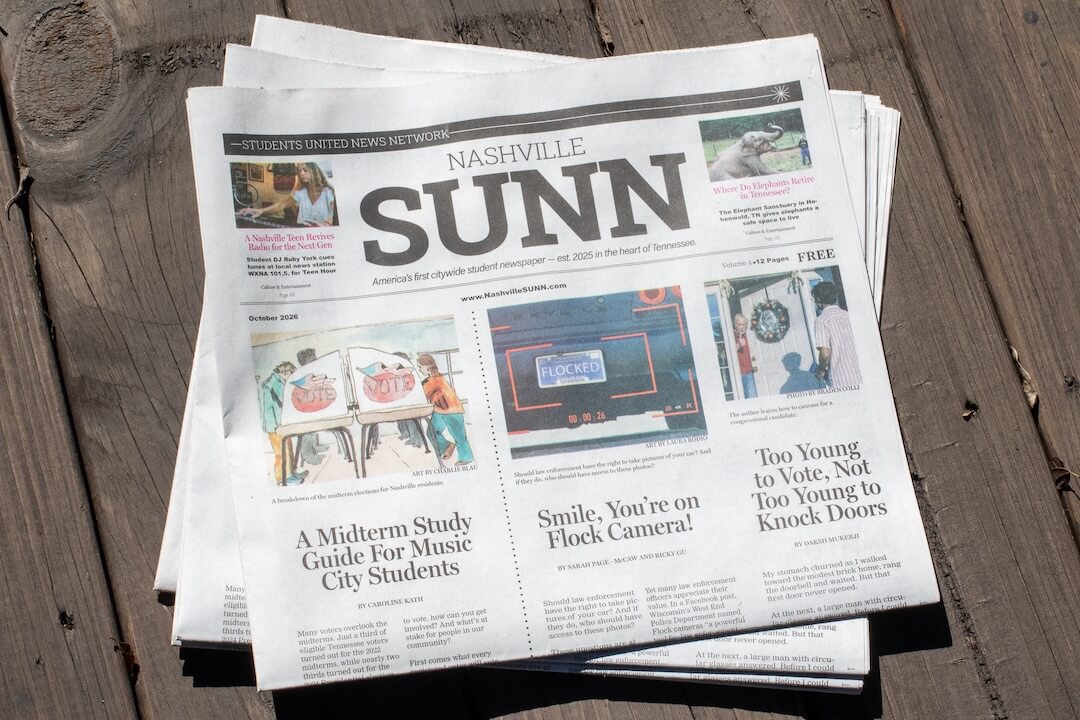
- Publication & Distribution: The finalized issue drops online and in print, distributed to approximately 6,000 readers across local libraries, high schools, and roughly 26 commercial partner businesses throughout Nashville.
Supporting Context & Metrics: Data, Distribution, and Financial Models
Scale, Reach, and Partnerships
The Nashville SUNN operates at an impressive intersection of grassroots community organizing and professional media distribution. With each bimonthly issue featuring between 20 and 24 pieces of original journalism, reviews, op-eds, and art, the publication has carved out a permanent fixture in the local media ecosystem.
- Print Circulation: Approximately 6,000 physical copies distributed across Nashville public spaces, high schools, and local businesses.
- Mainstream Syndication: Through a strategic partnership with The Tennessean (part of the USA Today Network), selected SUNN stories are republished in a regular Sunday print and online feature. Edited by Tennessean opinion editor Tacuma Roeback, this partnership has already elevated more than 20 student pieces to a statewide audience, with a financial model paying $50 per article split between the student writer and the publication.
- Saturday Workshops: Free, open-access workshops hosted at the downtown Nashville Public Library. These sessions connect high schoolers with seasoned professionals from NPR, The Tennessean, and local television stations like NewsChannel 5.
Financial Architecture and Compensation
Running a sustainable, high-impact student publication requires innovative funding. Amanda Little currently operates SUNN as an unpaid executive director, relying heavily on foundation grants and small donor contributions while actively building corporate partnerships and advertising revenue streams.
Crucially, the organization believes in compensating its contributors. Student writers are paid between $50 and $125 per assignment depending on scope and placement, while student artists and photographers receive financial compensation for their visual assets. Furthermore, the college editors are compensated hourly for their intensive administrative and editorial labor.
Official Statements & Perspectives
The success of The Nashville SUNN is best understood through the voices of those who build, edit, and contribute to its pages every single day.
"We’re going to talk through the developmental edits step by step instead of just commenting on them. That way, she can understand what goes into the structure of an op-ed."
— Sarah Nipper, Editor-in-Chief, The Nashville SUNN
Nipper’s pedagogical approach has transformed the confidence of novice writers. Ruby York, a 10th grader at Martin Luther King Jr. School who contributes to the paper while DJing on WXNA’s Teen Power Radio Hour, noted the profound impact of this mentorship:
"I had no idea what I was doing when I first started writing, and it was kind of a mess. (Nipper) completely helped teach me how to write, how to organize a piece, what to do during editing, how to make it longer and how to format it."
Founder Amanda Little emphasizes that placing college students at the helm is a deliberate tactical choice designed to maximize relational engagement:
"There’s no better way to motivate young talent than through college students who speak their language. A college student who’s doing amazing things as an undergraduate can be more exciting to the people we’re trying to reach. Mentoring lets us work with schools that have no journalism program… We can bring in students interested in debate, Model UN, youth in government or student council, or students who simply care about issues and want to amplify their voices."
Managing editor Manushree Navaneethakrishnan highlights the intellectual rigor required to transition high school perspectives into journalistic narratives:
"The first thing they’re going to think is, ‘Oh, my piece just isn’t good enough. My piece isn’t ready.’ It’s comforting to know that someone didn’t just skim your piece. They genuinely read it and engaged with it… Editing for Nashville SUNN was so interesting because it was so content-focused. The writers were really on top of things, fact-checking and making sure to corroborate information."
Navaneethakrishnan also reflects on the broader life skills instilled by the publication:
"You don’t have to want to be a journalist to do journalism. Genuinely, every single field can benefit from it because you’re having conversations with people. I owe so much to the SUNN — it truly is a facet of my identity and personality and has advanced my leadership in so many ways."
Future Outlook: Scaling the Blueprint for National Impact
As The Nashville SUNN solidifies its presence as an indispensable community asset, the organization’s leadership is looking toward the horizon with ambitious scaling goals.
Expanding the Print Footprint
While the digital publication ensures global accessibility, leadership recognizes the unique power of the physical page. Editor-in-Chief Sarah Nipper notes that physical editions foster deeper community memory and institutional buy-in, allowing English teachers to introduce journalism dynamically into their classrooms. Future initiatives aim to scale print distribution significantly beyond the current 6,000-copy threshold, penetrating deeper into suburban and rural districts surrounding Davidson County.
Diversifying Revenue and Ensuring Long-Term Viability
Transitioning from grant-dependent startup funding to a self-sustaining financial model remains a core objective for Amanda Little and her administrative team. Expanding corporate sponsorships, deepening local business advertising partnerships, and scaling syndication relationships with regional media conglomerates will be critical to ensuring fair compensation for student creators for years to come.
Replicating the Local Model Nationwide
Perhaps the most significant legacy of The Nashville SUNN lies in its scalability. While The SUNN Post successfully networks established high school papers across 35 states, the Nashville affiliate demonstrates that direct, college-led local intervention can successfully rescue student journalism in districts stripped of traditional school-sponsored media.
By actively recruiting from debate teams, student councils, and civic organizations, The Nashville SUNN has redefined who gets to be a journalist. In doing so, it provides a replicable, highly effective roadmap for communities across the United States seeking to heal the fractures in local media, one young writer at a time.
