

Executive Overview
In newsrooms across the United States, a quiet and unprecedented transformation is underway. As artificial intelligence reshapes the media landscape at a dizzying pace—shifting capabilities and ethical paradigms on what feels like a weekly basis—tech-savvy journalists are increasingly finding themselves thrust into an entirely new, unscripted role. They are becoming the unofficial "AI champions" of their organizations, tasked with the heavy responsibility of introducing complex machine-learning tools, establishing ethical guidelines, and persuading skeptical colleagues to embrace the digital future.
For professionals operating within small and medium-sized newsrooms, this role can often feel isolating. These individuals are routinely expected to bridge the gap between rapidly evolving technology and traditional journalistic workflows without institutional support, formal titles, or adequate budgets. In some extreme cases, these pioneering reporters are even paying out of pocket for the cloud infrastructure and API keys required to test tools that could eventually save their newsrooms hundreds of hours of labor.
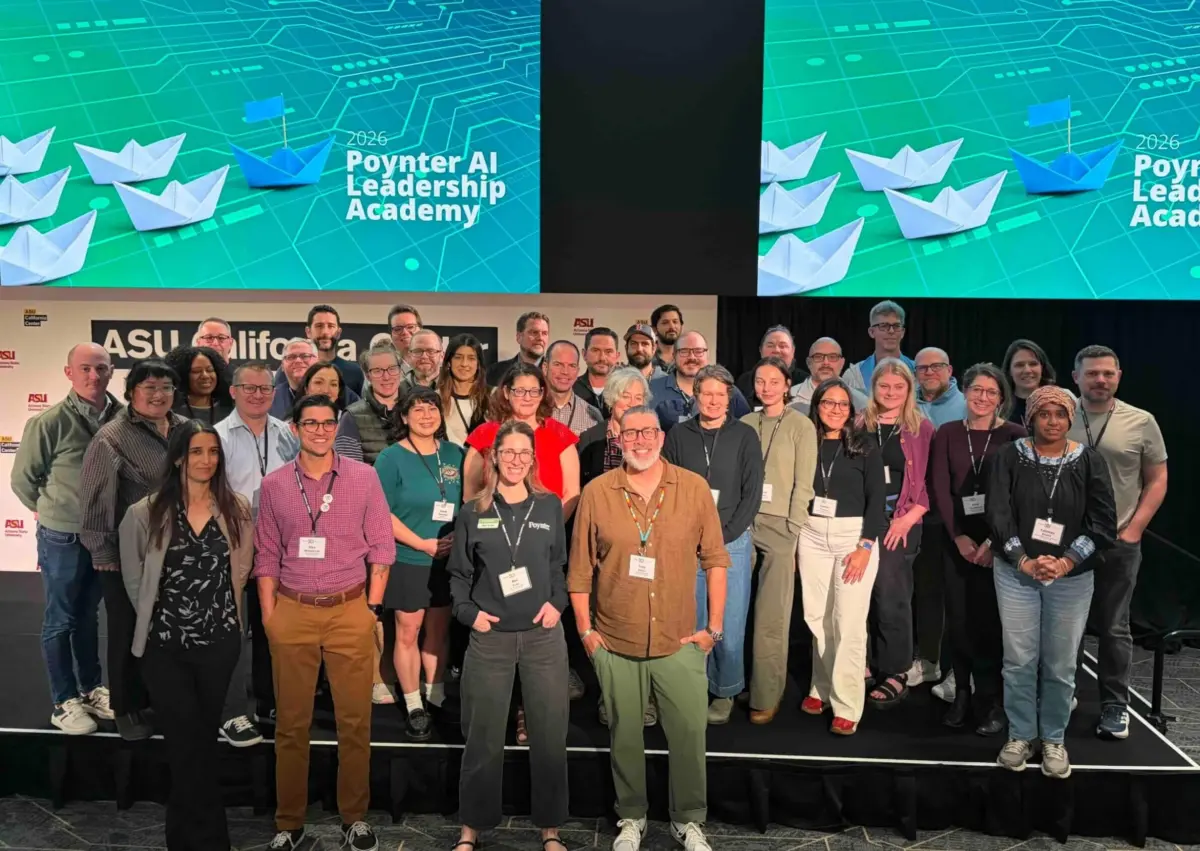
Recognizing this critical support gap, the Poynter Institute stepped forward to build a lifeline. From October 26–27, a cohort of 33 hand-selected journalists from across the nation gathered at the Arizona State University (ASU) California Center in Los Angeles. The occasion marked the kickoff of Poynter’s inaugural Leading AI in the Newsroom program. Led by an expert faculty comprising Alex Mahadevan, Sitara Nieves, Tony Elkins, and Kelly McBride, the two-day intensive workshop was designed to provide these emerging leaders with practical training, change-management strategies, and, perhaps most importantly, a robust community of peers who intimately understand the unique burdens of technological transformation.
This report explores the motivations, challenges, and actionable strategies that emerged from Poynter’s landmark West Coast gathering, shedding light on how local and regional newsrooms are navigating the precarious intersection of journalism and artificial intelligence.
Detailed Chronology: Inside the Los Angeles Workshop
Day One: Setting the Stage and Calibrating Expectations
The timing of the workshop was notable: gathering 33 busy journalists just one week before a high-stakes national election demonstrated an extraordinary level of commitment from the participants. Yet, despite the looming news cycles back home, the atmosphere in the ASU California Center was charged not with anxiety, but with pragmatic enthusiasm.
Alex Mahadevan, director of the MediaWise project at Poynter and one of the lead facilitators, noted that he wore physical "AI skeptic" and "AI optimist" buttons to set the tone. As it turned out, the entire cohort shared that dual perspective. These were not naive tech evangelists blinded by Silicon Valley hype; they were veteran reporters and editors who understood both the profound efficiencies and the glaring failure modes of large language models and automated scraping tools.
The opening sessions focused heavily on laying a foundational understanding of responsible AI adoption. Faculty members guided the cohort through the psychological dynamics of newsroom resistance. For many participants, Day One provided an immediate sense of relief: the realization that they were no longer fighting the algorithmic battle alone. The natural introversion commonly found among "lonely coders" and tech-forward newsroom nerds quickly melted away as participants shared war stories of trying to explain prompt engineering to skeptical copy desks and exhausted publishers.
Day Two: Strategy, Metrics, and the "Balcony"
If the first day was about shared misery and foundational alignment, the second day was strictly focused on actionable power and structural strategy. Tony Elkins led a pivotal session introducing a conceptual framework that visibly resonated with the room: the distinction between the "dance floor" and the "balcony."
In modern newsrooms, tech-forward journalists are almost always trapped on the dance floor—frantically coding, editing, managing daily output, or stuck in endless reactive meetings. Elkins introduced the radical notion that stepping back to think about high-level strategy is not a luxury, but a core professional duty. Participants were encouraged to literally block out time on their calendars for "balcony time"—protected hours dedicated solely to long-term planning, workflow evaluation, and ethical risk assessment.
Following the balcony session, Mahadevan led a rigorous workshop on operational metrics. Rather than yielding to top-down executive mandates that demand "we must use AI everywhere," the cohort was trained on how to establish hard benchmarks. Participants learned how to track specific performance indicators to determine whether an experimental AI tool genuinely aids the reporting process—or whether it is time to ruthlessly kill the project before it introduces institutional liabilities.
Supporting Context & Metrics: The State of AI in Local Media
To truly understand the significance of Poynter’s initiative, one must examine the precarious economic and structural reality of small and medium-sized newsrooms in the 2020s.
The Spectrum of Adoption
During the Los Angeles workshop, faculty surveyed the diverse ways participants are currently attempting to implement artificial intelligence. The use cases span a remarkably wide spectrum:
- Administrative Automation: Routine story summaries, automated transcriptions, and baseline headline optimization to speed up publishing workflows.
- Investigative Scraping: Custom-built tools designed to ingest thousands of pages of public government documents, parse complex local budgets, and flag anomalies for investigative reporters.
- Accountability Journalism: Automated scripts tuned to monitor local government meetings, cross-reference zoning laws, and alert newsrooms when public bodies attempt to bypass transparency statutes.
- Pre-Publication Safety Checks: Experimental guardrails designed to scan drafts for potential factual discrepancies, missing context, or high-risk legal exposures before a piece goes live.
The Anatomy of Newsroom Friction
Despite these promising applications, the friction preventing widespread, ethical adoption remains immense. Survey data and anecdotal evidence from the workshop highlight two opposing forces crushing middle-management innovators:
- Top-Down Mandates: Corporate owners and legacy publishers often issue sweeping, ill-informed directives demanding that newsrooms "integrate AI" immediately, usually driven by a desire to cut costs or chase algorithmic traffic trends.
- Bottom-Up Resistance: Frontline reporters and unionized newsroom staffers frequently view AI as an existential threat to their livelihoods, craftsmanship, and the factual integrity of their publications.
Caught squarely in the middle are the 33 journalists who attended Poynter’s program. They are the translators, forced to interpret corporate techno-optimism for a deeply skeptical, overworked reporting staff.
Official Statements & Insights: An Interview with Alex Mahadevan
To unpack the deeper implications of the West Coast workshop, we sat down with Poynter faculty member Alex Mahadevan for an expansive discussion on the realities facing modern newsroom innovators.
With so much alarming news about AI and its potential impact, what was the atmosphere like among the cohort?
"I wore my ‘AI skeptic’ and ‘AI optimist’ buttons, and I think the cohort had a similar, pragmatic view of AI in journalism. These folks know how the technology really works and its great promise, but also understand where it fails. But I definitely noticed way more enthusiasm from this group than I have when I’m out and about."
The program specifically focuses on small and medium-sized newsrooms. What are the most common use cases and primary operational challenges you observed?
"For uses, the cohort covered almost everything. Some newsrooms use AI for story summaries and headline help, and others built tools that watch government meetings, scrape documents for investigative teams, or flag possible errors before a story publishes.
The biggest challenge is around driving change and juggling stakeholder expectations. Not new for any news nerd who’s worked in media for a while. Many have AI mandates coming from above and extreme resistance from staff. Many feel alone. And this program was awesome because it gave them a cohort to lean on for the latter, and leadership and change management training for the former."
Were there any surprises during the discussions regarding participants’ experiences or concerns?
"I was surprised we could get 33 journalists together the week before an election! But to answer the question, I wasn’t too surprised by anything, since Poynter has been working closely with newsrooms on AI through training and consulting since ChatGPT came out. Maybe how chatty everyone was. Lonely coders can tend to be introverts (myself very much included), so it was really cool to see the cohort gel."
Journalists often become the unofficial “AI person” in their newsrooms. Do you believe these roles need more formal recognition, authority, or financial resources?
"Yes, absolutely. One person built their newsroom’s AI tools on infrastructure they pay for out of their own pocket, which is wild. I think these roles need recognition, but I’d put a budget and a seat in strategy meetings ahead of a new title. I know from personal experience that without institutional support, these rising leaders will burn out."
What practical strategies emerged that journalists could apply immediately upon returning to their newsrooms?
"Benchmark, don’t mandate. I did a session on identifying key metrics to track to determine whether to launch an AI product — or kill it. Tony, who led most of the week, taught the difference between the dance floor and the balcony. I literally watched people’s eyes light up when they realized that spending time thinking about strategy — not just editing, coding, or being stuck in meetings — is real work. It starts with literally putting a hold on your calendar for ‘balcony time.’ Protect it."
Future Outlook: What Lies Ahead for the Cohort
The conclusion of the two-day intensive in Los Angeles does not mark the end of the journey for these 33 media leaders. Rather, it serves as the launching pad for a sustained, months-long institutional transformation.
Ongoing Mentorship and Virtual Cohort Work
In the coming weeks and months, the participants will transition into a virtual learning framework. They will engage in regular sessions with specialized guest speakers focusing on delicate, high-stakes subjects:
- Audience Expectations & Transparency: Crafting public disclosures that clearly and honestly communicate to readers how and when AI tools are utilized in the reporting process.
- Advanced Leadership Dynamics: Navigating difficult conversations with publisher boards and union representatives.
- Agile Project Management: Ensuring that experimental internal tools move smoothly from conceptual prototypes to reliable, production-ready newsroom assets.
Project Implementation
Each participant is actively working on a concrete, customized implementation plan tailored to their home institution. These projects range from drafting comprehensive, organization-wide AI ethics policies to deploying custom-built open-source tools designed to protect local accountability reporting against dwindling newsroom headcounts.
For those journalists and media organizations unable to participate in this exclusive, application-based cohort, the path to technological literacy remains open. The Poynter Institute continues to offer accessible digital training via its comprehensive online curriculum, including the self-paced course AI for Journalists and Content Creators: From Understanding to Application, ensuring that the broader industry is not left behind in the algorithmic shift.
As the media industry navigates an era defined by automation, synthetic media, and profound economic restructuring, initiatives like Leading AI in the Newsroom provide a vital anchor. By transforming isolated, stressed tech enthusiasts into empowered, strategically minded leaders, Poynter is helping to ensure that the future of journalism remains firmly anchored in ethics, accuracy, and human oversight.
