In an era dominated by algorithmic feed shifts and rising paid customer acquisition costs, written strategic communication—commonly known as copywriting—has emerged as a foundational driver of online business capitalization. Recent operational data from digital marketing agencies and media platforms indicates that seven-figure online enterprises rely overwhelmingly on written marketing channels, including search-engine-optimized (SEO) editorial content, targeted email newsletters, and structured social media campaigns.
Industry analysis reveals a fundamental pivot in how digital media organizations evaluate written content. Historically measured by aesthetic nuance or artistic eloquence, modern copywriting is increasingly judged by quantitative metrics: conversion rates, lead quality, and measurable return on investment (ROI). Veterans of digital acquisition models contend that the primary function of effective copy is not to entertain or inform in isolation, but to systematically guide prospects through a structured psychological conversion funnel—attracting qualified attention, addressing specific operational friction points, and converting passive readership into recurring enterprise revenue.
This report examines the underlying methodologies, strategic frameworks, and technical workflows that distinguish high-performing digital copywriters from traditional content creators, providing an analysis of data tracking, competitive benchmarking, and AI integration within modern content ecosystems.
Detailed Chronology and Strategic Framework
The evolution of modern direct-response copywriting has yielded a repeatable ten-stage implementation framework. This methodology shifts the discipline away from creative guesswork and toward a structured, evidence-based engineering process.
High-converting copy relies on capturing the precise vernacular, emotional realities, and concrete friction points of a target audience. Rather than relying on theoretical audience personas, leading copywriters extract language directly from primary market sources:
Sales Call Transcription Analysis: Copywriters ingest recorded sales call transcripts—often utilizing Large Language Models (LLMs)—to isolate recurring buyer objections, specific language patterns, and emotional triggers.
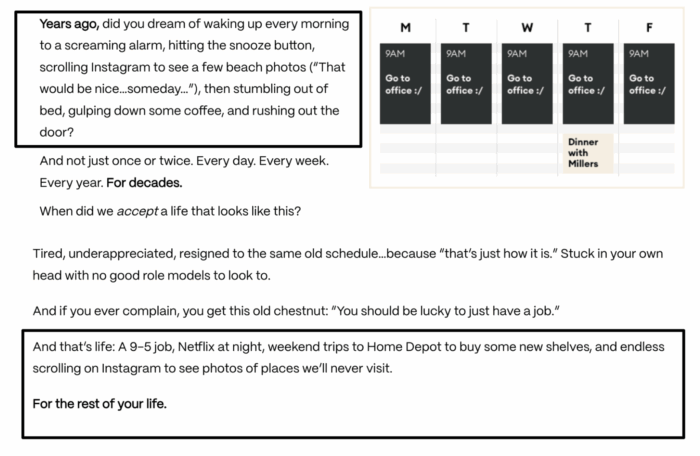
Community Data Mining: Unmoderated forums such as Reddit sub-threads and specialized Facebook groups serve as raw repositories for unedited consumer sentiment. Mining these spaces exposes the exact daily realities of prospects (e.g., rigid corporate schedules, software integration bottlenecks, or niche operational challenges).
Mirroring Reality: By reflecting these precise scenarios back to the prospect, the copy establishes immediate authority, demonstrating an intrinsic understanding of the reader’s current operational state before introducing a commercial solution.
2. Competitive Benchmarking via Paid Ad Libraries
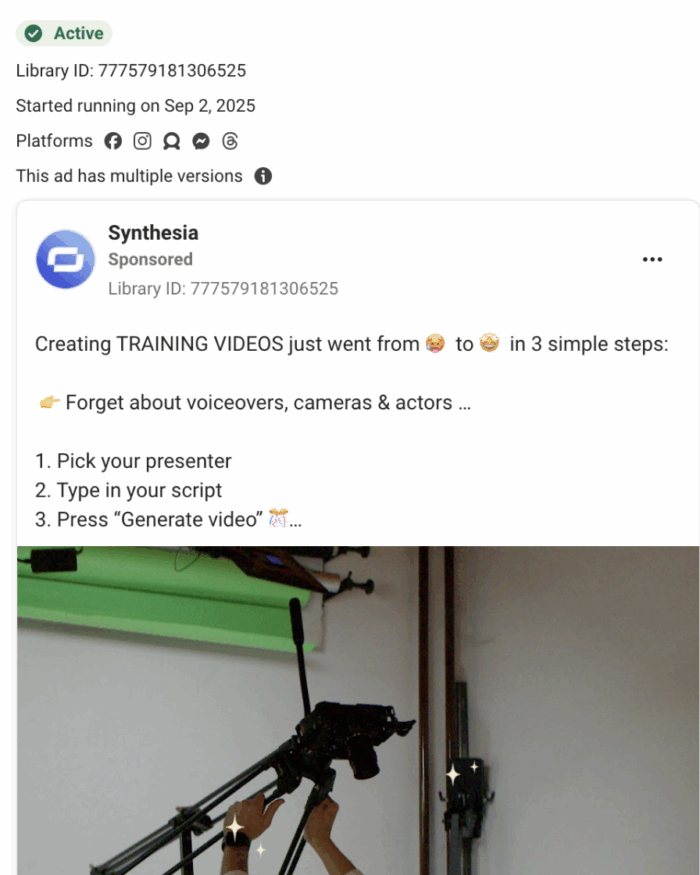
Prior to drafting campaign materials, acquisition strategists conduct competitive reverse-engineering through publicly accessible databases, such as the Meta Ad Library and LinkedIn Ad Transparency Tools.
Ad Longevity as a Profitability Indicator: Paid advertising campaigns represent direct capital expenditure; thus, ads that run continuously over extended durations (weeks to months) strongly correlate with positive ROI and proven messaging alignment.
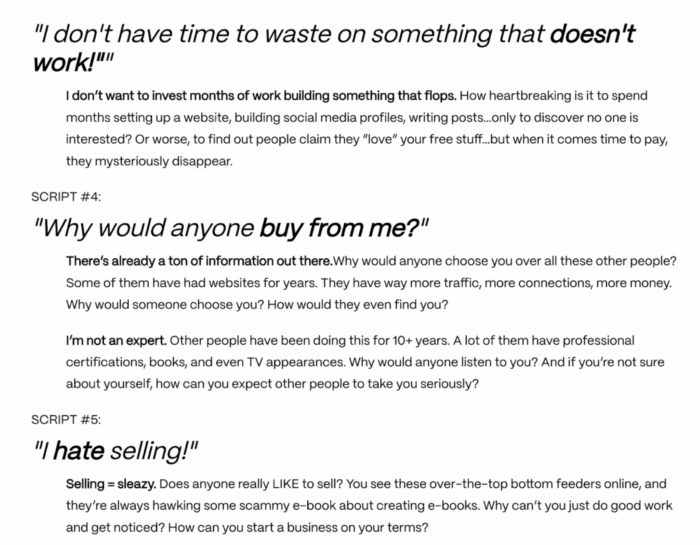
Pain-Point Extraction: Analyzing long-running competitor ad creatives illuminates the specific hooks, value propositions, and risk-reversal mechanisms that have already been validated by the market at scale.
3. Systematic Asset Archiving (The Modern Swipe File)
To optimize workflow efficiency, elite copywriters maintain structural repositories—known as swipe files—containing high-converting headlines, email structures, landing page architectures, and call-to-action (CTA) frameworks. Digital resources like SwipeFile.com aggregate historical and contemporary direct-response exemplars, allowing strategists to study proven persuasion structures curated by veteran copywriters.
4. Process Standardization and Operational Workflows
To eliminate creator friction and maintain output quality, professional writers adhere to standardized operational pipelines. A typical multi-step publishing workflow includes:
Structural Outlining: Defining the core objective, audience segment, key objections, and primary call-to-action before drafting body text.
Draft Execution: Rapid creation of raw copy focused entirely on logical progression and messaging alignment, free from real-time editorial constraint.
Strategic Editing: Refining draft text specifically for structural clarity, brevity, emotional resonance, and conversion optimization.
5. Intentional Execution and Practical Asset Building
Industry analysis indicates that copywriting proficiency scales exponentially when tied to direct financial risk and asset ownership. High-performing copywriters frequently build and manage independent digital properties—such as niche affiliate marketing portals, ghostwritten executive personal brands, micro-SaaS platforms, or specialized e-commerce operations.
A notable case study involves an e-commerce practitioner who operated a niche dropshipping storefront selling traditional clockwork timepieces. By publishing content focused strictly on technical repair guides rather than general history, the business attracted highly targeted traffic with explicit purchase and repair intent, translating directly into high-margin service requests. This underlines a fundamental industry axiom: content written for high commercial intent far outperforms high-volume informational traffic in driving revenue.
6. Pragmatic AI Integration in Copy Workflows
While generative AI models cannot fully replace high-level strategic reasoning, top-tier copywriters deploy artificial intelligence as a force multiplier across specific stages of production:
AI Operational Use-Case
Traditional Method
LLM-Augmented Method
Operational Advantage
Pain-Point Research
Manual forum reading
Transcript & thread ingestion prompts
Reduces research time by up to 70% while capturing long-tail sentiment.
Draft Editing & Clarity
Manual proofreading
Target prompts (e.g., "Rewrite for clarity and brevity")
Exposes alternate structural phrasings and eliminates unnecessary fluff.
Subject-Matter Sourcing
Manual web search
Directed index queries for expert LinkedIn/Twitter quotes
Rapidly locates real-world primary quotes to build topical authority.
7. Platform Specialization and Algorithmic Tailoring
Copywriting performance varies drastically depending on channel dynamics. Mastering modern distribution requires aligning writing style with platform-specific consumption habits and algorithmic incentives:
Executive B2B Platforms (LinkedIn/X): Requires sharp, provocative hooks, concise formatting, authoritative personal narrative, and engagement-driven structure tailored to platform recommendation engines.
8. Rigorous ROI Measurement and Attribution Modeling
A central point of operational failure for legacy writers is confusing vanity engagement (likes, shares, surface impressions) with actual pipeline revenue. Advanced direct-response frameworks enforce strict attribution metrics based on channel type:
[Traffic/Impression Source]
           │
           ▼
  [Conversion Mechanism]
  • GA4 Custom Event Tracking
  • Post-Purchase "How did you hear about us?" Form
  • Dedicated Offer Sales Funnels
           │
           ▼
[Qualified Lead / Direct Revenue]
Social & Ghostwriting Attribution: Assessing engagement quality by analyzing the professional profiles of commenters (e.g., targeted decision-makers versus low-intent casual users) alongside mandatory post-purchase attribution fields ("How did you hear about us?").
Organic Search & Editorial Attribution: Utilizing Google Analytics 4 (GA4) custom event tracking to measure the precise conversion path from blog reader to product trial or demo request.
Direct-Funnel Attribution: Tracking direct offer conversion rates, landing page drop-off metrics, and email list subscriber-to-customer conversion velocity.
9. Peer-Review Loops and Specialized Communities
Because internal bias often blinds writers to structural flaws in their own copy, professional growth requires continuous exposure to critique from peer networks and experienced conversion strategists. Educational platforms like Copyblogger Academy have emerged to address this operational gap, offering structured environments where copywriters submit active assets for direct line-by-line feedback from multi-million-dollar agency veterans.
10. The Temporal Law of Execution: Micro-Velocity vs. Macro-Patience
Derived from the capital allocation principles articulated by investor Naval Ravikant, elite copywriters operate under a dual temporal framework: extreme impatience with daily action coupled with radical patience regarding macro outcomes. Continuous daily execution, rapid iteration of ad creatives, and aggressive testing are required over extended time horizons before cumulative market feedback yields compound financial returns.
Supporting Context & Operational Metrics
The operational shift toward conversion copywriting is driven by macroeconomic realities within the digital marketing landscape. As media buying costs fluctuate and privacy-centric data changes (such as third-party cookie depreciation) alter ad targeting accuracy, organic and written acquisition funnels have reclaimed central importance in enterprise customer acquisition strategies.
Traditional Vanity Model:
[ High Impression Volume ] ➔ [ Casual Engagement ] ➔ [ Minimal Revenue Impact ]

Modern Conversion Model:
[ Commercial Intent Copy ] ➔ [ Qualified Audience ] ➔ [ Measurable ROI / Sales ]
Data from digital media properties shows that companies focusing on intent-driven copy generate significantly higher yield per web session than those prioritizing raw impression volume.
For instance, an enterprise SaaS provider publishing high-level generic content may attract tens of thousands of casual student readers without yielding pipeline revenue. Conversely, a streamlined asset targeting the specific technical headaches of IT directors can convert at a high rate despite receiving a fraction of the overall web traffic, validating the premise that strategic copywriting acts as a direct business growth asset.
Official Statements and Industry Insights
Perspective on Conversion vs. Eloquence
"Becoming a better copywriter doesn’t mean you write more eloquently. In fact, the opposite is often true. Great copywriters are clear, concise, and ultimately convert readers into customers. Focus on how to generate more revenue from your words."
— Digital Marketing Executive, Copyblogger Platform
Perspective on Community and Execution Standards
"Building a career as a copywriter can be challenging and isolated. Access to practical frameworks for writing, SEO, and distribution helps business owners turn content into a genuine growth asset. The objective is to move away from chasing likes and shares toward creating an ecosystem that converts attention into cash flow."
— Copyblogger Academy Programmatic Guidance
Perspective on Strategy and Iteration
"Be impatient with action, and patient with results."
— Naval Ravikant, Investor and Entrepreneur
Future Outlook
The landscape of digital copywriting is undergoing rapid transformation driven by technological integration and changing consumption habits. Key trends reshaping the industry include:
AI-Augmented Copywriting Hybridization: Copywriters who master LLM-assisted research, pattern identification, and editing workflows will increasingly outpace purely manual creators in speed, output volume, and research depth. However, strategic narrative direction, audience empathy, and authentic positioning will remain distinctly human domains.
Performance-Tied Compensation Models: The market is increasingly shifting away from flat per-word or per-article pricing toward performance-based compensation structures, including revenue-share agreements, cost-per-acquisition (CPA) bonuses, and equity-based agency retainers.
Omnichannel Messaging Alignment: As buyer journeys become more nonlinear, brands will require seamless messaging alignment across all written touchpoints—from initial social discovery hooks down to deep technical sales pages and post-purchase email onboarding sequences.
Ultimately, organizations and individual practitioners who treat copywriting as a quantitative acquisition science—anchored by rigorous research, continuous testing, and accurate attribution—will continue to capture outsized market share in the evolving digital economy.