

Executive Overview
As voters across the United States head to the polls, the 2026 midterm elections represent the ultimate referendum on President Donald Trump’s second administration. Set against a backdrop of domestic economic strain—marked by persistent inflation, dwindling consumer confidence, and surging fuel prices fueled by an escalating conflict in Iran—the American electorate appears increasingly alienated by the aggressive trajectory of the contemporary MAGA agenda.
For the Democratic Party, the atmospheric conditions suggest a favorable national climate. Expectations of substantial gains in the House of Representatives, alongside a viable path to capturing a Senate majority, have injected considerable optimism into progressive and establishment camps alike. However, underneath the surface of an anticipated "blue wave," the geopolitical and domestic landscape is fraught with volatility.
From aggressive late-cycle political betrayals in critical swing states to historic, unprecedented financial infusions from the world’s first trillionaire, the 2026 midterms defy simplistic narratives. As election returns begin to roll in, political analysts, campaign strategists, and party leaders are grappling with a core question: Will the anticipated Democratic surge materialize as a generational rebuke of executive power, or will a fragmented electorate yield a night of unexpected electoral surprises?
Detailed Chronology and Key Battleground Dynamics
The arc of the 2026 midterm cycle has been defined by rapid shifts in momentum, dramatic primary battles, and high-stakes general election showdowns that have captivated the national consciousness.
The Michigan Senate Drama: El-Sayed, Rogers, and Stevens
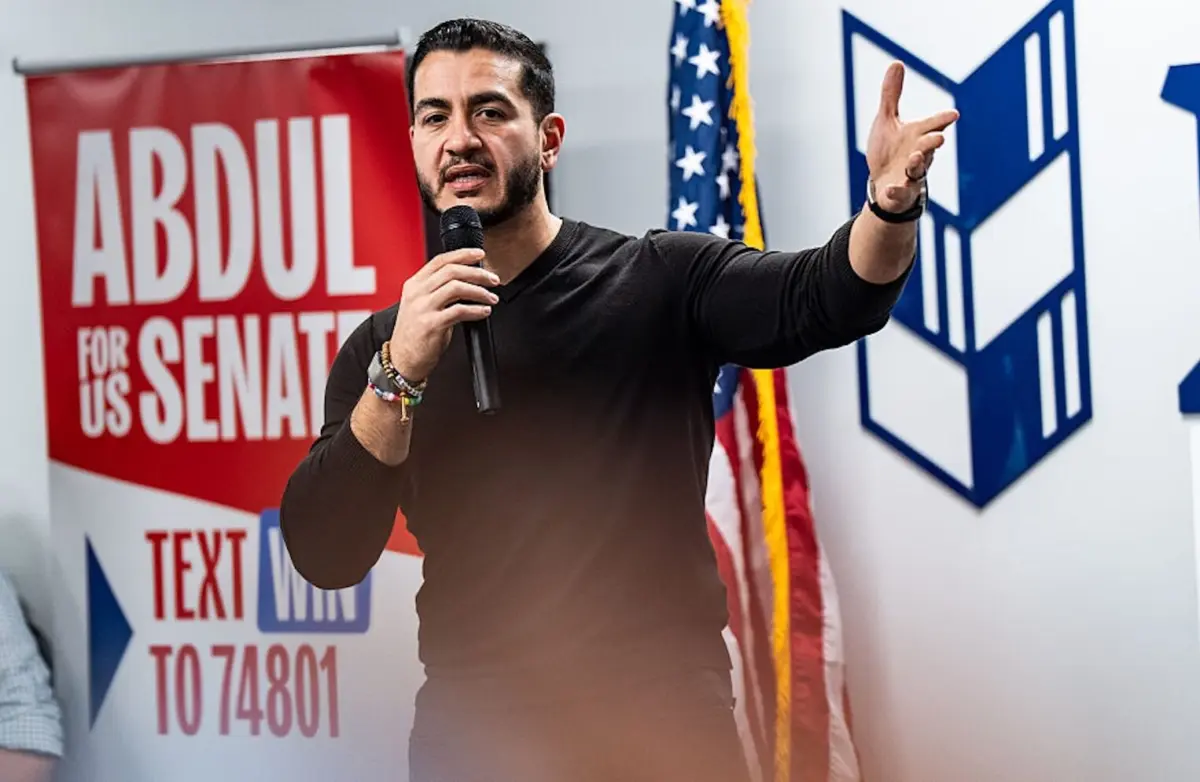
Few races encapsulate the volatile nature of the 2026 cycle quite like the Senate contest in Michigan. Dr. Abdul El-Sayed, the Democratic nominee, entered election day as the frontrunner, supported by robust polling—including a New York Times/Siena poll showing him with an 11-point lead over his Republican opponent, former Congressman Mike Rogers.
Yet, the race has been profoundly disrupted by intra-party fallout. Congresswoman Haley Stevens, who narrowly lost to El-Sayed in a grueling Democratic primary by a razor-thin margin of just 1% (14,893 votes), injected chaos into the final hours of the campaign. After repeatedly pledging support to El-Sayed, Stevens appeared alongside Mike Rogers at a local church service and endorsed the Republican candidate in a video message. The move triggered swift retribution, resulting in Stevens being formally expelled from the Michigan Democratic Party. While state Republicans wished the crossover had occurred weeks earlier to alter the trajectory of the race, nonpartisan prognosticators at the Cook Political Report maintained their rating of "Leans Democratic," viewing the disruption as too late to fundamentally overturn El-Sayed’s structural advantage.
Texas and the Southern Frontiers
Further south, Texas has emerged as another crucible of political transformation. Democrat James Talarico has galvanized progressive energy and terrified the state’s entrenched Republican establishment, challenging the historical boundaries of the Lone Star State’s electoral map. To counter this momentum, conservative forces—bolstered by monumental financial inputs—have rallied fiercely around Republican Senate nominee Ken Paxton, locking the state into a dead-heat race that serves as a primary bellwether for the shifting demographics of the Sun Belt.
Meanwhile, a series of historically safe red states in the Deep South have unexpectedly morphed into competitive battlegrounds. In South Carolina, Republican incumbent Darline Graham—appointed to the seat by presidential decree following the death of her brother, Senator Lindsey Graham—has struggled on the campaign trail, prompting vulnerabilities that Democratic challenger Annie Andrews has aggressively exploited.
In Mississippi, incumbent GOP Senator Cindy Hyde-Smith faces a spirited challenge from Democrat Scott Colom. Buoyed by high turnout among Black voters galvanized in the wake of the Supreme Court’s dismantling of key provisions of the Voting Rights Act, Mississippi has transitioned from an afterthought to a legitimate theater of competition. Similarly, Louisiana has shocked political observers: a recent poll indicates a tied race between Republican Julia Letlow and Democratic challenger Jamie Davis, driven by a dramatic surge in early voting among the state’s substantial African American population.
Supporting Context and Metrics: Gerrymandering, Money, and the Electorate
The mechanics of the 2026 midterms are shaped heavily by pre-election maneuvering, structural map adjustments, and an unprecedented financial arms race.
The Limits of Partisan Gerrymandering
The 2026 elections serve as the definitive stress test for the Republican Party’s aggressive post-2024 redistricting strategies. Following gains made by Donald Trump among Black and Latino voters in the previous presidential cycle, Republican state legislatures in Texas, Florida, and elsewhere redrew congressional boundaries to lock in structural advantages.
However, these calculations face severe headwinds. As the national mood soured over nearly two tumultuous years of Trump’s second term, polling data analyzed by Politico indicates that the coalition underpinning the administration has begun to fracture, effectively neutralizing the expected gains from partisan map-drawing. Compounding this, Democratic legislatures in states like California and Virginia engaged in aggressive counter-gerrymandering, neutralizing the GOP’s national structural edge and creating a volatile map where dozens of seats remain on a knife-edge.
Elon Musk’s Historic Financial Footprint
The financial dimensions of the 2026 cycle have shattered historical precedents. Reports from The New York Times detail that billionaire entrepreneur Elon Musk has injected a staggering $474 million into the midterm cycle across an intricate web of political action committees, dark-money funds, and independent expenditure groups.
A significant portion of this capital—including $168 million directed to the Senate Leadership Fund—was deployed to prop up vulnerable conservative candidates, most notably Ken Paxton in Texas. Beyond the immediate question of return on investment, Musk’s unprecedented spending carries severe political exposure. Should the projected "blue wave" materialize and Democrats secure control of Congress, Musk faces the near-certain prospect of sweeping congressional investigations. Lawmakers have signaled intent to probe his corporate interventions, his reported communications regarding geopolitical conflicts, and his leadership role within the Department of Government Efficiency (DOGE) during the nascent months of the second Trump administration.
Official Statements and Strategic Posturing
As polls prepare to close, party leadership and specialized political organizations are aggressively establishing their narratives to frame the impending outcomes.
The progressive wing of the Democratic Party has moved preemptively to counter any attempts by the establishment wing to minimize the impact of progressive candidates. A leaked internal memo from the Progressive Change Campaign Committee, obtained by Politico, outlines this strategic posture:
"Expect to hear narrow victories cited as evidence of weak electability. But a candidate’s first winning margin is not their electoral ceiling."
Progressive organizers point to contests like Michigan’s 7th Congressional District—where William Lawrence, co-founder of the Sunrise Movement, is mounting a competitive challenge against incumbent Republican Tom Barrett—as proof that progressive populism can secure victories in critical, hard-fought districts.
Conversely, establishment strategists are watching bellwether races closely to determine the ideological makeup of the post-midterm caucus. Early returns from districts such as Kentucky’s 6th Congressional District—where Democrat Zach Dembo faces Republican Ralph Alvarado in a seat that has remained stubbornly in GOP hands since 2012—are being monitored by both parties as an immediate indicator of the night’s broader trajectory. If Dembo establishes and maintains a decisive lead, strategists across the political spectrum anticipate a sweeping Democratic wave that will redefine the legislative balance of power in Washington.
Future Outlook: Governing in a Divided and Realigned America
The morning light following election night will not merely signal the tallying of votes; it will inaugurate a high-stakes legislative era that will dictate the remainder of the decade.
If the anticipated blue wave crests into a tsunami—manifested by sweeping gains in the House, a reclaimed Senate majority, and shock victories in traditional Southern strongholds—the political landscape will shift seismically. A Democratic congressional majority will immediately pivot from campaigning to aggressive oversight, utilizing subpoena power to investigate executive branch actions, economic policies, and the sprawling influence of billionaire donors like Elon Musk. Furthermore, the internal power dynamics within the Democratic Party will be permanently altered, empowering the progressive wing and setting the terms of engagement for the 2028 presidential primaries.
Conversely, should the Republican firewall hold—blunting Democratic ambitions through the protective scaffolding of gerrymandered districts and resilient conservative bases—the narrative of a fracturing MAGA coalition will be forcefully challenged. The conservative movement will claim vindication, validating their aggressive redistricting gambits and positioning the administration to press forward with its legislative priorities unencumbered by congressional oversight.
Ultimately, the 2026 midterms transcend routine electoral calculus. They stand as a profound measurement of an American public caught between competing visions of governance, economic reality, and institutional stability. As the final ballots are counted, the resulting political architecture will shape the trajectory of national policy for years to come.
