

Executive Overview
In a high-stakes administrative shakeup that highlights the tense intersection of national security, political influence, and internal law enforcement management, two veteran FBI counterterrorism officials have been abruptly removed from their posts. Michael Burgwald, the former head of counterterrorism operations at the FBI’s pivotal Washington Field Office (WFO), and his deputy, Courtland Rae, were stripped of their leadership roles and reassigned to bureau headquarters.
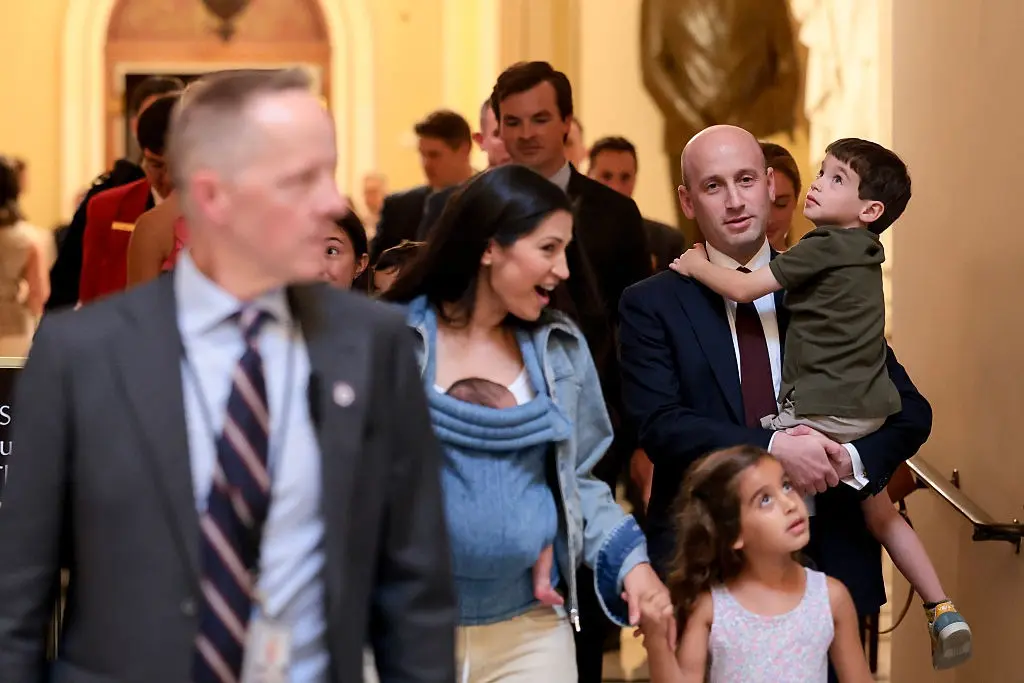
The immediate catalyst for this disciplinary action was an internal disagreement over how the bureau should handle a series of allegedly threatening and harassing phone calls directed at conservative podcaster Katie Miller. She is married to White House Deputy Chief of Staff Stephen Miller, one of the most prominent and polarizing architects of domestic and immigration policy in the current administration.
While field office investigators who initially reviewed the harassing communications concluded that they fell short of the threshold required to launch a formal, full-scale FBI investigation—and specifically noted no nexus to international or domestic terrorism—that operational determination triggered acute friction with upper management. Reports surfaced that Washington Field Office leadership, alongside FBI Director Kash Patel and members of the Miller family, grew deeply frustrated with the perceived sluggishness and conservative posture of the inquiry.
The decision to reassign Burgwald and Rae has injected fuel into ongoing debates regarding political interference in federal law enforcement. Critics point out that the removal of two highly decorated counterterrorism veterans creates a vacuum of institutional knowledge at a time of heightened geopolitical vulnerability. Conversely, the White House and agency leadership maintain that the reassignments were standard, autonomous personnel choices executed purely to address administrative stagnation and to ensure that credible threats against public officials receive the aggressive scrutiny they demand.
Detailed Chronology of Events
The sequence of events leading to the demotion of Burgwald and Rae unfolded rapidly across late September 2026, culminating in a dramatic restructuring of the WFO’s counterterrorism command structure.
- The Provocation: Over a period spanning several weeks, Katie Miller—a prominent conservative media figure and podcaster—received a barrage of phone calls that her camp characterized as threatening, harassing, and part of an ongoing pattern of targeted intimidation. This followed a relocation last year by the Miller family, who moved out of their conventional Virginia residence and into secure military housing due to escalating concerns over stalking, doxing, and public harassment.
- Initial Field Office Assessment: The communications were routed to the FBI’s Washington Field Office for preliminary review. A specialized field team evaluated the audio logs, transcripts, and metadata associated with the calls. According to sources familiar with the matter who spoke with CNN, the review team determined that the messages, while hostile or unpleasant, did not meet the rigorous legal and investigative thresholds required to initiate a formal federal case, nor did they bear any indicators of a coordinated terrorism enterprise.
- The Internal Rift: The field team’s findings were met with resistance from higher-ups. Reports from Bloomberg Law and other outlets indicated that senior WFO management, as well as FBI Director Kash Patel, were intensely dissatisfied with the speed, scope, and conclusions of the preliminary inquiry. The Miller family reportedly shared these frustrations, viewing the bureau’s hesitant approach as an institutional failure to protect the household of a senior White House official.
- The Friday Shakeup: On Friday, September 27, 2026, the administrative axe fell. Michael Burgwald and Courtland Rae were formally notified of their removal from their respective leadership posts at the Washington Field Office. Both men were immediately stripped of operational command and laterally reassigned to administrative berths at FBI Headquarters.
- Public Revelations and Damage Control: News of the demotions leaked to legal and investigative trade publications within hours, instantly drawing widespread media attention. By Saturday afternoon, both the WFO leadership and the White House press office found themselves issuing urgent statements to push back against narratives that the disciplinary actions constituted politically motivated interference ordered from the West Wing.
Supporting Context & Metrics: The Human Cost of Institutional Upheaval
Beyond the immediate political friction, the removal of Burgwald and Rae strips decades of irreplaceable counterterrorism expertise from the nation’s most sensitive field office at a perilous geopolitical moment.
The United States currently navigates a complex threat matrix, marked by active tensions and hostilities with state actors such as Iran, alongside persistent concerns regarding homegrown violent extremism. In this environment, the Washington Field Office serves as the tip of the spear for federal law enforcement and intelligence collection.
The professional pedigrees of the demoted officials underscore the magnitude of the operational experience lost in the shakeup:
- Michael Burgwald: A graduate of the United States Military Academy at West Point, Burgwald is a seasoned combat- and bureau-tested leader who has earned multiple prestigious Attorney General’s Awards for his contributions to national security. His career has been defined by high-stakes operations tracking sophisticated domestic and international terror threats.
- Courtland Rae: Rae’s operational footprint includes critical leadership roles during some of the most visible domestic crises of the past decade. Notably, Rae helped oversee the FBI’s rapid-response investigative architecture in the immediate aftermath of the April 2013 Boston Marathon bombing. Furthermore, both Burgwald and Rae played central roles in managing and directing complex investigations stemming from the January 6, 2021, attack on the United States Capitol.
The loss of these leaders coincides with a period of severe personal disruption for the Miller family. Stephen and Katie Miller, along with their three young children, have lived under a suffocating security umbrella. Last year, the family abandoned their private home to seek refuge in military housing—a move publicly acknowledged by the administration as a direct response to a sustained campaign of doxing, stalking, and harassment directed at high-ranking policy figures and their dependents.
Yet, legal analysts point out a critical tension in the bureau’s mandate: while the protection of public officials is paramount, FBI investigative thresholds are governed by strict statutory guidelines designed to protect civil liberties and prevent the allocation of limited federal resources to incidents that fall under local or state police jurisdiction. The core of the current controversy rests precisely on whether those statutory thresholds were meticulously observed by the field team or unreasonably weaponized by management.
Official Statements and Public Posturing
As the controversy escalated across cable news networks and policy blogs, representatives for both the executive branch and the federal law enforcement apparatus moved quickly to manage the narrative and deflect accusations of political cronyism.
Darren Cox, the chief of the FBI’s Washington Field Office, stepped forward to claim full, unilateral ownership of the personnel changes, explicitly shielding Director Kash Patel and the White House from allegations of command-level dictation.
"Director Patel did not order this decision," Cox stated emphatically in a public release distributed via the bureau’s communications channels. "This was a personnel decision made at the Washington field office level alone based on our constant evaluation of mission needs."
This assertion of administrative independence was echoed by White House spokesperson Lauren Bis, who stressed that neither Stephen nor Katie Miller had any personal acquaintance or prior interaction with either Burgwald or Rae. Bis framed the demotions not as an act of political retribution, but as a necessary operational correction executed by senior law enforcement managers who correctly identified a systemic breakdown in threat responsiveness.
"Senior leadership at the FBI determined they were stifling investigations into very serious threats and made a unilateral decision to remove them," Bis maintained.
Despite these coordinated denials, ethics watchdogs and congressional critics remain skeptical. The phrase "stifling investigations" has become a central point of contention; while the White House uses it to imply negligence or defiance on the part of the veteran agents, legal defenders of Burgwald and Rae argue that the phrase is being misapplied to describe professional investigators who simply followed standard evidentiary protocols and reached an assessment that displeased politically connected victims.
Future Outlook and Systemic Implications
The fallout from the Miller family threat assessment points toward a turbulent future for civil-military and law enforcement relations under the current administration. Several critical questions remain unresolved as the dust begins to settle:
- The Transparency Deficit: To date, specific details regarding the exact nature, origin, and content of the phone calls received by Katie Miller have not been made public. Without a transparent accounting of the evidence, independent national security experts remain divided on whether the field office’s initial decision to withhold a full-scale federal investigation was legally sound or legitimately negligent.
- Morale Within the Bureau: The abrupt demotion of two highly decorated counterterrorism veterans over a localized threat assessment—particularly one involving a top political appointee’s family—risks sending a chilling effect through the ranks of the FBI. Agents and analysts may increasingly fear that executing objective, evidence-based assessments that run contrary to the political desires of administration figures could result in career-ending reassignments.
- Congressional Oversight: Democratic lawmakers and congressional oversight committees have already signaled intentions to probe the circumstances surrounding the WFO shakeup. Investigators on Capitol Hill are expected to request internal communications, emails, and notes from both Director Kash Patel’s office and the Washington Field Office to determine whether improper political pressure was brought to bear on operational decision-makers.
As the bureau attempts to steady its leadership ranks in the nation’s capital, the episode serves as a sobering reminder of the delicate equilibrium required to maintain the rule of law. Balancing the genuine security needs of public officials against the institutional independence of federal investigators will remain one of the defining challenges for the administration as it steers the national security apparatus through an increasingly polarized domestic landscape.