

Published: September 27, 2026
Location: Washington, D.C. / Grand Teton National Park, Wyoming
Executive Overview
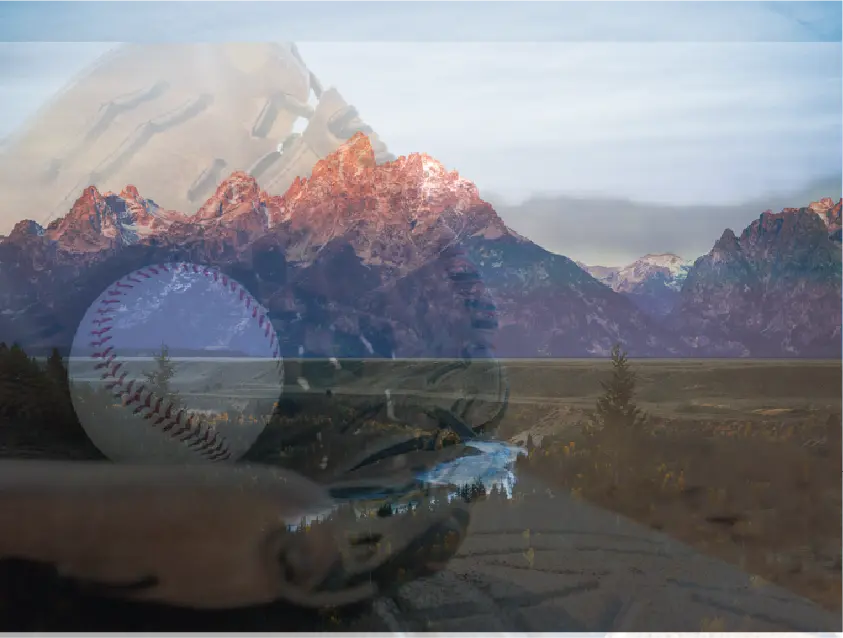
Major League Baseball (MLB) is exploring one of its most ambitious and ecologically sensitive special-event concepts to date: constructing a temporary, major-league-caliber ballpark within the majestic landscape of Grand Teton National Park in Wyoming.
Following a series of successful, unconventional venue deployments—ranging from the iconic Iowa cornfield immortalized in film to historic minor league grounds and the banked asphalt of a NASCAR speedway—the league has set its sights on the American wilderness.
However, this unprecedented proposal has already drawn intense scrutiny. Federal officials from the National Park Service (NPS) have quietly evaluated potential sites within the park, but the initiative faces formidable institutional, logistical, and environmental hurdles.
Conservation groups have mobilized in early opposition, warning that a professional sporting event of this scale would violate core tenets of park preservation, disrupt local wildlife corridors, and set a contentious precedent for commercial encroachment on public federal lands.
While the White House has clarified that the proposal originated entirely from league executives rather than a presidential directive, the convergence of major professional sports and federal land management has ignited a nationwide debate over the boundaries of public park usage.
Detailed Chronology: From Concept to Conservation Pushback
The genesis of the Grand Teton proposal stems from MLB’s ongoing strategy to market the sport through hyper-niche, highly visual, and geographically diverse backdrops. Over the past several seasons, the league has prioritized moving regular-season games out of traditional concrete-and-steel stadiums and into cultural touchstones or radical environments.
The strategy began in earnest with the resounding success of the "Field of Dreams" games in Dyersville, Iowa, and expanded internationally to London, Paris, Tokyo, Sydney, Seoul, and Mexico City. Domestically, the league has pushed the envelope further, staging games at Rickwood Field in Birmingham, Alabama—the oldest professional ballpark in the United States—and building a temporary diamond inside the confines of Bristol Motor Speedway in Tennessee.
The pivot toward America’s national parks represents a profound escalation of this experiential roadmap. According to reports broken by The Washington Post, MLB leadership recently approached the Trump administration to pitch the viability of hosting a regular-season contest within a federally protected national park unit.
The inquiry prompted concrete exploratory steps. National Park Service Deputy Director Frank Lands traveled to Wyoming to conduct an on-the-ground assessment of Grand Teton National Park. During his visit, Lands inspected three potential locations being weighed for the construction of a temporary baseball facility capable of hosting players, media, and spectators.
Despite these preliminary site visits, the concept remains in a formative phase. No formal site has been selected, no environmental impact statements have been published, and no operational permits have been issued by the Department of the Interior. Eager to distance the executive branch from potential political fallout, White House officials emphasized that the initiative is entirely an MLB-driven enterprise.
"This is not a Presidential directive, nor is it being directed by the White House," administration representatives told reporters.
News of the site evaluations immediately triggered alarms among conservation organizations, wildlife advocates, and public land watchdogs. While the NPS and MLB have yet to release a detailed blueprint or master plan, environmental coalitions argue that the mere exploration of a national park for professional sports entertainment crosses a historical line.
Critics point out that even if the physical footprint is restricted to previously disturbed plots of land—such as existing park storage yards—the surrounding infrastructural requirements threaten the ecological integrity of the Greater Yellowstone Ecosystem.
Supporting Context & Metrics: The Logistical and Environmental Maze
Moving tens of thousands of spectators into a pristine, ecologically sensitive alpine valley is an engineering and logistical labyrinth. Unlike traditional stadium retrofits or open-air speedways with pre-existing parking garages, sewage systems, and multi-lane access roads, Grand Teton National Park is explicitly managed to preserve natural quiet, scenic vistas, and uninterrupted wildlife habitats.
The Scale of Temporary Infrastructure
To pull off a modern MLB broadcast event, a temporary facility requires far more than a manicured infield and outfield grass. Planners must account for:
- Seating and Seating Bowl Engineering: Temporary stands must accommodate thousands of fans while meeting stringent seismic and wind-load safety codes.
- Media and Broadcasting Compounds: Dozens of mobile production trucks, satellite uplinks, camera towers, and press boxes demand massive electrical generators and high-bandwidth data lines.
- Player Amenities: Major League standards dictate climate-controlled clubhouses, batting cages, training rooms, and security perimeters for athletes and coaching staffs.
- Fan Services and Sanitation: Concession stands, merchandise booths, medical stations, and massive banks of temporary restrooms must be installed where none currently exist.
- Transportation and Ingress/Egress: Bringing thousands of vehicles into a park typically dependent on dispersed recreational traffic risks severe gridlock on two-lane park highways.
Conflict with National Park Service Regulations
These logistical demands collide directly with the strict regulatory framework governing America’s national parks. The National Park Service operates under a mandate to conserve scenery, natural and historic objects, and wildlife, leaving them unimpaired for the enjoyment of future generations.
Specific rules that could derail or heavily restrict an MLB game at Grand Teton include:
- Visitor and Wildlife Movement: Special events are strictly barred from disrupting the natural behaviors, migrations, or habitats of local wildlife, including pronghorn, bison, elk, and grizzly bears.
- Road and Trail Closures: Park permits generally prohibit closing major thoroughfares or recreational trails for private commercial entertainment, which would be necessary to manage game-day crowds.
- Designated Wilderness Protection: Event footprints cannot infringe upon areas designated as wilderness, which possess the highest level of federal protection against human alteration.
- Commercial Signage Restrictions: Strict aesthetic codes prohibit commercial logos, corporate banners, and large tent-like structures that mar the natural landscape.
While at least one of the locations examined by Deputy Director Lands is reportedly a previously disturbed maintenance or storage yard rather than untouched wilderness, conservationists argue that the secondary impacts—light pollution, acoustic disruption, and massive traffic spikes—will still bleed into the surrounding protected ecosystem.
Official Statements and Stakeholder Perspectives
The public discourse surrounding the Grand Teton proposal highlights a deepening ideological tug-of-war between commercial entertainment enterprise and federal land stewardship.
Major League Baseball has framed its special-event series as cultural celebrations that honor the game’s history while connecting with fans in unexpected, breathtaking environments. League executives maintain that these events are planned with meticulous care, aiming to leave minimal long-term environmental footprints while creating unforgettable memories for players and spectators alike. However, MLB has not yet released a formal public statement addressing the specific environmental challenges raised in Wyoming.
Conversely, conservation advocates have been outspoken in their condemnation of the exploratory talks. Representatives from various public land protection groups argue that national parks should remain sanctuaries for nature and low-impact recreation, untainted by corporate sponsorships, multi-million-dollar broadcast partnerships, and massive logistical footprints.
"National parks are our nation’s sacred spaces, designated to protect irreplaceable landscapes and wildlife—not to serve as pop-up stadiums for corporate entertainment," noted one prominent conservation coalition representative. "The precedent this would set is dangerous. Once you open the door to major professional sports leagues utilizing park interiors for broadcast spectacles, it becomes exceedingly difficult to draw the line against further commercial exploitation."
The Department of the Interior and the National Park Service have defended their preliminary fact-finding mission as a matter of due diligence, noting that federal agencies routinely evaluate inquiries from external organizations. However, officials have stressed that exploratory discussions do not equate to approval, and any formal proposal would be subject to exhaustive public review, environmental assessments, and rigorous compliance checks under the National Environmental Policy Act (NEPA).
Future Outlook: The Timeline and Road Ahead
Even if federal regulators, the White House, and Major League Baseball find a path forward through the dense thicket of environmental regulations and logistical hurdles, fans eager to see a home run hit against the backdrop of the Teton Range will have to wait.
Logistical realities have already pushed the timeline back. MLB’s special-event schedule and operational calendar for the 2027 season have already been finalized and locked into place. Consequently, 2028 stands as the absolute earliest theoretical date that a game could be staged in the park.
Before any groundbreaking can occur, the initiative must survive a grueling bureaucratic gauntlet. Any serious proposal would require:
- The completion of a comprehensive Environmental Impact Statement (EIS).
- Open public comment periods allowing local residents, indigenous tribes, and conservation groups to voice objections.
- Strict mitigation plans detailing how wildlife protection, traffic management, and native habitat restoration will be handled.
- Final sign-off from the National Park Service directorate and the Department of the Interior.
For now, the prospect of Major League Baseball playing under the jagged peaks of Grand Teton remains an intriguing, highly controversial thought experiment—a testament to the league’s relentless pursuit of novelty, balanced against the unyielding legal boundaries protecting America’s most treasured wild spaces.