

Executive Overview
The 2026 MTV Video Music Awards (VMAs) will long be remembered as a watershed moment for modern broadcast television. Against a backdrop of shifting media consumption habits, cord-cutting, and fierce competition from live sports, the ceremony delivered a stunning cultural and commercial performance. Broadcast live from the Peacock Theater in Los Angeles and aired on CBS, the event reached an extraordinary 11-year viewership high, drawing 8.4 million total viewers based on Nielsen fast national numbers.
This performance represents a phenomenal 51% surge compared to the previous year’s 5.5 million viewers, defying conventional wisdom that linear television events are locked into a trajectory of terminal decline.
Under the guidance of host Snoop Dogg and fueled by powerhouse appearances from enduring pop icons like Madonna and modern titans like Taylor Swift, the 2026 VMAs transcended traditional television. The broadcast proved that when linear programming is paired with high-impact live experiential moments, robust digital footprints, and aggressive cross-platform brand integration, it can still capture the collective global consciousness.
Beyond the eye-popping television ratings, the broadcast crushed records across key demographic slices. It achieved an impressive 30% jump across all audience demographics year-over-year, punctuated by 3.55 million viewers in the highly coveted Adults 25–54 (A25-54) demographic—the highest mark for this category since 2019.
Simultaneously, the night’s social media footprint was nothing short of monumental. Generating 31.1 million total interactions and pulling in 159 million video views—an 8% year-over-year increase—the VMAs proved that linear broadcasts and digital engagement operate not as adversaries, but as mutually reinforcing engines of modern entertainment value.
Adding to the complexity of this triumph, the telecast achieved these numbers despite facing significant headwinds. Most notably, it went head-to-head with an unexpected scheduling hurdle: a major NFL matchup between the Dallas Cowboys and the Baltimore Ravens played thousands of miles away in Rio de Janeiro, Brazil.
Yet, viewers still chose pop over pigskin, tuning in for a night that also delivered a masterclass in modern advertising strategy. Paramount Media Labs orchestrated a seamless commercial ecosystem, introducing 116 bespoke branded content assets and weaving eight minutes of deeply integrated brand experiences directly into the fabric of the show.
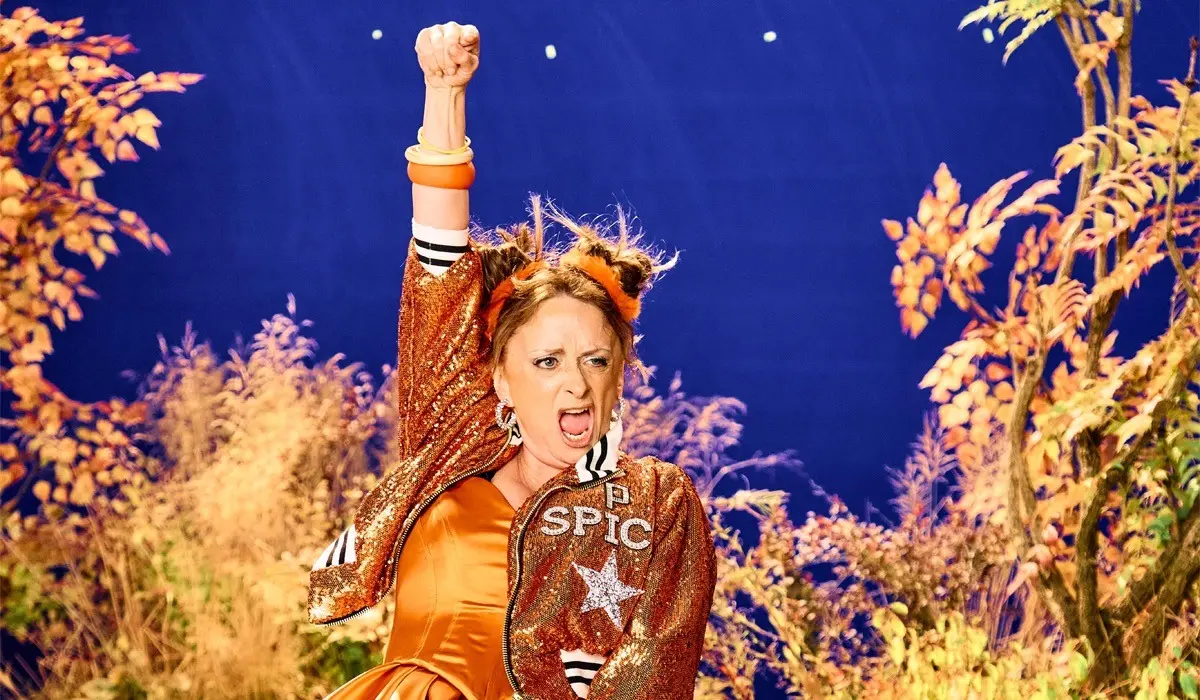
From Dunkin’ sketches featuring Rachel Dratch as the lost Spice Girl, "Pumpkin Spice," to a roster of 20 brand-new advertisers making their VMA debuts, the evening redefined how corporate sponsors can buy into cultural moments without alienating audiences.
Detailed Chronology of the Night
Pre-Show Momentum and the NFL Shadow
The road to the 2026 VMAs was fraught with logistical anxieties for network programmers at CBS and Paramount. Industry analysts openly questioned whether the broadcast could sustain momentum against an unprecedented counter-programming threat: a marquee NFL regular-season game between the Dallas Cowboys and the Baltimore Ravens, broadcast internationally from Rio de Janeiro. Live sports remain the undisputed king of linear television viewership, capable of vacuuming up millions of eyeballs and draining the oxygen from competing entertainment events.
Compounding these challenges, the television landscape has become increasingly fragmented. Audiences are consistently pulled toward on-demand streaming services, short-form video platforms, and social media feeds.
However, the production team countered these threats by manufacturing an inescapable sense of urgency. The marketing campaign leading up to Sunday night relied on heavy teasing of rare, high-stakes live moments. By positioning the show as an appointment-to-view cultural event that could not be adequately experienced through delayed-clip consumption on social media, the producers successfully mitigated the threat of the NFL crossover.
The Grand Opening: Madonna, Sabrina Carpenter, and Charli XCX
The telecast kicked off with a shock-and-awe opening sequence that immediately signaled to viewers that this was not a routine awards show. Pop icon Madonna made her triumphant return to the VMA stage, marking her first performance at the event in 23 years. The Queen of Pop did not take the stage alone; instead, she bridged generations of pop royalty by inviting contemporary hitmakers Sabrina Carpenter and Charli XCX to join her.
The collaborative performance was a meticulously choreographed celebration of female pop dominance, blending Madonna’s theatrical provocations with the sharp, ultra-modern sensibilities of Carpenter and Charli XCX. Within minutes of the broadcast opening, the performance dominated social media feeds globally, creating a real-time fear-of-missing-out (FOMO) effect that drove thousands of casual viewers to turn on CBS.
This opening gambit set a high-energy tone that persisted throughout the multi-hour broadcast, transforming the Peacock Theater into a pressure cooker of pop-culture relevance.
Mid-Show Highlights and Taylor Swift’s Triumphs
As the evening progressed, the momentum was sustained by a carefully balanced mix of high-production-value musical numbers, comedic beats from host Snoop Dogg, and major competitive milestones.
Taylor Swift continued her era of unmatched industry dominance. Swift not only walked away with the night’s most coveted competitive prize—Video of the Year—but was also honored with the inaugural MTV VMA Artist Director Honors. This new accolade recognized her deep creative involvement in conceptualizing, writing, and directing her own visual masterpieces.

Swift’s presence throughout the evening acted as a gravitational pull for her dedicated global fanbase, driving millions of concurrent engagements across X (formerly Twitter), TikTok, and Instagram.
Host Snoop Dogg provided a steady, charismatic anchor for the proceedings. His effortless comedic timing and deep reverence for music history helped bridge the gap between legacy acts and the Gen-Z artists dominating the modern charts.
The pacing of the show deliberately avoided the notorious lulls that have historically plagued live awards broadcasts, keeping viewers engaged through brisk transitions, unexpected onstage pairings, and high-impact visual presentations.
Supporting Context & Metrics
Audience Analytics and Demographic Dominance
The raw viewership data for the 2026 VMAs tells a story of remarkable resilience and demographic expansion. According to Nielsen fast national numbers, the broadcast drew an average of 8.4 million viewers, representing a staggering 51% year-over-year increase from the 5.5 million viewers who tuned in for the 2025 ceremony. To find a comparable high-water mark, industry analysts had to look back 11 years, cementing the 2026 broadcast as a modern statistical anomaly in an era of declining linear ratings.
More critical to advertisers than total viewership, however, was the demographic breakdown of the audience. The show posted a 30% increase across all core audience demographics compared to the previous year. Most notably, in the highly valued Adults 25–54 (A25-54) demographic—the primary target for premium brand advertisers—the show pulled in 3.55 million viewers. This represents the most-watched VMAs in this specific demographic since 2019, proving that the broadcast successfully appealed not only to nostalgic older millennials and Gen X viewers, but also retained the core youth demographic that defines MTV’s brand identity.
The Digital and Social Footprint
While the linear broadcast numbers exceeded all expectations, the 2026 VMAs achieved parallel dominance in the digital ecosystem. Modern television events cannot be evaluated through linear metrics alone; their true cultural footprint is measured in digital interactions, video streams, and user-generated content velocity.
During the broadcast window and the immediate post-show hours, the VMAs generated:
- 31.1 million total social interactions across major platforms including TikTok, X, Instagram, and YouTube.
- 159 million video views, marking an 8% increase compared to the previous year’s digital performance.
These numbers illustrate a symbiotic relationship between linear television and social media. The live broadcast served as the primary source material for real-time memes, clips, and cultural commentary, which in turn functioned as top-of-funnel marketing, driving uninitiated viewers back to CBS to catch the live stream.
The Commercial Ecosystem: Brands Take Center Stage
Perhaps the most sophisticated aspect of the 2026 VMAs was its commercial strategy. In an era where audiences actively seek to avoid advertising through ad-free streaming tiers and fast-forward buttons, the VMAs transformed commercials into must-watch entertainment.
Paramount Media Labs executed a comprehensive advertising strategy designed to weave brands into the very fabric of the broadcast. The network created 116 bespoke branded content assets and successfully integrated 8 minutes of branded content directly into the live telecast.
A standout example of this native integration was the Dunkin’ campaign featuring actress Rachel Dratch as her recurring, lost Spice Girl persona, "Pumpkin Spice." The character appeared at multiple unexpected moments throughout the night, blending comedy with product placement in a way that felt organic to the irreverent spirit of the VMAs. Rather than interrupting the flow of the show, these branded moments acted as comedic interludes that viewers embraced and discussed online.
This creative approach yielded impressive financial and inventory results for Paramount:
- 20 new-to-VMAs advertisers joined the roster for the 2026 ceremony.
- 4 brands made their debut on CBS specifically through this event.
- Linear ad inventory was completely sold out ahead of the broadcast, yet Paramount maintained flexibility by offering digital ad opportunities right up until curtain time.
Major sponsors fueling the night included heavy hitters such as Bacardi Rum, Under Armour, The General, Spotify, and Credit Karma. This diverse portfolio of sponsors demonstrates that the VMAs have successfully positioned themselves as an essential marketing platform across multiple retail, financial, and lifestyle categories.
Future Outlook
The resounding success of the 2026 MTV Video Music Awards offers a vital blueprint for the future of live television and entertainment marketing. For years, industry Cassandras have predicted the death of linear broadcast events, arguing that fragmented digital audiences and the rise of on-demand streaming would render multi-hour live awards shows obsolete. The 2026 VMAs thoroughly dismantled that narrative, proving that linear television remains uniquely capable of generating simultaneous, global cultural moments—provided the programming is bold enough to demand attention.
Looking ahead, several key takeaways emerge for networks, producers, and brand strategists:
- The Power of Cross-Generational Curation: The pairing of legacy icons like Madonna with contemporary stars like Sabrina Carpenter, Charli XCX, and Taylor Swift demonstrates the immense value of bridging generational divides. Future broadcasts will likely lean even harder into unexpected collaborations that unite disparate fanbases under a single viewing tent.
- Native Brand Integration Over Traditional Commercials: The success of Paramount Media Labs’ 8 minutes of integrated content—highlighted by the Dunkin’ / Rachel Dratch activations—proves that modern audiences will tolerate and even celebrate advertising if it is entertaining, self-aware, and seamlessly woven into the production. Traditional 30-second spot breaks are rapidly losing ground to narrative-driven brand partnerships.
- The Co-Dependency of Linear and Digital: The growth in social interactions (31.1 million) and video views (159 million) underscores that linear television and social media are no longer competing mediums. They are parts of an integrated ecosystem where live broadcast feeds generate the raw cultural currency required to fuel viral digital economies.
As media companies navigate an increasingly crowded and noisy Connected TV (CTV) landscape, the 2026 VMAs stand as a towering example of how to cut through the clutter. By combining high-stakes live performances, flawless cross-platform synergy, and innovative commercial partnerships, the event has not only secured its own immediate future but has revitalized the economic and cultural viability of the modern music awards show.