The landscape of modern journalism has shifted dramatically over the past decade, transforming from an era where foreign correspondents operated under established diplomatic conventions to a volatile environment defined by state hostility, hostage diplomacy, and authoritarian backlash. Few stories encapsulate this high-stakes paradigm shift better than that of Wall Street Journal reporter Evan Gershkovich. Arrested in Russia on March 29, 2023, and subjected to 491 days of harrowing imprisonment, Gershkovich’s journey from a routine reporting trip in Yekaterinburg to a high-profile international prisoner swap has become a defining cautionary tale for global media freedom.
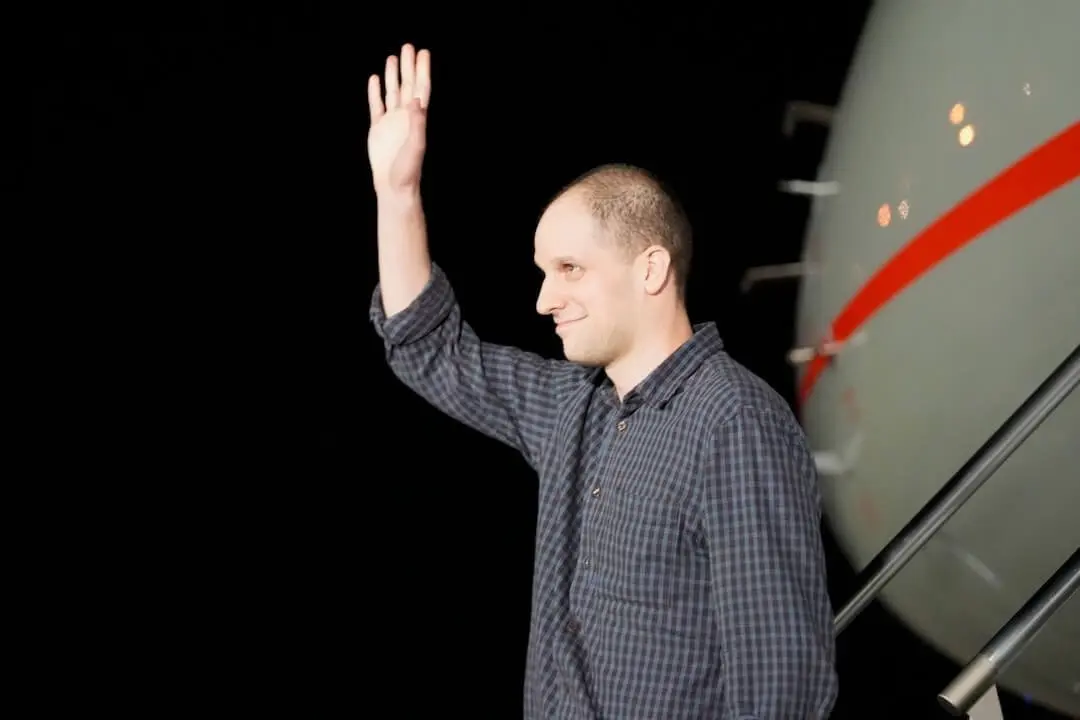
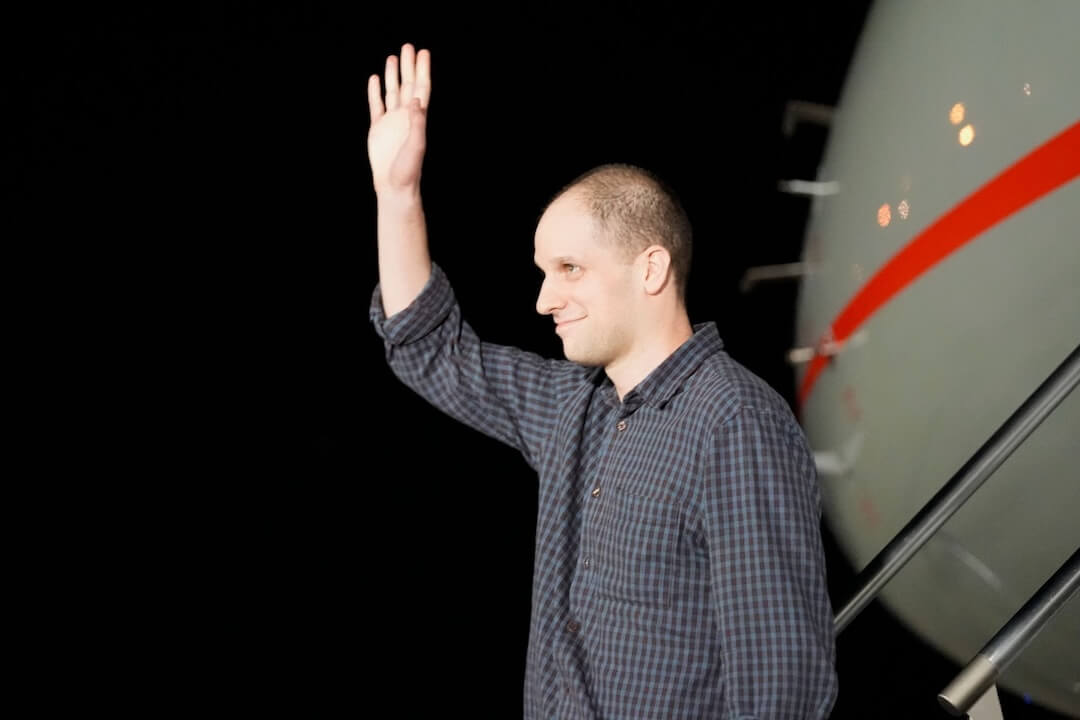
Following his release on August 1, 2024, as part of a complex, multi-nation prisoner exchange involving 24 individuals across six countries, Gershkovich has returned to the public eye. He has done so not merely as a survivor, but as an author and analyst of his own ordeal, releasing a new book titled "This Cursed Beautiful Land: A Russian-American Story" and participating in extensive media retrospectives, including sit-downs with Good Morning America co-host George Stephanopoulos and Wall Street Journal editor-in-chief Emma Tucker.
Beyond the deeply personal narrative of survival, resilience, and psychological recovery, Gershkovich’s ordeal raises profound questions about the future of international reporting. As authoritarian regimes increasingly view journalists not as diplomatic nuisances to be expelled via visa revocations, but as geopolitical leverage to be seized, the fundamental calculus of foreign correspondence has broken down.
Simultaneously, the broader media ecosystem continues to experience seismic institutional tremors. From high-level executive and anchor departures at major networks like Fox News—where Maria Bartiromo’s sudden exit has paved the way for Larry Kudlow—to the daily rhythms of broadcast television and the civic obligations of its personalities, the media industry remains under a perpetual magnifying glass. This report provides an in-depth examination of Gershkovich’s detention, the mechanics of modern hostage diplomacy, the shifting norms of journalism, and concurrent developments across the broader media landscape.
Detailed Chronology: From Arrest to Freedom
The Ambush in Yekaterinburg
The afternoon of March 29, 2023, began as a standard reporting assignment for Evan Gershkovich. Stationed in Russia as a credentialed correspondent for The Wall Street Journal, Gershkovich met with a source at a restaurant in Yekaterinburg. The situation escalated with terrifying speed.
Before the meeting could conclude, Gershkovich was swarmed by half a dozen masked operatives belonging to Russia’s Federal Security Service (FSB). Witnesses and subsequent accounts describe a violent takedown: operatives drove him to the ground, immediately secured a dark hood over his head, and hauled him away into custody.
Stripped of his environmental awareness and sensory inputs, Gershkovich was taken to an undisclosed location where the hood was temporarily removed for initial questioning. When asked to identify his employer, he answered plainly: he was a reporter for The Wall Street Journal. The hood was promptly reapplied, and he was transferred to an FSB detention facility. It was there that formal accusations of espionage were leveled against him—a moment that, counter-intuitively, brought him a measure of psychological relief.
The Calculus of Captivity
In his interview with George Stephanopoulos, Gershkovich reflected on the paradox of feeling relieved upon hearing the espionage charge.
"Because, one, I’m not going to be tortured," Gershkovich explained. "But, two, it’s a swap case."
Recognizing the fabricated nature of the charge, Gershkovich immediately understood the geopolitical chessboard. He surmised that the Russian state was not detaining him for a genuine criminal infraction, but was instead locking in a high-value bargaining chip to be traded down the line for Russian operatives or intelligence assets held by the United States or its Western allies.
This grim realization sustained him through 491 days of deprivation, isolation, and legal theater, even as the months stretched into an agonizingly slow timeline.
Inside Lefortovo and Perm: The Routine of Survival
Gershkovich spent his confinement adhering to a rigorous daily schedule designed to preserve his sanity and physical health. Waking up at 6:00 a.m. every morning, he would meticulously make his bed before trading off cleaning responsibilities with his cellmate—a Russian citizen with whom he forged an unexpected bond.
Confined to their cell for 23 hours a day, the two men navigated the psychological strain of isolation through shared routines. Gershkovich maintained a regimen of physical exercise, read voraciously, practiced meditation, and kept meticulous written notes, taking careful precautions to smuggle his journals out through legal or diplomatic channels. In a touch of surreal domesticity, the American journalist and his Russian cellmate bonded over a television show from their mutual childhoods: SpongeBob SquarePants. Notably, Gershkovich recalled playing precisely one game of backgammon during his entire incarceration.
Communication with the outside world was severely restricted, though he received letters from his parents. A particularly anxious milestone occurred when his parents were eventually permitted a brief prison visit. Gershkovich admitted to harboring fears that his parents might express anger or admonish him for taking the calculated risks inherent in reporting from a belligerent nation during wartime.
Instead, the encounter provided immense emotional grounding.
"They walked in with these beaming smiles," Gershkovich recalled. "And my dad said, I think, one of the most powerful things he has ever said to me, which was, ‘We come here with respect for you.’ It was an amazing thing for a parent to say, but it also kind of calmed me going forward."
The Presidential Pardon and the Swap
As the legal proceedings moved toward their inevitable conclusion, the systemic pressure culminated on July 19, 2024, when a Russian court sentenced Gershkovich to 16 years in a maximum-security penal colony following a secret, expedited trial widely condemned by Western governments and international press freedom organizations as a sham.
To facilitate the diplomatic mechanics of his release, Gershkovich was required to draft a formal letter of pardon addressed to Russian President Vladimir Putin. Striking a careful diplomatic balance, Gershkovich wrote that he could understand why Russian courts might have "mistakenly" believed he committed espionage, framing the crisis in a manner that allowed the Kremlin a face-saving exit ramp to transition directly into a prisoner swap.
The strategy proved effective. Just two weeks after his conviction, on August 1, 2024, Gershkovich was freed as part of the largest and most complex East-West prisoner exchange since the Cold War. The multi-nation operation successfully secured the release of 24 political prisoners and dissidents distributed across six distinct jurisdictions.
Upon landing on American soil, Gershkovich expressed deep gratitude to then-President Joe Biden, stating unequivocally:
"He’s the reason I’m sitting here today."
Reflecting on the psychological aftermath of his return, Gershkovich noted that while the adrenaline initially carried him through days of joyous reunion, the underlying trauma required careful processing. "You get back to life pretty quickly," he observed. "The trauma lasts and there are things to work on, and it took a while to feel normal again." Ultimately, he classifies the 491 days not as the defining summation of his existence, but as a severe, singular "chapter" in a much larger life story.
Supporting Context & Metrics: The Shifting Risk Matrix of Foreign Reporting
Gershkovich’s imprisonment has permanently altered how media organizations evaluate the safety, deployment, and operational parameters of foreign correspondents. In his comprehensive discussion with Wall Street Journal editor-in-chief Emma Tucker, Gershkovich expanded on how authoritarian creep across the globe has rewritten the unwritten rules of international journalism.
The Death of Traditional Diplomatic Norms
Historically, foreign correspondents operating in hostile or semi-authoritarian states operated under an implicit, albeit fragile, diplomatic compact. If a regime took severe umbrage at a journalist’s reporting, standard retaliatory measures involved bureaucratic penalties: revoking press accreditations, denying visa renewals, or orchestrating a polite expulsion from the country.
Gershkovich argues that this paradigm has been fundamentally shattered:
"More countries are becoming authoritarian. More countries are more willing to no longer treat a foreign correspondent like kind of a diplomat where, if you’re really unhappy with an outlet or a certain journalist, you don’t extend their visa, you cancel their accreditation, you kick them out. You don’t take them hostage."
This evolution transforms journalists from observers into high-value tactical commodities. When state actors realize that arresting a prominent Western reporter can yield the release of convicted murderers, spies, or cybercriminals held in Western prisons, the incentive structure shifts decisively toward state-sponsored hostage-taking.
A Chilled Domestic Climate
Remarkably, Gershkovich’s introspection regarding risk is not confined to authoritarian regimes abroad; he has turned a critical eye toward the domestic environment within Western democracies, including the United States.
When researching his book by interviewing former Biden administration officials in Washington, D.C., Gershkovich encountered an unexpected hesitance. Sources were visibly nervous, demonstrating that the political atmosphere surrounding media and government interactions has grown increasingly guarded and polarized.
Furthermore, the post-release environment has underscored ongoing domestic challenges for the press. Journalists continue to face aggressive legal threats, vexatious lawsuits designed to punish rigorous reporting, and public targeting campaigns, including the doxing and harassment of newsroom personnel. These compounding pressures indicate that the challenges facing contemporary journalism are systemic, spanning both totalitarian regimes abroad and deteriorating institutional trust at home.
Official Statements and Literary Contributions
The release of Gershkovich has coincided with a robust multimedia and literary rollout designed to document his experience and analyze its broader geopolitical implications.
Publishing Milestones
Gershkovich’s newly published book, "This Cursed Beautiful Land: A Russian-American Story," released by Penguin Random House, offers a comprehensive exploration of his family background, his roots, and the terrifying realities of his arrest and detention. The Wall Street Journal featured exclusive serialization excerpts under compelling titles such as "Did Putin Really Think I Was a Spy?" offering readers a granular look into the interrogations and psychological endurance tests he faced in Lefortovo.
Key Media Engagements
Good Morning America: In his first major television broadcast with George Stephanopoulos, Gershkovich focused heavily on the human elements of his arrest, the initial moments of physical apprehension by the FSB, and the emotional equilibrium provided by his parents’ prison visit.
The Wall Street Journal Interview: Speaking directly with WSJ Editor-in-Chief Emma Tucker, Gershkovich pivoted from personal narrative to systemic critique, analyzing the systemic erosion of press freedoms, the weaponization of the judiciary by authoritarian states, and the future viability of international reporting networks.
Broader Media Landscape Developments
While the media world continues to process the systemic implications of Gershkovich’s detention, several notable developments across domestic television and broadcasting have dominated industry headlines.
Executive and Anchor Shake-Ups at Fox News
Earlier in the month, Fox News Media announced a sudden parting of ways with longtime anchor and host Maria Bartiromo. While official network statements remained tight-lipped regarding the exact catalysts, industry reports surfaced indicating that the departure followed revelations that Bartiromo had shared internal Fox Business communications with the White House. These communications reportedly centered on editorial strategies to avoid broadcasting segments featuring Donald Trump’s unsubstantiated claims regarding a rigged 2020 election. Bartiromo’s legal representation has firmly rejected these reports, characterizing them as "irresponsible."
In the interim, Fox News has moved quickly to plug the broadcasting gap on her prominent Sunday program, Sunday Morning Futures. Veteran financial analyst and media personality Larry Kudlow has stepped into the hosting chair. Kudlow, who previously spent years anchoring at CNBC before serving from 2018 to 2021 as Assistant to the President for Economic Policy during the first Trump administration, anchored the program and is slated to continue through November 8—the crucial weekend following the midterm elections. Network executives have indicated that a permanent successor will be announced at a later date.
Broadcast Realities: Civic Duty and Morning Television
In lighter domestic broadcasting news, the Today show experienced an unscripted disruption when veteran meteorologist Al Roker abruptly exited the broadcast mid-morning on Monday. Co-hosts Savannah Guthrie and Craig Melvin quickly updated viewers, assuring the audience that Roker’s departure was entirely benign.
Roker was summoned to fulfill an essential civic obligation: jury duty.
Taking to Instagram to document the pivot, Roker posted a lighthearted video from transit, noting:
"Well, got out of the Today show early because I’ve got jury duty. It’s everybody’s civic duty to do your duty."
Before finishing the thought, Roker laughed, acknowledging the comedic repetition of the word, before returning to his regular broadcasting schedule the following day, seamlessly relieved on air by correspondent Dylan Dreyer.
Future Outlook
The overlapping narratives of Evan Gershkovich’s resilience and the ongoing structural evolution of the media industry point to a turbulent, high-stakes future for journalism.
The Operational Redesign of Foreign Bureaus: Major international news organizations are currently auditing their safety protocols. As long as state-sponsored hostage-taking remains a viable geopolitical tool for authoritarian regimes, the traditional model of deploying individual correspondents into hostile regions will require heightened operational security, enhanced intelligence-sharing with allied governments, and, in some cases, a strategic withdrawal from high-risk reporting environments.
Legal and Physical Protections for Reporters: The international community faces mounting pressure to establish robust legal frameworks that classify the wrongful detention of journalists not merely as a bilateral dispute, but as an explicit violation of international human rights and a form of state-backed extortion. Initiatives modeled after the Ian Cameron Hostage Recovery Act and strengthened diplomatic coalitions will be vital in deterring future abuses.
Institutional Resilience in Domestic Markets: Domestically, newsrooms must navigate an increasingly hostile political and legal environment. The rise of strategic lawsuits against public participation (SLAPPs), coordinated doxing campaigns, and deep political polarization requires media executives to invest heavily in legal defense infrastructure, cybersecurity, and physical protection for field reporters.
Ultimately, Gershkovich’s return to the journalistic fold—marked by his published works, public testimonies, and analytical insights—serves as an enduring testament to the resilience of the human spirit and the indispensable necessity of a free press. As the media ecosystem grapples with these profound disruptions, the lessons learned from 491 days in Russian confinement will reverberate across newsrooms worldwide for generations to come.