

Executive Overview
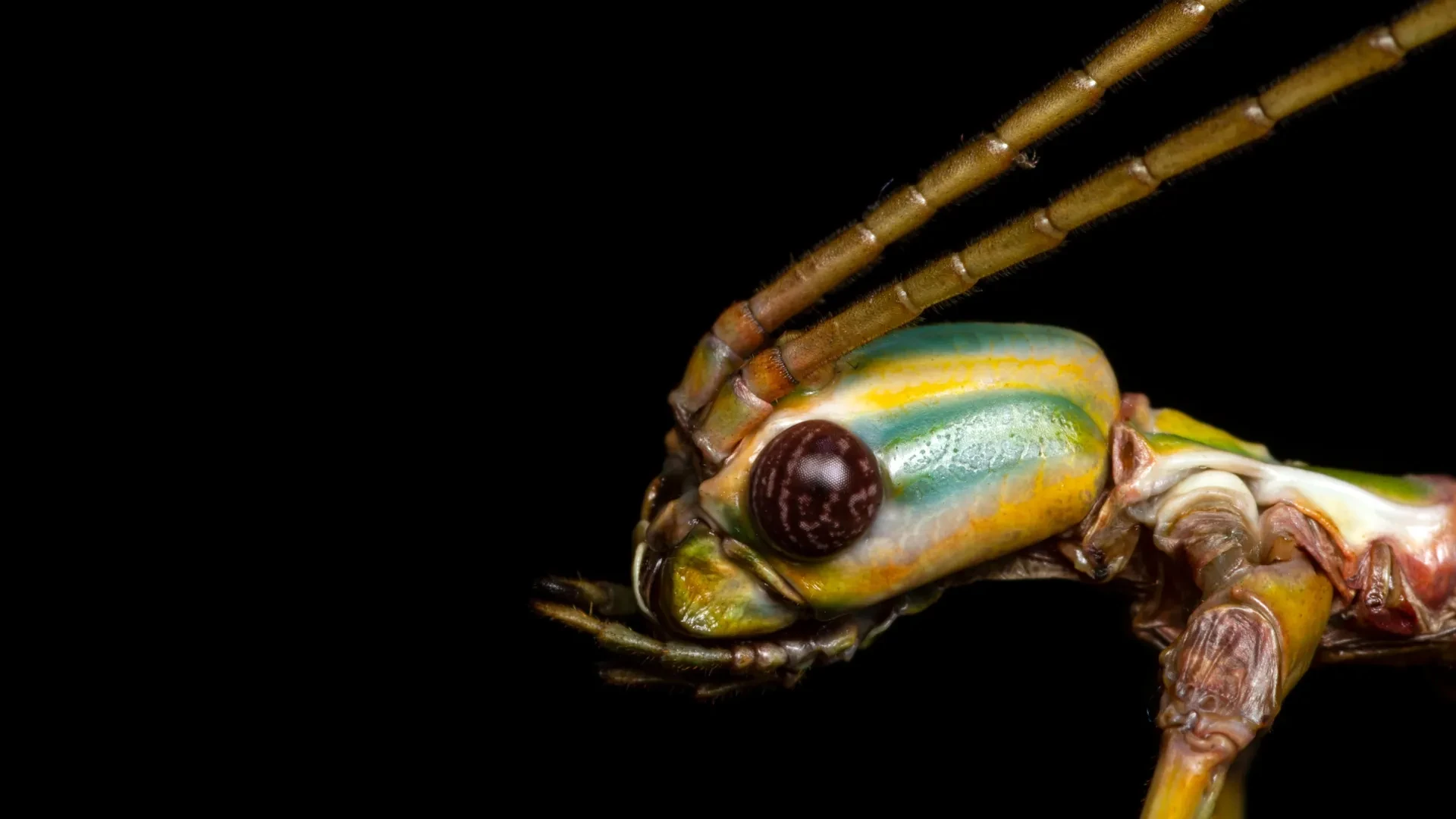
In a striking reminder of the vast, undocumented frontiers of Australia’s unique ecosystems, entomologists at the University of Sydney have officially identified two previously unrecognized species of giant stick insects. The discovery—published in the esteemed journal Austral Entomology—dramatically reshapes our understanding of the genus Anchiale, expanding a group once thought to comprise just two widely distributed species into a complex of five distinct lineages.
This breakthrough was achieved through a meticulous, multi-pronged scientific investigation that bridged modern molecular biology and traditional taxonomy. Researchers combined cutting-edge DNA sequencing with extensive museum specimen reviews, field surveys, captive-breeding observations, and thousands of crowd-sourced data points from citizen science platforms. Among the marquee finds is Anchiale mabiensis, a newly minted species native to Queensland’s critically endangered Mabi rainforest, which produces a bizarre and entirely unprecedented egg structure featuring a functional lid. Additionally, the team successfully resurrected Anchiale robusta, a large, familiar stick insect that had been misidentified and misclassified for decades, despite being heavily photographed and frequently encountered by the public.
Beyond its academic significance, the study carries vital implications for forestry, agriculture, and conservation biology. One of the newly parsed insects includes a taxon historically known to erupt into plague-like populations, periodically defoliating trees across eastern Australia. By untangling the taxonomy of these agricultural actors, land managers can now better anticipate and mitigate ecological disruptions. Ultimately, the research sounds a resonant alarm bell for the accelerating loss of global biodiversity, underscoring that even iconic, macro-sized invertebrates inhabiting heavily studied landscapes can slip through the scientific net before we even know they exist.
Detailed Chronology of the Discovery
The journey toward untangling the taxonomy of the Anchiale genus was far from straightforward, unfolding over years of detective work, molecular assays, and collaborative fieldwork.
Phase 1: Unraveling the Genetic Thread
The investigation began when a research team at the University of Sydney’s Aola Richards Sydney Insect Hub—spearheaded by lead author Dr. Braxton Jones—decided to take a fresh look at Australian stick insects traditionally assigned to the genus Anchiale. For generations, taxonomists relied almost exclusively on morphological traits—such as body length, coloration, and spine configuration—to categorize these giant insects. However, morphological variation within stick insects can be notoriously deceptive, influenced by geographic adaptation, sex, and developmental stage.
Dr. Jones, a Postdoctoral Research Associate in the Molecular Ecology, Evolution and Phylogenomics Laboratory, recognized that classical taxonomy needed to be reinforced with molecular data. The team initiated a comprehensive genetic screening process, extracting DNA from historical museum vouchers, newly captured wild specimens, and individuals successfully maintained in captive-breeding programs.
Phase 2: The Anchiale robusta Revelation
One of the most consequential milestones in the research timeline occurred when genetic sequencing data was cross-referenced with physical specimens. For decades, a large, robust stick insect common to coastal Queensland and northern New South Wales had been treated as a single, uniform species by scientists and hobbyists alike.
However, the DNA data told an entirely different story. The genetic divergence between populations was far too wide to support a single-species classification. Upon reexamining the physical morphology of these specimens in light of their genetic signatures, the researchers realized that a prominent insect long familiar to the public had been fundamentally misidentified. This lineage was formally separated and elevated to its own distinct taxonomic status: Anchiale robusta.
Phase 3: Fieldwork and the Discovery of Anchiale mabiensis
Simultaneously, field expeditions targeted remote and endangered habitats along the eastern Australian seaboard. This leg of the timeline bore fruit on the Atherton Tablelands in Far North Queensland. Within the fragmenting canopies of the critically endangered Mabi rainforest, researchers collected specimens that did not match any known Anchiale descriptions.
Laboratory observation of these specimens revealed a breathtaking evolutionary adaptation: the females produced eggs featuring a distinct, lid-like structural cap. This morphological novelty had never before been documented in any known stick insect species or its closest phylogenetic relatives, providing an undeniable morphological signature to match the genomic distinctiveness of Anchiale mabiensis.
Phase 4: Integration and Formal Description
With the molecular boundaries drawn and morphological anomalies cataloged, the team reconciled their findings across the entire geographic range of the genus—stretching from northern New South Wales, up through coastal Queensland, and deep into the tropical top end of Australia. What was once thought to be a simple two-species complex was systematically expanded into five distinct evolutionary lineages. The study was subsequently finalized, peer-reviewed, and published in Austral Entomology, marking a major paradigm shift in Australian entomology.
Supporting Context & Metrics
To fully appreciate the gravity of the University of Sydney’s discovery, one must examine the intersection of modern citizen science, historical documentation, and the broader context of Australia’s invertebrate crisis.
The Power and Limit of Citizen Science
Ironically, these discoveries were made despite—and in some ways, because of—an unprecedented volume of baseline data. Over the past decade, public interest in biodiversity has exploded, largely driven by digital platforms. More than 1,000 citizen science observations detailing the physical appearance, behavior, and geographic distribution of these stick insects were submitted to platforms such as iNaturalist and the Atlas of Living Australia.
These crowd-sourced records provided researchers with invaluable geographic distribution maps and behavioral insights that would have taken decades of traditional fieldwork to accumulate. Yet, as Dr. Jones pointed out, the sheer volume of photographs and casual encounters created a false sense of security. People assumed that because an insect was frequently photographed and heavily observed, it had already been thoroughly studied and officially classified by science. This paradox highlights the persistent gap between public engagement and professional taxonomic cataloging.
Taxonomic Metrics at a Glance
- Total Genus Expansion: Reclassified from 2 recognized species to 5 distinct species.
- Geographic Range: Spanning from northern New South Wales, hugging coastal Queensland, up to tropical northern Australia.
- Citizen Science Contribution: Over 1,000 pooled observations via iNaturalist and the Atlas of Living Australia.
- Key New Taxon: Anchiale mabiensis, discovered in the Mabi rainforest, featuring a unique, lid-bearing egg structure.
- Resurrected Taxon: Anchiale robusta, a large stick insect misidentified for decades.
- Pending Discoveries: At least one potential new, undescribed species identified in Cape York, awaiting further specimens for formal confirmation.
The Cryptic Nature of Stick Insects (Phasmatodea)
Stick insects (order Phasmatodea) are masterclasses in evolutionary camouflage. Their exceptional mimicry of twigs, bark, and foliage makes them notoriously difficult to survey in dense forest canopies. Furthermore, many species exhibit sexual dimorphism so extreme that males and females of the same species were historically cataloged as entirely different taxa. This biological masking, combined with isolated populations separated by geographic barriers or rainforest fragmentation, creates an ideal environment for cryptic speciation—where morphologically similar populations evolve along independent genetic pathways without outwardly changing their appearance.
Official Statements and Expert Insights
The implications of the Anchiale revision extend far beyond academic taxonomy, touching on conservation ethics and the philosophy of biological discovery.
Reflecting on the nature of the research, lead author Dr. Braxton Jones emphasized the detective-like patience required in modern entomology:
"Taxonomy is often a bit like detective work. Even among some of Australia’s most photographed and frequently reported insects, we’re still finding species that have escaped scientific recognition."
Dr. Jones, whose work in the Molecular Ecology, Evolution and Phylogenomics Laboratory focuses on unraveling complex evolutionary relationships, noted that the discovery serves as a sobering reminder of what remains hidden in plain sight. He elaborated on the urgency driving these investigations:
"These findings demonstrate the importance of protecting threatened ecosystems and documenting Australia’s extraordinary biodiversity before we lose species without us having even discovered them."
The research team also acknowledged the institutional and financial backing that made this comprehensive study possible. Funding was generously provided by the Australian Biological Resources Study through the National Taxonomy Research Grant—administered by the Commonwealth Department of Climate Change, Energy, the Environment and Water—alongside critical support from a CSIRO postgraduate scholarship. These funding streams underscore the national priority placed on mapping Australia’s megadiverse, yet increasingly vulnerable, ecosystems.
Future Outlook & Practical Implications
While the formal naming and description of Anchiale mabiensis and the resurrection of Anchiale robusta are monumental achievements for theoretical biology, the study’s conclusions carry immediate, real-world utility for land managers, foresters, and conservationists.
Forestry and Agricultural Management
One of the most compelling practical outcomes of this research relates to pest management. Historically, certain populations of Australian stick insects within this complex have occasionally erupted into plague-like proportions. During these population spikes, the insects can strip whole swathes of leaves from trees, causing significant stress or mortality in native forests, commercial timber plantations, and agricultural orchards.
Previously, because all members of this group were lumped under overly broad species classifications, pest management strategies were blunt and generalized. By successfully parsing a single perceived pest species into multiple distinct taxa, researchers have given land managers a sharper tool. Different species within the Anchiale genus may exhibit distinct life cycles, host-plant preferences, climatic thresholds, and natural predator dynamics. Understanding which specific species is responsible for an outbreak allows forestry and agricultural authorities to deploy targeted, species-specific management protocols rather than relying on broad, potentially environmentally disruptive interventions.
Conservation and the Threat of Extinction
On the conservation front, the discovery of Anchiale mabiensis highlights the fragile biodiversity harbored within Queensland’s Mabi rainforest. The Atherton Tablelands have experienced severe historical land clearing, leaving behind a fragmented matrix of critically endangered rainforest patches. Species restricted to these dwindling micro-habitats are exceptionally vulnerable to climate change, extreme weather events, and habitat degradation.
Furthermore, the study’s epilogue hints at unfinished business. Researchers have already flagged an additional, potentially undescribed stick insect lineage residing in the remote wilderness of Cape York. However, exercising scientific rigor, the team has withheld formal description until additional specimens and genetic samples can be secured to confirm its status.
The Race Against Time
Ultimately, the University of Sydney’s stick insect study serves as both a celebration of discovery and an urgent call to action. As anthropogenic pressures continue to squeeze natural habitats worldwide, scientists are engaged in a race against time to document life on Earth. The revelation that iconic, large-bodied insects can hide undetected in one of the world’s most thoroughly studied developed nations proves that our global biodiversity inventory is perilously incomplete. If giant stick insects can evade science for decades in plain view, countless smaller, less conspicuous invertebrates likely face extinction before they are ever given a name.