

Executive Overview
In the modern digital economy, the traditional boundaries separating industries have dissolved. Today, technology firms operate like media networks, entertainment conglomerates function as software developers, and direct-to-consumer brands curate multi-platform ecosystems. This convergence has created a paradox for modern brand architects: while companies have more avenues than ever to reach their audiences, the sheer volume of cross-category expansion often dilutes corporate identity. When every enterprise begins to look, act, and sound like a tech company, a media house, and an entertainment studio simultaneously, brand clarity ceases to be a luxury; it becomes a mission-critical survival metric.
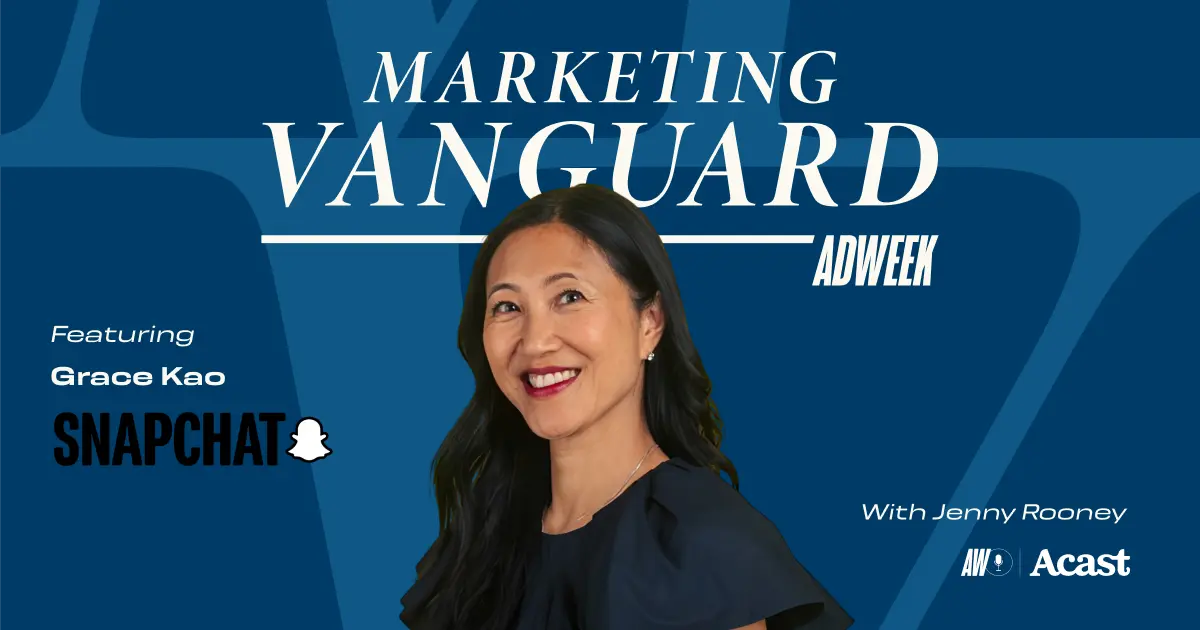
In a compelling masterclass on modern marketing strategy, the latest episode of Marketing Vanguard tackles this exact challenge. Host Jenny Rooney sits down with Grace Kao, Chief Marketing Officer of Snap, to examine the arduous yet essential work of building a brand that consumers genuinely understand, trust, and invite into their daily routines.
Beyond exploring Snap’s strategic pivot toward enriched chat utilities, real-world interpersonal connectivity, and immersive community experiences, the conversation cuts to the heart of what contemporary marketers should be asking themselves: “How do we actually add value to the consumer’s day, rather than just extracting their attention?”
This comprehensive report unpacks Kao’s insights from the episode, charting her unconventional career trajectory from the agency floor at BBDO to the executive suites of Silicon Valley’s most influential youth platforms. Through detailed analysis, chronological insights, and strategic context, we examine how founder-led clarity, challenger brand mentalities, and the unique operating system model of Snapchat are reshaping the future of digital engagement.
Detailed Chronology: From Apple’s Agency Floor to the C-Suite of Snap
To understand how Grace Kao approaches the modern marketing landscape, one must examine the foundational experiences that shaped her career. Her path to the chief marketing officer’s office at Snap was neither linear nor traditional; rather, it was forged through decades of proximity to some of the most culturally disruptive brands of the 21st century.
The Accidental Beginning: The Apple Apprenticeship
Kao’s journey into the marketing ecosystem began almost by happenstance. Having stepped away from graduate school at a crossroads in her life, she secured a position as an executive assistant at BBDO, landing immediately on the Apple account. In the early-to-mid 2000s, working within the orbit of Apple—then on the cusp of an unprecedented renaissance driven by the iPod and the impending launch of the iPhone—provided a masterclass in corporate discipline and creative rigor.
Working closely with legendary creative teams and observing founder-level decision-making instilled in Kao an appreciation for structural minimalism and narrative focus. It taught her that a brand’s value is not measured by how many things it attempts to say, but by the absolute clarity of its core message. This foundational chapter set the trajectory for a career that would consistently gravitate toward organizations defined by strong identities, youth-driven audiences, and unyielding points of view.
A Tour of Cultural Heavyweights
Over the subsequent two decades, Kao’s resume reads like a who’s who of digital culture and entertainment. Her career spans influential roles across both agency and brand portfolios, including:
- PlayStation: Immersing herself in the high-stakes, hyper-engaged gaming demographic where community loyalty and interactive storytelling are paramount.
- Yahoo: Navigating the turbulent pivot eras of early web portals, learning the complexities of scale and content aggregation.
- Pandora: Helping define the nascent days of music streaming and personalized audio advertising.
- Instagram: Witnessing firsthand the hyper-growth phase of visual social media and the dawn of creator-led commerce.
- Spotify: Shaping cultural conversations at the intersection of music, user data, and emotional streaming habits.
Across each of these professional chapters, Kao sought out brands that possessed a distinct cultural pulse. Whether navigating the shifts of streaming audio or the explosive rise of visual communication platforms, she consistently focused on how brands can maintain a centered identity while scaling globally.
Arriving at Snap: Championing Friendship and Creativity
Now leading marketing across Snapchat and the broader Snap ecosystem, Kao finds herself at the epicenter of Gen Z and millennial communication. Her mandate is clear: keep the Snap brand unapologetically rooted in its core pillars of friendship, creativity, and real-world connection, while constantly innovating to give brands, creators, and communities new ways to participate.
Supporting Context & Metrics: The Modern Brand Identity Crisis
Kao’s insights arrive at a critical inflection point for the global marketing industry. According to recent macroeconomic and digital advertising trends, brand loyalty is fracturing. As artificial intelligence lowers the barrier to content creation and performance marketing dominates quarterly budgets, many brands have sacrificed long-term identity building in favor of short-term conversion metrics.
The Cost of Feature Creep and Brand Dilution
When software companies build media arms, and retail giants launch streaming services, consumers experience what industry analysts call "brand blur." A legacy footwear brand starts acting like a tech firm via digital loyalty apps; a streaming service starts selling physical merchandise like a traditional retailer. Without a distinct anchor, these businesses risk alienating the very audiences they spent decades cultivating.
Kao points out that this expansion often makes internal operations messier. Companies grow, product portfolios diversify, and regional teams launch localized campaigns. Yet, despite this operational complexity, the brand’s center must hold.
+-----------------------------------------------------------------+
                 THE MODERN BRAND IDENTITY MATRIX
+-----------------------------------------------------------------+
| Operational Expansion:                                          |
| [Tech] + [Media] + [Entertainment] + [Commerce]                 |
|                                                                 |
|                                V                                |
|                                                                 |
| The Core Anchor (Kao's Principle):                              |
| Founder-Led Clarity + Uncompromising Point of View              |
|                                                                 |
|                                V                                |
|                                                                 |
| Consumer Perception:                                            |
| Trust, Intuitive Utility, & Authentic Cultural Participation    |
+-----------------------------------------------------------------+
The Psychology of Challenger Brands
Why do challenger brands often outperform legacy incumbents in cultural relevance? Kao suggests that knowing who you are is frequently easier when you clearly understand what you are fighting against.
Throughout her career, Kao has consistently favored challenger brands because they inherently possess:
- Sharper Points of View: They do not attempt to appeal to everyone; they carve out a passionate, dedicated niche.
- Risk Tolerance: Unburdened by the institutional inertia of legacy giants, they are willing to experiment with unconventional creative formats.
- Cultural Alignment: They mirror the mindset of modern youth culture—constantly questioning assumptions, resisting convention, and pushing against expected norms without defaulting into hollow cynicism.
Key Episode Insights & Deep Dive
[08:50] Great Brands Know Who They Are
Reflecting on her formative years around Apple, Kao highlights the transformative power of founder-led clarity. When a visionary leader can articulate with absolute precision what a company stands for, that clarity cascades down through every tier of the organization.
In today’s hyper-fragmented business environment, this principle is more vital than ever. Enterprises are stretching across disparate categories—merging hardware with software, subscription models with advertising, and real-world events with virtual metaverses. Kao argues that while corporate portfolios will inevitably expand and get more complex, the brand must retain an unshakeable center. If the leadership team cannot clearly articulate the brand’s soul in a single sentence, the consumer will certainly not be able to discern it across a cluttered media feed.
[11:03] Challenger Brands Need Something to Fight For
Elaborating on the psychology of market disruption, Kao notes that the most enduring brands are forged in opposition to status-quo complacency. By understanding what they stand against, these brands naturally attract highly engaged communities.
This philosophy directly informs how modern marketers should analyze youth culture. Gen Z and younger generations are remarkably adept at detecting inauthenticity. They do not want brands that lecture them or adopt superficial trends; they respect brands that take a stand, embrace transparency, and invite two-way dialogue. For marketers, the lesson is clear: stop trying to be liked by everyone. Instead, focus on building deep, resonant connections with the audiences who truly care about your mission.
[17:35] Snapchat as This Generation’s Operating System
One of the most profound shifts in perspective offered during the episode is Kao’s framing of Snapchat. Rather than viewing the platform merely as another social media content feed designed to capture passive scrolling attention, Kao describes Snapchat as something closer to an operating system for a generation.
Consider the user journey: Snapchat opens directly to the camera, placing creation and immediate visual communication at the forefront. It prioritizes private chat, real-time map sharing, and utility-driven tools that help friends navigate their physical lives together.
This distinction carries massive implications for brand marketers:
- The Interruption Model is Failing: Traditional advertising models rely on interrupting a user’s attention stream with banner ads or forced video pre-rolls.
- The Utility Model is Rising: On platforms that function as communication operating systems, the real opportunity is behavioral integration. Marketers must study the organic patterns of how people actually use the platform—how they locate friends, celebrate milestones, share inside jokes, and express identity—and find organic, useful roles within those native behaviors.
[20:15] Snapchat Marketing Has to Be the Best of Snapchat
Setting a standard of creative excellence requires institutional discipline. Kao reveals that she holds Snap’s internal and external marketing teams to an exceptionally high bar: Snapchat’s own brand marketing must match or exceed the creativity of the community using it.
In an ecosystem where millions of users daily utilize Augmented Reality (AR) lenses, generative editing tools, and multimedia messaging to remix their world, average corporate advertising is instantly rejected. To earn its place on the platform, brand work cannot feel like an imported TV spot dropped into a digital wrapper. It must listen to creators, honor what the community values, and participate with the same level of ingenuity, speed, and artistic bravery expected from its users.
Official Statements & Industry Reactions
While the podcast episode serves as a primary text for Kao’s strategic philosophy, broader industry commentary surrounding Snap’s recent product and marketing evolutions underscores the timeliness of her approach.
"We are moving away from the era where platforms could rely solely on algorithmic ad placement to drive results," noted an independent digital media strategist following the episode’s release. "Grace Kao is pointing toward a future where brand marketing must be indistinguishable from product utility. If a brand isn’t helping people connect or express themselves, it’s just noise."
Industry analysts have similarly praised Snap’s ongoing efforts to lean into its identity as an antidote to traditional, high-anxiety social media feeds. By centering its marketing and product development around close friends, intimate chat groups, and practical utility (such as Snap Map and AR-driven commerce), Snap is carving out a defensible moat in an era dominated by hyper-public, broadcast-heavy platforms.
Future Outlook: The Next Frontier for Brand Architects
As we look toward the remainder of 2026 and beyond, the intersection of technology, commerce, and human connection will continue to accelerate. Artificial intelligence, spatial computing, and evolving consumer privacy regulations will radically alter how brands find and retain their audiences.
For Chief Marketing Officers navigating this turbulent landscape, Grace Kao’s masterclass offers a definitive roadmap:
- Relentless Simplification: Resist the urge to be all things to all people. Embrace the operational complexity of a modern enterprise, but protect the purity of your brand’s core identity.
- Embrace the Challenger Mindset: Do not fear polarization. Stand for something specific, know what industry conventions you are disrupting, and align your brand voice with the authentic behaviors of your most passionate users.
- Move from Interruption to Integration: Stop treating digital platforms as billboards to be rented. Study how your audience actually lives, communicates, and utilizes technology, and build marketing initiatives that provide genuine utility and creative participation.
In an age where technology makes it easy for every company to replicate features and mimic competitors, human clarity remains the ultimate differentiator. As Kao demonstrates, the brands that endure will not be those with the biggest megaphone, but those with the clearest purpose, the deepest community roots, and the courage to add real value to the everyday lives of their audiences.