

Executive Overview
In a landmark legislative victory for the future of regional media, California Governor Gavin Newsom has signed AB 2222—officially known as the Community NEWS Act—into law. Hailed by the governor as “a big deal,” the legislation establishes the most ambitious state-level initiative in United States history aimed at resuscitating local journalism. Over the next five years, the state will inject roughly $200 million into the regional media ecosystem through refundable tax credits explicitly tied to the hiring and retention of working journalists.
The mechanism is straightforward yet revolutionary: news organizations receive financial offsets based on workforce size, earning $20,000 for each of their first five local journalists, $15,000 for any subsequent reporter, and an additional $15,000 incentive for newly created positions. Unlike traditional grant programs that rely on finite pools of appropriated funds or discretionary government handouts, this guaranteed tax structure gives publishers, investors, and philanthropic entities the financial predictability needed to aggressively rebuild depleted newsrooms.
Drafted with extensive guidance from the advocacy group Rebuild Local News and shepherded through the legislature by key Democratic champions, the bill successfully bridges ideological, structural, and commercial divides. By prioritizing content-neutral criteria, strict anti-fraud safeguards against "pink slime" journalism, and absolute editorial independence, the Community NEWS Act offers a bipartisan blueprint that proponents argue could—and should—be replicated nationwide to combat the encroaching shadow of local news deserts.
Detailed Chronology: From Concept to Law
The journey of AB 2222 from a conceptual framework to the governor’s desk represents a masterclass in coalition-building, political negotiation, and policy design.
- January: The employment tax credit model was officially introduced and pitched across California. Recognizing the distinct challenges facing different tiers of the media landscape, proponents engaged in months of intensive, collaborative negotiations with legislative staff.
- Spring to Summer: Architects of the bill worked side-by-side with media groups representing a diverse spectrum of the industry. They refined the statutory language, balanced competing interests between legacy conglomerates and agile digital startups, and partnered with key legislative champions—including Assemblymembers Chris Ward and Buffy Wicks, alongside Senator Jerry McNerney—to build a durable political coalition.
- The Legislative Push: As the bill wound its way through the California State Legislature, it drew a remarkably broad and unexpected alliance of supporters. Labor unions and corporate publishers, for-profit enterprises and mission-driven nonprofits, as well as print, broadcast, and digital outlets, coalesced around the legislation.
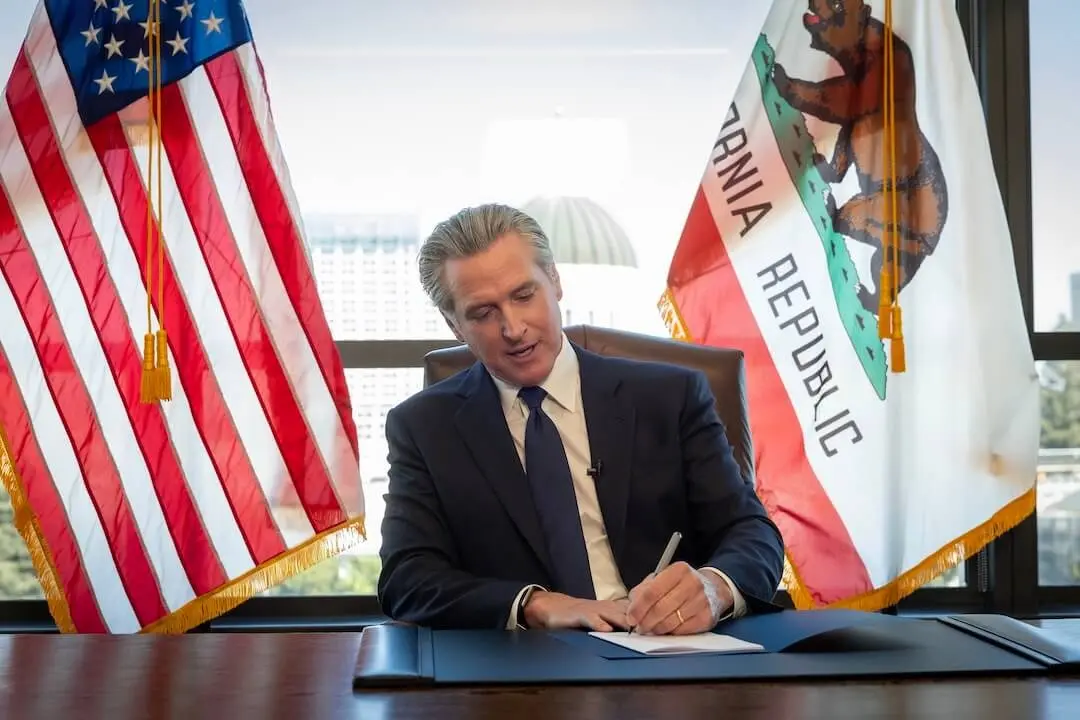
- Wednesday Signature: Governor Gavin Newsom formally signed AB 2222 into law, marking a watershed moment for state-backed media support and immediately positioning California as the national laboratory for localized journalistic revitalization.
Supporting Context & Metrics: Anatomy of the Crisis and the Cure
To understand the profound significance of the Community NEWS Act, one must examine the perilous state of American local journalism. Over the past two decades, thousands of newspapers have shuttered, leaving vast geographic swaths of the country as "news deserts" devoid of independent oversight. According to data from NewsGuard, a grim historical milestone has recently been crossed: fake local news websites—often pejoratively termed "pink slime" journalism—now outnumber legitimate local newspaper websites across the United States.
Compounding this crisis is the advent of generative artificial intelligence. Emerging evidence demonstrates that politically motivated actors are increasingly deploying automated networks to flood the information ecosystem with hyper-partisan content designed specifically to manipulate AI agents and influence electoral cycles.
Against this backdrop, AB 2222 was meticulously engineered to solve a complex policy riddle: how to inject vital capital into legitimate newsrooms while aggressively blocking bad actors. The statute establishes strict, binary eligibility criteria that the state tax department can evaluate objectively without making subjective, politically hazardous judgments about editorial quality. To qualify for the refundable tax credits, a news organization must:
- Have been in operation for at least one full year.
- Transparently disclose its ownership structure.
- Maintain and prominently display a public corrections policy.
- Carry adequate media liability insurance.
- Be entirely free from the operational control of political action committees (PACs) or 501(c)(4) advocacy organizations.
By relying on verifiable, objective metrics rather than bureaucratic taste tests, the law ensures that startups and legacy outlets alike can plug into the system safely, all while locking out partisan propaganda mills.
Official Statements and Stakeholder Perspectives
The passage of AB 2222 has sparked widespread commentary from political leaders, media advocates, and policy designers, illuminating the deep bipartisan roots and philosophical underpinnings of the legislation.
Governor Gavin Newsom underscored the fundamental adversarial role of a free press during the bill-signing ceremony, declaring:
"A free press isn’t supposed to make government comfortable. It’s supposed to make government accountable."
Steven Waldman, president of Rebuild Local News—the lead external sponsor that helped guide the legislation’s crafting—elaborated on why the tax credit structure fundamentally changes the math for outside investors and philanthropic donors:
"It is a guaranteed tax benefit rather than a fixed amount of appropriated funds… News organizations, investors or philanthropists can make a decision to invest in growing a newsroom with the certainty that their contribution will be partly matched by the state. It’s the first law that’s well positioned to leverage that kind of outside support."
Waldman also addressed the ideological diversity built into the framework, noting that the law purposefully avoids discriminating against outlets based on their editorial leanings or corporate structure. Local television stations affiliated with Fox or owned by Sinclair are eligible to benefit right alongside public NPR member stations, provided they are actively hiring and retaining local journalists.
Furthermore, proponents are eager to emphasize that the policy transcends traditional partisan lines. While the bill was enacted in deep-blue California under a progressive Democratic governor, the core mechanics of supporting civic infrastructure through tax policy have historically enjoyed conservative champions. For instance, the primary sponsor of similar federal media support legislation in the U.S. House of Representatives is conservative Republican Claudia Tenney—a stalwart supporter of former President Donald Trump—while Republican-led initiatives have surfaced independently in states such as New Hampshire, Utah, and Vermont.
Defenders of the policy frequently draw historical parallels to the foundational days of the American republic, specifically citing the Postal Subsidy of 1792. That historic measure provided heavily discounted postal rates for newspapers regardless of whether they championed the Federalist cause of Alexander Hamilton or the Jeffersonian ideals of Thomas Jefferson.
Future Outlook: A National Model for Civic Health
As California prepares to roll out the $200 million initiative over the next five years, media analysts, lawmakers, and publishers across the nation are watching closely. The success of AB 2222 could serve as the definitive proving ground for a new era of public policy designed to safeguard democratic institutions at the hyper-local level.
Crucially, the legislation does not absolve newsrooms of the responsibility to innovate, adapt, and connect with their communities. The refundable tax credits are not a golden ticket to financial complacency; rather, they serve as a vital lifeline—a way for struggling news organizations to get their noses above water so they can return to what they do best: dispatching reporters to cover school boards, city councils, county government, and local courts.
If foundations and civic-minded philanthropists leverage this state-backed matching mechanism to launch coordinated campaigns against news deserts, California’s experiment could fundamentally transform the economics of regional reporting. By proving that public policy can support accountability journalism without compromising editorial independence or descending into partisan capture, the Community NEWS Act may well establish a gold standard that other states—and the federal government—will be compelled to follow in the years ahead.