

Executive Overview
For decades, the standard visual presentation for television news anchors across America was narrowly defined: neatly pressed, shoulder-length straight hair for women, and conventional, Eurocentric tailoring for all. While these rigid boundaries have slowly receded under the weight of cultural evolution and digital advocacy, they continue to cast a long shadow over broadcast newsrooms. For Black journalists, particularly women, the decision of how to wear their hair on air is rarely a simple matter of personal style. It remains a calculated professional risk fraught with unspoken biases, contract clauses, and the looming threat of being perceived as "unprofessional."
This dynamic carries profound implications not just for the journalists themselves, but for the communities they serve. Local television news relies fundamentally on trust, accuracy, and representation. When newsrooms enforce—or implicitly encourage—conformance to white standards of beauty and professionalism, they distort the mirror they hold up to the public. Viewers are deprived of authentic storytelling from journalists who reflect the full tapestry of their communities.
In Indiana, this struggle takes on added urgency. Unlike thirty other states that have enacted versions of the CROWN Act (Creating a Respectful and Open World for Natural Hair)—legislation designed to prohibit discrimination based on hair texture and protective hairstyles—Indiana offers no such legal protection. Legislative efforts to pass the bill have stalled, leaving Black professionals vulnerable to workplace bias. Against a backdrop of shifting national politics and a systematic backlash against diversity, equity, and inclusion (DEI) initiatives, the presence of Black journalists wearing braids, locs, and natural afros on air is an act of quiet resilience. It is a vital step toward reshaping cultural norms in local media and ensuring that newsrooms truly reflect the audiences they represent.
Detailed Chronology: Navigating the Airwaves with Natural Hair
The journey of Black broadcast journalists reclaiming their authentic identities on air is marked by personal milestones, institutional resistance, and pivotal cultural movements.
The Cost of Conformity: Early Career Realities
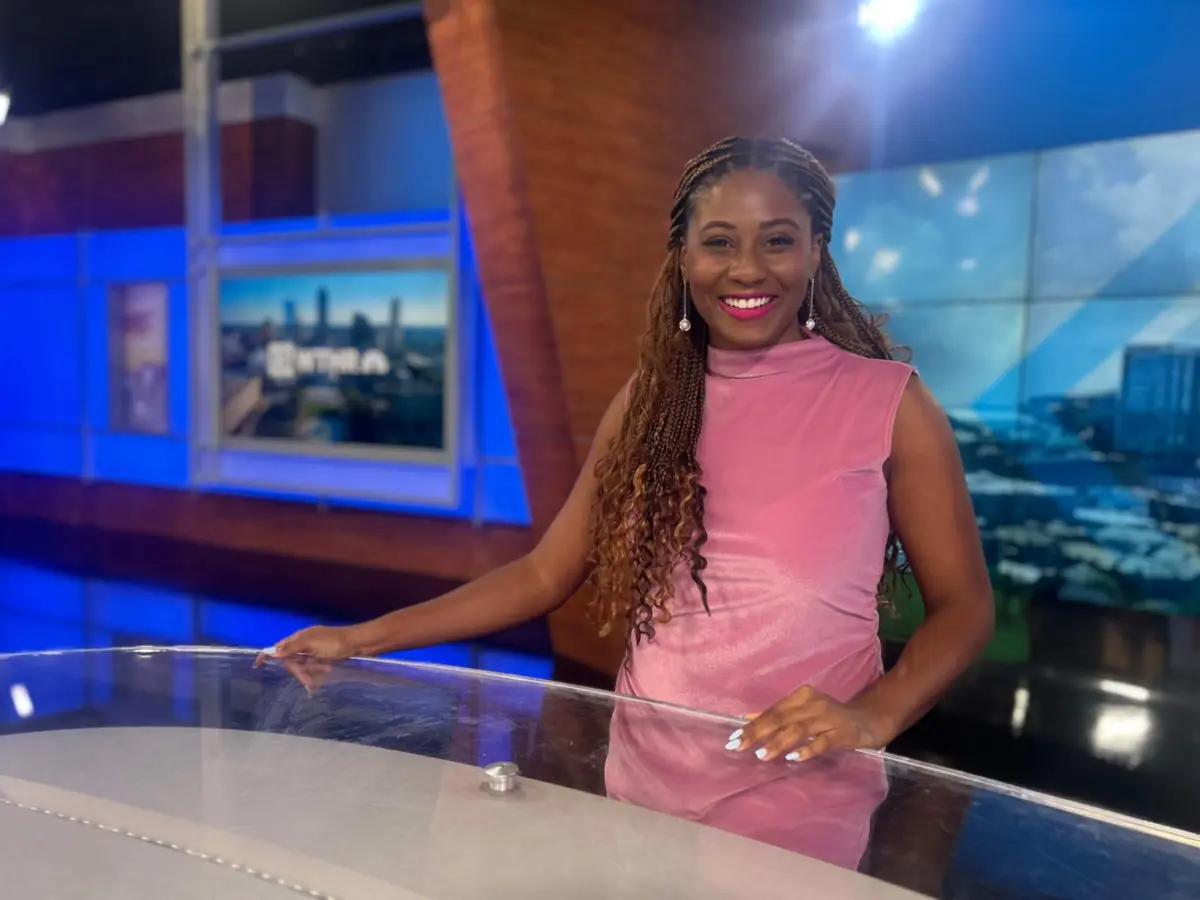
In August 2020, broadcast journalist Jalea Brooks faced a professional crossroads in Montgomery, Alabama. Having worked in the local market for nearly four years, she wanted to introduce a new hairstyle on air: braids. However, earlier in her tenure, a white station manager had pulled her aside to issue an implicit warning regarding her appearance. Brooks was told that if she wished to continue anchoring, she needed a consistent look. While she was ostensibly given a choice of hairstyle, she was expected to stick with it permanently. At the time, with her natural Black hair pulled back into a simple bun between styles, she understood the subtext clearly.
"I could read between the lines, and I understood what he meant by that," Brooks recalled. "And I definitely knew that sticking to the status quo felt like the safest option."
For Brooks, that "safe option" meant maintaining straight hair, a preference codified by a contractual clause requiring managerial permission for any significant alterations to her on-air appearance. Consequently, she hesitated for years before broaching the subject of braids with her news director again. It was only after drawing courage from a growing wave of Black journalists nationwide choosing to embrace their natural hair that she finally made her request, backed by visual references of the style. Approval was granted, and she began wearing braids on air in August 2020.
A New Chapter in Indianapolis
When Brooks accepted an anchor position at WTHR in Indianapolis in December 2020, she decided to address the issue immediately. During her onboarding, she had an upfront conversation with leadership regarding her desire to wear various natural hairstyles. To her relief, her new news director assured her that her hair was entirely her choice. Every subsequent news director at the station has maintained this supportive stance, allowing Brooks to rotate through an array of natural styles.
Ironically, straight hair has become the anomaly in her professional life. After wearing natural styles for months—and sometimes over a full year—viewers occasionally reached out with expressions of concern, asking whether station management had forced her to straighten her hair. While Brooks reassured them that the choices were entirely her own, she acknowledged the validity of their concern, noting that forced conformity remains a grim reality for many of her peers across the industry.
The Regional Landscape and Personal Ultimatum
Similar narratives echo across Indiana’s media markets. Naja Woods, a former multimedia journalist and anchor at WRTV, embraced her natural curls long before transitioning from a producing role to on-air reporting in South Bend. When she contemplated switching to braids, the familiar anxieties surfaced.
"I didn’t know, it’s like, are braids unprofessional on air?" Woods asked herself at the time. "So all that went through my mind. I looked up examples of other Black women wearing their hair in braids, and I just went for it and never turned back."
Woods received overwhelming validation from viewers, particularly children and parents of color. Young girls would approach her to express admiration, noting how inspiring it was to see a dark-skinned woman proudly wear her natural hair on television. Woods noted that she never faced institutional pushback from station management, adopting an uncompromising stance on her bodily autonomy: "I’m not going to straighten my hair, put constant heat on my hair just to please somebody else." If pushed to an ultimatum, she was prepared to change stations, though she remains optimistic that natural hair has gained permanent ground in the industry.
Supporting Context & Metrics: The Reality of Workplace Bias
The individual experiences of journalists like Brooks and Woods are substantiated by robust sociological and institutional research, painting a clear picture of persistent bias in professional settings.
The CROWN Research and Academic Findings
A landmark 2023 CROWN Workplace Research Study—co-commissioned by Dove and LinkedIn—revealed that Black women’s hair is twice as likely to be perceived as "unprofessional" compared to non-Black hair. This bias translates directly into hiring, retention, and advancement opportunities.
Complementing this data, a 2024 academic study by a researcher at Indiana University-Purdue University Indianapolis (IUPUI)—subtitled Dress to Repress: Exploring How Dress Codes and Norms Harm Black Women in the Workplace—examined the psychological toll of restrictive dress codes. Authored by Dr. Jasmine Beecham, the research underscored that dress codes regulating hair send an explicit message to Black women: they cannot be authentically themselves in the workplace. Furthermore, such policies often function as a broader signal that Black employees are undervalued within the corporate hierarchy.
Dr. Beecham emphasizes that while formal paperwork can be rewritten, altering workplace culture is the more arduous yet critical hurdle. By appearing on television with diverse hairstyles, Black journalists actively dismantle these cultural barriers, helping employers and residents in Indianapolis and beyond become more inclusive.
The Legislative Blind Spot: Indiana and the CROWN Act
While thirty states have enacted the CROWN Act since California pioneered the legislation in 2019, Indiana remains a glaring holdout. The legislation is designed to prohibit discrimination based on hair texture and protective hairstyles—such as braids, locs, twists, and bantu knots—across employment, housing, and educational institutions.
In 2023, State Representative Vanessa Summers (D-Indianapolis) introduced House Bill 1284, Indiana’s iteration of the CROWN Act. Representing District 99—where 52% of constituents are female and 37% are Black—Summers drew on her own lived experiences of navigating stylistic discrimination.
"I’ve had every hairstyle and every color that you can have, and I understood some of the discrimination you can get from having your hair a certain way," Summers stated.
Despite its importance, the bill was swiftly blocked. Committee Chair Representative Robert Behning (R-Indianapolis) issued a flat refusal when asked to consider it, preventing the legislation from advancing out of the education committee.
Official Statements and Political Realities
The legislative impasse in Indiana highlights the deep partisan divides and shifting political currents surrounding civil rights and workplace equity.
Representative Summers acknowledges that in the current political climate—marked by an intense legislative supermajority (split 70 to 30, Republicans to Democrats) and a broader national backlash against diversity, equity, and inclusion (DEI) initiatives—passing the CROWN Act immediately is an uphill battle.
Nevertheless, Summers remains undeterred and plans to reintroduce the measure in the next legislative session. She notes that meaningful progress will require strategic bipartisan cooperation, specifically pointing to the necessity of a white female ally in the legislature to champion the cause, secure a public hearing, and elevate the conversation. Even if the bill fails to pass initially, Summers counts generating public awareness as a vital victory in "moving the needle a little bit."
Media watchdogs and public editors point out that the stakes are particularly high in 2026. With political pressures disproportionately sidelining Black women across various industries, maintaining visibility and autonomy in newsrooms is essential. When journalists are free to present their authentic selves, their reporting resonates more deeply with the public.
Future Outlook: Representation as a Window into the Community
The transformation of local television newsrooms is not merely a cosmetic evolution; it is a foundational test of journalistic integrity. As the industry moves further away from the homogeneous presentation standards of the 20th century, the presence of natural Black hairstyles on air serves as a powerful barometer of community inclusion.
The movement that gained substantial momentum through grassroots digital campaigns like #FreeTheCurls in 2019 and the viral surge of #BlackHairOnAir following the 2020 racial justice protests has permanently altered viewer expectations. Audiences increasingly demand authenticity from the people who enter their living rooms every evening to report local news, weather, and investigative pieces.
Looking ahead, the path forward requires a dual commitment:
- Institutional Leadership: News directors and media executives must continue to dismantle outdated internal guidelines, actively dismantling the notion that Eurocentric standards equal professionalism.
- Legislative Protections: Lawmakers in states like Indiana must eventually reckon with the modern demands of workforce equality by revisiting protections such as the CROWN Act, ensuring that workers are judged on their competence and character rather than the texture of their hair.
Ultimately, local journalism fulfills its highest calling when it reflects the true face of the community it serves. By supporting Black journalists in their right to choose how they present themselves, newsrooms do more than foster an inclusive internal culture—they build a more authentic, trusted bridge to every viewer watching on the other side of the screen.