

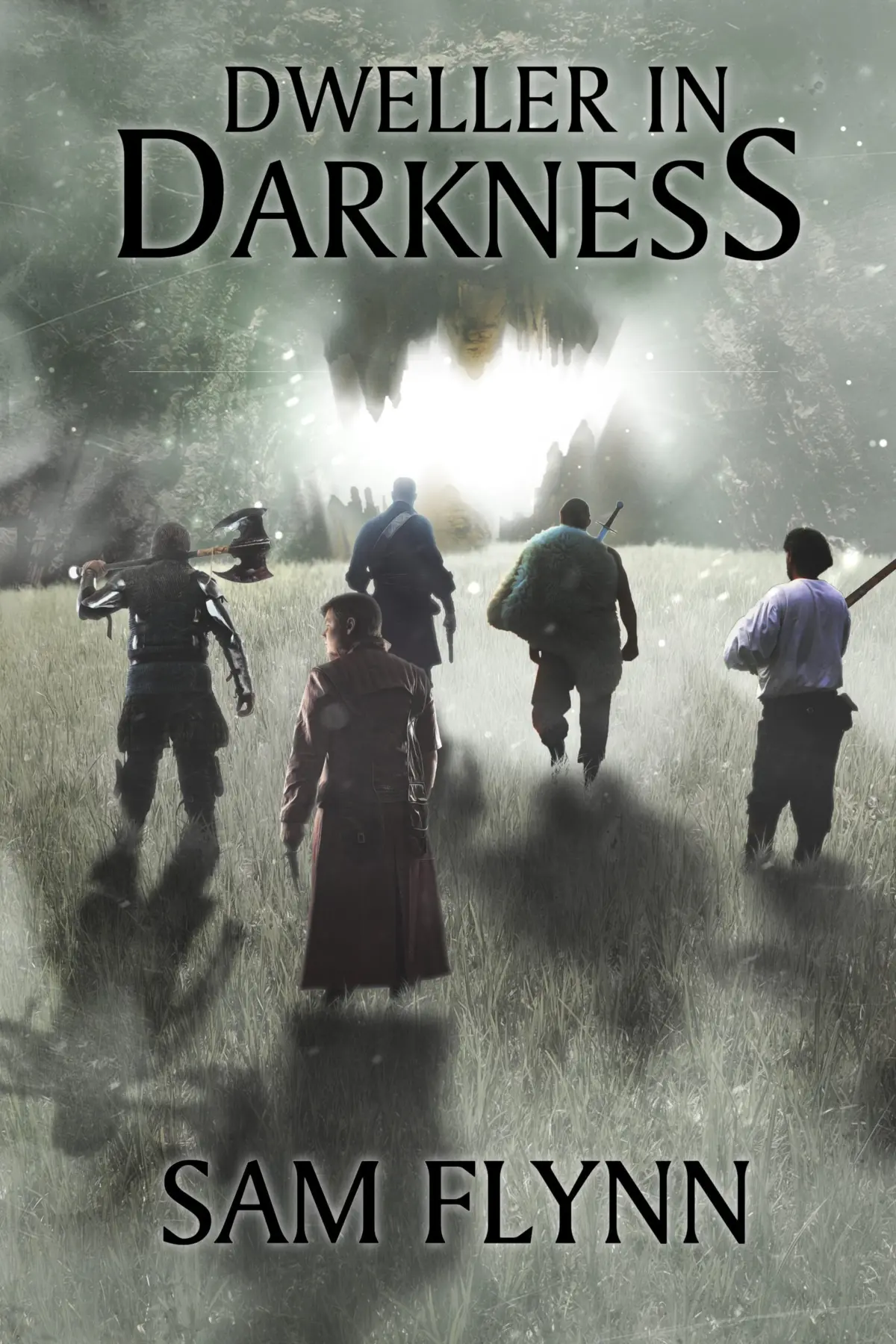
In the ever-evolving landscape of modern speculative fiction, few debut authors have achieved the rapid, visceral impact of Sam Flynn. With the upcoming September 22 release of Dweller in Darkness—the concluding installment of his critically acclaimed Deadlights Duology published by Timber Ghost Press—Flynn cements his reputation as a formidable voice in dark fantasy and cosmic horror. Following the success of The Mystery of the Pale King, named one of the best reads of 2024 by Grimdark Magazine, Flynn returns to the bleak, atmospheric world of Hathur to dismantle the traditional hero’s journey and replace it with a harrowing exploration of institutional corruption, cosmic dread, and systemic rot.
Flynn’s trajectory from an aspiring epic fantasy writer shelving doorstopper manuscripts to a sharp, efficient novella specialist offers a masterclass in modern publishing resilience. In this exclusive retrospective and deep dive, Flynn unpacks the mechanical genesis of the Deadlights Duology, tracing its roots from a serendipitous workshop exercise to an explosive exorcism of sociopolitical rage. Blending meticulous structural worldbuilding with the suffocating atmosphere of cosmic dread, Flynn’s work explores what happens when a protagonist realizes that the gods they worship—and the heroes they are named after—are the architects of their own damnation.
Detailed Chronology: From Concept to Conclusion
The journey of the Deadlights Duology did not begin with grand, sweeping visions of continental wars; rather, it was born out of institutional necessity and creative redirection during a turbulent period in the author’s writing career.
Spring 2022: The Futurescapes Pivot
For years, Sam Flynn labored over a massive, traditional epic fantasy manuscript—a doorstopper endeavor designed to launch a sprawling multi-book series. However, upon attending his first Futurescapes Writers’ Workshop in the spring of 2022, harsh realities set in. Multiple literary agents and editors delivered a sobering truth: the contemporary traditional publishing market rarely takes a chance on unproven debut authors attempting to sell massive, multi-volume epics right out of the gate.
Disheartened but undeterred, Flynn pivoted during a crucial composition class taught by literary agent Elizabeth Copps. The assignment challenged writers to reverse-engineer a narrative concept from a paired set of comparative titles ("comps"). For Flynn, the inspiration was already colliding in his subconscious. He was simultaneously reading Robert W. Chambers’ classic weird-fiction masterpiece The King in Yellow and tumbling down a historical Wikipedia rabbit hole regarding Gilles de Rais, the medieval French nobleman and notorious serial killer. Both narratives shared a chilling narrative anchor: a mysterious, potentially occult play driving its subjects toward madness.
The Birth of the Deadlights Duology
From this unique collision of The King in Yellow and Gilles de Rais, the conceptual blueprint for the Deadlights Duology exploded outward. Flynn realized that while his hundreds of thousands of words written for the discarded epic fantasy novel had not resulted in a marketable manuscript, they had fundamentally sharpened his technical craft. The massive trunk novel served as the engine; the focused, atmospheric comps became the fuel.
This creative alchemy gave birth to The Mystery of the Pale King—praised widely for its tight plotting and grim atmosphere—and paved the immediate way for its direct follow-up, Dweller in Darkness. Rather than wallowing in the loss of his initial project, Flynn redirected his accumulated literary endurance into shorter, higher-impact dark fantasy and horror novellas, achieving market breakthrough precisely when he needed it most.
Supporting Context & Metrics: The Anatomy of Cosmic Horror and Worldbuilding
To understand the resonance of Dweller in Darkness, one must examine the precise structural and thematic pillars upon which Flynn constructs his narratives. Speculative fiction operates under different rules than realist literature, demanding a calculated approach to worldbuilding, character psychology, and pacing.
Building the Box Before Thinking Outside It
Unlike realist fiction, speculative storytelling cannot rely on shared baseline assumptions about the physical or societal laws governing the universe. Authors must explicitly establish the rules of their extraordinary settings to properly orient the reader. According to Flynn, worldbuilding requires robust internal logic—whether drawing from Brandon Sanderson’s quantifiable hard-magic frameworks or Jeff VanderMeer’s opaque, surreal new-weird philosophies.
Only after these rules are firmly established can an author effectively pull the rug out from under both the character and the reader. Flynn relies heavily on the literary device of "misbelief"—a state where a protagonist operates under deeply ingrained, systemic falsehoods. Throughout the narrative arc, characters must either confront these misbeliefs or cling to them with tragic tenacity.
In Dweller in Darkness, the protagonist, Cassius Marius, is named after the antagonist of the previous book—a man revered globally as a savior by the Church of the Pale King. Cassius’s awakening to the reality that his namesake is actually a monster serves as the thematic core of his internal disintegration.
The Engine of Dread
While traditional horror often relies on shock value or visceral disgust, cosmic horror operates on a deeper, more paralyzing emotional frequency: dread.
Flynn defines dread as the essence of cosmic indifference—the terrifying realization that humanity is insignificant in a universe that is indifferent at best and maliciously hostile at worst. Unlike physical threats, dread cannot be outrun, fought, or intellectually resolved. It creeps forward with inevitable inertia.
By tying cosmic horror directly to a character’s internal misbelief, Flynn bridges the gap between intellectual abstraction and emotional resonance. The abstract "truth" of the universe slithers just off-page, prodding the protagonist to stare into the abyss while they desperately toil to maintain their comforting illusions.
Propulsion and the "Bead on a String"
Maintaining narrative momentum requires what Flynn describes as the "bead on a string" methodology. Imagine a taut horizontal string along which a single bead travels; the author’s primary scene-by-scene objective is to keep the reader’s gaze utterly transfixed on that moving point.
If the emotional axis of a story represents the Y-axis (how it makes us feel) and the thematic axis represents the X-axis (what it is about), masterclass speculative fiction intersects precisely in the middle. By utilizing monsters, magic, and societal collapse as symbolic stand-ins for internal human conflict, Flynn ensures that every element of worldbuilding directly serves character agency. In Dweller in Darkness, Cassius’s direct lineage to the ritualistic tradition of the Lightbringers—instituted by his own mother—creates an inescapable, personal bridge between his internal stakes and the apocalyptic fate of his homeland.
Official Statements: The Sociopolitical Catalyst of the Sequel
The thematic DNA of Dweller in Darkness shifted dramatically from Flynn’s initial concepts due to external real-world pressures. In a candid reflection on the creative process behind the sequel, Flynn opens up about the intersection of art, politics, and emotional catharsis.
"The sequel needed to change because I had changed. Dweller in Darkness was not the original idea I had for the sequel to my debut. There were a few reasons I put the original idea aside, but one looms largest: the 2024 U.S. presidential election once again shook me and the country I live in to its core. The rage, the disgust, the fear, it all had to go somewhere. What writing has always done for me is allow me to sweat the poison out. There’s nothing less judgmental than a blank page."
Rather than shying away from contemporary political anxieties, Flynn channeled them directly into the dark fantasy framework of Hathur. The result is an unashamedly angry narrative that targets the mechanics of authoritarianism and institutional control.
"This would be an angry story. There would not be peace, not for those who wrought the world of the Deadlights Duology. Peace would have to wait until after I told the story of how their world ends. Fascists abhor creativity and art because imagination is anarchic. Imagination allows our minds to go anywhere we choose, inhabit anyone’s POV—empathy, another fascist weakness—and dream better worlds. Fascists have no imagination, and their jealousy frustrates them to no end."
Despite the pervasive darkness, bloodied worldbuilding, and uncompromising critique of systemic power, Flynn emphasizes that the narrative remains tethered to a desperate, unyielding human core.
"It’s not enough to write an angry screed. My favorite dark fantasies are laced with romanticism, however bruised, however bloodied, a flickering flame that refuses to go out in the dark. While Dweller in Darkness was an exorcism of all the darkness swirling inside me at the time, it also became a vessel for hope, because stepping into the dark made me seek out that flickering flame and hold it close until the end."
Future Outlook: The Legacy of the Deadlights Duology
As the publication date for Dweller in Darkness approaches on September 22, the literary world watches closely to see how Sam Flynn will conclude the saga of Cassius Marius and the Church of the Pale King. Timber Ghost Press has positioned the release as one of the premier dark fantasy events of the autumn publishing calendar.
For readers, the conclusion of the Deadlights Duology marks not an endpoint for Flynn, but a triumphant proof of concept. By demonstrating that debut and sophomore authors can bypass sprawling, unmarketable epic formats in favor of razor-sharp, thematic novellas, Flynn has carved out a distinct and sustainable niche within contemporary weird fiction and grimdark fantasy.
As Flynn continues his routine of writing, reading classic cinema, and maintaining his creative output from his home in Ohio alongside his wife Angela and their pets, his trajectory serves as an inspiration for speculative fiction writers navigating an increasingly difficult traditional publishing climate. The engine of hard work, fueled by sharp comparative analysis and forged in the fires of sociopolitical catharsis, has officially set the Deadlights Duology off to a legendary race.
Dweller in Darkness drops on September 22 via Timber Ghost Press, with The Mystery of the Pale King available now across major independent bookstores, Amazon, and direct publisher platforms.