

Executive Overview
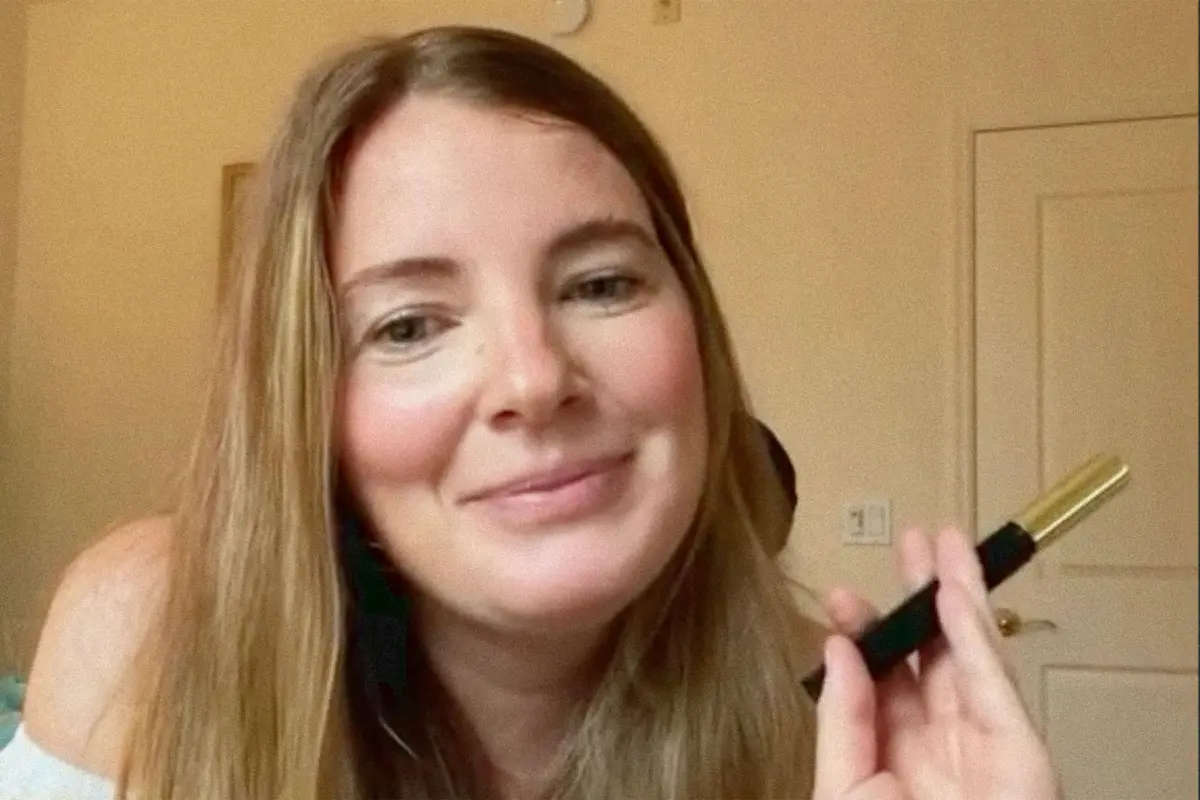
Brooke Eby, a pioneering digital creator, fierce advocate, and defining voice in the modern landscape of Amyotrophic Lateral Sclerosis (ALS) awareness, has passed away at the age of 37. Her death was officially announced on October 1 by the ALS Network, her longtime advocacy partner. Eby spent the final four years of her life transforming how society perceives, discusses, and confronts one of the most devastating neurodegenerative diseases known to modern medicine.
Diagnosed at just 33 years old—decades younger than the typical demographic for the condition—Eby rejected the traditional, often sterile approach to terminal illness advocacy. Instead, she utilized platforms like TikTok, where she amassed over 300,000 followers, to deliver an unflinching, brilliantly witty, and deeply human chronicle of her physical deterioration. Dubbing her online diary a "show, don’t tell" method of activism, she invited hundreds of thousands of strangers into her living room, her doctor’s appointments, and her moments of immense vulnerability.
Eby’s impact transcended viral moments and follower counts. She fundamentally reshaped the support systems available to newly diagnosed patients by founding "ALS Together," a digital refuge designed to foster community, shared grief, and camaraderie among those navigating terminal diagnoses. In June 2026, her monumental contributions were formally recognized when the ALS Network honored her with the prestigious Dean and Kathleen Rasmussen Advocate of the Year Award.
Her passing leaves a profound vacuum in the advocacy community, yet her legacy endures. By stripping away the clinical detachment often associated with Lou Gehrig’s disease, Eby personalized a condition that many previously viewed as a distant abstraction. She leaves behind a grieving family, a devoted digital community, and an unyielding blueprint for patient-led advocacy in the digital age.
Detailed Chronology: From Shock Diagnosis to Digital Icon
The Life-Altering Moment
In her early thirties, a stage of life typically defined by career progression, personal milestones, and boundless futures, Brooke Eby’s world shifted irrevocably. Following a series of subtle yet persistent physical anomalies, she received a diagnosis of amyotrophic lateral sclerosis (ALS) at age 33.
ALS is a progressive, universally fatal neurodegenerative disease that systematically attacks and destroys motor neurons in the brain and spinal cord. These specialized nerve cells control voluntary muscle movement, including crucial functions such as walking, speaking, swallowing, and breathing. For Eby, the diagnosis functioned as an immediate, unvarnished death sentence. Medical literature establishes that the median life expectancy for an ALS patient following the onset of symptoms is a mere two to five years.
Embracing the Camera: The Birth of an Activist
Rather than retreating into privacy to cope with the diagnosis, Eby chose an unprecedented path of radical transparency. Recognizing that traditional awareness campaigns—often consisting of detached infographics and clinical statistics—fail to capture the visceral horror of the disease, she turned to TikTok.
With sharp wit, dry humor, and a complete absence of self-pity, Eby began documenting her declining health. Her content defied genre: one day she might post a darkly humorous video utilizing a makeshift beer bong to take her medication; the next, she would offer a raw, tearful assessment of failing a routine respiratory test. This unfiltered approach resonated deeply with audiences. Within a relatively short window, her follower count swelled past 300,000 individuals who tuned in daily not out of morbid curiosity, but out of genuine affection and solidarity.
Building Safe Harbors: The Creation of "ALS Together"
Eby quickly realized that physical isolation is one of the cruelest components of a rare and terminal illness. To combat this, she spearheaded the creation of "ALS Together," a dedicated Slack channel that served as an intimate lifeline for individuals newly diagnosed with ALS. The platform provided a secure, empathetic environment where patients could converse freely, share coping strategies, mourn their losses, and connect without the societal filters often forced upon the terminally ill.
National Recognition and Final Chapters
By mid-2026, Eby’s relentless advocacy had garnered widespread institutional acclaim. In June of that year, the ALS Network presented her with the Dean and Kathleen Rasmussen Advocate of the Year Award, cementing her status as a titan in the non-profit healthcare advocacy space.
Even as her respiratory capacity diminished and her physical autonomy eroded, Eby’s voice remained razor-sharp. In interviews leading up to her passing, she routinely dismissed conventional notions of legacy, preferring instead to focus on the immediate, tangible objective of her work: ensuring that the public associated the abstract term "ALS" with a living, breathing human face.
Supporting Context & Metrics: The Landscape of ALS
Understanding Amyotrophic Lateral Sclerosis
Amyotrophic Lateral Sclerosis, frequently referred to as Lou Gehrig’s disease after the legendary New York Yankees baseball player whose career it prematurely ended, remains one of the medical community’s most formidable enigmas. The disease manifests when motor neurons—nerve cells extending from the brain to the spinal cord and down to muscles throughout the body—degenerate and die. When the motor neurons can no longer signal instructions to muscles, the muscles begin to waste away (atrophy), leading to progressive paralysis.
Demographics and Statistical Realities
- Age of Onset: While the vast majority of ALS cases are diagnosed in individuals aged 60 and older, Eby’s diagnosis at age 33 highlights that the disease does not discriminate based on youth.
- Incidence Rates: According to epidemiological data, approximately one in every 400 people will develop ALS during their lifetime.
- Prognosis: The standard life expectancy post-diagnosis remains stubbornly fixed between two and five years, a statistic that Eby frequently weaponized in her advocacy to demand accelerated clinical research and broader regulatory urgency.
The "Show, Don’t Tell" Methodology
Eby’s brilliance as an activist lay in her intuitive grasp of modern media psychology. Traditional public health campaigns often rely on data points that, while mathematically significant, struggle to elicit emotional resonance from the general public. Eby understood that abstract numbers do not inspire legislative funding or public outrage; human relationships do.
By framing herself not as a medical anomaly, but as a potential friend, sister, or daughter to anyone watching through a screen, she successfully forged emotional investments among her audience. Viewers were no longer passive consumers of health news; they were active participants who grew fiercely defensive of Eby and intensely frustrated by the glacial pace of pharmaceutical progress for ALS treatments.
Official Statements and Tributes
The global ALS community and healthcare leaders have responded to Eby’s passing with an outpouring of grief, respect, and deep admiration for her contributions.
Sheri Strahl, President and CEO of the ALS Network, released a poignant statement capturing the essence of Eby’s impact:
"Brooke changed the way people see ALS, but she also changed the way people living with ALS find and support one another. She brought humor into incredibly difficult moments, spoke with fearless honesty, and created connection where it was desperately needed. We are heartbroken by her passing and profoundly grateful that we had the privilege of knowing her, working alongside her, and celebrating her. Brooke’s impact will live on in every person she reached and throughout the community she created."
Reflecting on her motivations during a 2025 interview with Rolling Stone, Eby offered a characteristically pragmatic perspective on her mortality and public image:
"People are always talking about legacy and whatever. I don’t really care. All I really care that people remember is someone like me could get this disease, and that it took me as quickly as it did. As long as when they hear the word ALS, they can picture a face, whether it’s mine or someone else’s. I can’t be embarrassed once I’m dead."
Colleagues, fellow creators, and beneficiaries of the "ALS Together" network have similarly flooded social media platforms with testimonies detailing how Eby’s fierce advocacy helped them navigate their own darkest hours, proving that her reach extended far beyond the metrics of her digital footprint.
Future Outlook: The Enduring Blueprint of Digital Advocacy
Brooke Eby’s passing marks the end of a remarkable chapter in digital health advocacy, yet the framework she established will undoubtedly influence future generations of patients and activists.
Transforming Patient-Led Movements
For decades, rare disease advocacy was strictly managed by institutional non-profits, medical researchers, and corporate foundations. Eby’s work proved that digital platforms empower individual patients to circumvent traditional bureaucratic gatekeepers, building grassroots movements in real-time. By utilizing short-form video platforms to dismantle the stigma and sanitized aesthetics of terminal illness, she demonstrated that radical authenticity is a potent tool for societal change.
The Ongoing Battle Against ALS
As the medical research community continues its slow, arduous march toward effective treatments and a eventual cure for ALS, the void left by Eby’s absence will be keenly felt. Clinical trials require participants, funding requires public awareness, and systemic change requires unrelenting pressure—areas where Eby excelled.
Yet, the digital infrastructure she created—exemplified by initiatives like "ALS Together"—ensures that newly diagnosed patients will continue to find peer support long after her passing. Brooke Eby wanted the world to be angry at ALS, to recognize the human cost of its rapid progression, and to refuse complacency. As her followers, peers, and medical allies pick up the torch, her final wish—that people everywhere can picture a familiar, human face when they hear the word ALS—remains her most enduring and powerful triumph.