

Executive Overview
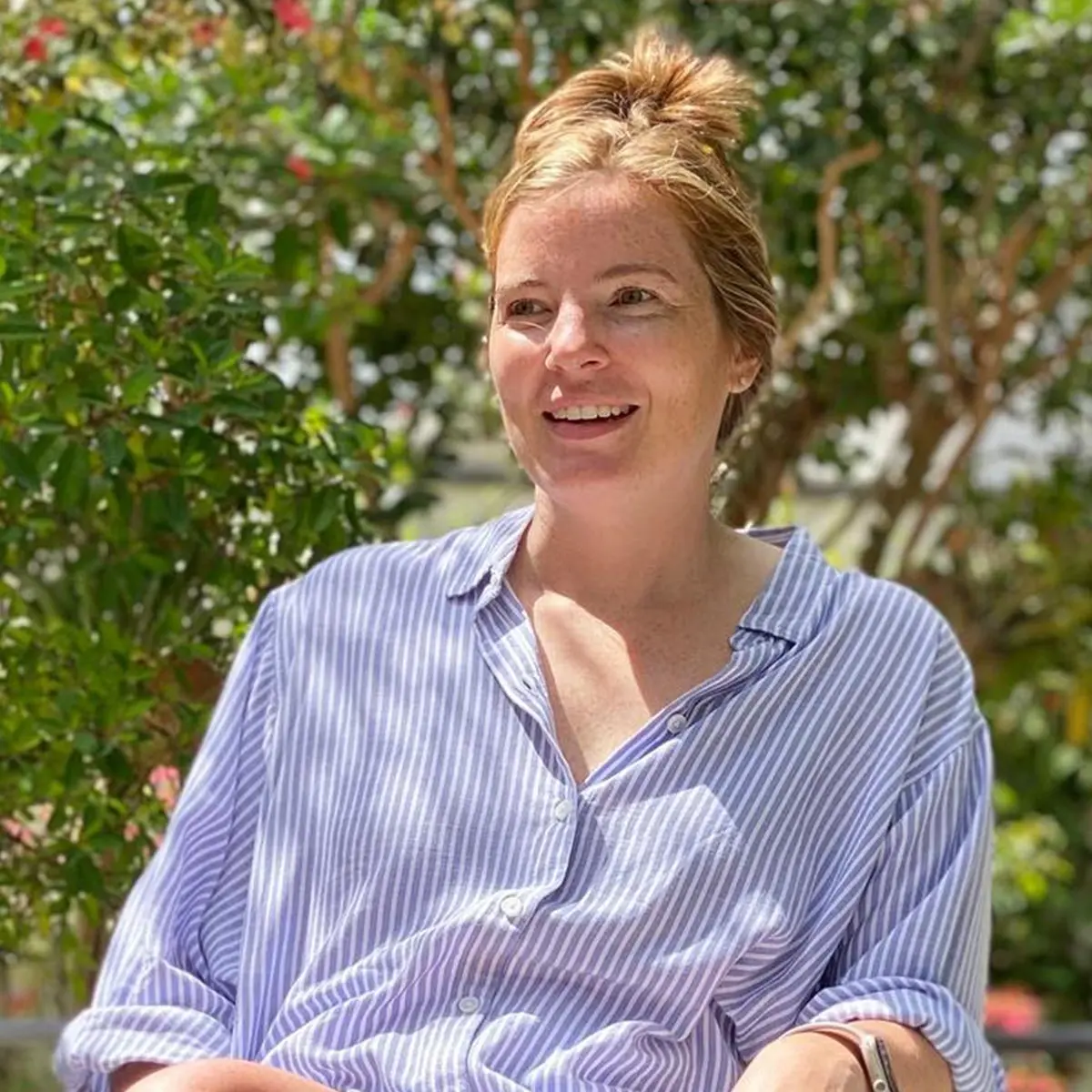
The global TikTok community and the broader healthcare advocacy space are in deep mourning following the death of Brooke Eby, a vibrant digital creator and relentless advocate who chronicled her harrowing journey with amyotrophic lateral sclerosis (ALS). Eby passed away at the age of 37, roughly four years after her initial diagnosis at age 33. Known to hundreds of thousands of followers simply as "Limpbroozkit" across TikTok and Instagram, Eby transformed her personal tragedy into a public masterclass in resilience.
Rather than adopting a tone of unmitigated despair, Eby chose an approach characterized by sharp wit, tongue-in-cheek dark comedy, and fearless vulnerability. Her willingness to pull back the curtain on the grim realities of Lou Gehrig’s disease demystified the condition for a generation of digital natives. In doing so, she bridged the gap between sterile medical diagnoses and human lived experience.
Her passing, confirmed by The ALS Network in an October 1 statement, marks the end of a profound chapter in digital advocacy. Eby did not merely raise awareness; she built an inclusive, empathetic community where patients, caregivers, and onlookers alike could confront an otherwise terrifying degenerative illness with a measure of grace and laughter. This comprehensive retrospective examines Eby’s life, her advocacy model, the rapid physical progression of her disease, and the indelible legacy she leaves behind for future generations confronting neuromuscular disorders.
Detailed Chronology: From Diagnosis to Digital Advocacy
The Turning Point (2022)
Brooke Eby’s life pivoted unexpectedly in 2022 when, at the age of 33, she began experiencing unusual physical symptoms that defied easy explanation. After a battery of neurological tests and specialist consultations, she received a diagnosis that would upend her future: amyotrophic lateral sclerosis, commonly known as ALS or Lou Gehrig’s disease.
ALS is a progressive neurodegenerative disease that affects nerve cells in the brain and the spinal cord. As motor neurons degenerate, the brain loses the ability to initiate and control muscle movement. Patients in the later stages of the disease may lose the ability to speak, eat, move, and breathe independently, while cognitive function frequently remains intact, trapping individuals inside their own failing bodies.
Rather than retreating into privacy, Eby made a deliberate choice to document her trajectory. She launched her digital presence under the handle @limpbroozkit, a darkly humorous nod to her shifting physical capabilities and the nu-metal band Limp Bizkit.
The Escalation of Symptoms (2024–2025)
As the years progressed, the biological toll of the disease accelerated dramatically. While Eby had maintained a relative degree of physical autonomy in the early stages of her diagnosis, the landscape of her battle shifted visibly over the final year of her life.
By June 2025, the compounding weakness in her swallowing muscles necessitated the surgical installation of a feeding tube. This medical milestone marked a difficult psychological and physical threshold, yet Eby continued to share her experiences without filter. In January 2025, she published a deeply personal essay in People magazine detailing the complex emotional landscape of her diagnosis. She wrote candidly about why humor became her primary defense mechanism:
"Everyone was a lot more comfortable with my situation when I was laughing, and that came back around to make me feel more comfortable too."
By early 2026, the physical manifestations of ALS severely impacted her respiratory and vocal capabilities. In one of her final video dispatches, posted to TikTok on September 3, 2025, Eby addressed her deteriorating speech with characteristic candor. Struggling to coordinate her breath and lip movements, she told her audience:
"I’m not ready to give up talking. Also, my head and neck have to be in the exact right position for me to even get any words to come out. I can’t tell if my breath isn’t strong enough to fight the breathing machine anymore or if it’s just my lips are weak."
With the razor-sharp comedic timing that defined her internet persona, she capped the vulnerable admission with a self-deprecating quip:
"But you know what they say, loose lips sink… Brooke’s will to live."
Supporting Context & Metrics: The Reality of ALS
To fully understand the weight of Brooke Eby’s contributions, one must examine the clinical and demographic realities of amyotrophic lateral sclerosis. ALS is considered a rare disease, yet its impact is devastatingly profound.
Clinical Overview and Statistics
- Incidence: According to the ALS Association, approximately 5,000 people are diagnosed with ALS each year in the United States alone, with an estimated 20,000 to 30,000 Americans living with the disease at any given time.
- Age of Onset: While ALS can strike at any age, symptoms most commonly develop between the ages of 40 and 70. Eby’s diagnosis at age 33 placed her on the younger end of the demographic spectrum, making her journey particularly resonant with millennials and younger generations navigating sudden health crises.
- Prognosis: The prognosis for ALS patients is notoriously grim. The average life expectancy from the onset of symptoms is typically two to five years. Eby survived for approximately four years following her diagnosis, mirroring the statistical median while packing decades of educational and cultural impact into that timeframe.
- Economic and Emotional Toll: Beyond the physical degradation, the cost of round-the-clock specialized care, adaptive technologies, speech-generating devices, and home modifications places an immense emotional and financial burden on families.
The Evolution of Patient Advocacy in the Digital Age
Before platforms like TikTok, Instagram, and X (formerly Twitter) became mainstream, rare disease advocacy was largely confined to traditional charity galas, telethons, and institutional newsletters. These formats often portrayed patients through a lens of passive suffering or inspirational heroism, occasionally distancing the public from the gritty, unvarnished reality of the conditions.
Creators like Brooke Eby disrupted this paradigm. By utilizing short-form video platforms, Eby bypassed traditional media gatekeepers, establishing a peer-to-peer connection with her audience. She pulled back the sanitized veil of terminal illness, demonstrating that individuals facing death can retain their agency, their multifaceted personalities, and their sense of humor. Her approach resonated deeply, generating millions of views and fostering a robust digital ecosystem of support, education, and mutual aid.
Official Statements and Tributes
The announcement of Eby’s passing triggered an outpouring of grief and admiration across the healthcare and advocacy sectors. Institutional leaders and fellow creators alike highlighted the transformative nature of her work.
The ALS Network Statement
In an official statement released on October 1, Sheri Strahl, President and CEO of The ALS Network, reflected on Eby’s enduring influence:
"The ALS Network joins the ALS community in mourning the passing of Brooke Eby, an extraordinary advocate, storyteller, community builder, and friend whose honesty, humor and determination changed how countless people understood ALS."
Strahl elaborated on the unique methodology Eby brought to public health communication:
"She brought humor into incredibly difficult moments, spoke with fearless honesty, and created connection where it was desperately needed. We are heartbroken by her passing and profoundly grateful that we had the privilege of knowing her, working alongside her, and celebrating her. Brooke’s impact will live on in every person she reached and throughout the community she created."
Digital Community and Media Reactions
Peers within the chronic illness and disability advocacy communities flooded social media with tributes. Fellow creators noted that Eby had single-handedly demystified adaptive equipment—such as feeding tubes, mobility aids, and respiratory support systems—making them less frightening for newly diagnosed patients who stumbled upon her videos while searching for answers online.
Future Outlook: Legacy and the Road Ahead for ALS Research
While Brooke Eby’s physical journey has drawn to a close, her digital footprint remains permanently embedded in the cultural landscape. In her reflective essay for People magazine published in January 2025, Eby explicitly articulated her vision for her post-mortem legacy:
"My TikTok presence will live on after I die. I hope it serves as a visual diary for anyone who gets diagnosed and needs a guide."
Impact on Future Patients and Caregivers
Eby’s digital archive functions as a living textbook for navigating the emotional and logistical milestones of neurodegenerative decline. For newly diagnosed patients grappling with the initial shock of an ALS diagnosis, her videos provide a roadmap that balances medical reality with psychological comfort. By normalizing conversations around difficult topics—such as the loss of speech, the implementation of feeding tubes, and the realities of hospice care—she removed much of the paralyzing stigma associated with terminal illness.
Implications for Research and Awareness
The work of creators like Eby plays a critical downstream role in scientific research. By humanizing statistical data and directing public attention toward organizations like The ALS Network, digital advocates stimulate grassroots fundraising, encourage legislative advocacy for expanded access to experimental treatments, and accelerate clinical trial recruitment.
Although a definitive cure for amyotrophic lateral sclerosis remains elusive, the medical research community continues to make incremental strides in gene therapy, biomarker identification, and targeted neuroprotective treatments. As awareness campaigns become more organic, culturally fluent, and driven by authentic patient voices, public pressure on federal funding agencies and pharmaceutical developers to prioritize neurodegenerative disease research intensifies.
Brooke Eby’s life and work demonstrate that terminal illness does not have to erase individuality. Through her courage, her refusal to sugarcoat her reality, and her brilliant application of humor to the darkest of circumstances, she permanently altered the discourse surrounding ALS. Her digital diary stands as an enduring testament to the power of human connection, ensuring that her voice will continue to guide, educate, and comfort those who walk the path after her.