

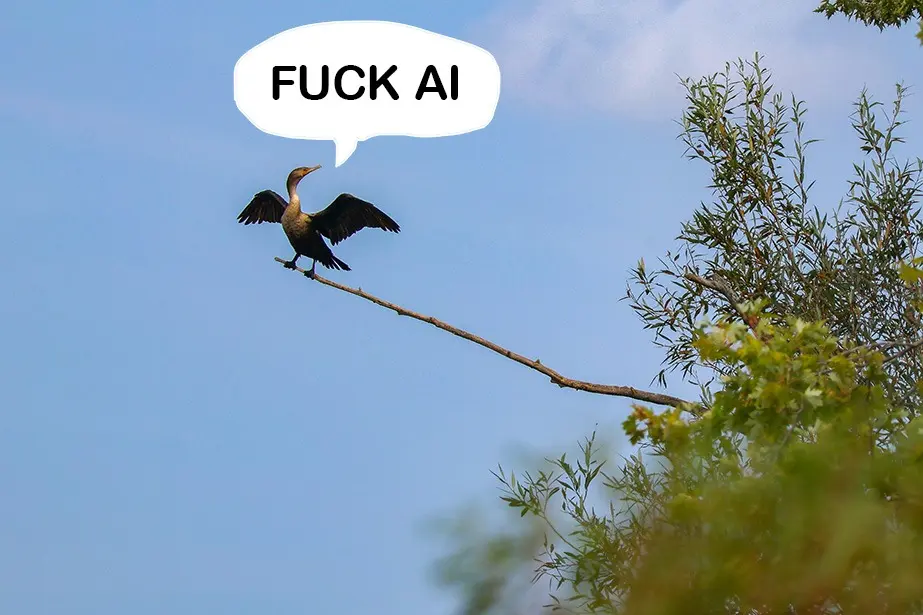
The Horror Writers Association (HWA) has found itself at the epicenter of a fierce industry-wide controversy following the distribution of its official member newsletter. The publication included a deeply polarizing essay written by then-board trustee Séphera Girón, which advocated for the integration of generative artificial intelligence (AI) in creative writing and criticized critics of the technology as "gatekeepers" and "bullies."
The backlash was swift, vocal, and immediate. Professional authors across the horror community—an artistic sector uniquely vulnerable to the uncompensated ingestion of creative labor by Large Language Models (LLMs)—expressed deep outrage that a premier trade organization dedicated to the craft of writing would disseminate pro-AI rhetoric. Hours after the newsletter hit member inboxes, the HWA leadership acted decisively, removing Girón from her board position.
This incident exposes a deepening ideological fault line within modern literature: the irreconcilable tension between the Silicon Valley-driven push for automated content generation and the foundational tenets of human authorship, copyright integrity, and artistic ownership. Far from being a localized administrative misstep, the HWA newsletter controversy encapsulates the broader, existential struggle writers face as their intellectual property is mined to fuel technologies designed to commodify, devalue, and ultimately replace them.
Detailed Chronology
The Newsletter Distribution
The crisis began on a routine Tuesday when HWA members received the organization’s scheduled electronic newsletter. Embedded within the communication was an essay penned by trustee Séphera Girón. Rather than focusing on the traditional pillars of the HWA—craft development, networking, professional standards, and business advocacy—the essay functioned as a defense of artificial intelligence in creative careers.
Girón’s piece urged members to halt their criticisms of peers utilizing AI tools, characterizing industry pushback as hostile "gatekeeping." She drew sweeping, controversial comparisons between the rise of generative AI and historical technological shifts, such as the transition from analog to digital photography, the introduction of home television, and the invention of synthesizers. Furthermore, the essay argued that critics were exhibiting hypocrisy by utilizing platforms like Facebook, Amazon, and smartphones that inherently rely on machine learning algorithms.
Immediate Community Backlash
Within minutes of the newsletter’s delivery, screenshots and excerpts began circulating rapidly across digital literary spaces, most notably on Bluesky and X (formerly Twitter). Authors such as Holly Lyn Walrath and prominent novelist Chuck Wendig brought widespread attention to the piece, framing it as a direct betrayal of the organization’s core mandate.
The literary community reacted with disbelief and anger. Critics highlighted the severe irony of an international organization representing creators—artists whose livelihoods depend on copyright protections and human-derived emotional resonance—distributing corporate apologetics for a technology built on systemic copyright infringement. The sentiment among the membership was unified: the HWA is a professional association for horror writers, not a prompter’s syndicate for automated text generators.
Swift Institutional Action
Recognizing the catastrophic damage to the organization’s reputation and its breach of member trust, the HWA executive leadership moved with unprecedented speed. By late afternoon on the same day, the board convened, addressed the crisis, and stripped Séphera Girón of her trustee responsibilities. An official statement regarding her removal and a commitment to reaffirming the organization’s anti-generative-AI stance was rapidly prepared for distribution to the membership base.
Supporting Context & Metrics
To fully understand the intensity of the HWA member reaction, one must examine the economic and existential realities facing contemporary authors. Generative AI models are trained on vast corpuses of text, art, and code. In the literary sphere, this has repeatedly occurred without the consent, credit, or compensation of the creators.
- The Theft of Intellectual Property: LLMs require millions of copyrighted books, short stories, and articles to function. Authors find their life’s work ingested into corporate databases without legal recourse or financial remuneration, transforming human creativity into "Soylent Green"—raw fuel for engines designed to undercut the human workforce.
- The False Equivalency Fallacy: Proponents of generative AI frequently invoke historical precedents—such as the invention of photography, word processors, or electronic instruments—to frame critics as regressive Luddites. However, media theorists and authors point out a critical distinction: traditional tools enhance human agency, whereas generative AI displaces human decision-making. As critics note, using a camera involves framing, timing, lighting, and post-processing choices unique to the human artist. Conversely, prompting an LLM delegates the creative acts of synthesis, stylistic choice, and narrative generation to a probabilistic algorithm.
- Environmental and Economic Toll: Beyond intellectual property concerns, the generative AI infrastructure carries a massive ecological footprint, consuming unprecedented amounts of water and electricity to power data centers. When combined with the economic displacement of freelance writers, copyeditors, and artists, the technology presents a multi-faceted threat to the creative economy.
Official Statements and Industry Reactions
The fallout from the Girón essay triggered a wave of commentary from prominent literary figures, dissecting the arguments presented in the text and highlighting the broader implications for creative unions.
Deconstructing the "Luddite" Argument
A central pillar of the contested HWA essay was the assertion that writers fearful of AI are repeating historical resistance to automation. Prominent industry voices dismantled this comparison, emphasizing that tools like spellcheckers or cameras expand human capability, whereas generative AI acts as a substitute for human thought.
"AI is not a tool—it’s not allowing you to do the work. You’re allowing it to do the work. Which is to say, you’re the tool," noted author Chuck Wendig in a comprehensive critique of the essay.
Furthermore, defenders of human art pushed back against the "gotcha" rhetoric claiming that using modern technology (such as smartphones or social media) makes rejecting generative AI hypocritical. Critics pointed out that participating in modern society is often a structural necessity, whereas utilizing a text generator to write fiction is an entirely optional, ethical choice.
The Problem of "Corporate Oligarchs"
While Girón’s essay attempted to deflect blame away from individual creators and onto invisible "oligarchs" who divide the populace, authors argued that defending individual usage of generative AI actively empowers those very corporations.
"Sure, there’s no ethical consumption under capitalism," industry commentators noted, "but there are also ways to not gleefully be unethical." By normalizing the output of stolen labor, individual users act as willing participants in a system engineered to devalue human artistry and enrich major tech conglomerates at the expense of working creators.
Future Outlook
The rapid removal of Séphera Girón from the HWA board marks a critical turning point, but it also signals that professional writing organizations must remain eternally vigilant. As artificial intelligence companies aggressively lobby for lax copyright standards and attempt to normalize machine-generated content across publishing pipelines, trade organizations will face mounting pressure to compromise.
Key Challenges Ahead for Writers’ Organizations
- Rebuilding Member Trust: Organizations like the HWA, SFWA (Science Fiction and Fantasy Writers Association), and the Authors Guild must unequivocally draw bright lines regarding generative AI. Trust, once fractured by internal institutional missteps, requires rigorous and sustained reaffirmation of pro-human policies.
- Establishing Clear Ethical Boundaries: Professional bodies must update their codes of conduct, awards eligibility criteria, and publication guidelines. Explicitly banning the submission of AI-generated or AI-assisted manuscripts is no longer optional; it is essential to the survival of literary standards.
- Collective Legal Defense: As tech giants continue to treat public and protected literature as open-source mining fields, trade organizations must pool resources to back class-action lawsuits, lobby lawmakers for stringent copyright protections, and secure fair compensation for past data scraping.
Conclusion
The HWA newsletter controversy serves as a cautionary tale for every cultural and artistic institution navigating the digital age. It demonstrates that the rank-and-file members of creative communities are acutely aware of the existential stakes involved.
Writing is not merely the mechanical output of words on a page; it is the unique transmission of human consciousness, empathy, and lived experience. When an organization dedicated to horror—a genre plumbing the deepest recesses of the human psyche—attempts to sanitize or champion automated facsimiles of art, the rejection will be absolute. For the HWA, the swift ouster of its board member is a step toward redemption, but the broader war for the soul of human authorship has only just begun.