

Executive Overview
The financial architecture of the entertainment industry has long operated as a paradox of extremes. On one end of the spectrum sit astronomical payouts, generational wealth, and legendary syndication residuals that flow like perpetual motion machines. On the other lies a grueling underbelly of minimum-scale contracts, deferred dreams, passion projects funded out of pocket, and residuals so meager they barely cover the postage required to mail them.
Recent high-profile disclosures from household names—ranging from Saved by the Bell alumni to A-list movie stars—have pulled back the curtain on how Hollywood actually compensates its talent. While audiences frequently assume that anyone appearing on television or starring in a blockbuster film is set for life, the reality is far more nuanced. Factors such as backend equity, poorly negotiated early-career contracts, the seismic shift toward streaming platforms, and aggressive tax and agent deductions reveal a vastly uneven playing field.
This report investigates the complex financial realities of Hollywood compensation, examining the chasm between the industry’s highest earners and those who traded massive paydays for artistic fulfillment, union cards, or simply a shot at breaking into the business.
Detailed Chronology: Industry Milestones in Talent Compensation
To understand how modern entertainment pay scales have evolved, it is necessary to trace the historical shifts in contract negotiations, syndication deals, and the advent of the digital streaming economy.
The Network Television Era and Syndication Goldmines (1970s–1990s)
In the legacy era of network television, shows were built to run for syndication. Actors who secured spots on long-running network sitcoms or teen comedies often signed restrictive, long-term contracts early in their runs.
- The 1975 SNL Baseline: When Saturday Night Live launched in 1975, foundational cast members like John Belushi, Gilda Radner, and Chevy Chase earned a modest $750 per episode. Adjusted for inflation, this established a modest baseline for sketch comedy talent that would persist in proportional terms for decades.
- The Syndication Boom: Shows produced during this period—most notably Friends—created unprecedented residual pipelines. By the 2000s and 2010s, the principal cast of Friends was pulling in an estimated $20 million annually each in syndication residuals alone. Lisa Kudrow famously attributed these astronomical sums to the enduring appeal of characters like Phoebe Buffay, while also acknowledging the peerless comedic timing of late co-star Matthew Perry.
The Prestige Film & Low-Budget Breakthroughs (1980s–2000s)
As independent cinema flourished alongside major studio blockbusters, actors frequently faced stark choices between commercial paydays and artistic credibility.
- The 1985 Paradigm Shift: Oprah Winfrey accepted a mere $35,000 to star in Steven Spielberg’s The Color Purple. Despite the low payout, Winfrey later noted it was the best financial decision of her life, serving as a foundational catalyst for her career as a media mogul.
- The Indie and Biopic Groundwork: In 1997, Jennifer Lopez made history as the first Latina actress to command $1 million for a film, starring in the biopic Selena. Conversely, actors like Christian Bale (American Psycho, 2000) and Jonah Hill (The Wolf of Wall Street, 2013) accepted absolute legal minimums or near-poverty wages ($60,000 before commissions for Hill) simply to work with visionary directors like Mary Harron and Martin Scorsese.
The Streaming Disruption and Residual Erasure (2010s–Present)
The rise of subscription video-on-demand (SVOD) platforms fundamentally shattered the traditional residual model. Because streaming services typically buy out a show’s worldwide rights upfront rather than licensing individual episodes to local syndication networks, recurring backend payments for cast and crew evaporated.
- The Streaming Squeeze: Stars of modern streaming hits—such as Tommy Dorfman of Netflix’s 13 Reasons Why, who earned under $30,000 for an entire grueling first season—found themselves locked out of the lucrative backend bonuses that defined earlier television generations. This systemic disparity served as a primary catalyst for the historic 2023 SAG-AFTRA and WGA strikes.
Supporting Context & Metrics: The Anatomy of a Hollywood Paycheck
A gross salary headline in a trade publication rarely reflects the capital an actor actually takes home. When evaluating celebrity earnings, several hidden financial drains drastically reduce the final take-home figure:
- Agency and Management Fees: Standard representation commands roughly 15% to 20% of an actor’s gross earnings.
- Legal and Public Relations Representation: Entertainment lawyers and publicists typically siphon an additional 5% each.
- Federal, State, and Local Taxes: High earners in production hubs like California and New York face progressive tax brackets that frequently consume up to 50% of gross income.
The Taraji P. Henson Breakdown:
To illustrate the stark reality of mid-tier and supporting star compensation, actress Taraji P. Henson detailed the mathematics behind her $150,000 salary for 2008’s The Curious Case of Benjamin Button:
- Gross Salary: $150,000
- Less Representation/Team Fees (30% off the top): -$45,000 leaves $105,000
- Less Federal & State Taxes (~50%): -$52,500
- Actual Net Take-Home: Approximately $40,000 to $52,000 on a critically acclaimed, Oscar-nominated blockbuster role.
| Project / Show | Talent | Reported Compensation / Residuals | Context & Impact |
|---|---|---|---|
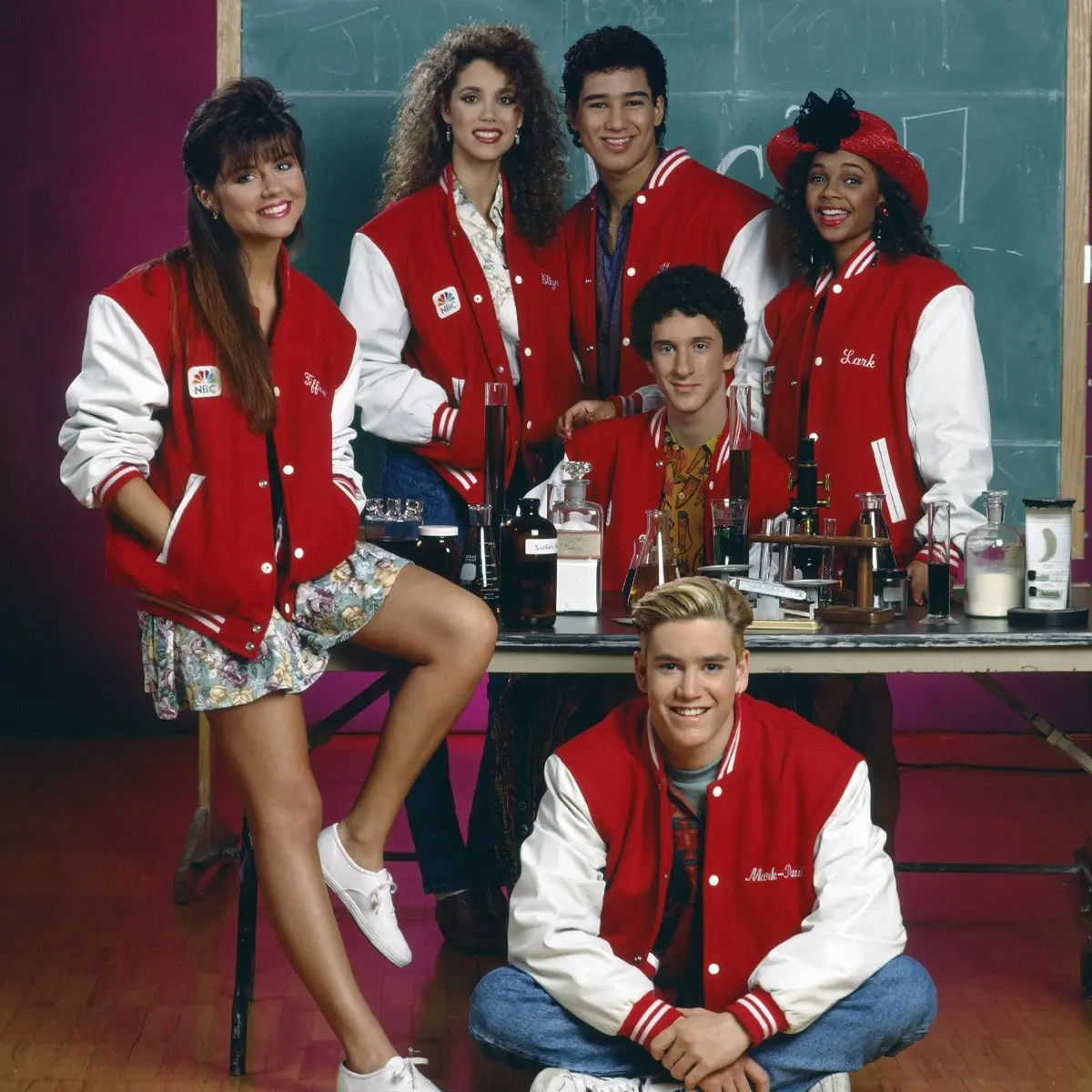
| Saved by the Bell | Tiffani Thiessen / Mario Lopez | "Negative" residuals / postage costs exceed checks | Early bad syndication deals yielded negligible long-term payouts. |
| Friends | Lisa Kudrow & Cast | ~$20 million per year each | Unprecedented traditional network syndication evergreen model. |
| Jackass (Season 1) | Steve-O | Less than $1,500 total (post-taxes) | Rendered homeless and broke despite starring in a viral MTV sensation. |
| The Wolf of Wall Street | Jonah Hill | $60,000 (before taxes/commissions) | Accepted minimum scale to work with Martin Scorsese. |
| 13 Reasons Why (Season 1) | Tommy Dorfman | $29,953.24 for 8 episodes over 6 months | Sparked industry conversations on streaming residual exploitation. |
| The Lord of the Rings | Cate Blanchett & Orlando Bloom | Nominal scale / $175,000 for the trilogy | Massive global box office gross ($2.9B) did not translate to upfront backend wealth for supporting leads. |
Official Statements and Insider Revelations
The discourse surrounding pay equity, poor early contracts, and streaming royalty structures has prompted unprecedented transparency across the industry.
- On the Gender Wage Gap: Following the 2014 Sony hack, Jennifer Lawrence spoke out candidly about discovering systemic pay disparities between herself and her male co-stars in American Hustle. Elaborating on her later experience filming Don’t Look Up alongside Leonardo DiCaprio—where she commanded $25 million to his $30 million—Lawrence noted: "Leo brings in more box office than I do… I’m extremely fortunate and happy with my deal. But in other situations… it’s extremely uncomfortable to inquire about equal pay."
- The Reality of Reality TV: Reality television operates under an entirely separate compensation tier. According to disclosures from Dancing With the Stars professional Jenna Johnson and Real Housewives of New Jersey alumnus Joe Giudice, debut seasons often yield virtually no net profit for cast members. Giudice revealed that he and his ex-wife Teresa earned a mere $25,000 for their explosive first season, while out-of-pocket costs for hosting production-mandated events topped $150,000.
- Self-Financing and Passion Projects: A-listers frequently weaponize their personal wealth to subsidize independent art. George Clooney notoriously earned just $1 for writing Good Night, and Good Luck, while simultaneously turning over his directing and acting salaries to keep the historical drama afloat. Clooney noted that his lucrative international commercial endorsements for brands like Nespresso and Italian sunglasses served as financial shock absorbers for his passion projects.
Future Outlook: The Next Frontier in Talent Compensation
As the entertainment landscape transitions further into the streaming and hybrid distribution era, the traditional business models governing actor compensation are facing structural transformation.
- The Evolution of Residuals: With traditional syndication largely replaced by algorithmic subscription models, union negotiations will continue to focus on viewership-based metrics and data transparency. Ensuring that actors on streaming platforms share directly in the long-tail success of evergreen content remains a core labor priority.
- Transparency and Accountability: The era of silent acceptance regarding pay disparity—whether along gender lines or between executive suites and minimum-scale talent—is receding. Public disclosures by high-profile artists have normalized open conversations about agent fees, tax burdens, and equitable profit-sharing.
- The Hybrid Artist Model: As demonstrated by George Clooney, Jennifer Lopez, and an increasing number of multi-hyphenate creators, modern talent is increasingly opting to "bank on themselves" through self-production, equity stakes, and alternative revenue streams.
Ultimately, the Hollywood paycheck paradox will persist as long as the industry remains split between multi-million-dollar blockbuster budgets and ultra-lean independent ventures. However, as transparency increases and industry labor standards evolve, the chasm between the industry’s highest highs and lowest lows may finally begin to narrow.