

Executive Overview
The modern podcast advertising landscape has evolved past the era of the rigid, forced mid-roll read. Listeners have developed an innate radar for disingenuous promotions, and the traditional model of treating audio inventory like a static billboard on a highway is rapidly losing efficacy. At ADWEEK’s Advertising HQ event, industry heavyweights gathered to dissect this paradigm shift, offering a masterclass in how modern creators and media networks are forging deeper, more profitable connections with audiences.
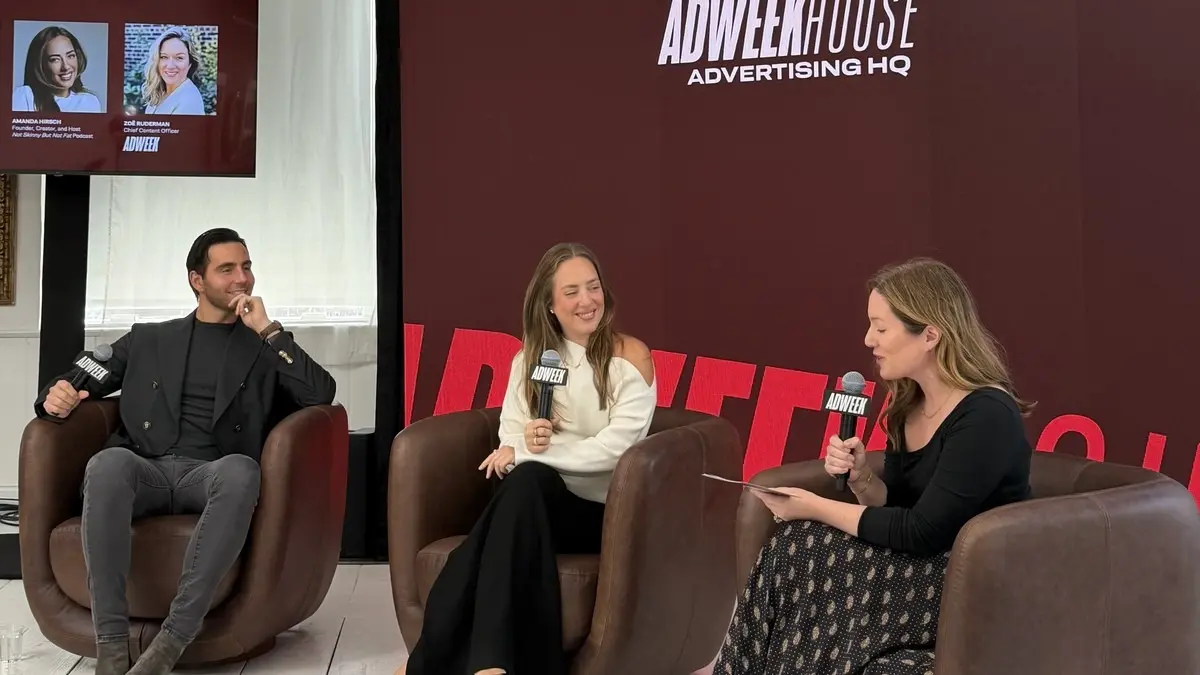
At the center of this conversation was Amanda Hirsch, host of the runaway hit culture and pop-culture podcast Not Skinny But Not Fat. In a candid discussion with ADWEEK Chief Content Officer Zoe Ruderman, Hirsch pulled back the curtain on her rigorous vetting process for brand partnerships—revealing that she occasionally accepts lower fees for products she already uses and loves. Alongside her was Mark Mullett, President of Global Entertainment at Dear Media, the powerhouse female-focused podcast network representing roughly 100 shows. Together, Hirsch and Mullett illustrated a transformative blueprint for the creator economy: one where authenticity is not merely a marketing buzzword, but the foundational currency of modern commerce.
This comprehensive report examines the shifting dynamics of audio monetization. We will explore how Dear Media’s specialized approach—relying on a dedicated team of approximately 40 sales professionals and eschewing programmatic ads in favor of creator-shaped integrations—has propelled the network into a formidable revenue-generating enterprise. Furthermore, we will analyze the integration of video, experiential real-world (IRL) events, and long-form "brand entertainment" initiatives, such as Dear Media’s recent collaboration with Weight Watchers. Ultimately, this article provides an authoritative look into why treating creators as genuine partners rather than mere media channels is the ultimate prerequisite for brand survival in today’s saturated attention economy.
Detailed Chronology: The Evolution of Podcast Monetization and the Rise of Organic Partnerships
The Transactional Past Versus the Relational Present
To understand the significance of Amanda Hirsch’s philosophy, one must first look at how podcast advertising operated during the medium’s early commercial boom. For years, podcast monetization mirrored traditional radio: agencies bought block ad space, inserted generic promotional spots, and handed talent a script loaded with required talking points and discount codes. Hosts were expected to read these scripts verbatim, regardless of whether they used the product, understood it, or even liked it.
Inevitably, listeners noticed. Engagement metrics declined, and skip buttons became the default user behavior. The friction between uninspired corporate copy and the intimate, parasocial relationships listeners form with their favorite podcast hosts created a chasm of distrust.
The Hirsch Framework: Vetting Before the Ink Dries
Amanda Hirsch has systematically dismantled the traditional playbook. For the Not Skinny But Not Fat host, the foundation of a successful brand partnership is laid long before legal contracts are drafted or financial terms are negotiated. Hirsch runs every potential commercial collaborator through an uncompromising, multi-step filter system:
- Organic Affinity: Is she already a genuine consumer of the product or service?
- First-Hand Experience: Has she personally tested, utilized, and vetted the item in her day-to-day life?
- Audience Utility: Will her listeners find the product genuinely useful, entertaining, or life-enhancing?
This rigorous filtering process grants Hirsch absolute peace of mind. When asked about turning down lucrative deals that fail to clear her internal hurdles, she expresses zero hesitation. In her view, passing on a misaligned brand is never painful because she operates with an abundance mindset, trusting that deeply aligned opportunities will naturally follow.
[Brand Pitch Received]
       │
       ▼
[Filter 1: Organic Fan?] ──(No)──► [Polite Decline]
       │ (Yes)
       ▼
[Filter 2: Tested Product?] ──(No)──► [Request Product / Test]
       │ (Yes)
       ▼
[Filter 3: Audience Utility?] ──(No)──► [Polite Decline]
       │ (Yes)
       ▼
[Collaborative Content Creation ("Let them cook")]
Hirsch’s decision-making is anchored entirely in empathy for her listener base. Rather than viewing an ad slot as an interruption to be monetized, she views it as a service opportunity. "I’m thinking about my audience, like, ‘Wait, they would love this,’" Hirsch explained during her ADWEEK conversation. "’This would be so helpful for them.’"
This dedication to consumer value is so profound that Hirsch has been known to accept lower compensation thresholds when partnering with brands she already champions in her personal life. To her, maintaining the integrity of her recommendation holds far greater long-term value than a short-term cash grab. Her ultimate white whale—a dream partner she has organically endorsed for years—remains the comfort footwear giant Ugg.
Supporting Context & Metrics: Inside the Dear Media Ecosystem
Scaling the Creator Economy
While individual creators like Amanda Hirsch set the tone for individual shows, the infrastructure supporting them requires sophisticated operational strategies. Enter Dear Media. As a premier destination for lifestyle, culture, and wellness audio content, the network has successfully scaled its operations by doubling down on a boutique, high-touch sales model.
Dear Media manages a roster of approximately 100 distinct shows. To service this vast network, the company employs a dedicated sales team of roughly 40 professionals. This high ratio of sales talent to podcasts underscores the company’s commitment to bespoke brand matching. Unlike major conglomerates that rely heavily on automated programmatic ad insertion—where ads are dynamically injected based on listener demographics with little regard for show tone—Dear Media largely bypasses the programmatic route. Instead, the network champion host-read advertisements, allowing talent to collaborate directly with brands to shape the messaging organically.
Financial Health and Growth Trajectory
The proof of this relational model is writ large in Dear Media’s financial metrics. According to investigative reporting published by The New York Times, Dear Media was on a trajectory to generate between $50 million and $100 million in annual revenue. This impressive financial scaling was achieved following an initial capital injection of approximately $12 million in venture investment.
These figures validate a vital thesis in modern media economics: audiences reward authenticity with loyalty, and brands reward loyalty with high-retention advertising dollars. By positioning itself as a premium, brand-safe, and culturally relevant audio network, Dear Media commands premium CPMs (cost per thousand impressions) precisely because their ad placements convert at rates that algorithmic programmatic networks simply cannot match.
Official Statements and Industry Insights: "Let Creators Create"
The Perils of the Scripted Read
Despite the proven success of host-read, organic integrations, brand marketers still fall into legacy traps. According to Mark Mullett, President of Global Entertainment at Dear Media, the single biggest mistake brands continue to make is handing creators a rigid, pre-written script and expecting them to execute it line-for-line.
This approach fundamentally misunderstands why audiences tune into podcasts in the first place. Listeners tune in for the unique voice, cadence, humor, and perspective of the host. Stifling that voice with corporate legal jargon instantly shatters the illusion of intimacy.
"The biggest mistake brands still make is handing talent a script and expecting them to read it," Mullett emphasized. Furthermore, he noted that brands often harbor the misconception that creators are transactional mercenaries who will accept any financial offer thrown their way, regardless of the product’s quality or relevance.
The Power of Creative Autonomy
Mullett’s prescription for this industry-wide malady is refreshingly direct: give up control to gain influence.
"Let creators create," Mullett asserted during the ADWEEK session. "If they said yes to working with a brand, let them cook, let them do their thing. It’s going to be better for you."
When a brand validates a creator’s expertise by stepping back and allowing them to translate the marketing objectives into their native storytelling language, the results are exponentially more effective. The creator knows their audience’s pain points, sense of humor, and attention triggers better than any brand marketing director ever could.
Future Outlook: Video, Experiential Integration, and the Next Generation of "Brand Entertainment"
The Multichannel Audio Revolution
The definition of a "podcast" has fundamentally shifted over the past three years. Audio is no longer a purely auditory medium consumed exclusively through earbuds during morning commutes. The proliferation of video-first podcasting—championed by platforms like YouTube, Spotify, and Apple Podcasts—has completely redefined what brand partnerships look like in practice.
Modern partnerships span an expansive multichannel spectrum:
- Set Product Placement: Subtle, organic integration of physical products within the visual frame of the video recording studio.
- Experiential IRL (In Real Life) Events: Live podcast recordings and brand-sponsored activations that allow consumers to interact physically with the products and creators they love.
- Spliced Video Content: Bite-sized promotional clips and brand integrations edited seamlessly into highlight reels distributed across TikTok, Instagram Reels, and YouTube Shorts.
The Weight Watchers Case Study: Redefining "Brand Entertainment"
A prime illustration of this multichannel, narrative-driven evolution is Dear Media’s recent collaboration with Weight Watchers. Rather than settling for a standard mid-roll ad read or a simple social media post, the network partnered with the brand to launch a dedicated companion show.
Hosted by a Weight Watchers employee, the podcast chronicles her personal journey with GLP-1 medications and weight management. Crucially, the show deliberately steps away from dry medical science or clinical jargon, focusing instead on the psychological, emotional, and personal human experience of transformation.
While the historic industry term "brand entertainment" often evokes imagery of dry, corporate-sponsored infomercials or "snoozy" content, Mullett argues that the modern execution of the concept is entirely different.
"It’s really just great entertainment—brought to you by Weight Watchers," Mullett noted.
By funding a show that provides genuine emotional resonance and community support, Weight Watchers successfully embeds itself into the listener’s life not as an advertiser shouting a discount code, but as a supportive facilitator of a meaningful journey.
Metrics That Matter: Beyond the Spreadsheet
While corporate boardrooms live and die by quarterly performance dashboards, click-through rates, and attribution models, top-tier creators often maintain a healthy distance from raw analytics to protect their creative intuition. Amanda Hirsch admits that she mostly avoids looking at the numbers, checking performance metrics only when formal quarterly reports arrive.
For Hirsch, the true metric of success cannot be captured on a spreadsheet. Instead, she measures the triumph of an episode by emotional resonance—specifically, when a listener reaches out to share that they fell in love with a guest they had never heard of before tuning into her show. That intangible spark of discovery and human connection is the ultimate engine driving the podcasting industry forward.
Conclusion: The Sustainable Future of Creator Commerce
The convergence of insights from Amanda Hirsch and Mark Mullett points toward an undeniable truth: the era of deceptive, transactional advertising in podcasting is drawing to a close. As audiences become increasingly sophisticated and saturated with marketing messages, trust has become the scarcest and most valuable commodity in digital media.
Brands that wish to thrive in this environment must adopt the Dear Media and Amanda Hirsch philosophy. They must respect the creator-audience relationship, abandon rigid scripts, embrace multichannel video and experiential storytelling, and—above all—allow creators the autonomy to "cook." When brands step back and trust the unique voice of the talent, everyone wins: the creator maintains their integrity, the audience receives valuable and authentic recommendations, and the brand reaps the rewards of deep, lasting consumer loyalty.