

Executive Overview
In the realm of software engineering and digital product design, an old adage persists: "There are only two hard things in Computer Science: cache invalidation and naming things." While cache invalidation remains a heavy technical burden, the persistent friction surrounding nomenclature continues to quietly derail product development cycles, fracture team synergies, and alienate end users.
From color palettes and HTML classes to UI components, design tokens, and feature launches, the language we choose does more than label our work—it shapes how we conceptualize problems and dictates the nature of cross-functional dialogue. When designers, developers, product managers, and users speak different linguistic "dialects," confusion is guaranteed. A feature struggles with adoption not necessarily because it is poorly built, but because its name fails to communicate its core value or intent.

This comprehensive guide explores the structural anatomy of naming in modern product design. By synthesizing insights from industry leaders, open-source repositories, and established design systems (such as those from Intuit and Vodafone), we examine practical frameworks to help teams eliminate ambiguity, scale their token taxonomies, and build cohesive digital ecosystems.
Detailed Chronology: The Evolution of Digital Nomenclature
The historical approach to naming elements within digital spaces has evolved dramatically over the last three decades, moving from ad-hoc developer shorthand to sophisticated, cross-discipline taxonomies.

Phase 1: The Wild West of Web Development (Late 1990s – Early 2000s)
In the early days of the web, naming conventions were practically non-existent. HTML classes and IDs were created on the fly based on immediate visual appearance rather than semantic meaning. Developers wrote code like <div class="blue-box-right"> or <span class="red-text">.
- The Problem: This approach utterly failed as websites grew in scale and complexity. A simple brand redesign that swapped red for green required sweeping, error-prone manual edits across hundreds of templates.
Phase 2: The Rise of Semantics and Methodologies (2010s)
Recognizing the fragility of visual-based naming, the industry pivoted toward semantic structure. Methodologies such as BEM (Block, Element, Modifier), SMACSS, and OOCSS emerged to impose order on CSS architecture.

- The Shift: Instead of naming an element
.big-blue-button, developers learned to name it.btn--primaryor.card__title. This decoupled the appearance from the structural identifier, introducing flexibility and reusability.
Phase 3: The Design Systems Era and Multi-Brand Complexity (Present Day)
Today, digital products are rarely standalone entities; they are part of expansive multi-brand ecosystems. Companies like Intuit, Vodafone, and Shopify manage massive libraries of reusable interface components and design tokens that span diverse platforms and frameworks.
- The Current Challenge: Naming is no longer just a coding concern. It is a shared vocabulary that must bridge Figma layers, code repositories, product documentation, and user-facing copy. Modern design systems require rigorous taxonomies—hierarchical naming structures that trace a component or token from its raw primitive value all the way to its context-specific application on a live webpage.
Supporting Context & Metrics: The Anatomy of a Good Name
Choosing the right name requires balancing two extremes: being too generic (leading to complete ambiguity about a component’s purpose) or too specific (leaving zero room for flexibility and future reuse).

[ Too Generic ] ───► [ Sweet Spot ] ───► [ Too Specific ]
(.box, .item)        (.card__header)      (.homepage-blue-pricing-card-header)
Industry consensus and design guidelines—such as those synthesized by product designer Javier Cuello—reveal that an effective name possesses several non-negotiable traits:
- Logical Structure: It follows a predictable, hierarchical pattern.
- Conciseness: It is short and direct.
- Semantic Meaning: It relates to function or role, never to transient visual properties (e.g., use
.text-mutedrather than.grey-text-12px). - Universal Recognition: It is intuitively understood by everyone in the product ecosystem.
Key Resource Benchmarks for Naming Everything
When teams run out of inspiration, a burgeoning ecosystem of open-source tools and repositories can help break through creative blocks:

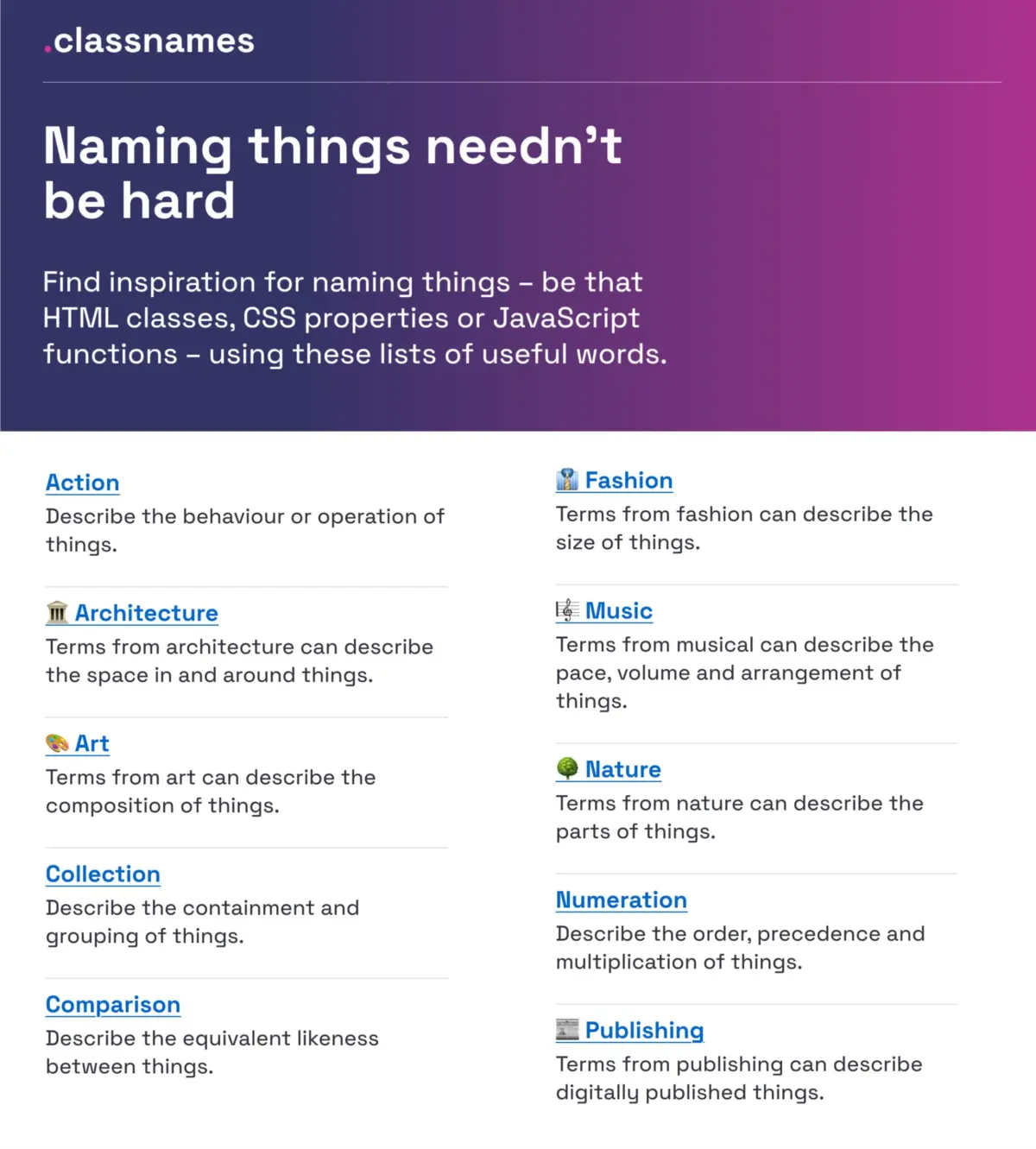
- For General Code & Classes: Classnames provides thematically grouped lists of words categorized by behavior, likeness, grouping, and associations. It reaches beyond standard tech vocabulary into architecture, publishing, fashion, and nature to inspire unique identifiers.
- For Color Tokens: David Aerne’s Color Names repository boasts over 30,000 unique color names sourced from user contributions and historical references, complete with interactive search utilities and pickers like Color Parrot.
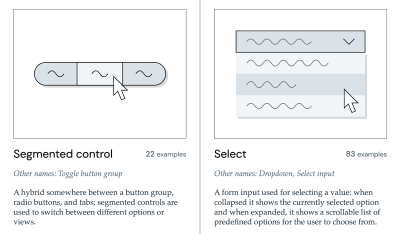
- For UI Components: Iain Bean’s Component Gallery aggregates real-world examples and alternative names for more than 50 standard UI components (from accordions to hidden utility text), helping teams align with established web conventions.
- For Digital Products & Services: Onym offers an open-source collection of brainstorming methodologies, vetting frameworks, and etymological tools specifically engineered for naming new products or services.
Official Guidelines & Frameworks from Enterprise Leaders
To understand how high-performing organizations implement these principles at scale, we can look to case studies from global design system teams.
1. Scaling Design Tokens: The Intuit Model
Managing a suite of household products—including Mailchimp, QuickBooks, TurboTax, and Mint—requires a foundational design system that transcends individual brand themes. Nate Baldwin documented Intuit’s journey toward creating a flexible design token taxonomy.
By auditing the pain points of their legacy systems, the Intuit team established strict criteria for token relationships. Their architecture separated raw visual values (primitives) from semantic intent and component-specific roles, ensuring that a design token could adapt fluidly across disparate applications without breaking core brand identities.
2. Multi-Brand Orchestration: Vodafone UK’s Variables Taxonomy Map
Complex telecommunications organizations face the ultimate design system stress test: multi-brand, multi-themed environments. The Vodafone UK Design System team published their Variables Taxonomy Map on Figma, providing a masterclass in token structuring.
Building upon Nathan Curtis’s foundational work on token naming, Vodafone’s map organizes tokens into four distinct, interconnected collections:

- Brand: Core identity values.
- Primitives: Raw design values (hex codes, base pixel scales).
- Semantics: Contextual meaning (e.g., background-color-interactive).
- Pages/Components: Implementation-specific applications.
This orchestrated structure allows any team member to instantly understand where a token is deployed and what it represents simply by reading its string name. Furthermore, tools like Romina Kavcic’s Design Token Naming Guide and associated inventory spreadsheets provide teams with actionable frameworks to build and filter their own token taxonomies across multiple states and roles.
3. Feature Discovery and the "Job-to-Be-Done"
Naming is not limited to code variables and components; it dictates feature adoption. In her practical guide on feature naming, UX writer Erin Gannon highlights that poor feature adoption is frequently a symptom of poor discoverability caused by opaque naming conventions.

For a feature to be adopted, users must discover it, understand it, try it, learn it, and finally integrate it into their daily workflows.
- The Golden Rule: Feature names must be driven by user needs and the "job-to-be-done." They should signal a clear outcome or value proposition.
- Actionable Advice: Avoid clever internal codenames or corporate jargon. Instead, ask real users to explain the feature in their own vernacular, and adopt the language they naturally use.
Future Outlook: The Intersection of AI, Design Systems, and Universal Vocabularies
As the software development landscape rapidly absorbs artificial intelligence-driven interfaces and automated design-to-code pipelines, the importance of disciplined naming will only intensify.

The Rise of AI-Generated Interfaces
With tools like those explored in Design Patterns For AI Interfaces, product designers and engineers are increasingly collaborating with machine learning models that generate layouts, components, and code snippets dynamically. AI models rely heavily on semantic clarity. Ambiguous class names or unstructured design tokens lead directly to hallucinated code, broken layouts, and inconsistent user experiences.
Toward Unified Cross-Disciplinary Dialects
In the near future, we can expect automated linting tools to actively police design token taxonomies in real-time across both Figma and GitHub repositories, flagging non-semantic names before they ever reach production. As design systems mature into automated, token-driven ecosystems, the elimination of organizational "dialects"—the siloed vocabularies of engineering, product, and design—will become a baseline operational requirement.

Wrapping Up
The ideal name is remarkably simple: it is the one that is universally understood, correctly mapped, and actively utilized by both the multidisciplinary product team and the end user.
Countless hours are wasted every year because product teams speak about the exact same interface element using different dialects. By investing time into establishing a rigorous, scalable taxonomy for your UI components, colors, tokens, and features, you eliminate friction, drastically reduce confusion, and foster a healthier, more collaborative engineering and design culture.

Take a moment to audit your current backlog, identify lingering naming conflicts, and adopt a unified vocabulary. It is one of the single most effective investments a product team can make.